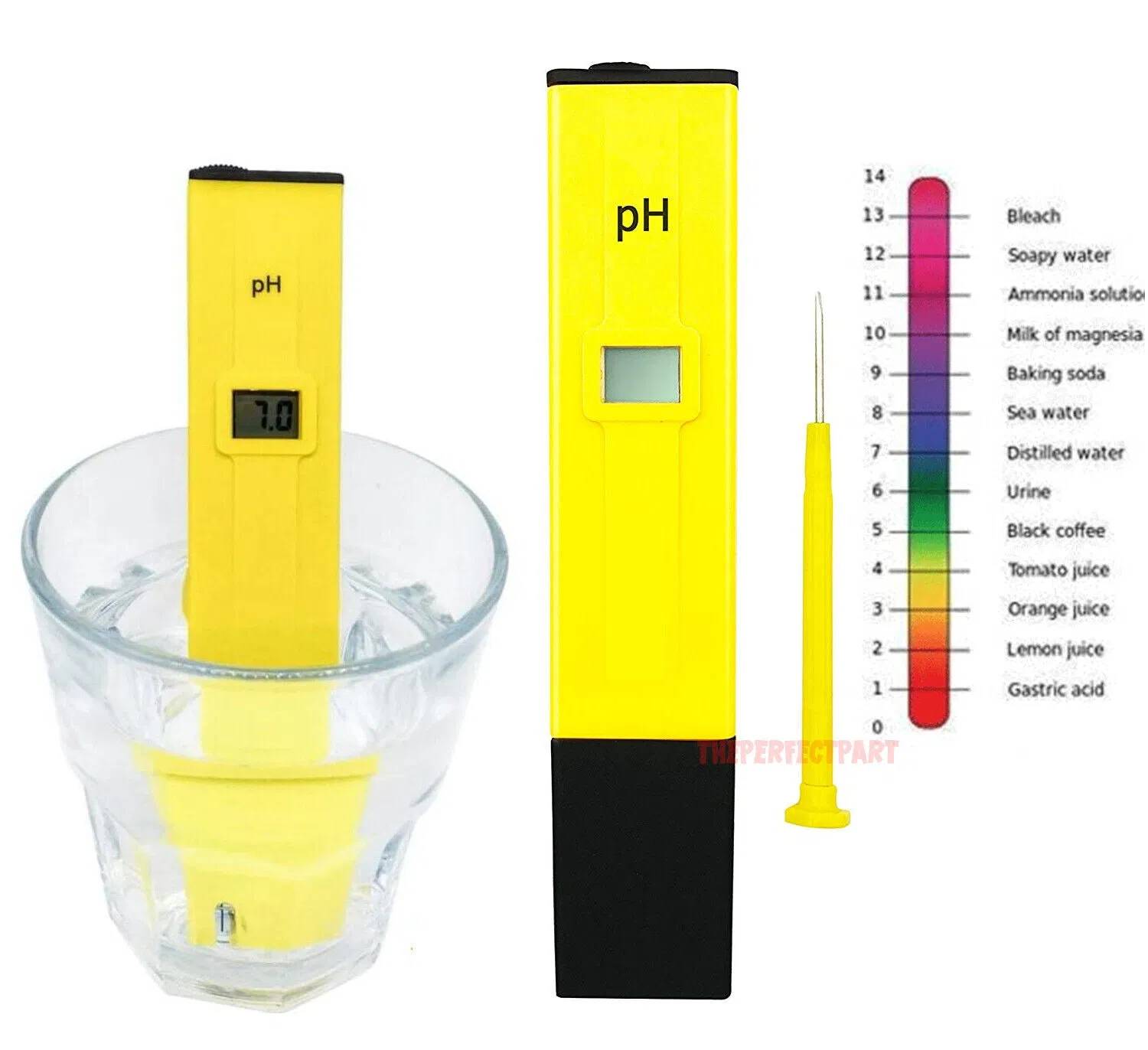

Photos from current listings. Actual item, color, and included accessories may vary.
Electric Ph Tester Buying Guide
An electric pH tester is a pocket or benchtop meter that converts hydrogen-ion activity into a digital reading via a glass or ISFET electrode. The core trade-off is electrode quality and calibration stability: budget pens use sealed gel probes that drift and cannot be replaced, while serious meters use refillable or replaceable electrodes and two- or three-point calibration. Buy a replaceable-electrode meter with at least two-point calibration if you need repeatable readings; treat sealed, single-point pens as short-life convenience tools only.
Key takeaways
- Electrode type decides lifespan: sealed gel probes last roughly 6-18 months and are non-replaceable, while refillable glass or replaceable ISFET sensors can run years with KCl refills.
- Calibration points gate accuracy: one-point pens suit aquariums and pools at ±0.1 pH, but hydroponics and brewing demand two- or three-point calibration across pH 4.01, 7.00, and 10.01 buffers.
- Resolution and accuracy are separate specs: 0.01 pH display resolution is common, but true accuracy of ±0.01 pH requires ATC and fresh buffers, while ±0.1 pH pens are adequate for general water checks.
At a glance
- Category
- Spectroscopy, Analysis & Detection Instruments
- Last updated
- Nov 28, 2026
Current offers
Highlights
- Electrode type decides lifespan: sealed gel probes last roughly 6-18 months and are non-replaceable, while refillable glass or replaceable ISFET sensors can run years with KCl refills.
- Calibration points gate accuracy: one-point pens suit aquariums and pools at ±0.1 pH, but hydroponics and brewing demand two- or three-point calibration across pH 4.01, 7.00, and 10.01 buffers.
- Resolution and accuracy are separate specs: 0.01 pH display resolution is common, but true accuracy of ±0.01 pH requires ATC and fresh buffers, while ±0.1 pH pens are adequate for general water checks.
- Temperature compensation matters: meters with automatic temperature compensation (ATC) from 0-50°C avoid the 0.1-0.3 pH error that uncompensated pens show when sample temperature deviates from 25°C.
Best use cases
- Hydroponics and reservoir monitoring: pick a replaceable-electrode pen with two-point calibration and ATC; skip sealed single-point pens because nutrient solutions drift quickly and require reliable ±0.1 pH tracking.
- Aquarium and pond checks: a sealed ATC pen with one- or two-point calibration is sufficient for fish-only tanks; skip lab-grade benchtop meters unless keeping sensitive shrimp or reef species.
- Pool and spa water: choose a pen rated for high-ionic-strength water with a replaceable electrode; skip low-cost gel pens that foul quickly in chlorine and require frequent replacement.
- Brewing and winemaking: use a meter with three-point calibration, replaceable glass electrode, and ±0.01 pH accuracy; skip pen-style aquarium meters that lack resolution for mash and must adjustments.
Buying tips
- Check electrode replaceability first: if the probe is not user-replaceable, budget for replacing the entire pen within 12-18 months of regular use.
- Match calibration to your tolerance: choose one-point for ±0.1 pH work, two-point for hydroponics and aquariums, and three-point for brewing, winemaking, and lab-adjacent tasks.
- Confirm ATC range: a meter specifying 0-50°C automatic temperature compensation is safe for chilled and heated samples; fixed-temperature pens force you to measure near 25°C.
- Verify buffer standards in the box or budget for them: pH 4.01, 7.00, and 10.01 buffer sachets are consumables, and a meter without fresh buffers is uncalibrated regardless of display precision.
Specs
| Electrode Type | Sealed gel vs replaceable glass/ISFET |
|---|---|
| Calibration Points | 1-point to 3-point (4.01/7.00/10.01) |
| Accuracy / Resolution | ±0.1 pH / 0.01 pH (typical) |
| Temperature Compensation | ATC 0-50°C vs fixed 25°C |
Related searches
What to check before buying
- Measure your sample container depth: pocket pens need at least 2-3 cm of immersion, so shallow trays and small vials may require a benchtop probe instead.
- Confirm your water chemistry: high-chlorine pools and saltwater aquariums demand electrodes rated for high ionic strength; standard gel probes degrade faster in these environments.
- Check calibration buffer availability: ensure pH 4.01, 7.00, and 10.01 buffers are stocked locally or included, since calibration is required before first use and monthly thereafter.
- Match power and storage: most pens use button cells or AAA batteries; verify battery type and included storage solution, because dry-stored glass electrodes lose accuracy within weeks.
FAQ
Data sources: eBay / Amazon listings and product attribute feeds. Updated Nov 28, 2026.
Some links on this page are affiliate links. If you buy after clicking one, we may earn a commission at no extra cost to you. This does not change which products appear here or their order. Affiliate disclosure.