
Photos from current listings. Actual item, color, and included accessories may vary.
Food Metal Detector Buying Guide
A food metal detector is an inline inspection system that rejects product contaminated with ferrous, non-ferrous, or stainless-steel fragments before packaging or shipment. The core trade-off is aperture size and sensitivity versus conveyor throughput: wider belts and taller apertures raise detection limits, while higher belt speeds reduce dwell time and sensitivity. The decision rule is simple: buy a conveyor unit rated to at least 1.5× your widest product and specify Fe Φ1.0–1.5 mm detection as the minimum acceptable baseline; anything without published aperture, speed, and sensitivity specs is a compromise.
Median $5,749.08
Key takeaways
- Belt-width and aperture geometry set the detection floor: typical industrial units use 400 mm belts with Fe Φ1.0 mm sensitivity, and sensitivity degrades as aperture grows beyond the product envelope.
- Detection technology splits into balanced-coil (single frequency, ferrous-optimized) and multi-frequency/multi-coil heads that resolve non-ferrous and stainless steel; stainless 304 is hardest to detect and needs higher-frequency heads.
- Conveyor drive and reject method matter as much as the head: variable-speed motors with air-blast or pusher rejection integrate with packaging lines, while stop-belt units suit low-throughput manual operations.
At a glance
- Category
- Spectroscopy, Analysis & Detection Instruments
- Last updated
- Nov 28, 2026
Current offers
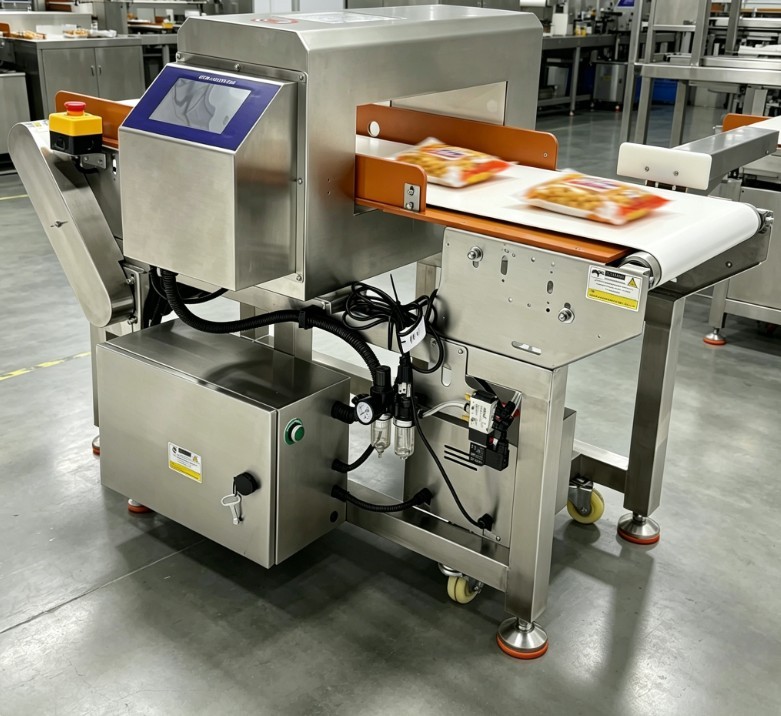 Industrial Food Conveyor Belt Metal Detector 110V 400mm Width Fe Φ≥1.0mm$5,579.80Last checked Nov 16, 2026View on eBay
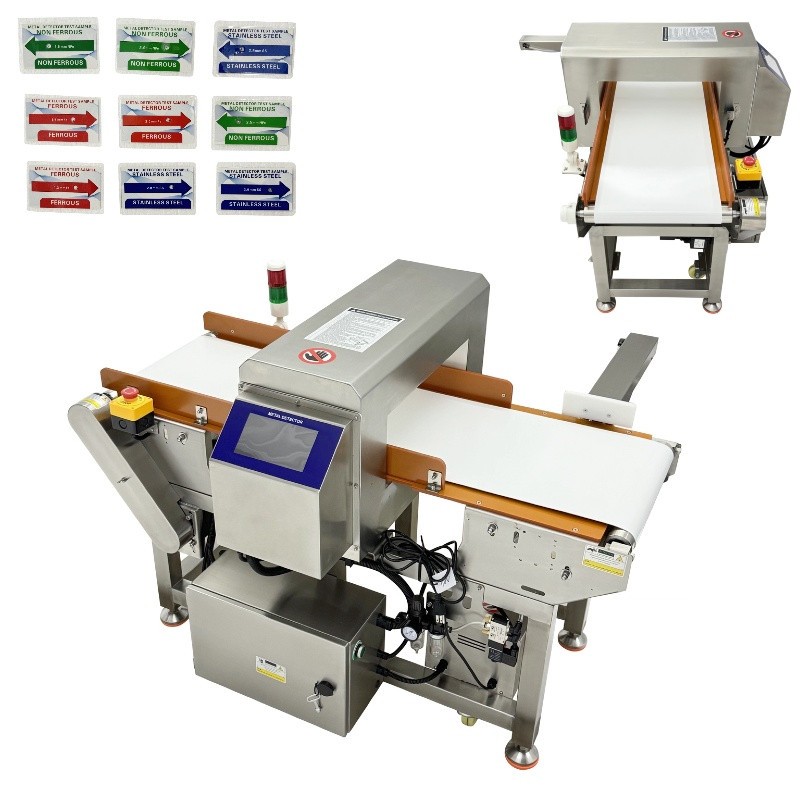 110VFood Conveyor Metal Detector Food Metal Detection Machine Inspection Machine$5,704.00Last checked Nov 16, 2026View on eBay
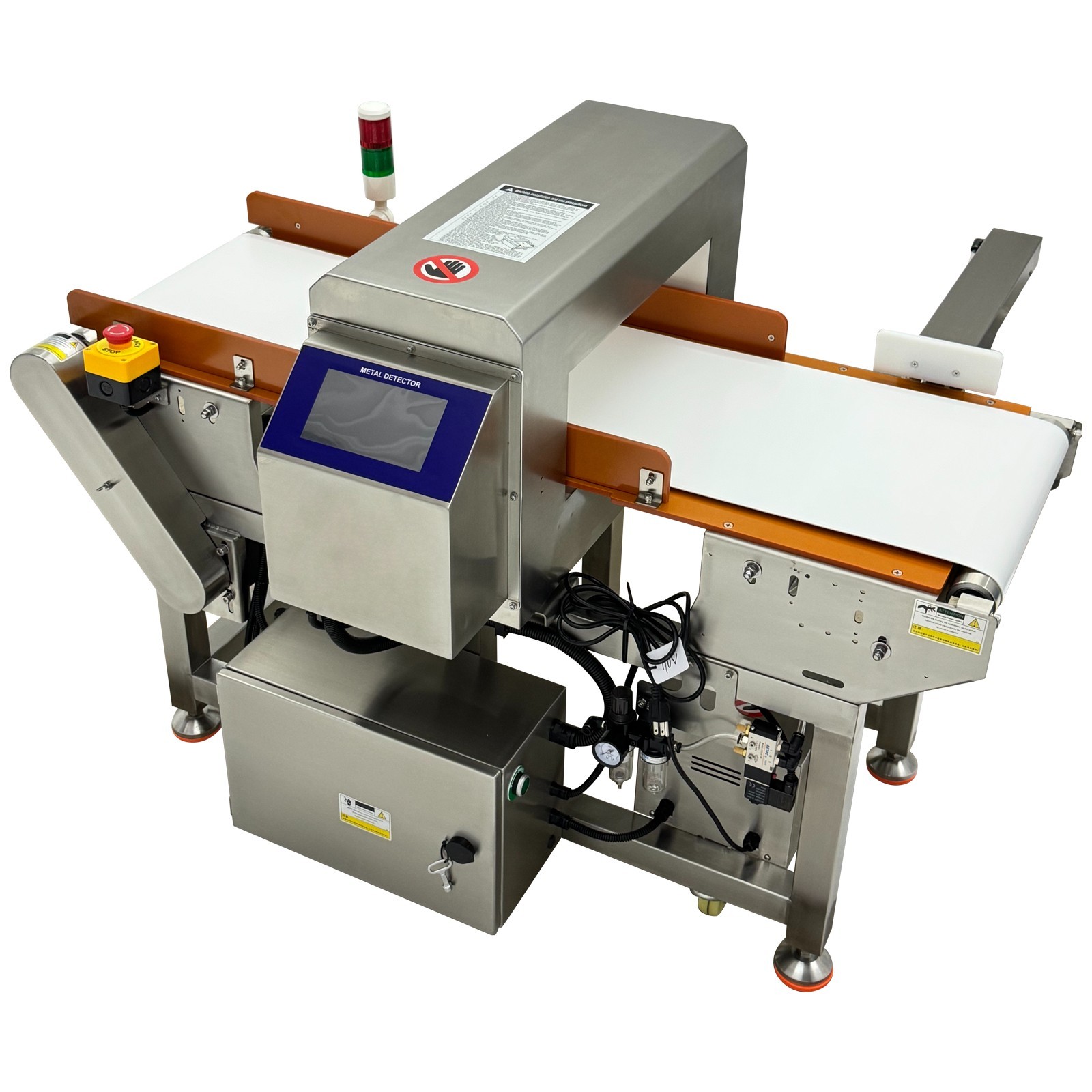 Metal Foreign Object Detection Machine Food Conveyor Metal Detector Inspection$5,731.60Last checked Nov 17, 2026View on eBay
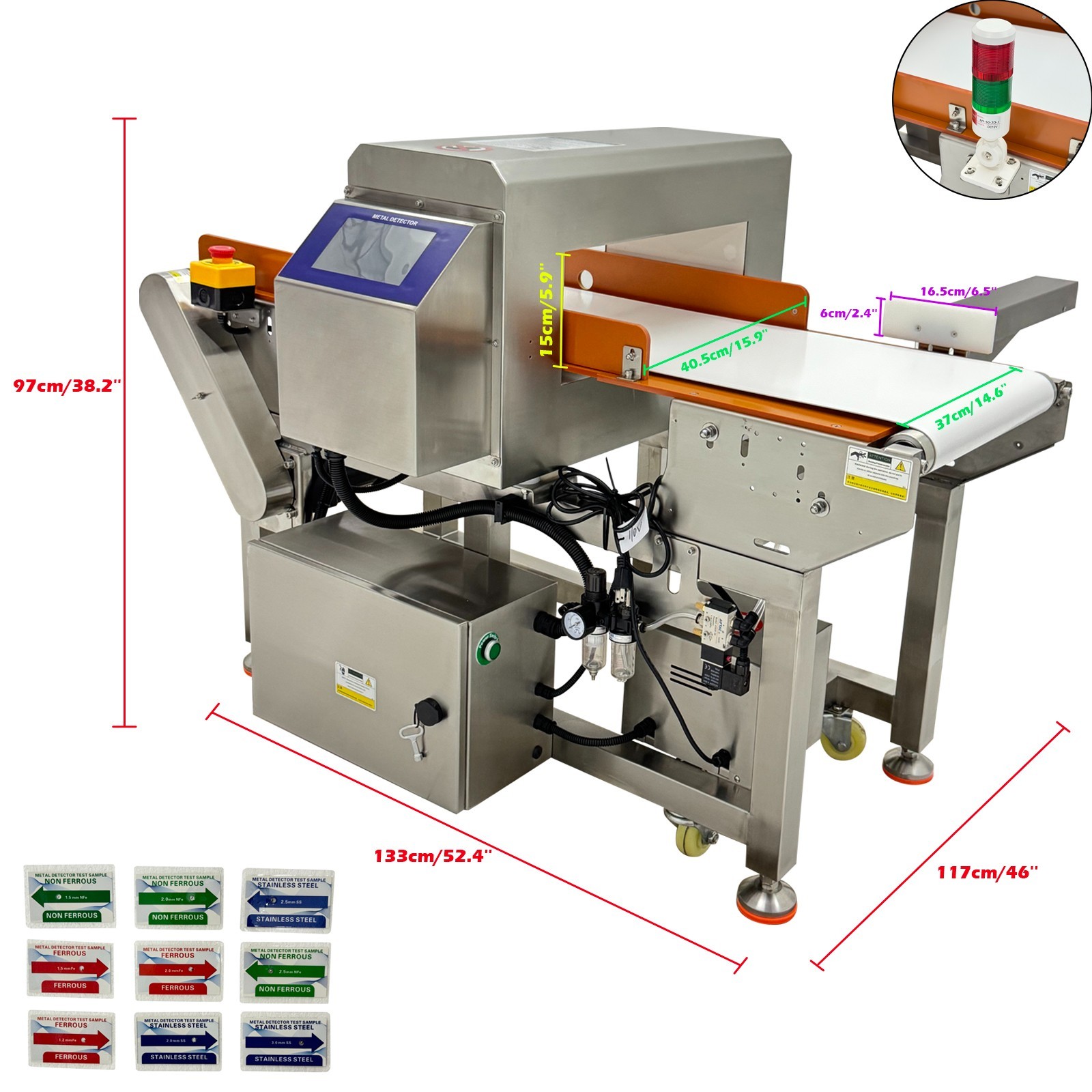 110V Industrial Food Conveyor Metal Foreign Object Detector Inspection Machine$5,766.56Last checked Nov 18, 2026View on eBay
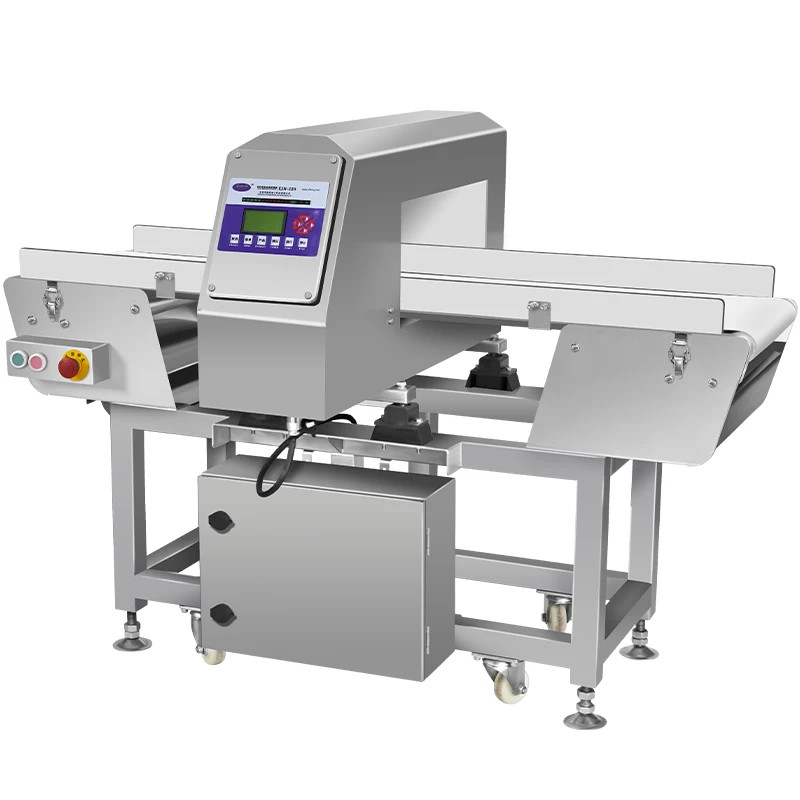 1pcs Industrial Food Metal Detector Machine with Conveyor Belt for Food Safety$7,698.00Last checked Nov 17, 2026View on eBay
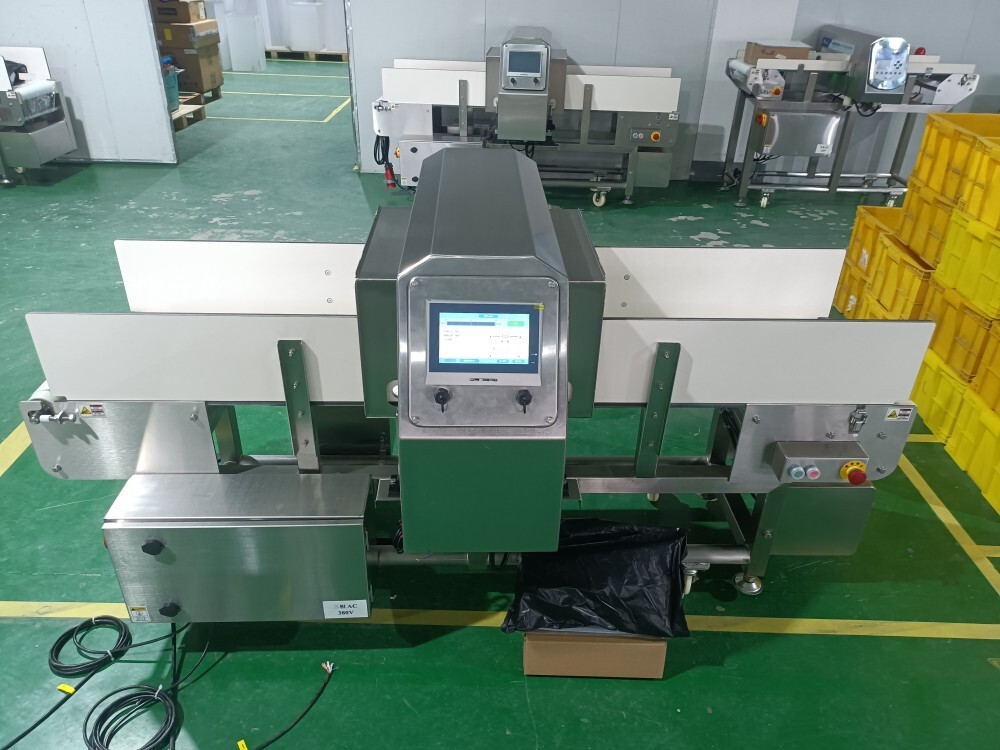 Automatic Metal Detector Conveyor Food Safety Equipment Testing Machine$8,000.00Last checked Nov 18, 2026View on eBay
Highlights
- Belt-width and aperture geometry set the detection floor: typical industrial units use 400 mm belts with Fe Φ1.0 mm sensitivity, and sensitivity degrades as aperture grows beyond the product envelope.
- Detection technology splits into balanced-coil (single frequency, ferrous-optimized) and multi-frequency/multi-coil heads that resolve non-ferrous and stainless steel; stainless 304 is hardest to detect and needs higher-frequency heads.
- Conveyor drive and reject method matter as much as the head: variable-speed motors with air-blast or pusher rejection integrate with packaging lines, while stop-belt units suit low-throughput manual operations.
- Construction grade separates washdown food plants from dry-goods rooms: IP65/IP66 stainless 304 frames with food-grade PU belting survive sanitation cycles, while painted-steel frames corrode and shed contamination.
Best use cases
- Best fit: dry snacks, baked goods, and frozen packs on a 400 mm belt at Fe Φ1.0–1.5 mm — pick a stainless 304 IP65 unit with air-blast reject and variable speed.
- Best fit: meat, poultry, and wet dairy — specify IP66 washdown construction, PU belting, and a head rated for non-ferrous and stainless detection, not ferrous-only.
- Wrong fit: bulk powders or slurries — conveyor units cannot inspect free-flowing product; use a pipeline gravity-fall metal detector with a vertical aperture instead.
- Wrong fit: small-batch or home kitchen use — industrial conveyors are 110V/220V fixed-installation machines; a handheld pin detector is the correct tier, not a conveyor.
Buying tips
- Size the aperture from product, not belt: height and width should clear the tallest and widest pack by 20–30 mm; exceeding this raises the achievable Fe limit above Φ1.5 mm.
- Demand published sensitivity at a stated speed — Fe Φ1.0 mm at 400 mm belt width is the entry industrial benchmark; use Fe Φ0.8 mm and stainless Φ1.5–2.0 mm for stricter standards.
- Match voltage and phase to your facility before ordering: 110V single-phase units are common in catalog listings, but 220V or three-phase drives are standard in larger plants.
- Confirm rejection and interface hardware — air-blast valve, pusher, or alarm-only stop — plus conveyor height adjustability to align with existing packaging line infeed.
Specs
| Detection Head | Balanced-coil vs multi-frequency |
|---|---|
| Sensitivity (Fe) | Φ0.8–1.5 mm at 400 mm belt |
| Belt Width | 300–500 mm standard |
| Housing Grade | IP65/IP66 stainless 304 |
Related searches
What to check before buying
- Measure your tallest and widest product plus 20–30 mm clearance to fix aperture height and width; belt width must exceed product width.
- Confirm floor space for conveyor length plus reject bin and infeed/outfeed clearance, and check floor is level for stable belt tracking.
- Verify facility voltage (110V vs 220V) and phase, plus compressed air supply if selecting an air-blast reject system.
- Check washdown requirements and ambient conditions: IP65 for dry rooms, IP66 stainless 304 for wet or sanitation-heavy zones.
FAQ
Data sources: eBay / Amazon listings and product attribute feeds. Updated Nov 28, 2026.
Some links on this page are affiliate links. If you buy after clicking one, we may earn a commission at no extra cost to you. This does not change which products appear here or their order. Affiliate disclosure.