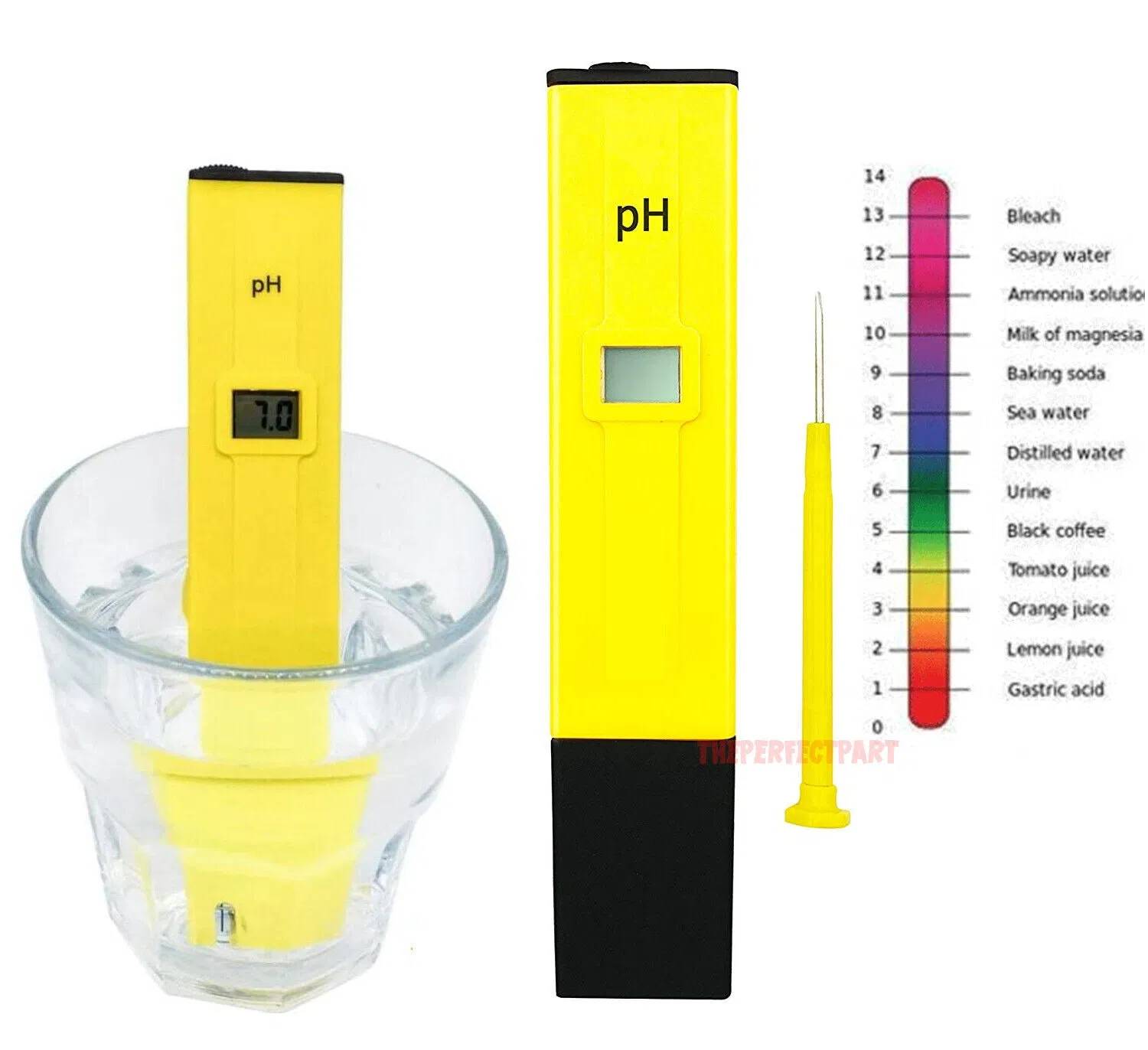

Photos from current listings. Actual item, color, and included accessories may vary.
Hydroponic Ph Tester Buying Guide
A hydroponic pH tester is a pocket meter or pen that measures nutrient solution acidity to keep roots in the 5.5–6.5 absorption window. The critical trade-off is between glass-bulb accuracy with replaceable probes versus sealed low-cost pens that drift and die. Buy a model with a replaceable electrode and two-point calibration if you run continuous hydroponics; skip sealed pens for anything beyond spot checks.
Key takeaways
- Glass bulb vs. sealed probe: replaceable glass electrodes hold calibration longer; sealed pens degrade after 6–12 months and cannot be serviced.
- Resolution and accuracy tiers: 0.01 pH resolution with ±0.01–0.02 accuracy for hydroponics; ±0.1 pens are only adequate for aquarium spot checks.
- Calibration buffer set: reliable meters require 4.01, 6.86, and 9.18 (or 7.00/10.01) standards; one-point calibration masks slope drift.
At a glance
- Category
- Spectroscopy, Analysis & Detection Instruments
- Last updated
- Nov 28, 2026
Current offers
Highlights
- Glass bulb vs. sealed probe: replaceable glass electrodes hold calibration longer; sealed pens degrade after 6–12 months and cannot be serviced.
- Resolution and accuracy tiers: 0.01 pH resolution with ±0.01–0.02 accuracy for hydroponics; ±0.1 pens are only adequate for aquarium spot checks.
- Calibration buffer set: reliable meters require 4.01, 6.86, and 9.18 (or 7.00/10.01) standards; one-point calibration masks slope drift.
- ATC and probe construction: automatic temperature compensation plus a detachable BNC or waterproof sealed body determines whether readings stay stable across reservoir temperature swings.
Best use cases
- Best fit: recirculating DWC/NFT systems with daily reservoir checks — choose a replaceable-probe pen with 0.01 resolution and ATC.
- Best fit: small batch hand-watered coco or rockwool — a ±0.05 pen with two-point calibration covers low-volume mixing without overspending.
- Wrong fit: continuous inline monitoring — pocket pens are not designed for 24/7 submersion; use an inline probe controller instead.
- Skip: sealed ±0.1 aquarium pens for hydroponics — insufficient resolution and no probe replacement for nutrient-sensitive crops.
Buying tips
- Resolution math: 0.01 pH steps distinguish a 5.8 from 5.9 mix; a 0.1-step pen cannot resolve the 5.5–6.5 band precisely enough.
- Probe replacement: detachable BNC or screw-in electrodes extend meter life indefinitely; sealed pens are disposable once the bulb fouls.
- Calibration cadence: budget for fresh 4.01 and 6.86 buffer sachets; meters that only offer single-point trim will read falsely high in acidic nutrient mixes.
- Temperature compensation: ATC rated across 0–50 °C keeps readings stable; non-ATC pens shift roughly 0.03 pH per 10 °C deviation.
Specs
| Resolution | 0.01 pH (hydroponic grade) vs 0.1 pH |
|---|---|
| Accuracy | ±0.01–0.02 pH vs ±0.1 pH |
| Probe Type | Replaceable glass bulb vs sealed |
| Calibration | 2–3 point (4.01/6.86/9.18) vs 1-point |
Related searches
What to check before buying
- Confirm your reservoir volume and testing frequency; daily checks justify a replaceable-probe meter, weekly checks a basic pen.
- Check probe type: glass bulb for lab-grade accuracy, ISFET or sealed for durability if the pen will be dropped or stored dry.
- Verify calibration standards availability locally: 4.01, 6.86, and 9.18 buffers must match the meter's recognized points.
- Match storage and cleaning supplies: KCl storage solution and soft cleaning solution prevent glass bulb dehydration and salt buildup.
FAQ
Data sources: eBay / Amazon listings and product attribute feeds. Updated Nov 28, 2026.
Some links on this page are affiliate links. If you buy after clicking one, we may earn a commission at no extra cost to you. This does not change which products appear here or their order. Affiliate disclosure.