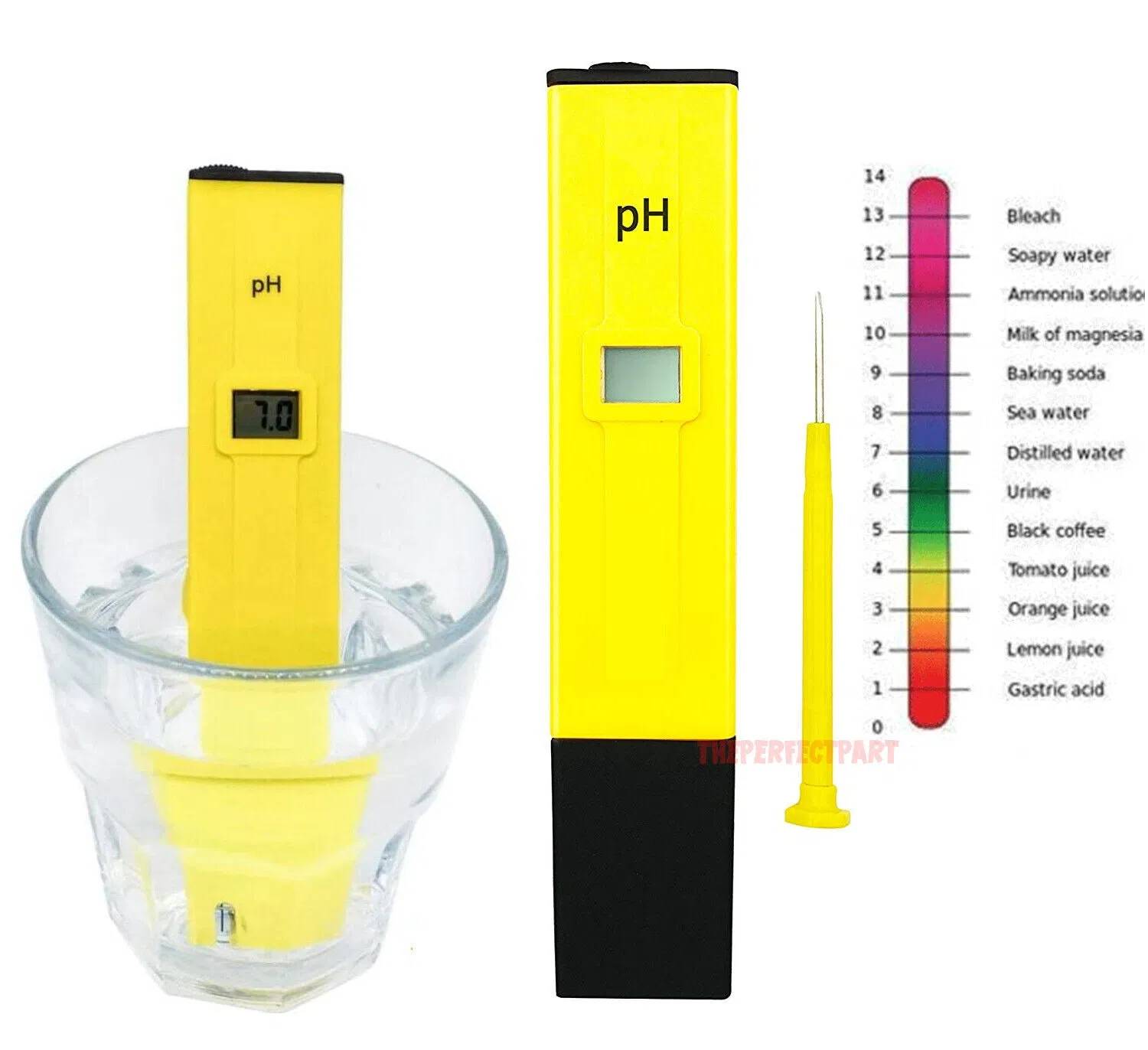

Photos from current listings. Actual item, color, and included accessories may vary.
Pen Type Ph Meter Buying Guide
A pen-type pH meter is a handheld, pocket-sized electrochemical instrument combining a glass or ISFET electrode, a high-impedance amplifier, and a digital display in a single sealed body. The core trade-off is electrode architecture: budget glass-bulb pens suffer drift and require wet storage, while refillable or replaceable-junction electrodes and temperature-compensated circuits deliver stable readings across wider ranges. Buy a pen with automatic temperature compensation (ATC), a replaceable or refillable junction, and ±0.01 pH resolution if you need repeatable lab-grade data; accept a sealed non-replaceable electrode only for casual spot checks of clear, near-neutral solutions.
Key takeaways
- Electrode junction type decides lifespan: sealed gel junctions are maintenance-free but non-replaceable and drift after months; refillable KCl junctions and replaceable electrode modules restore accuracy.
- ATC range and compensation math matter: models rated 0-50°C with automatic compensation reduce error to ±0.1 pH; pens without ATC can drift 0.2-0.3 pH per 10°C offset in uncalibrated samples.
- Resolution and accuracy are separate specs: a ±0.01 pH resolution display often pairs with ±0.05 pH accuracy on budget pens, while true ±0.01 pH accuracy requires a lab-grade electrode and 2-3 point calibration.
At a glance
- Category
- Spectroscopy, Analysis & Detection Instruments
- Last updated
- Nov 28, 2026
Current offers
Highlights
- Electrode junction type decides lifespan: sealed gel junctions are maintenance-free but non-replaceable and drift after months; refillable KCl junctions and replaceable electrode modules restore accuracy.
- ATC range and compensation math matter: models rated 0-50°C with automatic compensation reduce error to ±0.1 pH; pens without ATC can drift 0.2-0.3 pH per 10°C offset in uncalibrated samples.
- Resolution and accuracy are separate specs: a ±0.01 pH resolution display often pairs with ±0.05 pH accuracy on budget pens, while true ±0.01 pH accuracy requires a lab-grade electrode and 2-3 point calibration.
- Waterproof rating and body construction: IP57 or IP65 sealed bodies survive rinsing and field use; unsealed battery compartments and exposed screws are the first failure point in hydroponic and aquaculture environments.
Best use cases
- Best fit: hydroponics and aquarium monitoring — pick a waterproof (IP57+), ATC pen with a replaceable electrode and 0.01 pH resolution; skip unsealed budget pens with non-replaceable bulbs for daily reservoir use.
- Best fit: pool and spa spot checks — a sealed, non-replaceable pen with ATC and 0.1 pH resolution is sufficient and lower maintenance; skip lab-grade refillable electrodes because pool chemicals and outdoor storage shorten junction life.
- Best fit: food, beer, and soil slurry testing — choose a pen with a detachable or spear-tip electrode and 0.01 pH accuracy; skip pens whose electrode cannot be removed for cleaning, as protein and fat foul glass bulbs permanently.
- Wrong fit: high-temperature or viscous samples above 50°C, strong acids/bases, or non-aqueous solvents — pen meters are not built for these and will degrade; use a bench meter with a dedicated electrode instead.
Buying tips
- Calibration buffer math: buy a pen that supports at least 2-point calibration (pH 4.01 and 7.00, or 7.00 and 10.01); 1-point calibration only trims offset and cannot correct slope drift.
- Electrode storage rule: glass-bulb pens must be stored in KCl storage solution, never distilled water; models with a soak cap or refillable chamber last measurably longer than dry-stored pens.
- Battery and connector standard: prefer replaceable AAA or LR44 cells over sealed rechargeable batteries; USB-C rechargeable pens are convenient but a depleted cell mid-calibration ruins a reading session.
- Resolution vs accuracy threshold: for hydroponics and brewing, ±0.01 pH accuracy is the minimum for actionable nutrient or mash decisions; for pools and spas, ±0.1 pH accuracy is adequate and cheaper to maintain.
Specs
| Electrode Type | Glass bulb vs ISFET vs refillable |
|---|---|
| pH Accuracy | ±0.01 vs ±0.05 vs ±0.1 pH |
| Temperature Compensation | ATC 0-50°C vs manual vs none |
| Waterproof Rating | IP57/IP65 sealed vs unrated |
Related searches
What to check before buying
- Confirm the electrode is replaceable or refillable if you will test daily — sealed gel pens are disposable by design and cannot be recalibrated once slope degrades.
- Match the ATC temperature range to your sample: cold hydroponic reservoirs (15-20°C) and hot mash (65-75°C) both need coverage, and a 0-50°C rating covers most applications.
- Verify waterproof rating before field or rinse use: IP57 or IP65 protects against splashes and short immersion; unrated pens should never be rinsed under a tap.
- Budget for calibration buffers and storage solution at purchase — a pen without 4.01/7.00 buffers and KCl soak solution cannot be maintained to its stated accuracy.
FAQ
Data sources: eBay / Amazon listings and product attribute feeds. Updated Nov 28, 2026.
Some links on this page are affiliate links. If you buy after clicking one, we may earn a commission at no extra cost to you. This does not change which products appear here or their order. Affiliate disclosure.