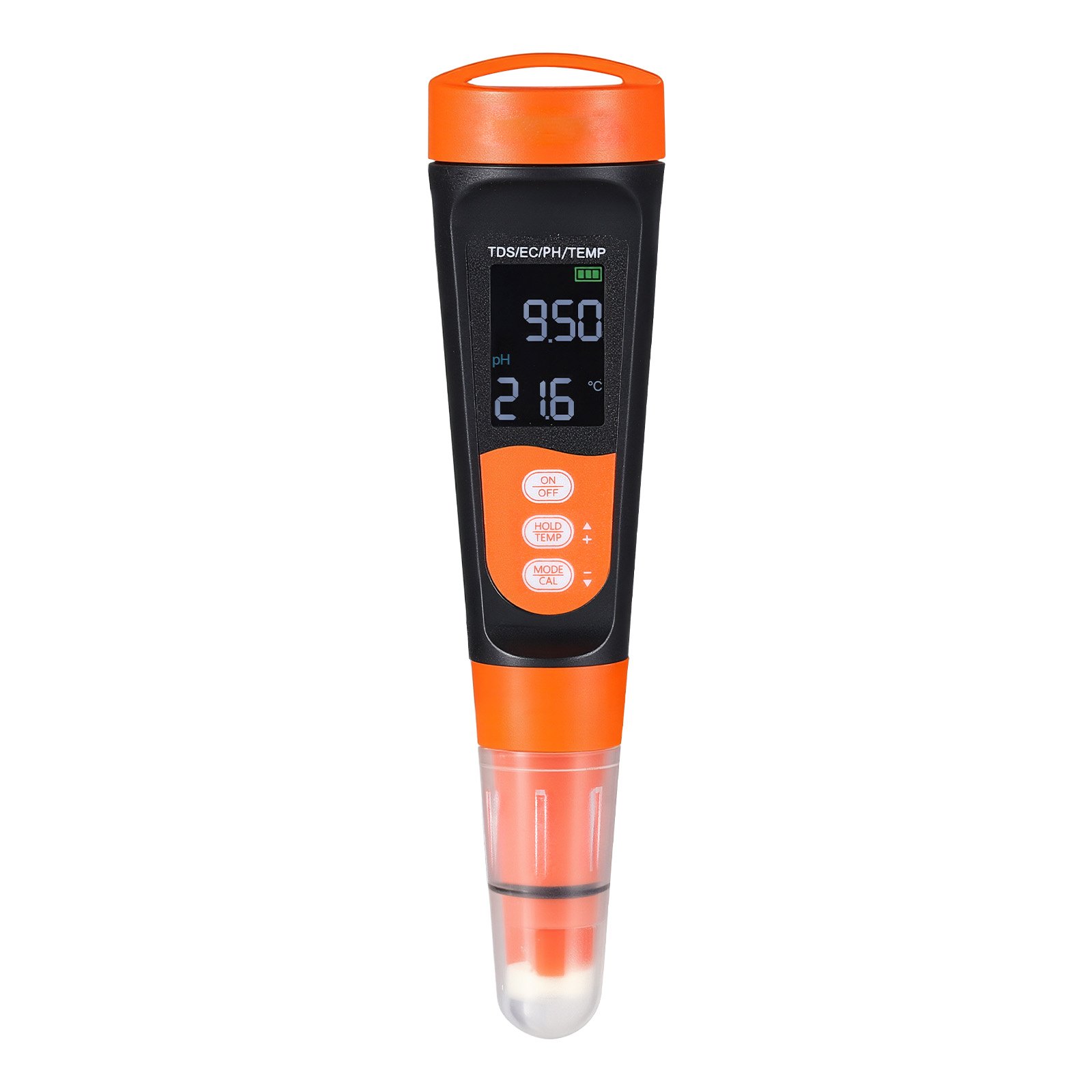

Photos from current listings. Actual item, color, and included accessories may vary.
Ph And Ec Meter Buying Guide
A pH and EC meter is a dual-parameter water-testing instrument pairing a glass-bulb pH electrode with a conductivity cell to read acidity and nutrient strength in one probe. The decisive trade-off is electrode architecture: lab-grade replaceable glass bulbs with two-point calibration hold accuracy over seasons, while sealed combo pens drift and die. Buy a meter with replaceable probes and NIST-traceable calibration buffers; skip any sealed unit that cannot be recalibrated.
Key takeaways
- pH sensing uses a hydrated glass bulb with KCl reference gel; EC uses a two-plate or toroidal conductivity cell — separate electrodes outperform single-chip combo pens on drift.
- IP68 rating means the probe survives full submersion to 1 m; IP67 only tolerates splashes, so reservoir dipping requires IP68.
- Two-point pH calibration at pH 4.00 and 7.00 with fresh buffer powder is the minimum; three-point adds pH 10.01 for alkaline nutrient mixes.
At a glance
- Category
- Spectroscopy, Analysis & Detection Instruments
- Last updated
- Nov 28, 2026
Current offers
Highlights
- pH sensing uses a hydrated glass bulb with KCl reference gel; EC uses a two-plate or toroidal conductivity cell — separate electrodes outperform single-chip combo pens on drift.
- IP68 rating means the probe survives full submersion to 1 m; IP67 only tolerates splashes, so reservoir dipping requires IP68.
- Two-point pH calibration at pH 4.00 and 7.00 with fresh buffer powder is the minimum; three-point adds pH 10.01 for alkaline nutrient mixes.
- EC/TDS conversion runs at the 0.5 (NaCl) or 0.7 (442) factor — pick the factor matching your nutrient label or readings will be off by up to 30%.
Best use cases
- Hydroponic reservoirs and DWC buckets: choose a dual pH/EC pen with IP68 probe and replaceable electrode; skip single-function pH-only pens that force two dips.
- Soil and coco runoff testing: pick a pen with a slim tapered probe and 0.01 pH resolution; skip flat lab electrodes that cannot enter drainage saucers.
- Brewing, aquarium, and pool spot checks: a waterproof pocket tester with ATC and hold function fits; skip benchtop meters with external probes and mains power.
- Reject sealed non-replaceable combo pens for continuous commercial use — electrode exhaustion after months of dosing makes the whole unit landfill.
Buying tips
- Insist on a replaceable electrode: a screw-off pH bulb module extends meter life indefinitely versus sealed pens discarded when the bulb ages.
- Match EC range to nutrient strength: 0–2000 µS/cm suits seedlings and aquariums, while 0–20,000 µS/cm (20 mS/cm) covers full-strength hydroponic bloom feeds.
- Require automatic temperature compensation (ATC) from 0–50 °C; without it, pH and EC readings shift with every reservoir temperature change.
- Calibrate with fresh pH 4.00/7.00 and 1413 µS/cm standard solutions — powder packets are one-use; buy bottled reference buffers for repeatable two-point calibration.
Specs
| Sensor Type | Replaceable glass pH / conductivity cell |
|---|---|
| pH Range & Accuracy | 0–14 pH, ±0.01 resolution |
| EC Range | 0–20,000 µS/cm (0–20 mS/cm) |
| Waterproof Rating | IP68 submersible probe |
Related searches
What to check before buying
- Reservoir depth and probe length: confirm the probe reaches at least 2 inches into solution for stable EC cell readings.
- Calibration supply: set aside pH 4.00, pH 7.00, and 1413 µS/cm buffer stock before first use — a meter without buffers is uncalibrated.
- Battery and storage: pocket testers use button cells (LR44/CR2032); keep spare cells and store the pH bulb in KCl storage solution, never distilled water.
- Waterproofing standard: verify IP68 if the probe will be submerged; IP67 units are splash-resistant only and fail in continuous dipping.
FAQ
Data sources: eBay / Amazon listings and product attribute feeds. Updated Nov 28, 2026.
Some links on this page are affiliate links. If you buy after clicking one, we may earn a commission at no extra cost to you. This does not change which products appear here or their order. Affiliate disclosure.