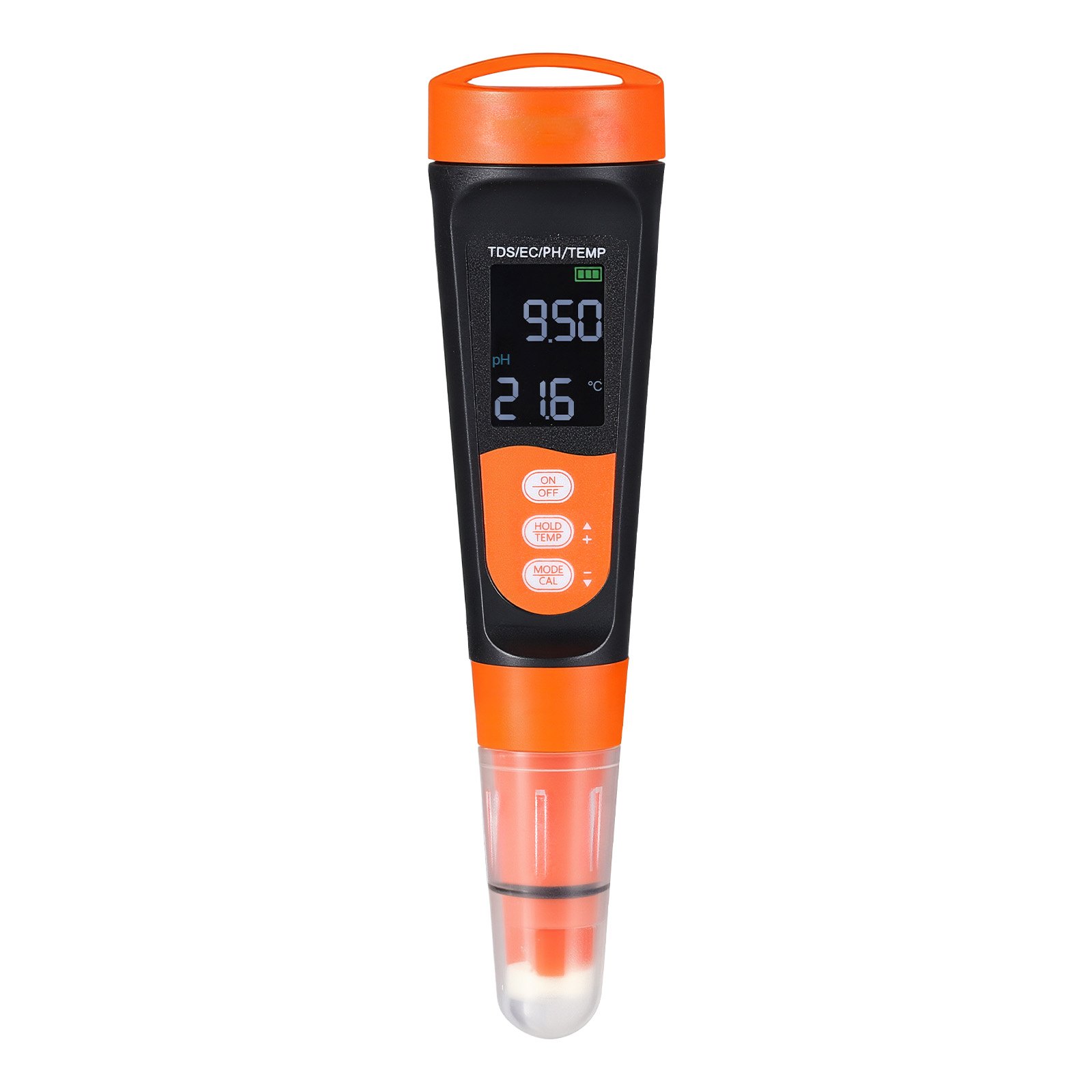

Photos from current listings. Actual item, color, and included accessories may vary.
Ph Ec Meter Buying Guide
A pH/EC meter is a dual-parameter water-testing instrument combining a glass-bulb pH electrode with a conductivity cell to measure acidity and nutrient concentration in one handheld or benchtop device. The core trade-off is between lab-grade replaceable probes with temperature compensation and sealed pen-style units that drift once the electrode degrades. Choose a meter with user-replaceable probes and ATC for long-term accuracy; treat sealed non-replaceable pens as short-life convenience tools.
Key takeaways
- pH accuracy tiers: ±0.01 pH lab-grade with replaceable glass electrode vs ±0.1 pH pen-style sealed bulb, which cannot be recalibrated past membrane fouling.
- EC/TDS cell type: two-pole stainless or graphite electrodes handle general water; four-pole or toroidal cells resist polarization and fouling in high-salt or nutrient solutions.
- Calibration standard: meters using pH 4.00/7.00/10.01 buffers with auto-recognition and EC 1413 µS/cm or 12.88 mS/cm standards hold accuracy; offset-only calibration drifts.
At a glance
- Category
- Spectroscopy, Analysis & Detection Instruments
- Last updated
- Nov 28, 2026
Current offers
Highlights
- pH accuracy tiers: ±0.01 pH lab-grade with replaceable glass electrode vs ±0.1 pH pen-style sealed bulb, which cannot be recalibrated past membrane fouling.
- EC/TDS cell type: two-pole stainless or graphite electrodes handle general water; four-pole or toroidal cells resist polarization and fouling in high-salt or nutrient solutions.
- Calibration standard: meters using pH 4.00/7.00/10.01 buffers with auto-recognition and EC 1413 µS/cm or 12.88 mS/cm standards hold accuracy; offset-only calibration drifts.
- Environmental sealing and ATC: IP67/IP68 probe bodies with automatic temperature compensation from 0-50°C prevent the 2-3% per °C EC error seen in non-compensated units.
Best use cases
- Hydroponics and nutrient reservoirs: pick a dual pH/EC pen with ATC and replaceable electrode; skip single-parameter pH pens that force separate EC readings and doubled calibration steps.
- Aquarium and reef keeping: choose ±0.01 pH accuracy with 3-point calibration and a waterproof IP68 probe; avoid ±0.1 hobby pens where a 0.2 pH swing stresses livestock.
- Field/industrial water screening: select a rugged IP67 meter with four-pole EC cell for high-TDS samples; skip glass-bulb lab meters that fracture in field conditions.
- Pool and spa checks: a sealed pen with ±0.1 pH and TDS-only EC is adequate; skip lab-grade replaceable-electrode meters where cost and calibration overhead exceed need.
Buying tips
- Match accuracy to application: ±0.01 pH for aquariums and hydroponics; ±0.1 pH is sufficient for pools and general screening but too coarse for nutrient dosing.
- Confirm the EC range covers your samples: 0-2000 µS/cm for freshwater, up to 20 mS/cm for hydroponic nutrient solutions, and 0-200 mS/cm for brackish or industrial brine.
- Require automatic temperature compensation (ATC) and a temperature readout; manual EC correction introduces 2% error per °C deviation from 25°C.
- Prefer meters with replaceable electrodes and at least 2-point pH calibration; sealed pens become consumables once the bulb fouls or dries out.
Specs
| pH Accuracy | ±0.01 lab vs ±0.1 pen |
|---|---|
| EC Cell Type | 2-pole vs 4-pole/toroidal |
| Calibration Points | 1-2 point vs 3-point ATC |
| Probe Design | Replaceable bulb vs sealed pen |
Related searches
What to check before buying
- Verify probe reach fits your vessel: pen meters need at least 4-5 cm immersion depth; reservoir and tank checks may need a cable-connected probe.
- Confirm calibration supplies match the meter: pH 4.00/7.00/10.01 buffer packets and 1413 µS/cm EC standard, plus storage solution for glass bulbs.
- Check power and sealing: IP67/IP68 rating for wet environments and either LR44/AAA batteries or USB-C rechargeable, with low-battery indication.
- Plan storage: glass pH bulbs must stay hydrated in KCl storage solution; dry-stored electrodes drift and require extended conditioning.
FAQ
Data sources: eBay / Amazon listings and product attribute feeds. Updated Nov 28, 2026.
Some links on this page are affiliate links. If you buy after clicking one, we may earn a commission at no extra cost to you. This does not change which products appear here or their order. Affiliate disclosure.