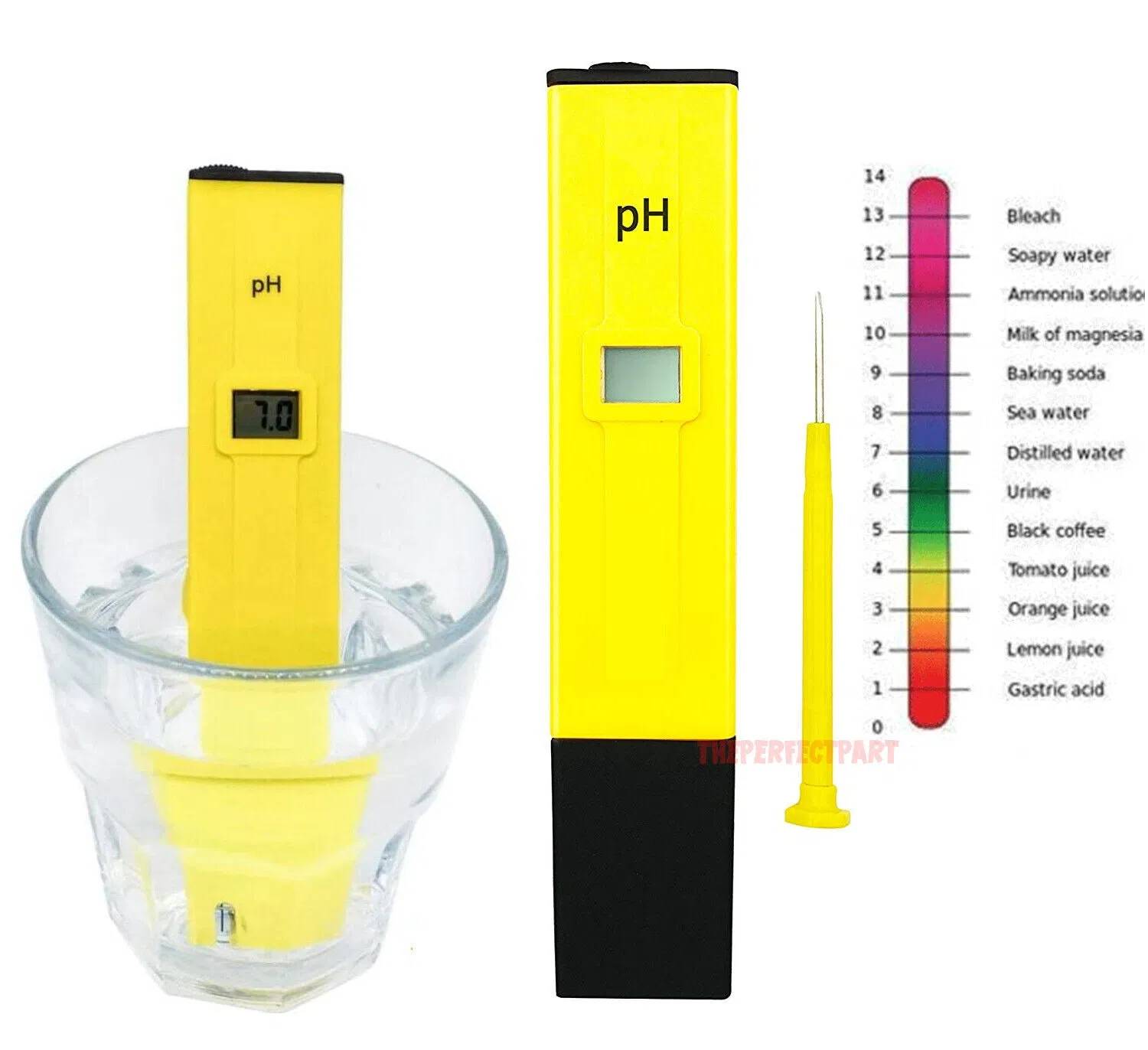

Photos from current listings. Actual item, color, and included accessories may vary.
Ph Pen Tester Buying Guide
A pH pen tester is a handheld digital meter combining a glass-bulb or ISFET electrode with a high-impedance millivolt amplifier to read liquid pH in seconds. The core trade-off is electrode quality versus calibration stability: budget pens use porous glass bulbs and single-point trim, while durable pens offer replaceable probes, ATC, and two-point calibration. The decision rule is simple: buy any pen with ATC and user-replaceable electrodes; skip sealed, non-calibratable pens with no temperature compensation.
Key takeaways
- Electrode type decides lifespan: glass-bulb probes last from 6 to 24 months and are replaceable; sealed ISFET or plastic-bulb pens are disposable when drift starts.
- ATC (automatic temperature compensation) is mandatory for accuracy: without it, readings drift 0.1 to 0.3 pH per 10°C away from 25°C calibration.
- Calibration tiers: single-point (pH 7 only) gives ±0.2 pH; two-point (pH 4.01 and 7.00) gives ±0.05 pH; three-point adds pH 10.01 for alkaline ranges.
At a glance
- Category
- Spectroscopy, Analysis & Detection Instruments
- Last updated
- Nov 28, 2026
Current offers
Highlights
- Electrode type decides lifespan: glass-bulb probes last from 6 to 24 months and are replaceable; sealed ISFET or plastic-bulb pens are disposable when drift starts.
- ATC (automatic temperature compensation) is mandatory for accuracy: without it, readings drift 0.1 to 0.3 pH per 10°C away from 25°C calibration.
- Calibration tiers: single-point (pH 7 only) gives ±0.2 pH; two-point (pH 4.01 and 7.00) gives ±0.05 pH; three-point adds pH 10.01 for alkaline ranges.
- Resolution and accuracy badges: 0.01 pH resolution with ±0.01 to ±0.05 accuracy is the practical floor; 0.1 pH pens are pool-grade only, not hydroponics-grade.
Best use cases
- Hydroponics and aquariums: pick a two-point-calibratable pen with ATC and a replaceable glass bulb; skip 0.1 pH pool pens and sealed non-replaceable models.
- Pool and spa spot checks: a 0.1 pH resolution pen with single-point calibration is adequate; skip ±0.01 lab pens because chlorine and high pH swings make sub-0.1 precision irrelevant.
- Brewing, cheese, and soil slurries: choose a pen rated for viscous or semi-solid samples with a detachable or spear-tip electrode; skip standard bulb pens that clog and cannot be cleaned.
- Lab or classroom demonstrations: pick a pen with three-point calibration and a BNC output for logging; skip pocket pens with no data output or calibration lock.
Buying tips
- Require user-replaceable electrodes and at least two-point calibration; a sealed pen without either is a consumable, not a durable instrument.
- Verify ATC range covers your samples: 0 to 50°C covers hydroponics and aquariums; cold-room or heated-process work needs 0 to 80°C or wider.
- Match resolution to application: 0.01 pH for nutrient solutions and aquariums; 0.1 pH is acceptable only for pool and spa where 0.2 pH swings are normal.
- Check electrode storage: pens needing KCl storage solution require wet caps; dry-storage pens use gel or ISFET electrodes and tolerate neglect but drift sooner.
Specs
| Electrode Type | Glass bulb vs ISFET vs plastic |
|---|---|
| pH Accuracy | ±0.01 / ±0.05 / ±0.1 pH tiers |
| Calibration Points | 1-point / 2-point / 3-point |
| Temperature Compensation | ATC 0-50°C vs none |
Related searches
What to check before buying
- Confirm your sample temperature stays within the pen's ATC range; readings outside it are uncorrected and can be off by 0.2 pH or more.
- Ensure you have fresh pH 4.01, 7.00, and (if needed) 10.01 buffer powders or solutions on hand; calibration is required before first use and monthly after.
- Measure your container depth: standard pocket pens need at least 3 to 5 cm of liquid to submerge the bulb; shallow trays require a detachable or spear electrode.
- Verify the pen's battery type and waterproof rating (IP65 or better) if it will be used near splashes, reservoirs, or outdoor pools.
FAQ
Data sources: eBay / Amazon listings and product attribute feeds. Updated Nov 28, 2026.
Some links on this page are affiliate links. If you buy after clicking one, we may earn a commission at no extra cost to you. This does not change which products appear here or their order. Affiliate disclosure.