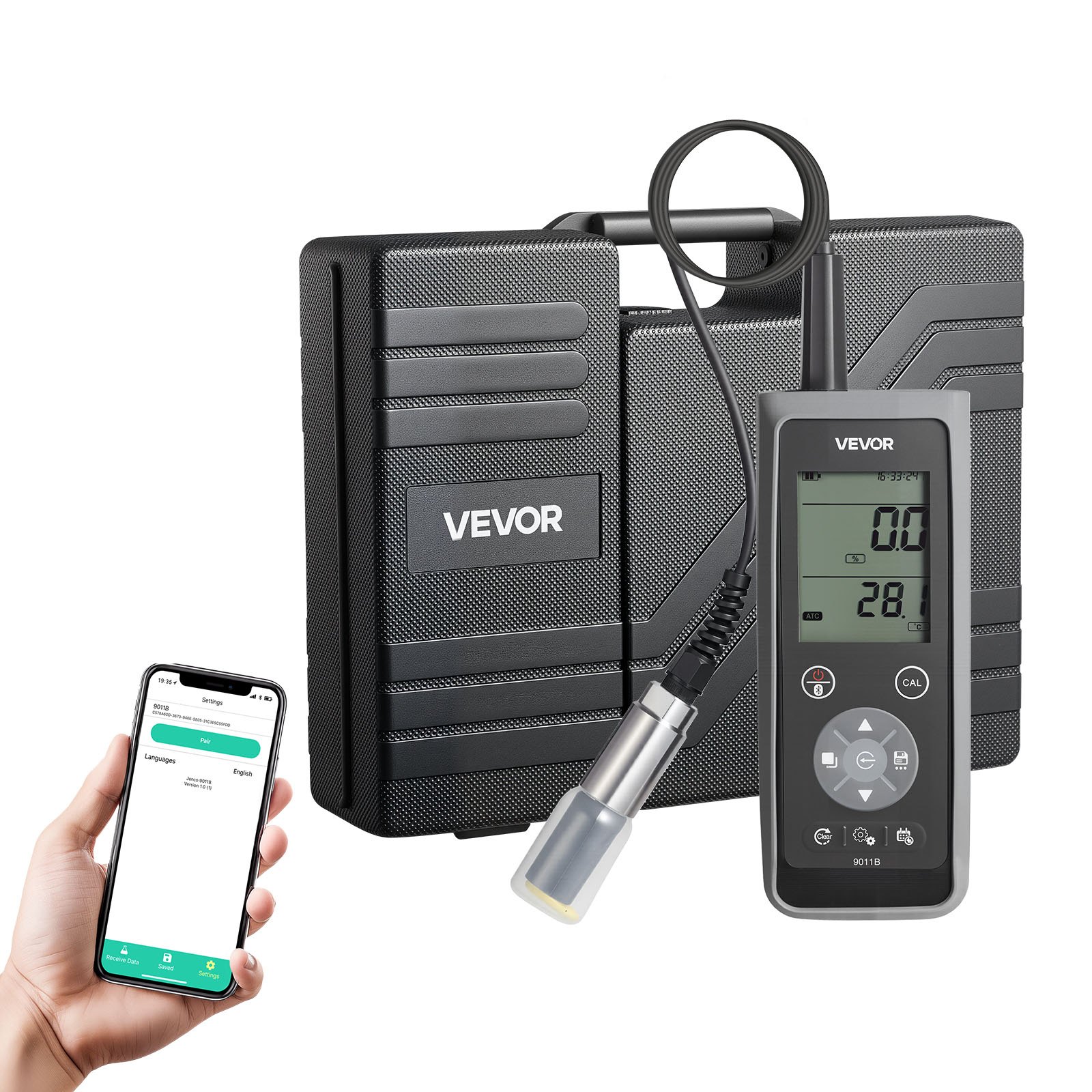

Photos from current listings. Actual item, color, and included accessories may vary.
Portable Oxygen Meter Buying Guide
A portable oxygen meter measures dissolved oxygen (DO) in water or oxygen concentration in gas, and the core trade-off is sensor architecture: polarographic/ galvanic electrochemical cells versus optical luminescent probes. Buy electrochemical for lowest cost on spot checks; buy optical for low-maintenance long-term monitoring where fouling and membrane servicing would dominate.
Key takeaways
- Electrochemical (galvanic/polarographic) probes consume oxygen and need membrane/electrolyte service every few months; optical luminescent probes use a dye cap with no flow dependence and 1-3 year cap life.
- DO accuracy tiers: ±0.1-0.2 mg/L for lab-grade meters with temperature compensation and salinity/barometric correction, versus ±0.5 mg/L for basic pen-style units.
- Galvanic cells need sample flow past the membrane (stirring); optical sensors read correctly in still water, making them better for ponds and stagnant wells.
At a glance
- Category
- Spectroscopy, Analysis & Detection Instruments
- Last updated
- Nov 28, 2026
Current offers
Highlights
- Electrochemical (galvanic/polarographic) probes consume oxygen and need membrane/electrolyte service every few months; optical luminescent probes use a dye cap with no flow dependence and 1-3 year cap life.
- DO accuracy tiers: ±0.1-0.2 mg/L for lab-grade meters with temperature compensation and salinity/barometric correction, versus ±0.5 mg/L for basic pen-style units.
- Galvanic cells need sample flow past the membrane (stirring); optical sensors read correctly in still water, making them better for ponds and stagnant wells.
- Auto temperature compensation (0-50°C) and salinity compensation are the features that separate usable field meters from toy pens that drift with temperature.
Best use cases
- Pick an optical-probe meter with salinity and barometric compensation for aquaculture ponds, lakes, and wastewater aeration basins where probes stay submerged and fouling is constant.
- Pick a galvanic pen or handheld with replaceable membrane caps for quick spot checks of tap water, aquariums, and brewing water where cost per reading matters more than long-term drift.
- Skip pen-style DO meters for BOD5 wastewater compliance testing — you need a meter with 0.01 mg/L resolution, stirrer compatibility, and documented calibration against zero-oxygen and saturated standards.
- Skip optical meters for gaseous oxygen measurement in welding or medical lines; those require dedicated galvanic or zirconia oxygen analyzers, not dissolved-oxygen probes.
Buying tips
- Match range to application: 0-20 mg/L covers most natural and treated water; 0-50 mg/L suits supersaturated aquaculture and some industrial streams — a 0-50 mg/L meter still reads low ranges but check resolution at 0.1 vs 0.01 mg/L.
- Choose a probe with a detachable cable and BNC or proprietary connector so you can replace the sensor without discarding the meter; fixed-cable pens become e-waste when the cell dies.
- For field use, require IP67 or IP68 meter housing and at least 3 m (10 ft) of cable; the 13.1 ft class of cable lets you sample from a bank without wading.
- Verify calibration standards are user-accessible: meters needing only a zero-oxygen solution (sodium sulfite) and water-saturated air are simpler than those requiring a factory recalibration kit.
Specs
| Sensor Type | Galvanic / polarographic vs optical |
|---|---|
| DO Range | 0-20 mg/L or 0-50 mg/L |
| Accuracy | ±0.1-0.2 vs ±0.5 mg/L |
| Data & Cable | Bluetooth/USB logging, 3-4 m cable |
Related searches
What to check before buying
- Confirm your sample container depth and access: a 13 ft cable reaches most pond banks, but deep wells need a weighted probe guard and cable longer than the static water level.
- Check temperature range of the water you test: standard compensation covers 0-50°C; near-freezing or geothermal samples need a meter rated beyond that.
- For saltwater or brackish ponds, confirm the meter accepts a salinity input (0-40 ppt) or has automatic salinity compensation, otherwise DO readings run high.
- Decide your data workflow before buying: Bluetooth/USB logging and 500+ reading storage suit trend monitoring; a basic display-only pen is enough for one-off checks.
FAQ
Data sources: eBay / Amazon listings and product attribute feeds. Updated Nov 28, 2026.
Some links on this page are affiliate links. If you buy after clicking one, we may earn a commission at no extra cost to you. This does not change which products appear here or their order. Affiliate disclosure.