
Photos from current listings. Actual item, color, and included accessories may vary.
Water Ph Test Kit Buying Guide
A water pH test kit measures acidity/alkalinity on the 0–14 scale, and the core trade-off is between cheap colorimetric strips/drops (low cost, ±0.5–1.0 pH accuracy, no calibration) and electronic meters (higher cost, ±0.01–0.1 pH, require calibration and probe care). Buy a digital meter with ATC and replaceable electrode for repeated or critical testing; choose strips or drops only for occasional, non-critical screening.
Median $196.99
Key takeaways
- Colorimetric strips and drops read 0.5–1.0 pH resolution by eye and are single-use; digital meters read 0.01–0.1 pH and need 2-point (pH 4.00/7.00) calibration.
- Pen-style meters (pocket testers) use a glass bulb or flat ISFET electrode; the glass bulb must stay hydrated in storage solution and is the primary wear part.
- Benchtop meters add mains power, magnetic stirrer compatibility, and data logging (e.g., 50-reading memory), while pocket meters run on button cells and favor portability.
At a glance
- Category
- Spectroscopy, Analysis & Detection Instruments
- Last updated
- Nov 28, 2026
Current offers
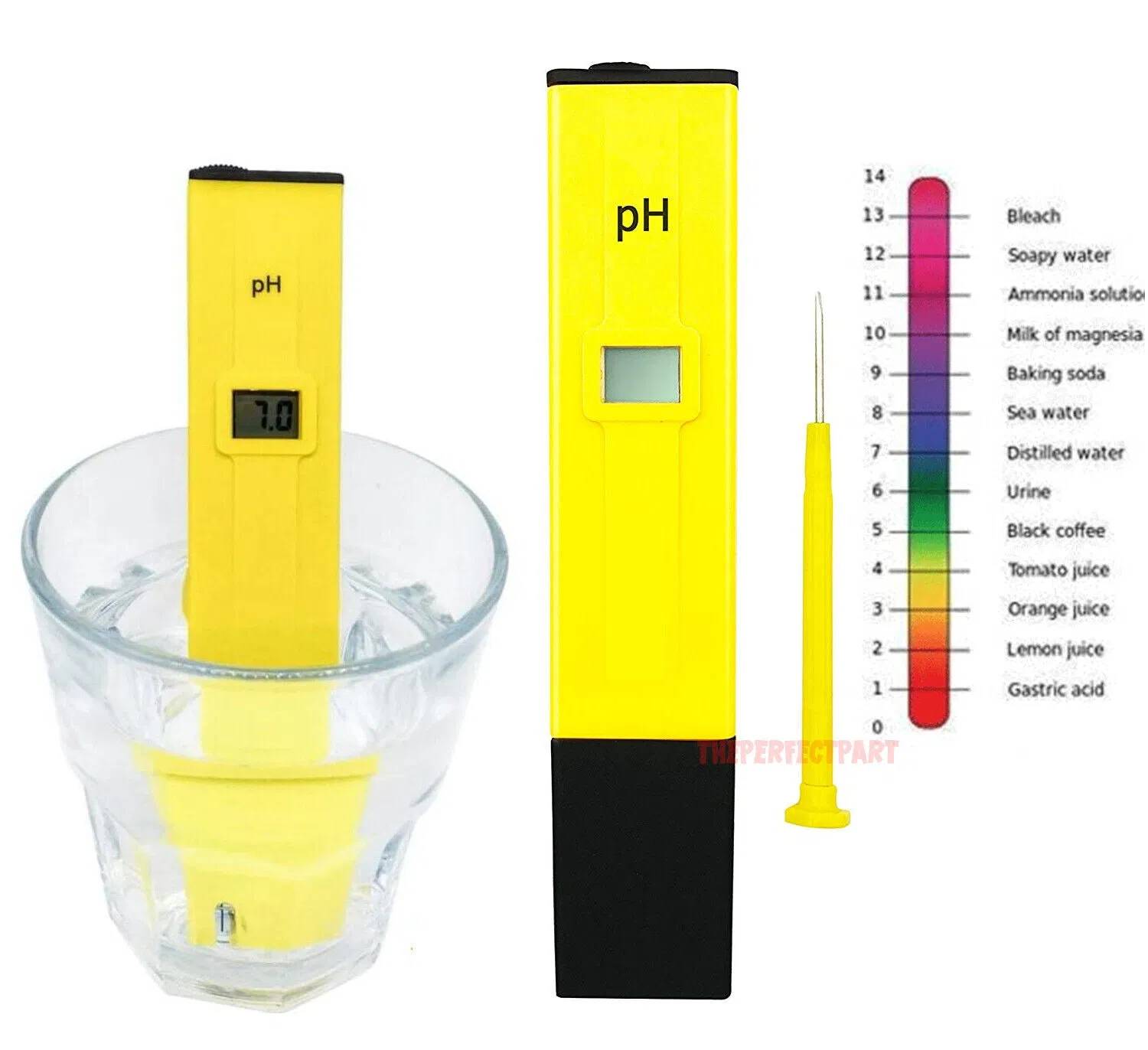 Digital Electric PH Meter LCD Tester Pocket Hydroponics Aquarium Water Test Pen$20.99View on Mallflare
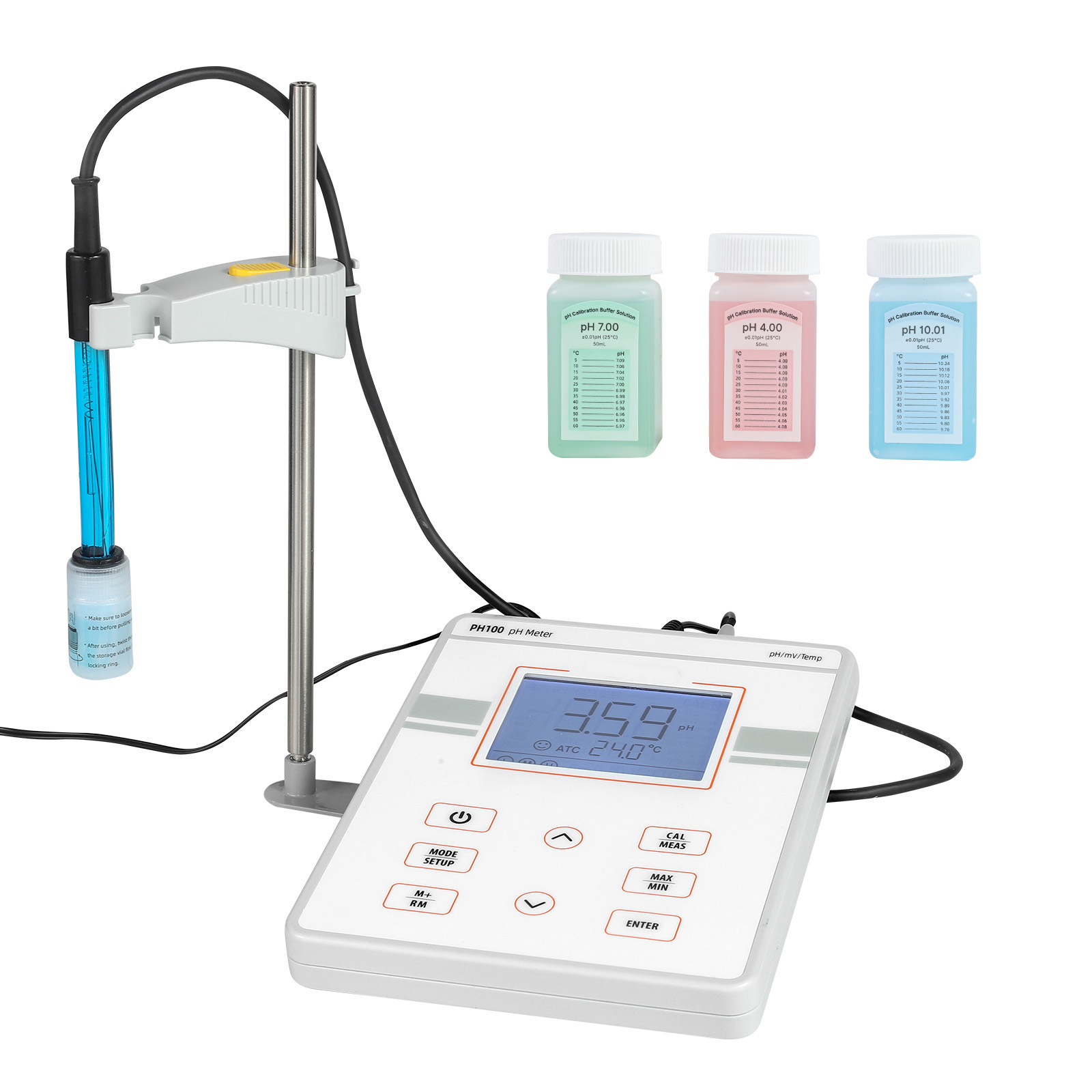 Benchtop PH Meter, 0-14 PH Range, Laboratory Tester Kit With Large Backlit Display, Calibration Solutions, Power Adapter, Stores Up To 50 Readings, For Temperature And Water Quality Testing$372.99View on Mallflare
Highlights
- Colorimetric strips and drops read 0.5–1.0 pH resolution by eye and are single-use; digital meters read 0.01–0.1 pH and need 2-point (pH 4.00/7.00) calibration.
- Pen-style meters (pocket testers) use a glass bulb or flat ISFET electrode; the glass bulb must stay hydrated in storage solution and is the primary wear part.
- Benchtop meters add mains power, magnetic stirrer compatibility, and data logging (e.g., 50-reading memory), while pocket meters run on button cells and favor portability.
- Multi-parameter pens combine pH with EC/TDS/salinity/temperature, but pH accuracy still depends on separate calibration and a clean, replaceable probe.
Best use cases
- Best fit: hydroponics, aquariums, and pools needing daily checks — pick a pocket pen with ATC, replaceable electrode, and 2-point calibration; skip single-use strips, which are too coarse for nutrient lockout or fish health.
- Best fit: drinking-water and home-brew screening — choose a pen or benchtop meter with 0.01 pH resolution and fresh pH 4/7 buffer; skip multi-parameter pens that only offer 0.1 pH resolution.
- Wrong fit: laboratory or regulatory work requiring traceable results — a consumer pen lacks certificate-grade calibration; use a benchtop meter with a certified electrode and recorded calibration logs.
- Best fit: classroom or occasional garden checks — colorimetric drops or strips are adequate for 0.5 pH screening; skip them for any loop where you must adjust dosing by 0.1 pH.
Buying tips
- Match resolution to the task: 0.01 pH for hydroponics/aquariums, 0.1 pH for general water screening, 0.5 pH for strips — buying finer resolution than you can calibrate is wasted money.
- Confirm the electrode is replaceable and the kit includes pH 4.00 and 7.00 buffer; a sealed non-replaceable probe makes the whole pen disposable when it drifts.
- For pen meters, check ATC range (0–50°C typical) and storage solution inclusion; a probe stored dry in tap water loses slope within months.
- For benchtop meters, verify power options (adapter vs battery), stirrer compatibility, and memory size — benchtop units are for stationary benches, not field rounds.
Specs
| Meter Type | Pen / Benchtop / Strip / Drop |
|---|---|
| pH Resolution | 0.01 pH (meter) / 0.5 pH (strip) |
| Calibration Points | 2-point (4.00 / 7.00) typical |
| Temperature Comp. | ATC 0–50°C on digital meters |
Related searches
What to check before buying
- Confirm the probe reaches your sample: pocket pens need at least 2–3 cm immersion depth, and benchtop probes need a beaker or cup tall enough for the bulb plus reference junction.
- Check calibration supplies: you need pH 4.00 and 7.00 (and optionally 10.00) buffer plus distilled water for rinsing; without these, any meter is only a rough indicator.
- Verify power and environment: button cells for pens, mains adapter for benchtops, and operating temperature within 0–50°C; avoid storing the probe below freezing or above 50°C.
- Confirm the probe type for your sample: glass bulb for clear water, flat-surface or spear-tip electrodes for soil/semi-solids, and never use a glass bulb in viscous or abrasive media.
FAQ
Data sources: eBay / Amazon listings and product attribute feeds. Updated Nov 28, 2026.
Some links on this page are affiliate links. If you buy after clicking one, we may earn a commission at no extra cost to you. This does not change which products appear here or their order. Affiliate disclosure.