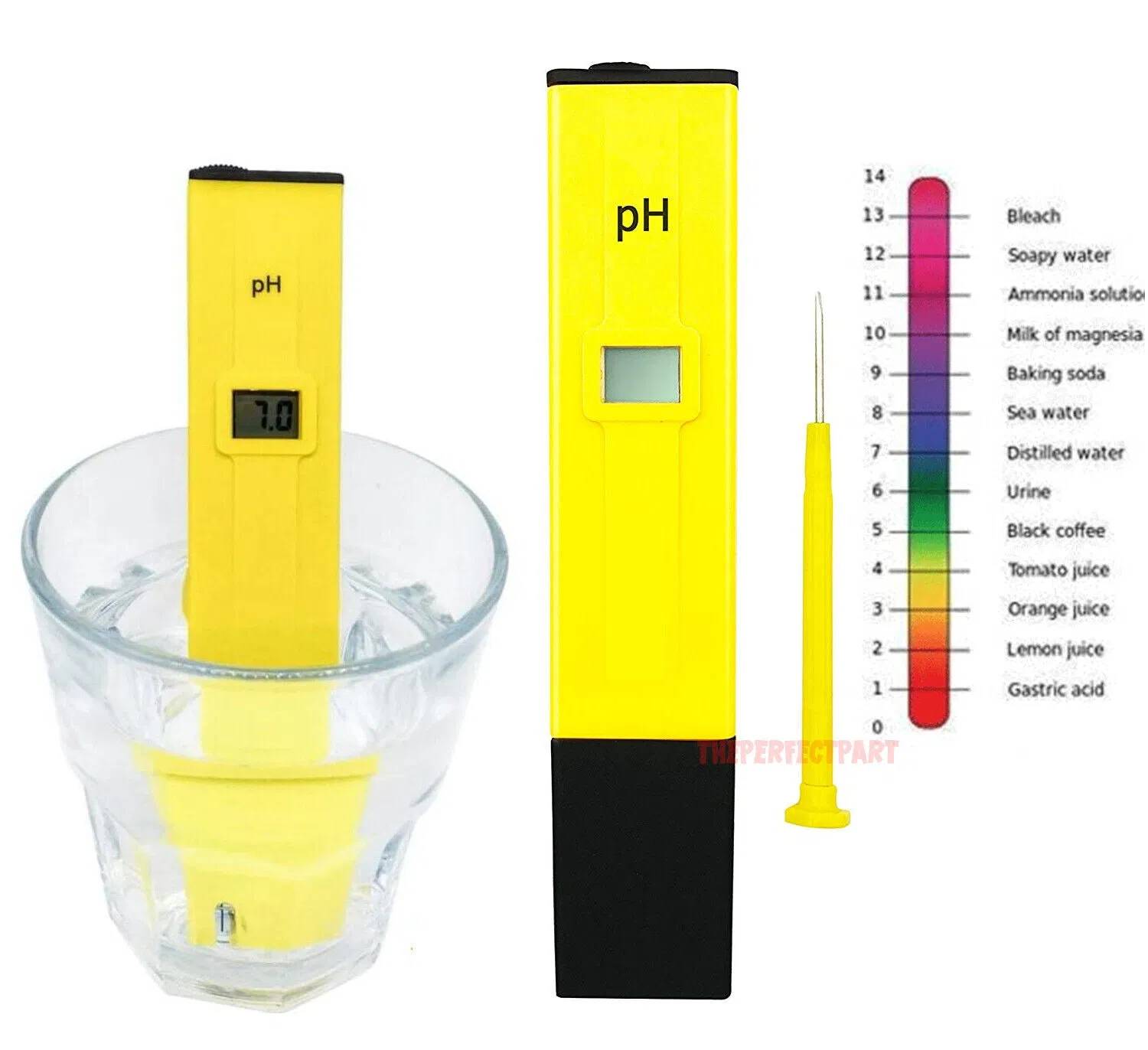

Photos from current listings. Actual item, color, and included accessories may vary.
Water Tester Buying Guide
Water testers split into two engineering classes: pocket pen-style meters with sealed electrodes and benchtop units with replaceable probes and lab-grade calibration. The core trade-off is electrode durability and calibration stability—cheap pens drift after weeks, while units with replaceable electrodes and ATC hold accuracy for years. Buy a pen only for spot checks; buy a benchtop or replaceable-probe pen for repeated measurement and record-keeping.
Key takeaways
- Pocket pens use sealed gel electrodes and 2-point calibration; drift appears after 3–6 months and the whole pen must be replaced when the electrode fails.
- Benchtop meters and higher-tier pens use detachable BNC or DIN probes with 3-point calibration, so you replace a probe instead of the entire instrument.
- IP67/IP68 ratings mean the probe or body can be submerged, but only the electrode junction is truly waterproof—display buttons and battery compartments still fail under prolonged immersion.
At a glance
- Category
- Spectroscopy, Analysis & Detection Instruments
- Last updated
- Nov 28, 2026
Current offers
Highlights
- Pocket pens use sealed gel electrodes and 2-point calibration; drift appears after 3–6 months and the whole pen must be replaced when the electrode fails.
- Benchtop meters and higher-tier pens use detachable BNC or DIN probes with 3-point calibration, so you replace a probe instead of the entire instrument.
- IP67/IP68 ratings mean the probe or body can be submerged, but only the electrode junction is truly waterproof—display buttons and battery compartments still fail under prolonged immersion.
- Automatic temperature compensation (ATC) is mandatory for accurate pH; pens without ATC read up to 0.3 pH off as sample temperature moves 10°C from calibration.
Best use cases
- Hydroponics and aquarium spot checks: pick a pocket pen with ATC and 2-point calibration; skip benchtop units that need a stable surface and power outlet.
- Home brewing, reef keeping, and repeated water-quality logging: pick a benchtop meter with replaceable probe, 3-point calibration, and reading memory; skip sealed pens that drift.
- Field and travel testing: pick an IP67 pen with cap-style storage solution; skip benchtop kits with glass probes and external power adapters.
- Regulatory or lab documentation: pick a benchtop with stored readings and calibration reminders; skip pens with no memory or calibration tracking.
Buying tips
- Confirm the calibration standard: most pH pens use 4.01, 7.00, and 10.01 buffers—packs must match the meter's expected points or calibration will fail.
- Check electrode type: sealed gel electrodes suit pens; refillable glass-bulb probes with KCl solution last longer and are replaceable on benchtop units.
- For EC/TDS, check the conversion scale: 500-scale (NaCl) vs 700-scale (442) changes ppm readings by 40%; choose one and record it.
- Verify ATC range: accurate meters compensate 0–50°C; pens without ATC or with narrow range misread cold tap water and hot nutrient solutions.
Specs
| Meter Form | Pocket pen / benchtop / multi-parameter |
|---|---|
| pH Range | 0–14 pH; accuracy ±0.01–0.1 |
| Calibration Points | 2-point pen / 3-point benchtop |
| Waterproof Rating | IP65–IP68 probe/body |
Related searches
What to check before buying
- Measure your sample container depth—pen probes need at least 4–5 cm immersion; benchtop probes reach deeper but need a stable stand.
- Confirm power: benchtop meters use DC adapters or batteries; check plug standard and whether batteries are included for portable use.
- Check probe storage: glass-bulb probes must stay wet in KCl storage solution; pens need a moistened cap to prevent electrode dry-out.
- Verify calibration supplies: factor recurring buffer and storage-solution cost and availability into the tier you pick.
FAQ
Data sources: eBay / Amazon listings and product attribute feeds. Updated Nov 28, 2026.
Some links on this page are affiliate links. If you buy after clicking one, we may earn a commission at no extra cost to you. This does not change which products appear here or their order. Affiliate disclosure.