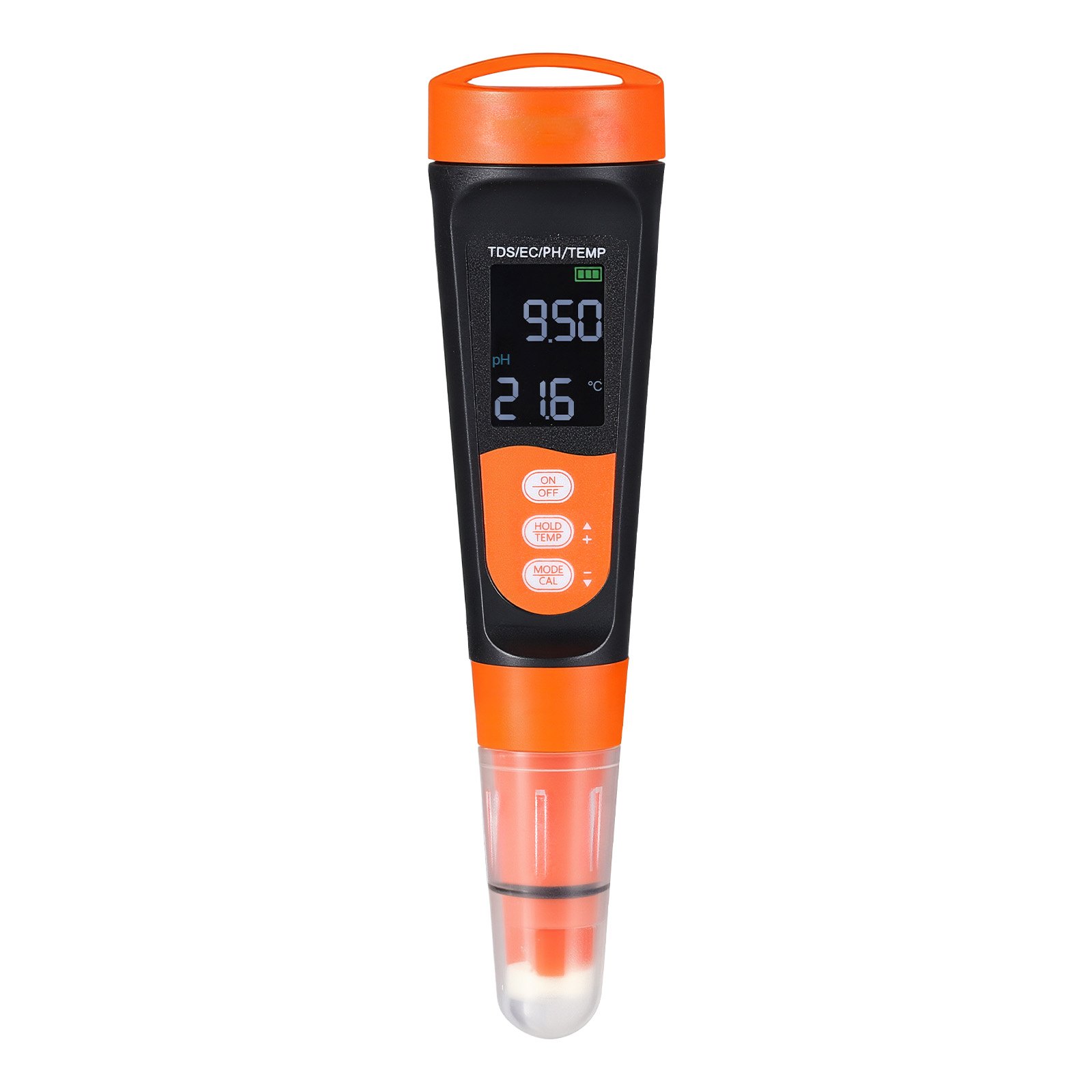

Photos from current listings. Actual item, color, and included accessories may vary.
Waterproof Ph Meter Buying Guide
A waterproof pH meter is a field-rated electrochemical tester pairing a sealed glass or ISFET electrode with an IP-rated housing so it survives rinsing, splashes, and full submersion. The core trade-off is electrode quality and calibration stability versus housing ruggedness—an IP68 body cannot compensate for a drifting, non-replaceable probe. Buy a meter with a user-replaceable electrode and at least two-point calibration; treat sealed, non-replaceable probes as short-life consumables.
Key takeaways
- IP68 is the meaningful waterproof tier—rated for continuous submersion—while IP57 survives splashes and brief drops but not soaking; IP65/66 is splash-resistant only.
- Glass-bulb electrodes deliver the best accuracy and stability but fracture on impact; flat ISFET or open-junction probes resist breakage and fouling in slurries and semi-solids.
- Two-point calibration at pH 4.01 and 7.00 covers most natural and treated water; three-point adds 10.01 for alkaline pools and process streams.
At a glance
- Category
- Spectroscopy, Analysis & Detection Instruments
- Last updated
- Nov 28, 2026
Current offers
Highlights
- IP68 is the meaningful waterproof tier—rated for continuous submersion—while IP57 survives splashes and brief drops but not soaking; IP65/66 is splash-resistant only.
- Glass-bulb electrodes deliver the best accuracy and stability but fracture on impact; flat ISFET or open-junction probes resist breakage and fouling in slurries and semi-solids.
- Two-point calibration at pH 4.01 and 7.00 covers most natural and treated water; three-point adds 10.01 for alkaline pools and process streams.
- Multi-parameter pocket kits that bundle pH, EC, TDS, and temperature share one housing but typically use lower-grade pH electrodes than dedicated pH-only meters.
Best use cases
- Best fit: hydroponics, aquariums, and pool checks—pick a pocket meter with a replaceable glass electrode, two-point calibration, and IP67/IP68 sealing for rinse-down durability.
- Best fit: wastewater, slurry, and soil-slurry field testing—choose a flat-surface or open-junction ISFET probe that resists fouling and breakage rather than a fragile glass bulb.
- Wrong fit: lab-grade trace analysis or regulatory reporting—pocket waterproof meters lack the resolution, temperature compensation accuracy, and calibration documentation of benchtop meters.
- Skip: permanently sealed probes with no replacement electrode for any regular-use application; the sensor degrades in months and the whole unit becomes disposable.
Buying tips
- Confirm the electrode is user-replaceable and sold as a spare; a sealed probe turns a calibration drift into a full-unit replacement.
- Match waterproofing to use: IP68 for submersion and rinse-down, IP57 for splash and rain, IP65/66 only for damp wipe-down environments.
- Require automatic temperature compensation (ATC) covering at least 0-50°C; uncompensated readings drift roughly 0.003 pH per °C away from 25°C.
- For outdoor field kits choose a display readable in direct sun—VA or backlit LCD—and check the battery type before relying on it remotely.
Specs
| Waterproof Rating | IP68 submersible / IP57 splash / IP65-66 |
|---|---|
| Electrode Type | Glass bulb vs flat ISFET vs open junction |
| Calibration Points | 2-point (4.01/7.00) or 3-point (10.01) |
| Temperature Comp. | ATC 0-50°C typical; manual without |
Related searches
What to check before buying
- Measure your sample vessel depth: the probe must reach the liquid without submerging the meter body beyond its IP rating.
- Verify the calibration buffer values you will actually use (4.01/7.00/10.01) are stocked or included, and that fresh powder packets are available.
- Check electrode type against your sample: glass bulb for clear water, flat ISFET or open junction for slurries, soil, and semi-solids.
- Confirm replacement electrodes, storage solution, and probe caps are available for the model before committing to the platform.
FAQ
Data sources: eBay / Amazon listings and product attribute feeds. Updated Nov 28, 2026.
Some links on this page are affiliate links. If you buy after clicking one, we may earn a commission at no extra cost to you. This does not change which products appear here or their order. Affiliate disclosure.