
Photos from current listings. Actual item, color, and included accessories may vary.
Infrared Camera Buying Guide
An infrared camera converts surface heat into a pixel grid, and the decisive trade-off is native IR detector resolution versus the price you pay for it. Native 256x192 sensors with 25Hz refresh and ±2°C accuracy are the durability and usefulness floor for diagnostics; 160x120 and interpolated-only units are casual tools, while 320x240-class detectors are the serious inspection tier.
Median $130.42 · Pre-owned listings
Key takeaways
- Native IR resolution is the primary performance gate: 160x120 is entry, 256x192 is competent, 320x240 is professional; 'TISR' or super-resolution upscaling does not add real detector pixels.
- Refresh rate separates usable tools from toys: 25Hz gives smooth live scanning; 8-9Hz budget units blur during motion and slow electrical fault tracing.
- Phone modules split into USB-C (Android, direct plug) and Wi-Fi (iOS and Android, shared viewing) architectures; the USB-C P1-style module reaches 320x240 and 600°C while phone-agnostic Wi-Fi units usually cap at 256x192.
At a glance
- Category
- Thermal Cameras, Borescopes & Visual Inspection
- Last updated
- Nov 28, 2026
Current offers
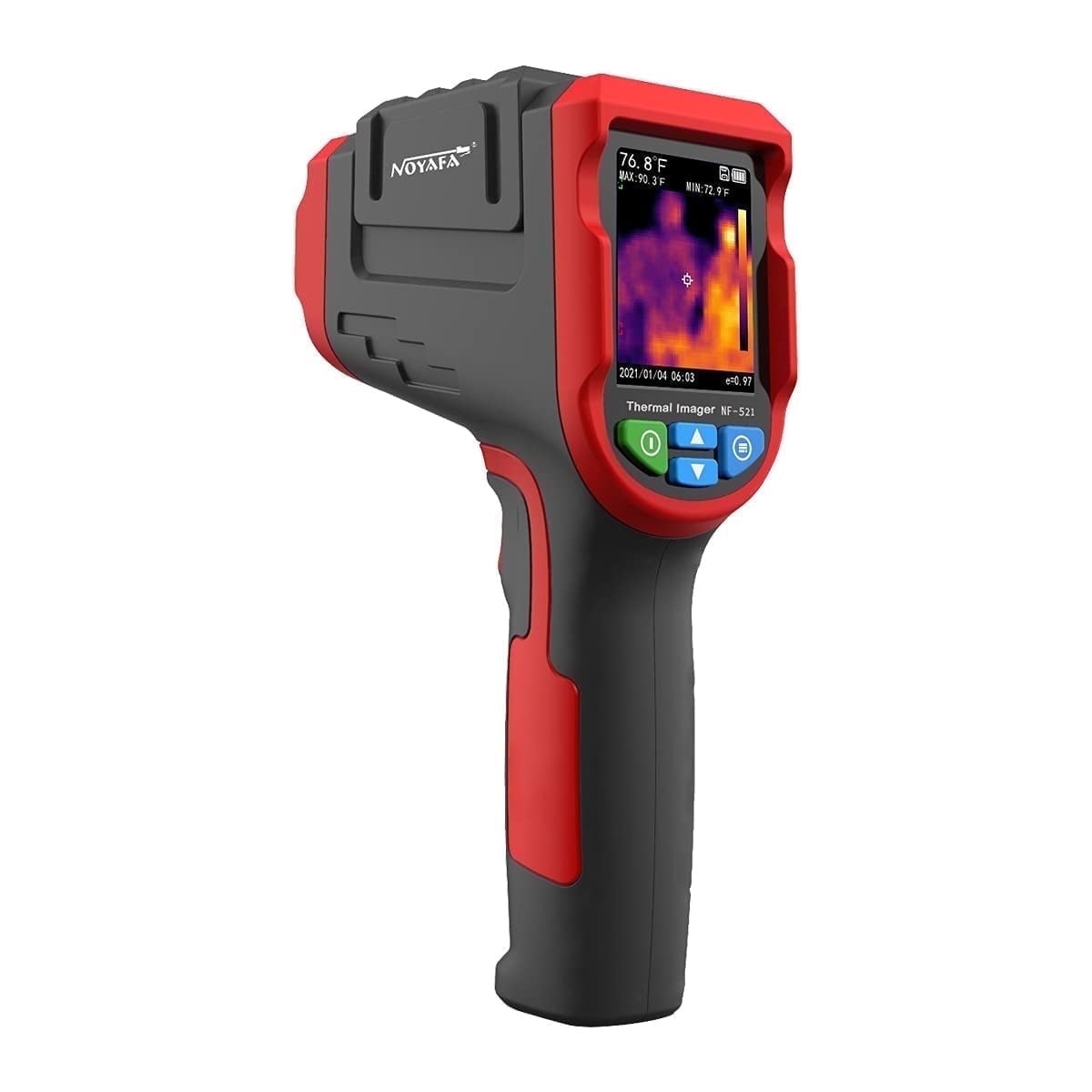 NOYAFA Infrared Thermal Imaging Camera, High Resolution, 2.4 in LCD Display,$89.00View on eBay
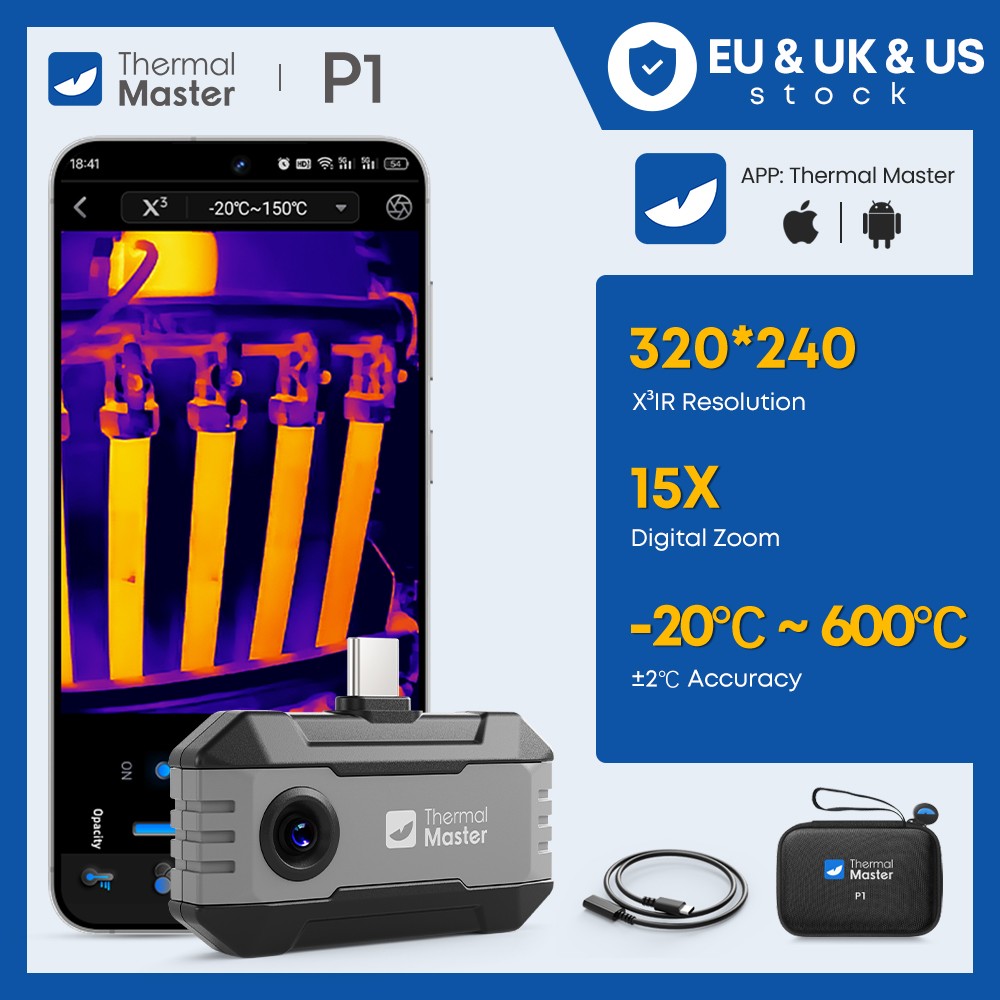 IOS&Android P1 Thermal Camera 320*240 USB-C Infrared Thermal Imager 600℃ Repair$119.93View on eBay
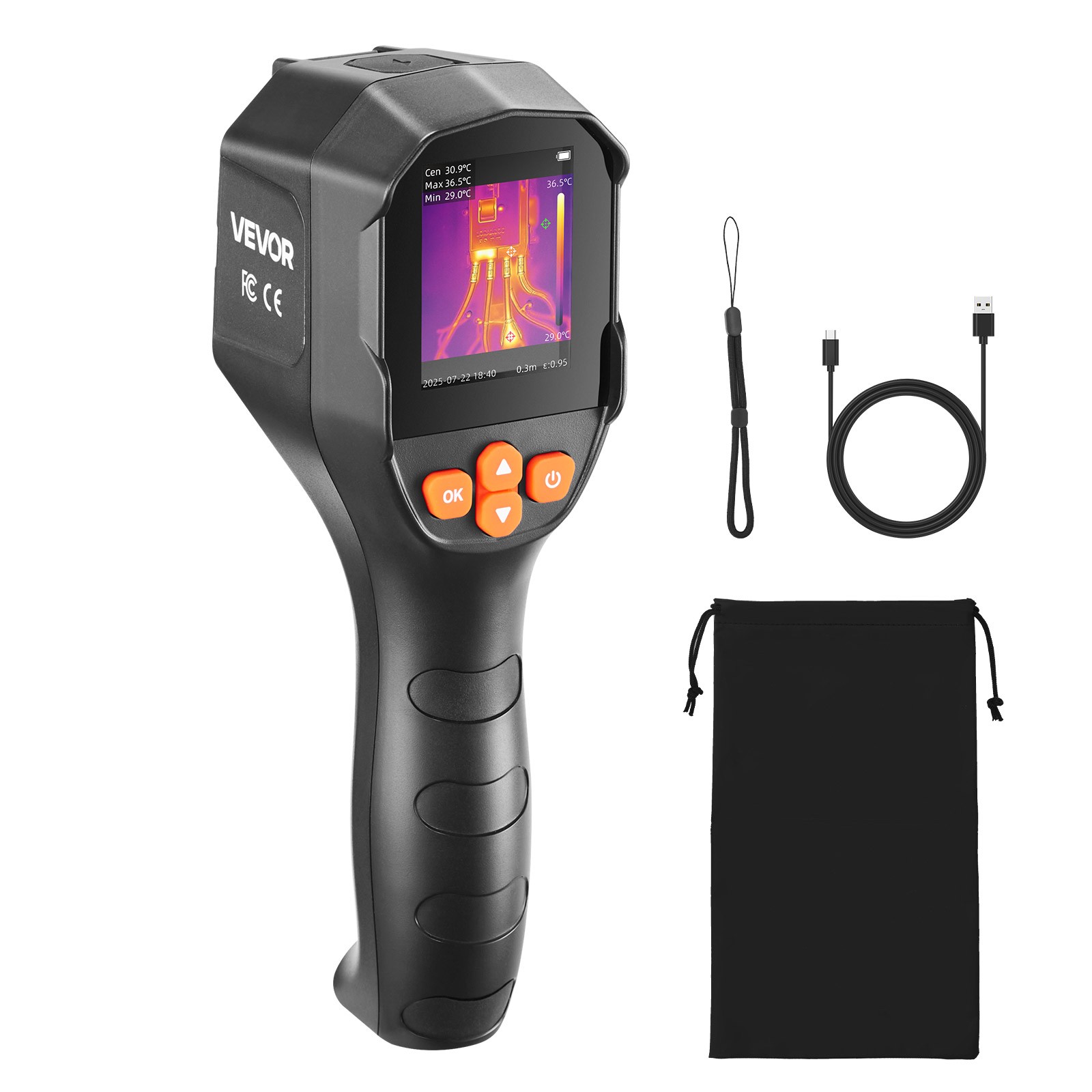 VEVOR Infrared Thermal Imager Temperature Imaging Camera TISR Resolution 240x180$140.90Last checked Nov 28, 2026View on eBay
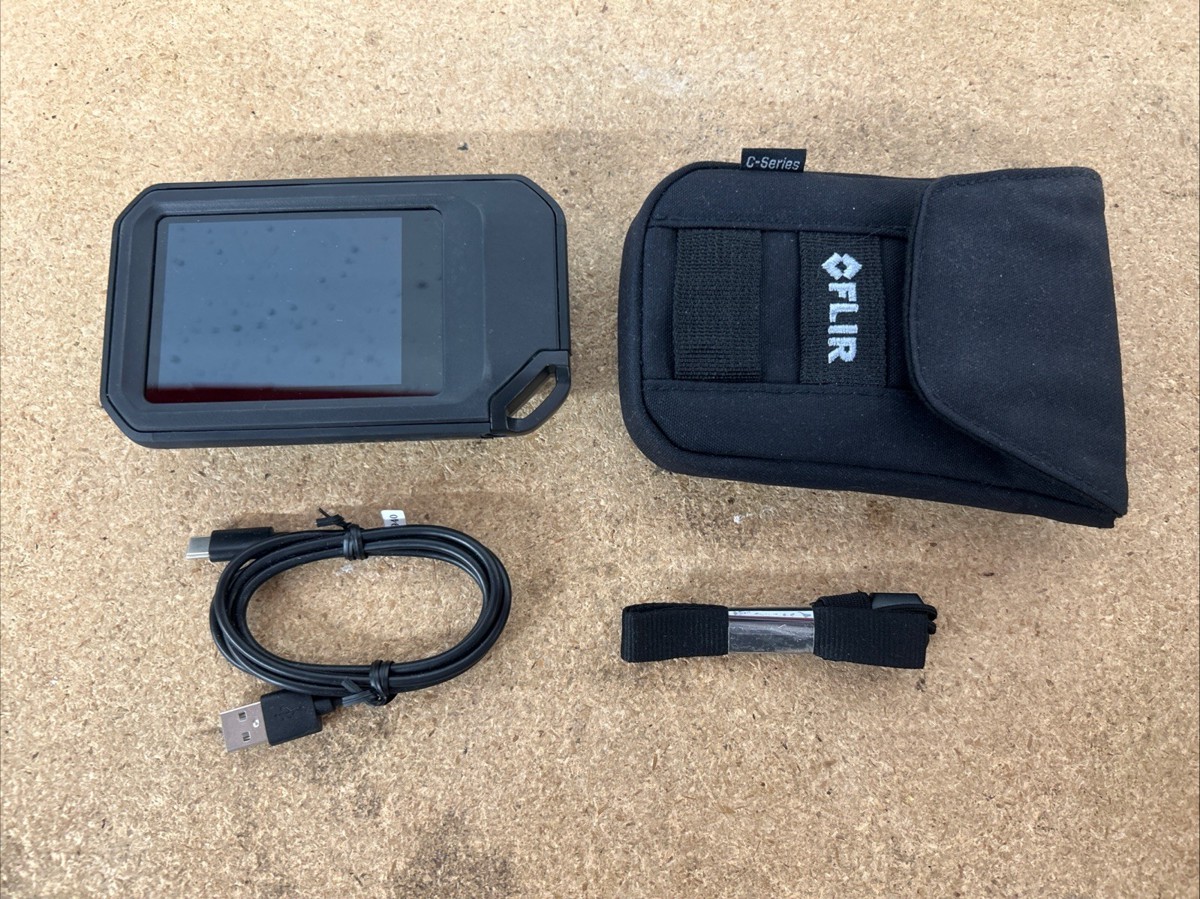 FLIR C8 Compact Thermal Imaging Camera: High Resolution Infrared Imager (320x240$699.99Used · Last checked Nov 24, 2026View on eBay
Highlights
- Native IR resolution is the primary performance gate: 160x120 is entry, 256x192 is competent, 320x240 is professional; 'TISR' or super-resolution upscaling does not add real detector pixels.
- Refresh rate separates usable tools from toys: 25Hz gives smooth live scanning; 8-9Hz budget units blur during motion and slow electrical fault tracing.
- Phone modules split into USB-C (Android, direct plug) and Wi-Fi (iOS and Android, shared viewing) architectures; the USB-C P1-style module reaches 320x240 and 600°C while phone-agnostic Wi-Fi units usually cap at 256x192.
- Standalone handhelds with 2.4-2.8in LCD and built-in battery (e.g. VEVOR TISR 240x180, NOYAFA) work without a phone; plastic-bodied housings are common at entry tier, so check drop rating and lens protection rather than material alone.
Best use cases
- Home inspection and electrical/panel diagnostics: choose a native 256x192 or 320x240 detector at 25Hz with at least ±2°C accuracy and a -4 to 752°F+ range; skip 160x120 units for breaker and connection scans.
- iPhone-centric casual use: pick a Wi-Fi module with 256x192 native IR and 25Hz, since Lightning/USB-C dongles are Android-first; skip USB-C-only modules if you are on iPhone.
- DIY around-the-house checks (doors, windows, radiators, overheating outlets): a 2.4in LCD handheld at 160x120-240x180 is adequate and phone-free; skip phone modules if you want one-hand operation.
- PCB and small-component work: require a macro lens or close-focus spec plus 256x192 native resolution and 25Hz; skip fixed-focus long-range units that cannot resolve component-level heat.
Buying tips
- Read the native IR number, not the super-resolution number: a '512x384 TISR' unit with 256x192 native is a 256x192 camera; a 320x240 TISR with 160x120 native is entry tier.
- Match the module to your phone OS before ordering: USB-C plug-in modules are Android-only in practice; Wi-Fi modules work across iOS and Android but add a battery and pairing step.
- For electrical work demand 25Hz refresh, ±2°C or better accuracy, and a top range of at least 600°C; for building envelope work -4°F to 300°F+ with 0.1°C resolution is sufficient.
- Ignore '3600' or similarly large marketing resolution figures on LCD handhelds; confirm the IR detector array (e.g. 240x180) and the display resolution separately.
Specs
| Native IR Resolution | 160x120 / 256x192 / 320x240 |
|---|---|
| Refresh Rate | 25Hz (pro) vs 8-9Hz (budget) |
| Phone Interface | USB-C Android / Wi-Fi iOS+Android |
| Thermal Accuracy | ±2°C or better / -4 to 600°F+ |
Related searches
What to check before buying
- Confirm your phone's port: USB-C Android phones take plug-in modules; iPhone and mixed-household use require a Wi-Fi module with its own battery.
- Verify the native IR array and refresh rate are stated explicitly (e.g. 256x192 at 25Hz); treat unstated specs as entry-tier 160x120 at 8-9Hz.
- For home inspection, check thermal accuracy (±2°C), temperature range, and whether a visible-light camera and macro lens are included for documentation.
- For handhelds, confirm battery type (rechargeable Li-ion vs AA), screen size (2.4in minimum for readable palettes), and SD storage for captured images.
FAQ
Data sources: eBay / Amazon listings and product attribute feeds. Updated Nov 28, 2026.
Some links on this page are affiliate links. If you buy after clicking one, we may earn a commission at no extra cost to you. This does not change which products appear here or their order. Affiliate disclosure.