When you are shopping for test leads, probes, and fixtures, the first question is whether you need to probe a live oscilloscope signal or hold a board still while repairing damaged data lines. These two tools head in different directions: one is a straightforward pair of scope probes, and the other is a purpose-built fixture for chip recovery. This head-to-head helps you match the tool to the job.
Quick Verdict
For everyday oscilloscope probing, choose the 100MHz Clip Probe Test Leads Kit at USD 17.99. For chip recovery and soldered-wire data repair, choose the Data Recovery Fixture at USD 69.99. The probe kit puts scope probes on your bench; the fixture provides a stable platform with adjustable probe needles.
At a Glance
| Feature | 100MHz Probe Leads Kit | Data Recovery Fixture |
|---|---|---|
| Listed price | USD 17.99 | USD 69.99 |
| Core job | General oscilloscope signal probing | Chip recovery, timing-data repair, flying-wire repair |
| Included items | Two probes with mini alligator clip and ground lead | One fixture and ten probe needles |
| Probe adjustability | 1X/10X switchable attenuation | Probe moves forward/backward, up/down, position adjustable |
| Cable and workspace | 120cm cable length | Circuit board area 151 x 135 mm |
Where Each Product Wins
The 100MHz Clip Probe Test Leads Kit wins when you are working with a scope and need to grab test points quickly. The mini alligator clips and ground lead let you make quick clip-on connections to test points. It is also the easier pick for a home bench that mostly does signal tracing and general measurements.
The Data Recovery Fixture wins when the job is repairing data damage caused by soldering flying wires. The adjustable probe can be repositioned to line up with the exact point you are repairing. For board-level chip recovery, the fixture holds everything in place so you can make precise adjustments with the probes.
Product Notes
100MHz Clip Probe Test Leads Kit
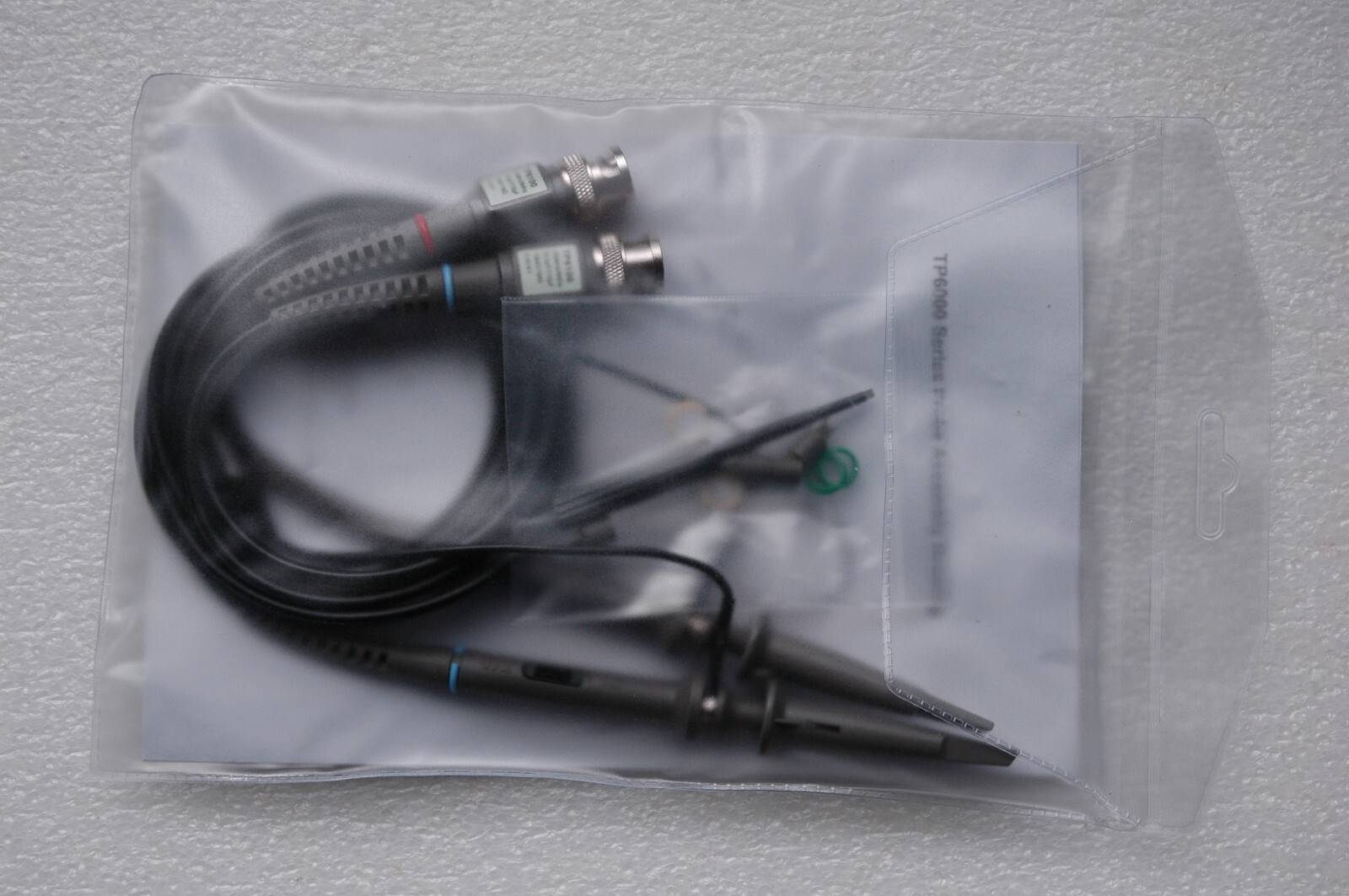
The JINHAO probe leads kit is the direct answer for scope work. It includes two probes with mini alligator clips and a ground lead, so you can quickly connect to pins and component legs. The switchable attenuation gives you 1X at DC-6MHz and 10X at 100MHz, with input resistance of 1MΩ at 1X and 10MΩ at 10X. Maximum input voltage is 300V DC plus peak AC at 1X and 600V DC plus peak AC at 10X. The 120cm cable reaches across a typical bench. The main limitation is the lack of a fixture: when you need to hold a board still for chip recovery, these clip leads won't do it. Also, the two-probe package means you will need additional kits if your scope has more channels. For general oscilloscope measurements, this is a practical way to get a pair of probes on your bench.
Data Recovery Fixture Chip Recovery Test Fixture with 10 Probes
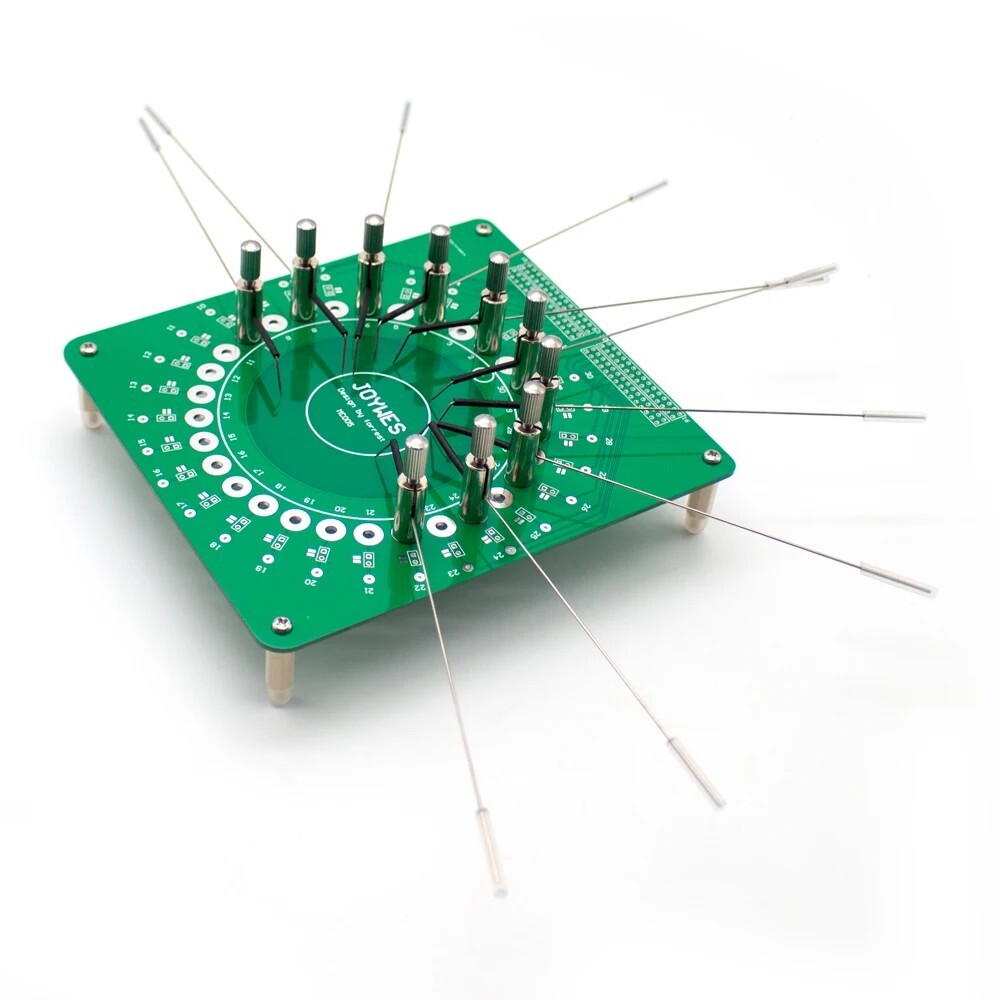
The Data Recovery Fixture takes over where clip leads fall short. It is a dedicated tool for chip recovery and timing-data repair, mainly helping repair data damage caused by soldering flying wires. The probe can move forward and backward, up and down, and its position can be adjusted to line up with the point you are repairing. You get ten probe needles in the package, and the stainless steel needles are 0.8mm in diameter and 135mm long. The circuit board area is 151 x 135mm, and the product size is 151 x 135 x 50mm, with a total weight around 300g. The limitation is that this fixture is not an oscilloscope probe kit. You won't get clip leads or a ground lead for a scope, and it is not designed for general signal tracing. For its intended task - holding a board and probes steady during chip-level data recovery - it is the more specialized tool.
Final Choice by Use Case
If you are probing signals on an oscilloscope, start with the 100MHz Clip Probe Test Leads Kit. The included probes cover two channels right away, and the switchable attenuation suits a range of bench measurements. If you are recovering data or repairing soldered flying wires on a chip, get the Data Recovery Fixture. The stable fixture and adjustable probe needles are designed for that exact task. Choose the probe kit for probing; choose the fixture for chip recovery.