When you're shopping for multimeters and electrical testers, the real question is what you're going to point it at. This comparison puts an industrial insulation resistance tester next to an automotive circuit probe. If you maintain motors, cables, and panels, the Digital Megohmmeter is built around high-voltage insulation checks. If you diagnose dead batteries, alternator output, or wiring faults, the 5-90V DC Circuit Tester is aimed at quick diagnostics. Neither tool is a substitute for the other, and the right pick comes down to the circuits you work on.
Quick Verdict
For industrial maintenance and insulation checks, the Digital Megohmmeter is the more capable instrument. For everyday automotive diagnostics, the 5-90V DC Circuit Tester is the simpler, lower-cost companion. The 5-90V DC Circuit Tester costs USD 4.90, while the Digital Megohmmeter lists at USD 39.89.
At a Glance
| Aspect | Digital Megohmmeter | 5-90V DC Circuit Tester |
| Best for | Insulation resistance and high-voltage AC/DC checks | Fast automotive electrical checks |
| Price | USD 39.89 | USD 4.90 |
| Key range | 250V/500V/1000V; insulation to 2000MΩ | DC circuit testing with red/green polarity display |
Where Each Product Wins
The Digital Megohmmeter brings higher test voltages and AC/DC voltage measurement up to 750V and 1000V respectively. The LOCK function lets you keep measuring without holding the button, which matters when you're testing cables or panels.
The 5-90V DC Circuit Tester gives you a quick read on a circuit with 0.1V precision. The included extra probe and large clamp help you reach wiring in tight spaces, and the display shows red for positive and green for negative.
Product Notes
Digital Megohmmeter Insulation Resistance Tester
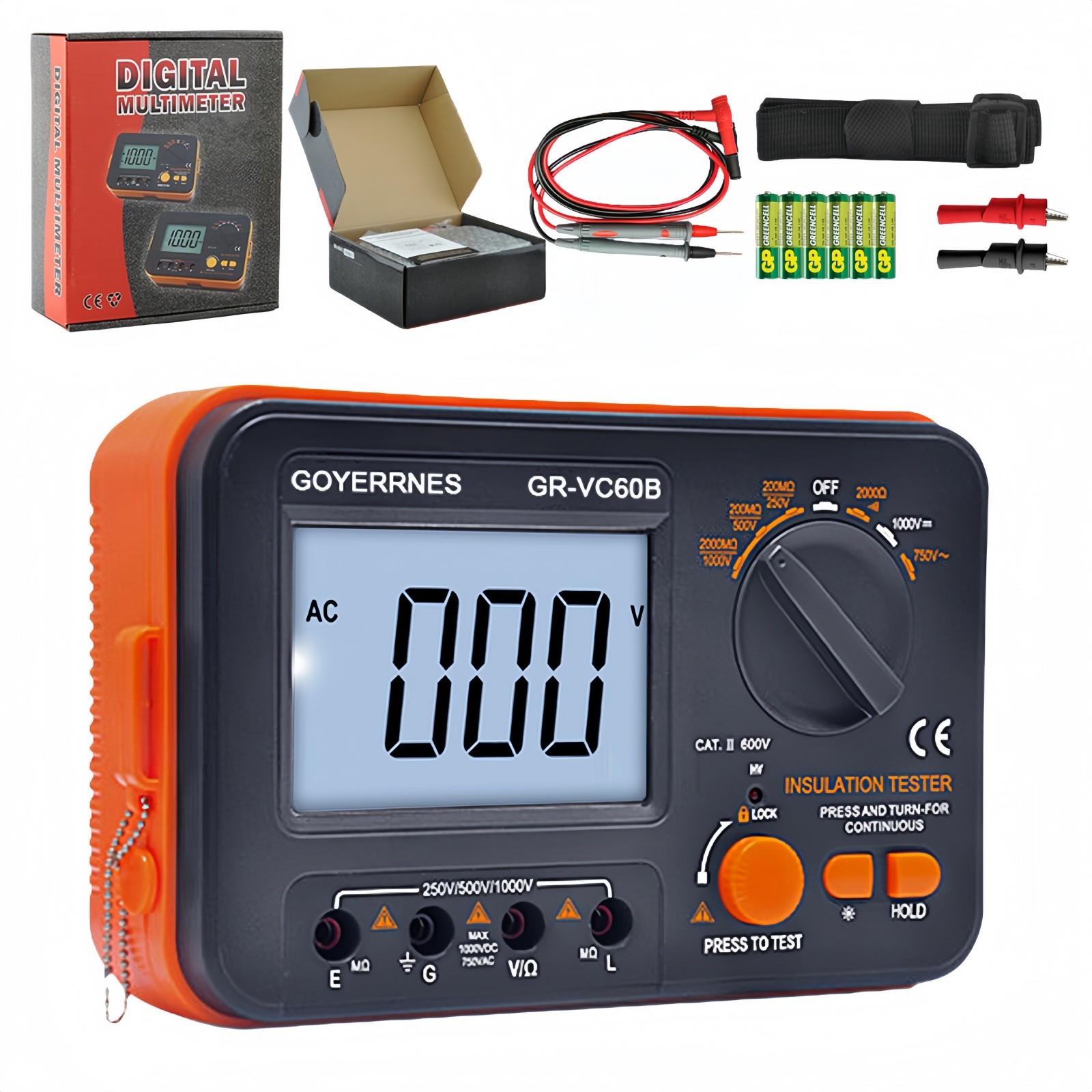
If your work involves high-voltage insulation, this is the tester to grab. The 1999-count manual-range design puts the control in your hands, so you can set the measurement range deliberately for the system you're checking. The backlit LCD and data-hold function make it easier to read and lock in results, even in dimmer areas. It also covers frequency readings from 40Hz to 400Hz, which is useful when you're monitoring supply frequency alongside insulation quality. This kind of control is valuable for systematic electrical work, but it does mean you need to be comfortable selecting ranges yourself. For someone who only wants to check a car's simple wiring, this is more instrument than the job requires.
5-90V DC Circuit Tester
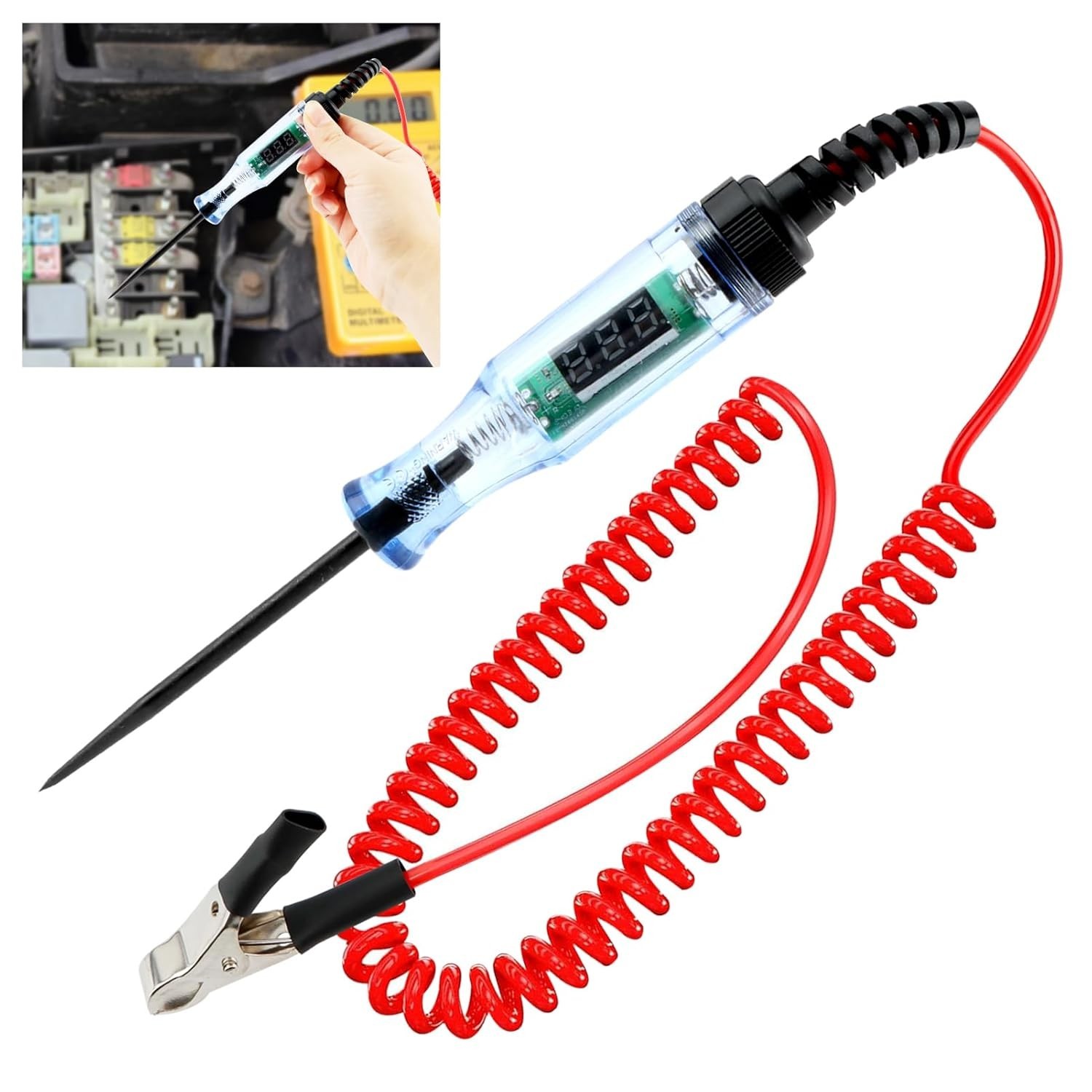
For fast answers on a car circuit, this probe is hard to beat. The battery-powered design means it's ready to use without needing another power source, and the housing comes included so you can store it or carry it with the rest of your gear. It's built for vehicle electrical work, so keep it in the car or shop for battery, alternator, and wiring checks. For dead batteries, alternator output, or wiring faults, it gives you a fast first look. Just remember its limitations: it's aimed at DC circuit testing rather than insulation resistance or high-voltage industrial measurements, so leave those bigger jobs to a dedicated insulation tester.
Final Choice by Use Case
If you're checking insulation on motors, cables, or electrical panels, the Digital Megohmmeter is the tester to buy. If you primarily diagnose vehicle electrical problems, the 5-90V DC Circuit Tester is the practical companion. Match the tool to the circuits you actually touch.