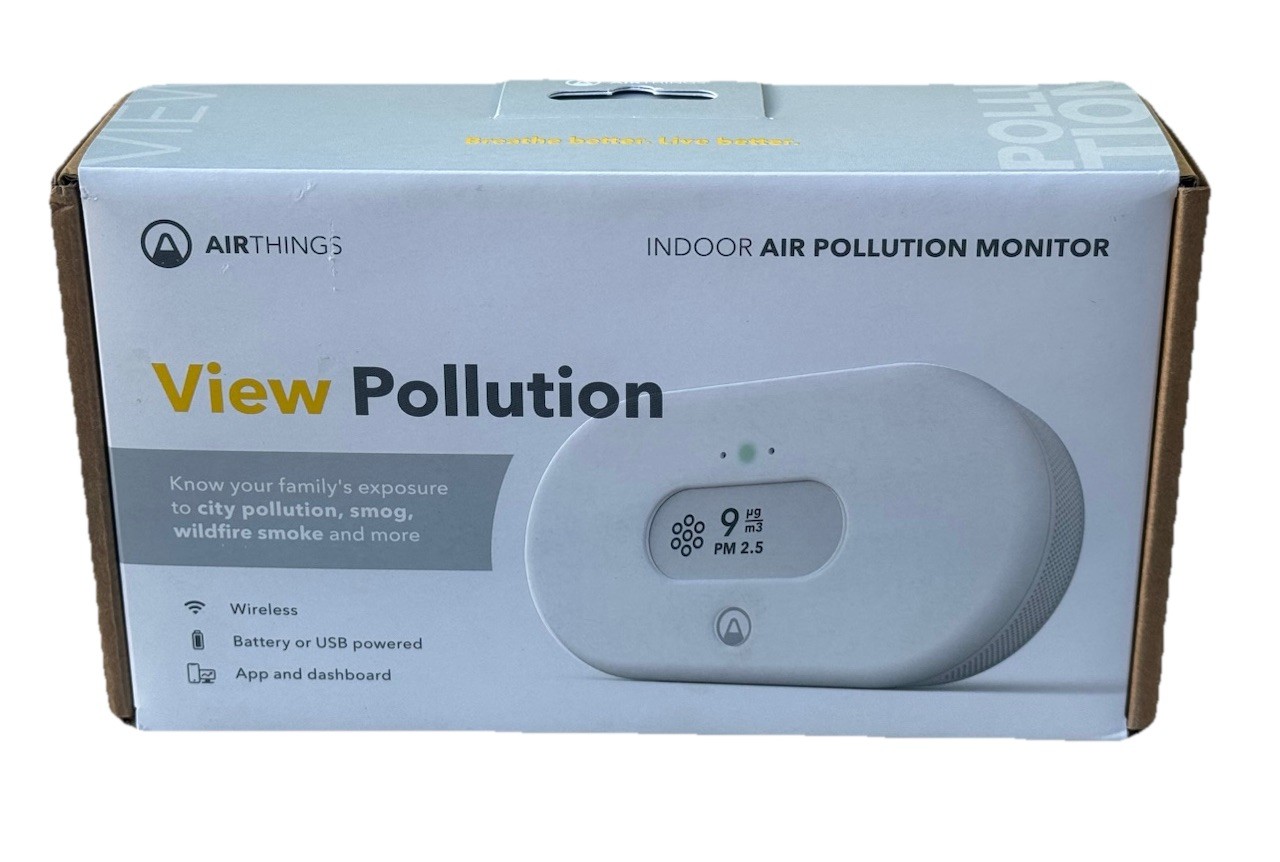

Photos from current listings. Actual item, color, and included accessories may vary.
Air Pollution Measurement Buying Guide
Air pollution measurement covers handheld and indoor monitors that quantify particulate matter (PM1/PM2.5/PM10), volatile organic compounds (VOCs), and combustion gases using optical particle counters and electrochemical or metal-oxide sensors. The core trade-off is sensor architecture: low-cost optical particle counters drift without calibration and respond poorly to humidity, while laser-scattering PM sensors with temperature/humidity compensation and electrochemical gas cells deliver defensible readings across seasons. The decision rule is simple: buy a unit with published PM2.5 accuracy against a reference and at least one electrochemical gas channel; skip anything that reports only a single uncalibrated 'air quality index' with no raw PM or VOC number.
Key takeaways
- Optical particle counters (laser scattering) measure PM1/PM2.5/PM10 in µg/m³; cheap infrared LED sensors only estimate coarse dust and over-read in humid air.
- Electrochemical cells are the standard for CO, NO2, O3, and SO2; metal-oxide (MOX) VOC sensors respond to total VOCs but drift and need burn-in and baseline recalibration.
- PM2.5 accuracy is quoted against reference gravimetry or beta attenuation; ±10 µg/m³ or ±10% is credible, while units with no stated accuracy are indicative only.
At a glance
- Category
- Environmental & Indoor Air Measurement
- Last updated
- Nov 28, 2026
Current offers
Highlights
- Optical particle counters (laser scattering) measure PM1/PM2.5/PM10 in µg/m³; cheap infrared LED sensors only estimate coarse dust and over-read in humid air.
- Electrochemical cells are the standard for CO, NO2, O3, and SO2; metal-oxide (MOX) VOC sensors respond to total VOCs but drift and need burn-in and baseline recalibration.
- PM2.5 accuracy is quoted against reference gravimetry or beta attenuation; ±10 µg/m³ or ±10% is credible, while units with no stated accuracy are indicative only.
- Outdoor-capable monitors need IP-rated enclosures, solar or long-life battery, and cellular/LoRa backhaul; indoor units use USB-C power and Wi-Fi with cloud logging.
Best use cases
- Indoor home or office monitoring: pick a Wi-Fi unit with laser PM2.5 plus electrochemical CO2 or VOC channels and continuous logging — skip battery-only display pucks with no raw numbers.
- Outdoor or portable street-level surveys: choose an IP65+ handheld or pole-mount with PM2.5/PM10, GPS tagging, and ≥24 h battery — skip indoor USB units that lack weather sealing.
- Wildfire smoke and combustion events: prioritize PM2.5 range to 500+ µg/m³, CO channel, and audible alerts — skip units capped at 100 µg/m³ or without gas sensing.
- Research-grade or regulatory comparison: use reference-equivalent beta attenuation or gravimetric samplers, not consumer optical monitors — consumer units are indicative, not compliance-grade.
Buying tips
- Check the PM sensor type: laser scattering with fan-driven airflow beats passive infrared; demand a stated PM2.5 accuracy (±10 µg/m³ or ±10%) and resolution of 0.1 µg/m³.
- For gas coverage, confirm at least one electrochemical cell (CO, NO2, or O3); MOX VOC sensors are useful trend indicators but require 24–48 h burn-in and periodic baseline reset.
- Match power and connectivity to placement: indoor units need USB-C or mains plus Wi-Fi; outdoor deployments need IP65+, solar or ≥1-year battery, and cellular or LoRa backhaul.
- Prioritize units with temperature and humidity compensation and raw µg/m³ export (CSV/API); AQI-only displays hide the data needed to compare against EPA/WHO thresholds.
Specs
| PM Sensor Type | Laser scattering vs infrared LED |
|---|---|
| Gas Sensor Type | Electrochemical vs metal-oxide (MOX) |
| PM2.5 Accuracy | ±10 µg/m³ or ±10% (stated) |
| Enclosure / Power | IP65 outdoor vs USB-C indoor |
Related searches
What to check before buying
- Measure the mounting spot: indoor units need a USB outlet within cable reach; outdoor units need pole or wall clearance and direct sun for solar variants.
- Confirm your climate and enclosure rating: outdoor monitors require IP65 or better and a operating range covering local winter lows and summer highs.
- Verify voltage and plug standard for your region (USB-C 5 V for indoor, 12 V or solar for outdoor) and that the companion app is available in your country.
- Check what companion parts are required: calibration kits, replacement sensor modules, or gateway/hub for LoRa or Zigbee models.
FAQ
Data sources: eBay / Amazon listings and product attribute feeds. Updated Nov 28, 2026.
Some links on this page are affiliate links. If you buy after clicking one, we may earn a commission at no extra cost to you. This does not change which products appear here or their order. Affiliate disclosure.