
Photos from current listings. Actual item, color, and included accessories may vary.
Indoor Air Quality Monitor Buying Guide
Indoor air quality monitors are multi-sensor instruments that track PM2.5/PM10 particulates, CO2, TVOCs, formaldehyde, temperature, and humidity, with performance hinging on sensor grade (NDIR CO2 vs. estimated eCO2, laser particle counters vs. VOC-only inference) and calibration durability. The decisive rule: buy a unit with an NDIR CO2 sensor, a laser-scattering PM sensor, and published accuracy tolerances; skip any monitor that infers particulates or CO2 from TVOC/mixed-gas readings or lacks calibration documentation.
Median $94.99 · New & pre-owned listings
Key takeaways
- NDIR (non-dispersive infrared) CO2 sensors deliver ±30-50 ppm accuracy and years of drift-free service, while eCO2 sensors estimate from VOC trends and can be off by hundreds of ppm.
- Laser particle counters measure PM1.0/PM2.5/PM10 via light scattering with ±10% tolerance; units listing only 'AQI' without PM channels usually derive a score from a single VOC sensor.
- Electrochemical HCHO (formaldehyde) cells cost more and last 2-3 years before replacement; semiconductor VOC sensors are cheaper but cross-sensitive to alcohol, perfume, and cooking fumes.
At a glance
- Category
- Environmental & Indoor Air Measurement
- Last updated
- Nov 29, 2026
Current offers
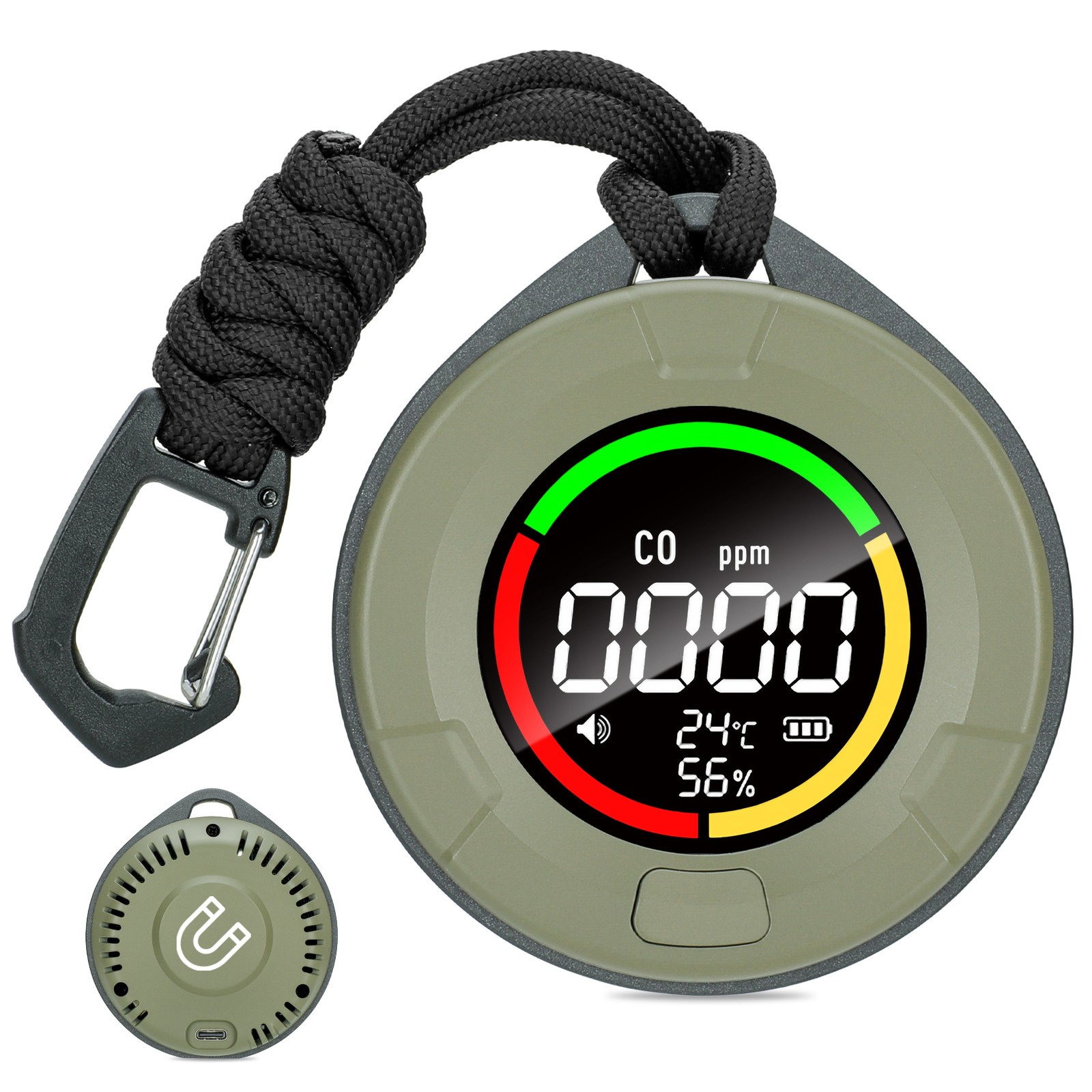 Portable CO2 Detector Mini Indoor air Monitor Home NDIR Sensor 3IN1 US$29.99View on eBay
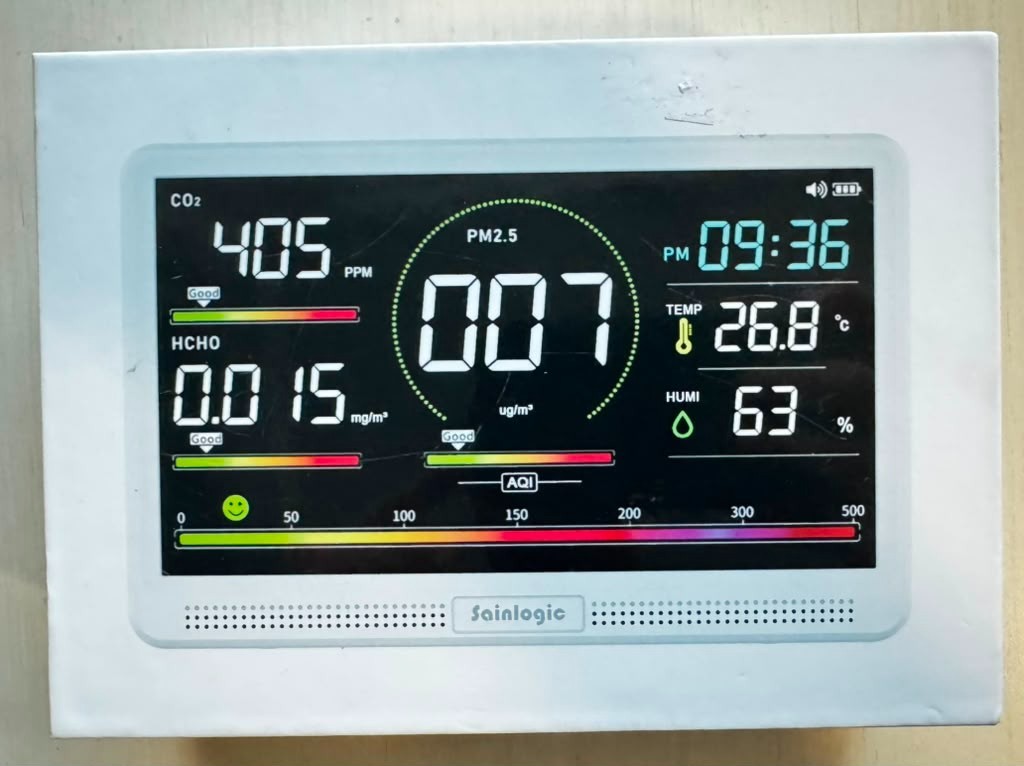 16 in 1 Air Quality Monitor Indoor 7" Display 9 AQI+7 AQI Alerts Air Quality Met$30.00View on eBay
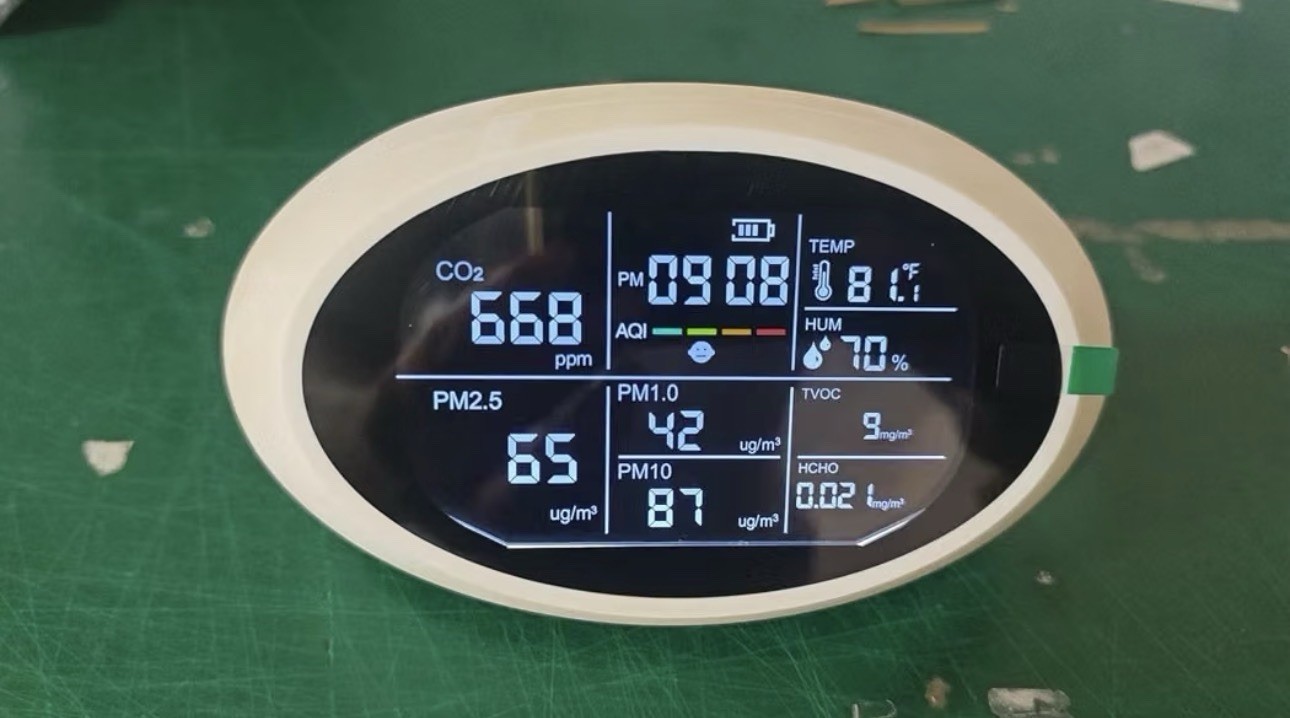 12-in-1 Air Quality Monitor Indoor, Portable Air Quality Monitor, CO2 PM1.0$39.99View on eBay
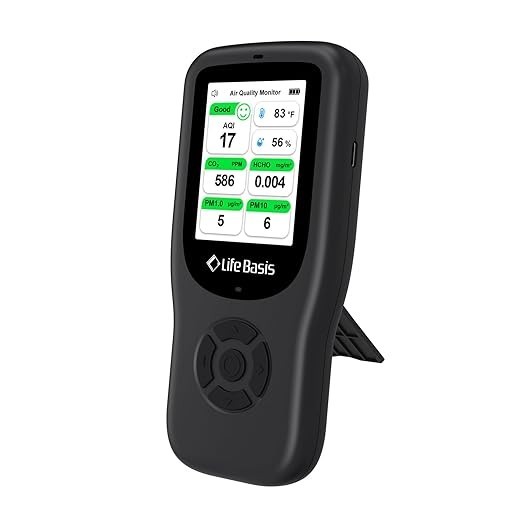 Life Basis Air Quality Monitor Indoor, 11-in-1 Air Quality Detector w. Stand$39.99View on eBay
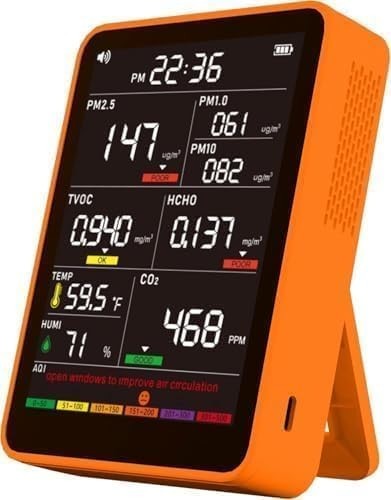 Professional Indoor Air Quality Monitor with AQI Beep Alarms, Portable Real Time$53.99View on eBay
- Professional Indoor Air Quality Monitor Real Time with AQI Beep Alarms Portable$53.99View on eBay
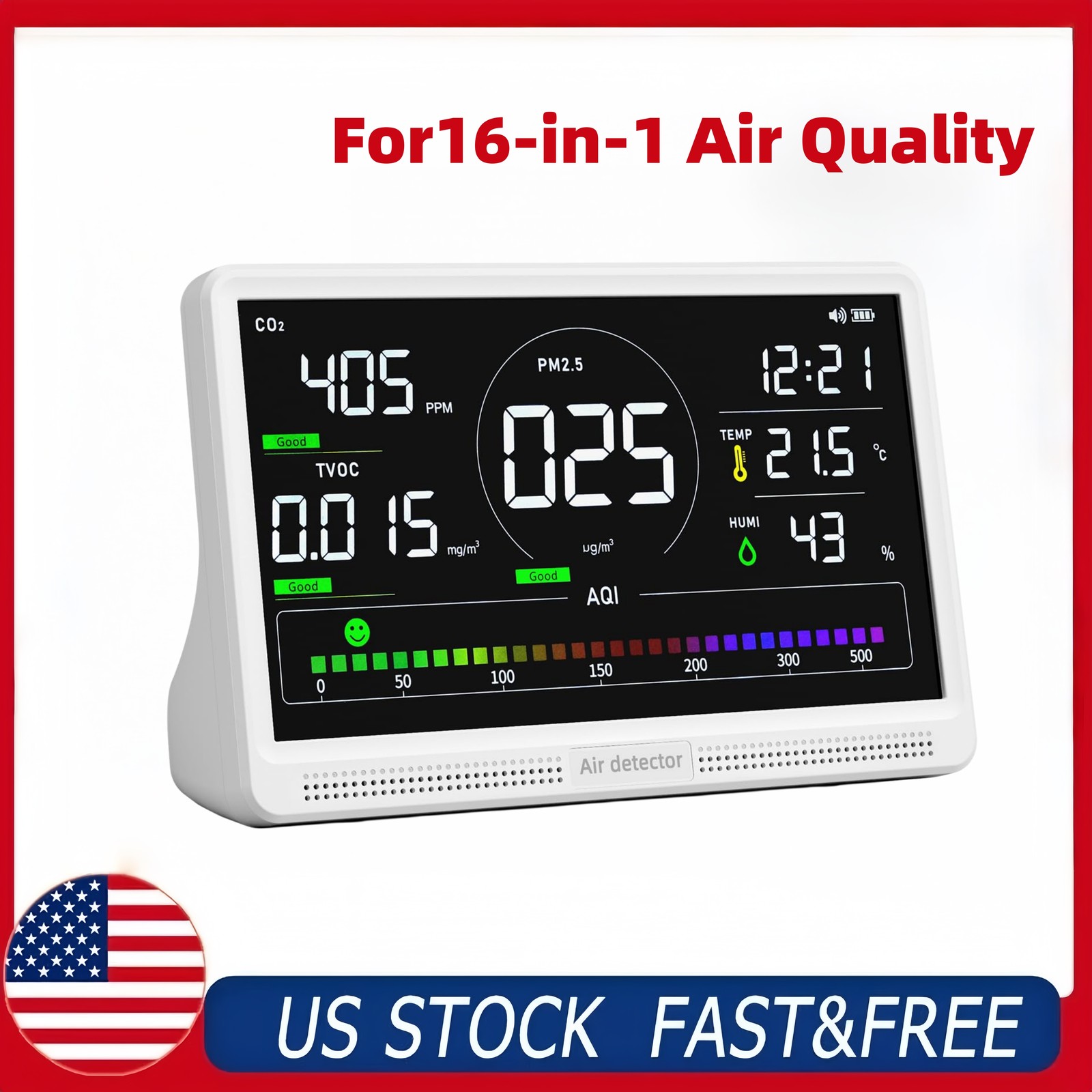 16-in-1 Indoor Air Quality Monitor with CO2, PM2.5, HCHO, TVOC, Temperature$56.99Last checked Nov 27, 2026View on eBay
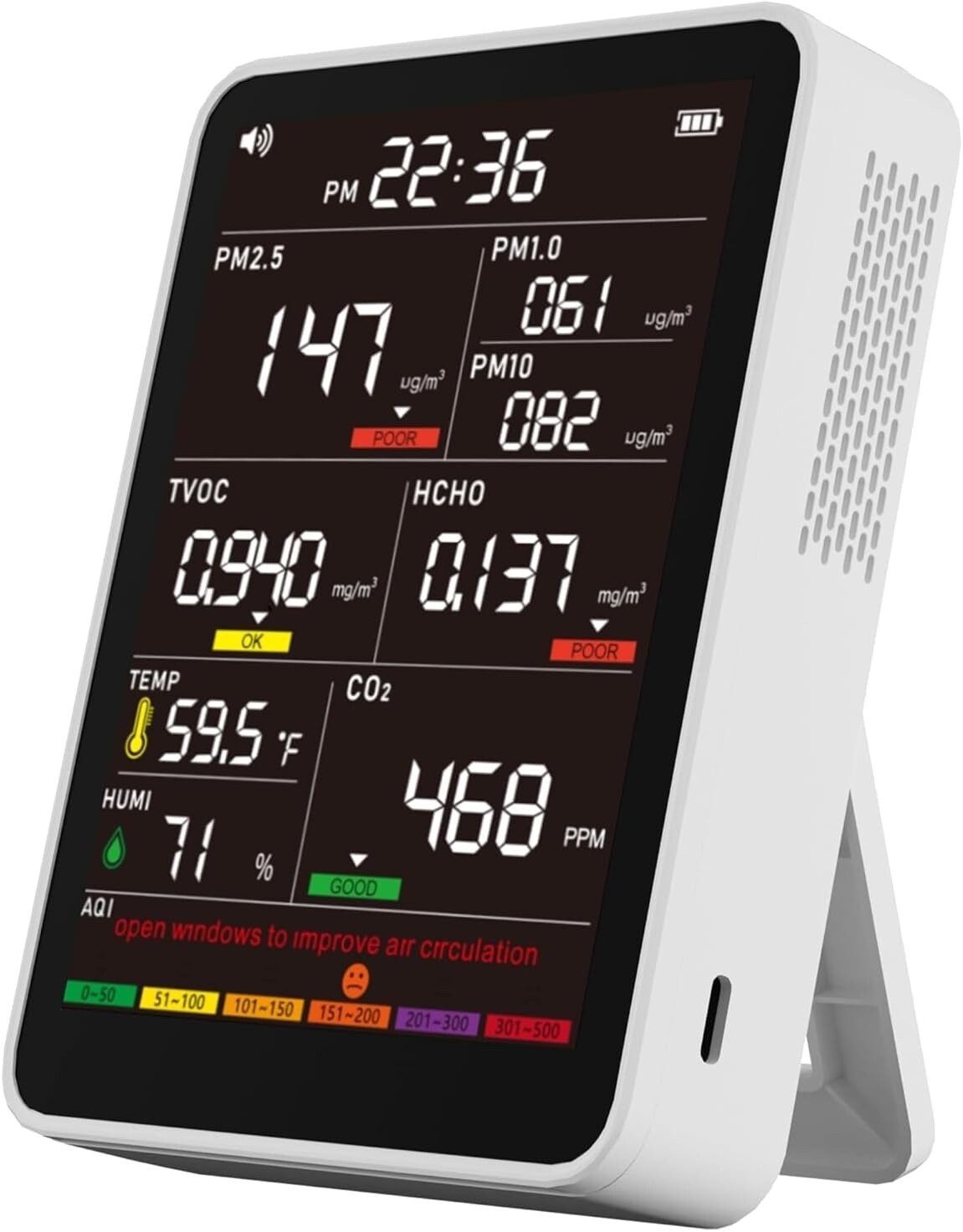 9-in-1 Professional Indoor Air Quality Monitor Indoor Portable AK16$59.99View on eBay
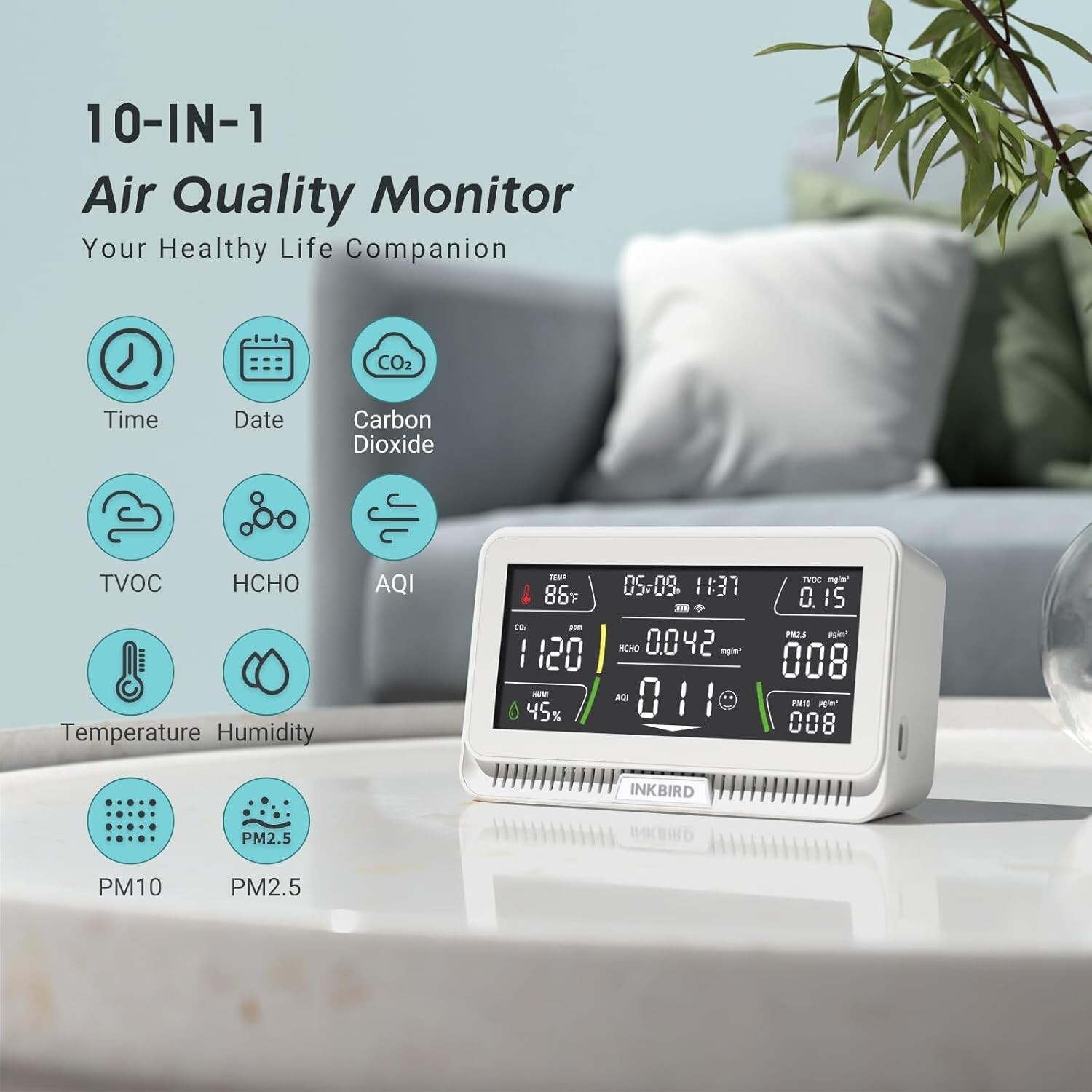 INKBIRD Air Quality Monitor Indoor Co2 Detector Portable 10-in-1 PM2.5 HCHO AQI$70.79View on eBay
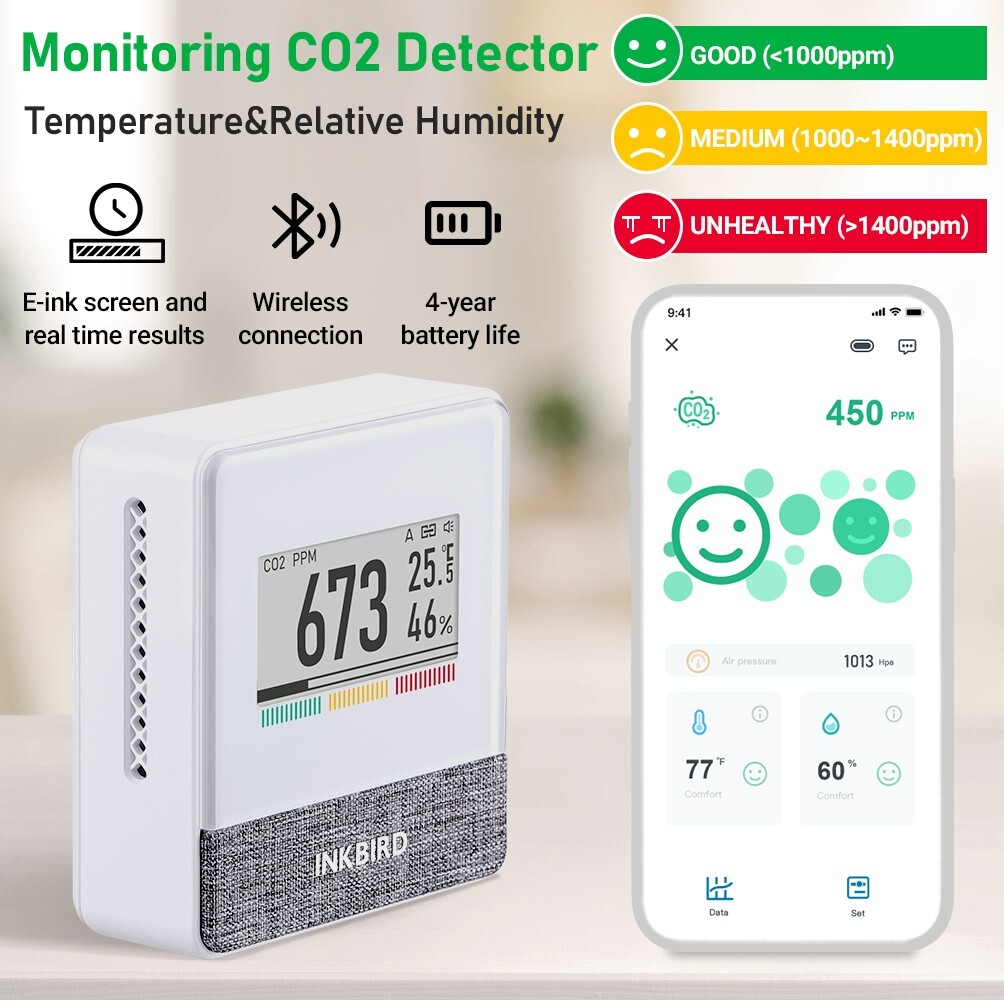 Wireless Indoor Air Quality Monitor INKBIRD IAM-T1 Electronic Ink Display NDIR$89.99Last checked Nov 27, 2026View on eBay
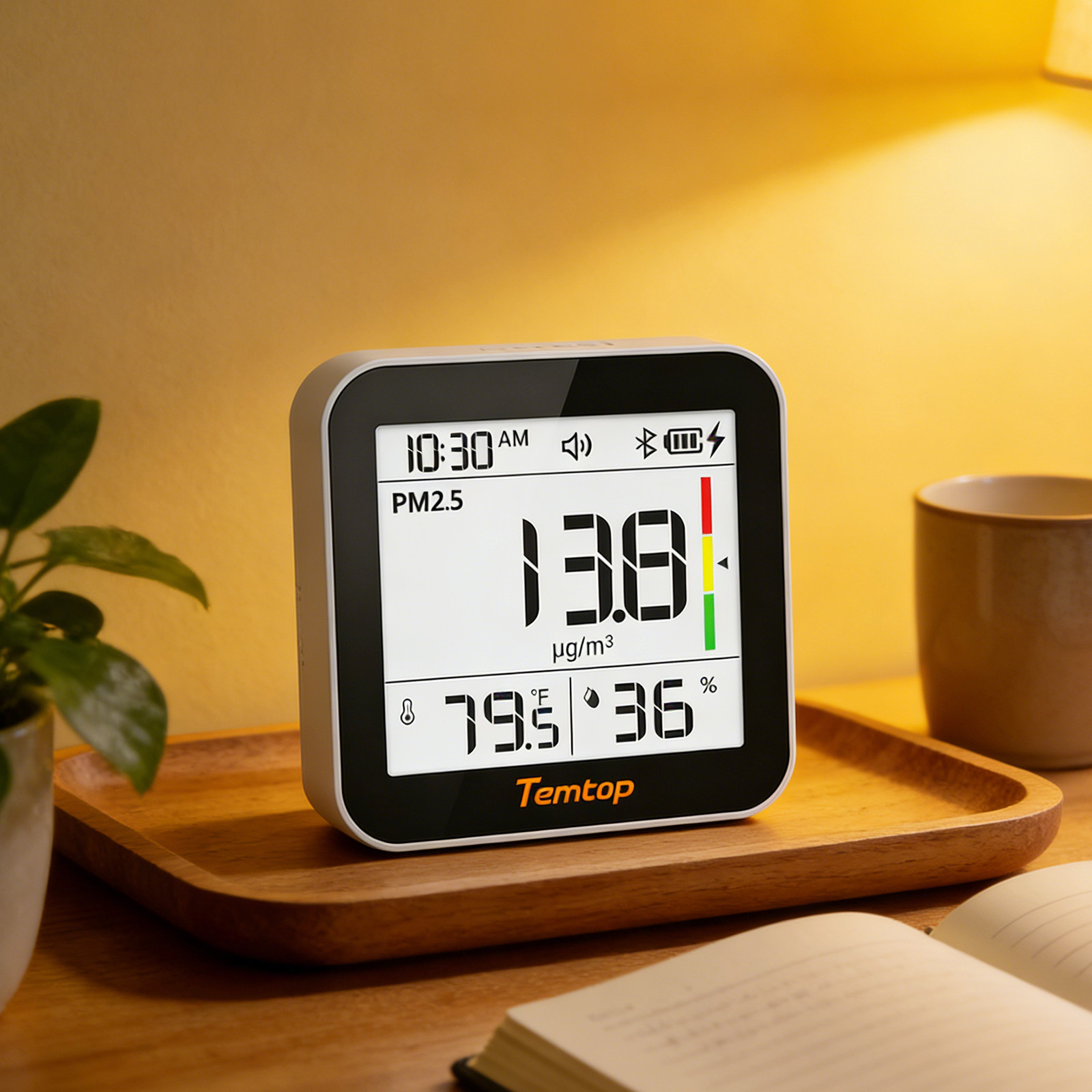 Temtop M10+ Indoor Air Quality Monitor CO2 Detector PM2.5 VOC Home Detector$99.99Last checked Nov 27, 2026View on eBay
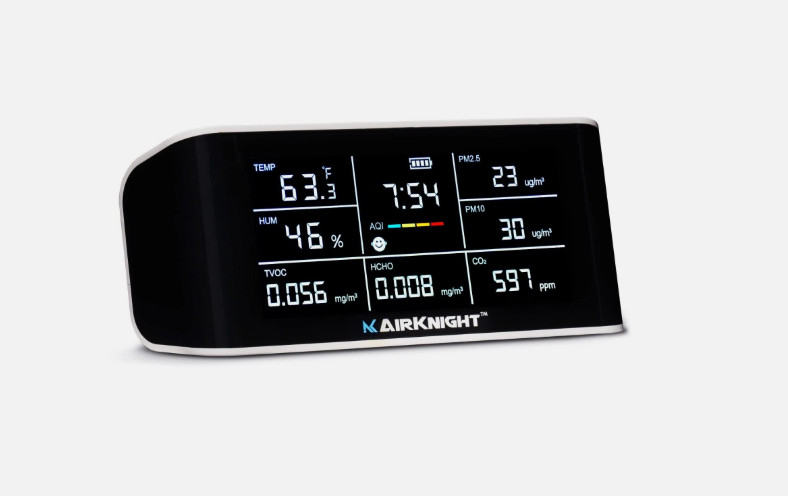 AirKnight 9-in-1 Indoor Air Quality Monitor Indoor Portable CO2 Monitor NEW$100.00View on eBay
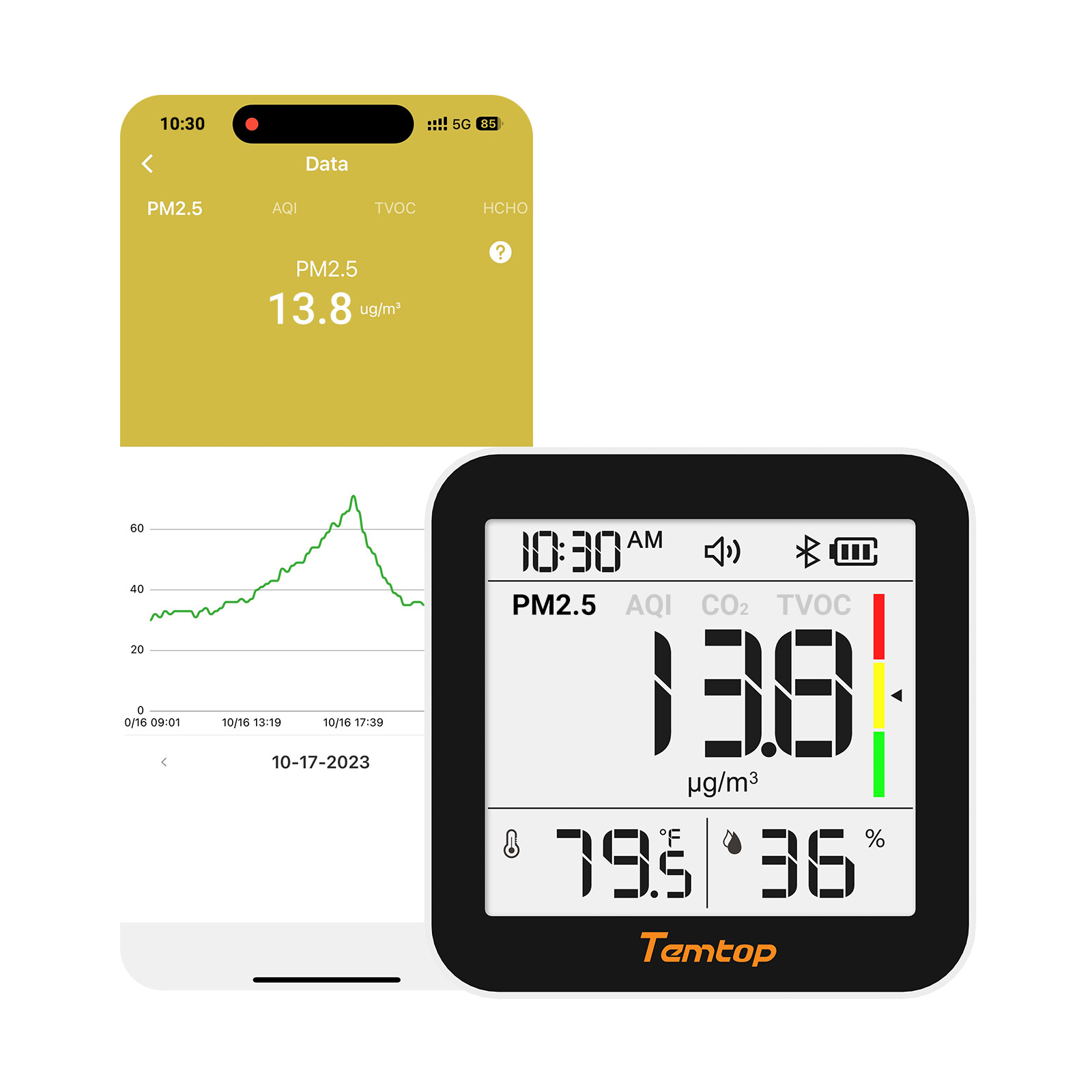 Temtop Indoor Air Quality Monitor 6-in-1 CO2,PM2.5,VOC Detection,temp,Hum, M10+$100.09Last checked Nov 27, 2026View on eBay
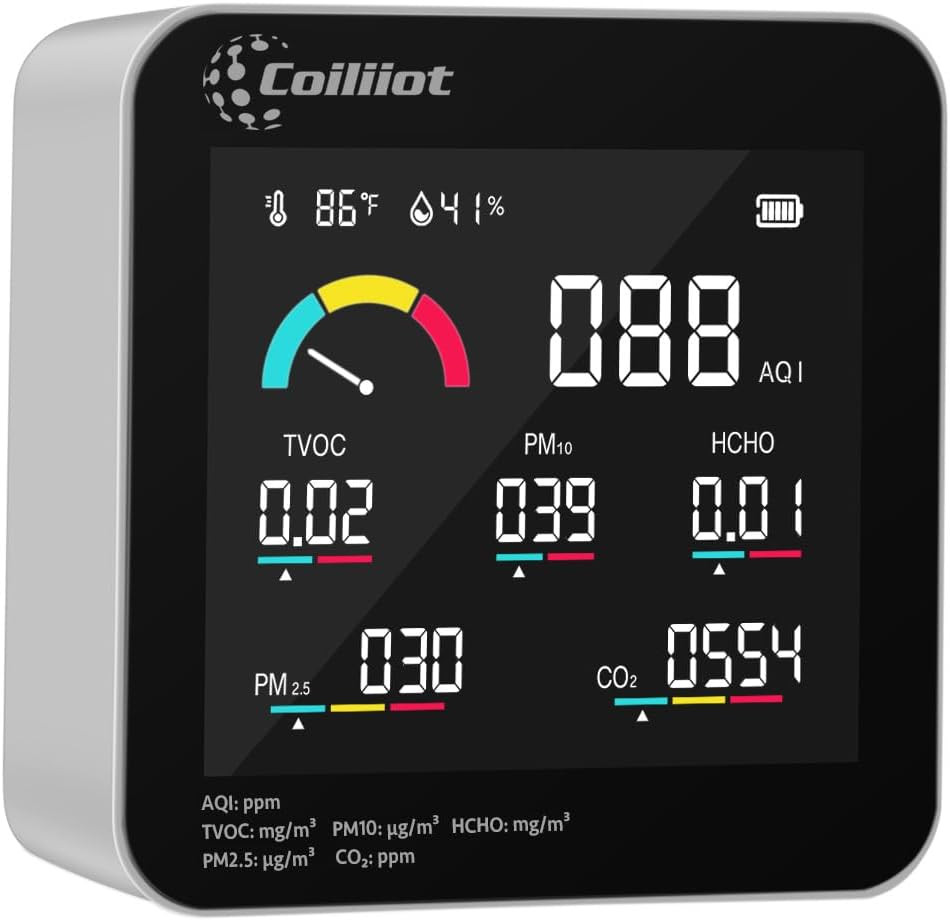 Air Quality Monitor Indoor – CO2 Detector, VOC Meter and AQI Tester Tracks TVOC,$117.32View on eBay
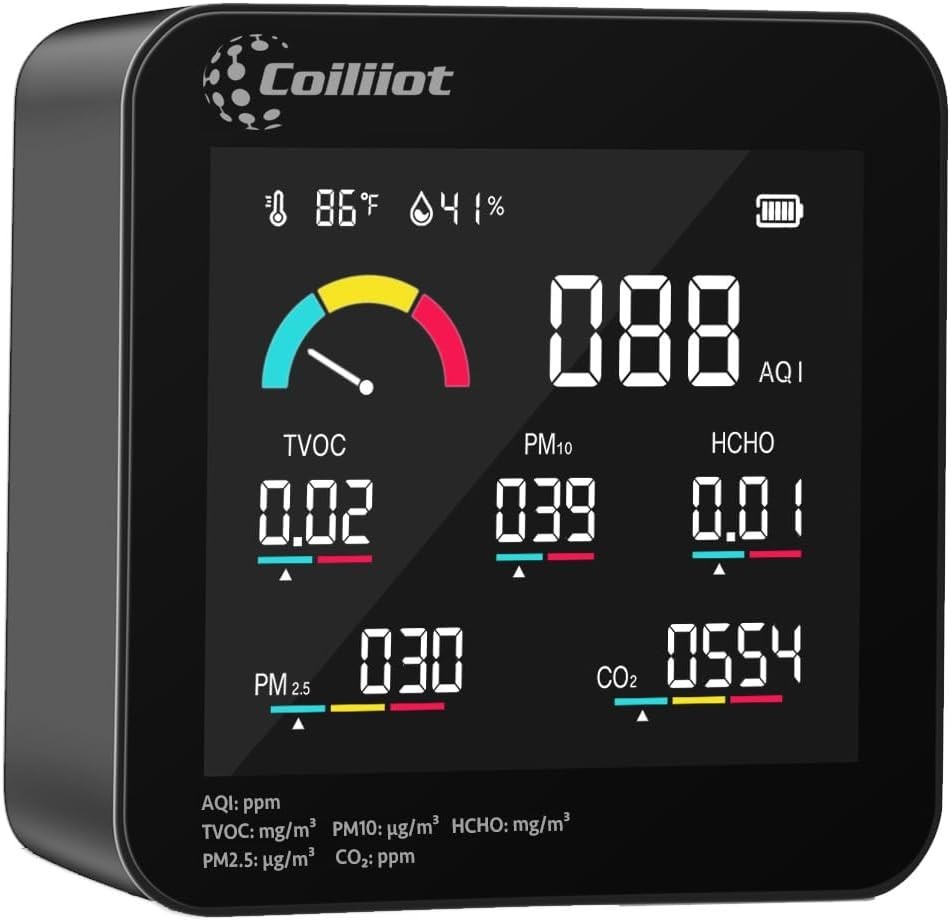 Air Quality Monitor Indoor – CO2 Detector, VOC Meter and AQI Tester Tracks TVOC,$119.32View on eBay
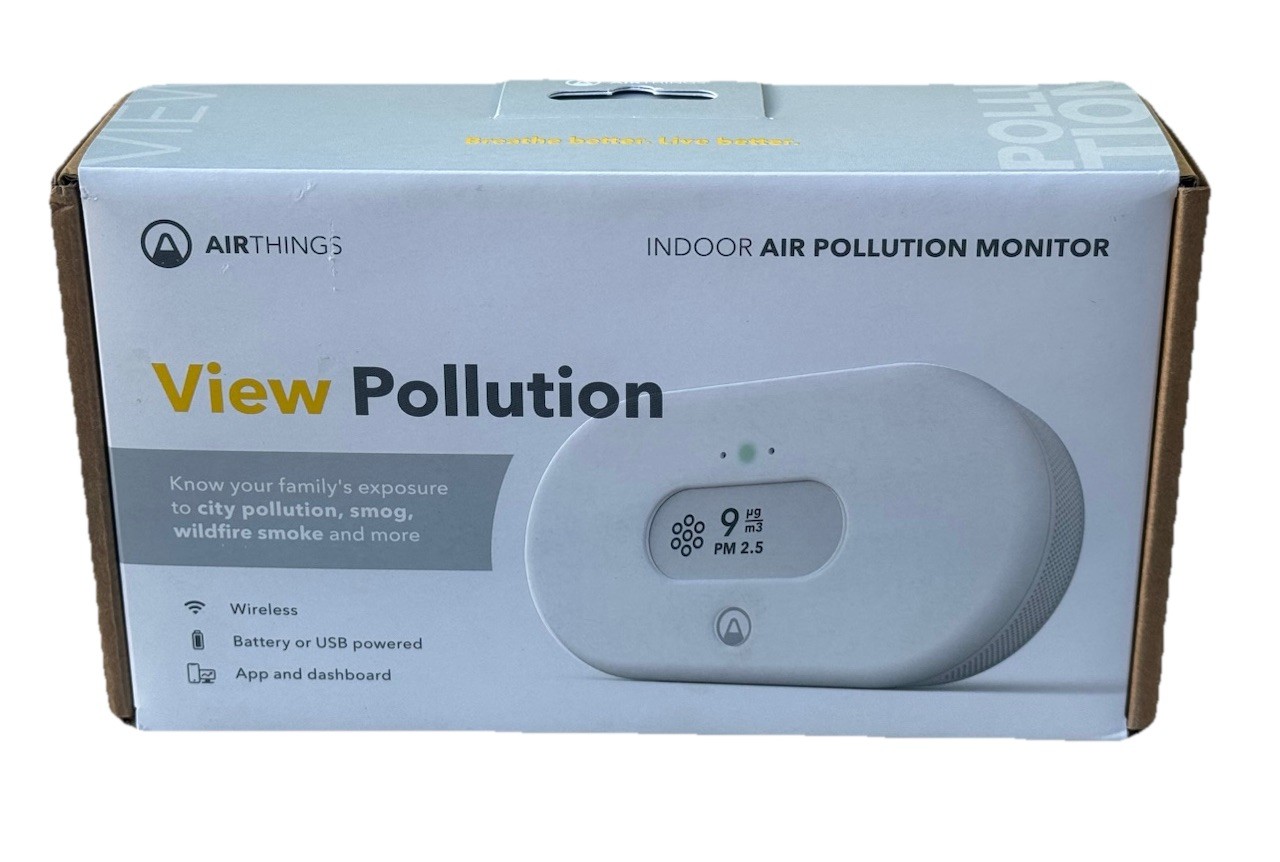 Airthings View Pollution Air Quality Indoor Air Quality Monitor 2980 NEW SEALED$160.00Last checked Nov 27, 2026View on eBay
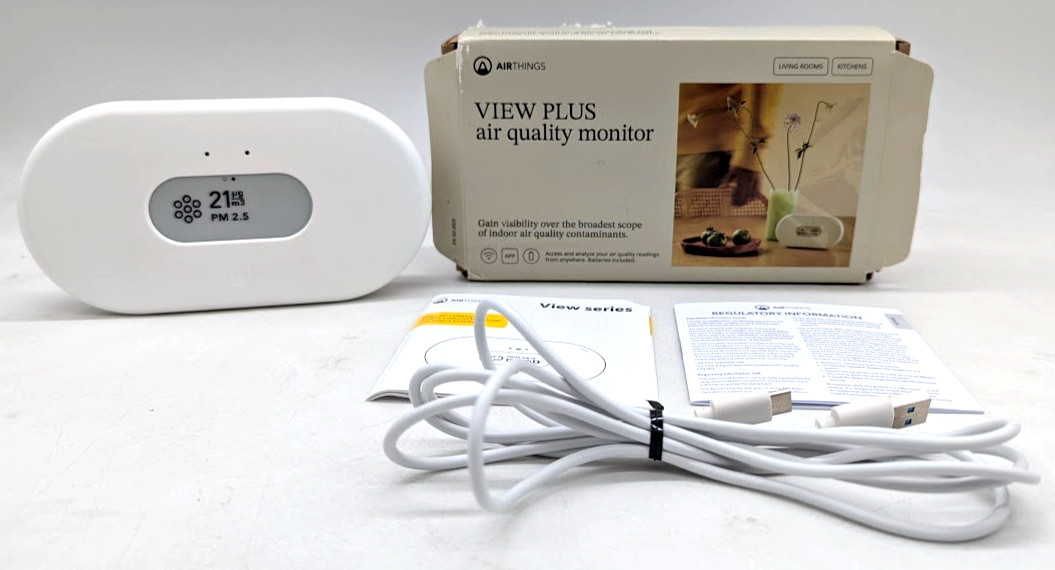 *OPEN BOX* Airthings View Plus Radon and Indoor Air Quality Monitor - White$199.99View on eBay
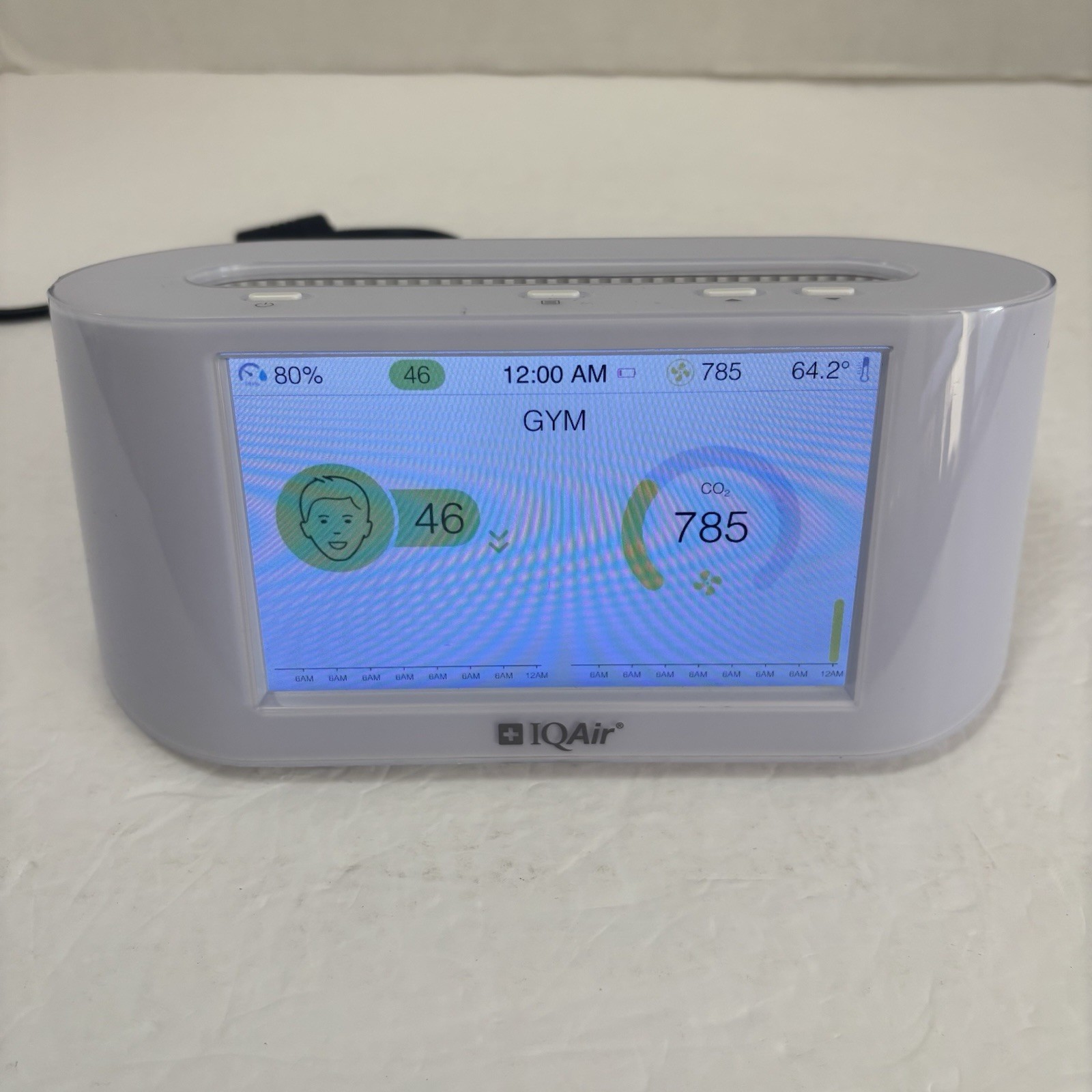 IQAir AirVisual Pro Wi-Fi Indoor/Outdoor Air Quality Monitor Temp Humidity CO2$209.99Used · Last checked Nov 24, 2026View on eBay
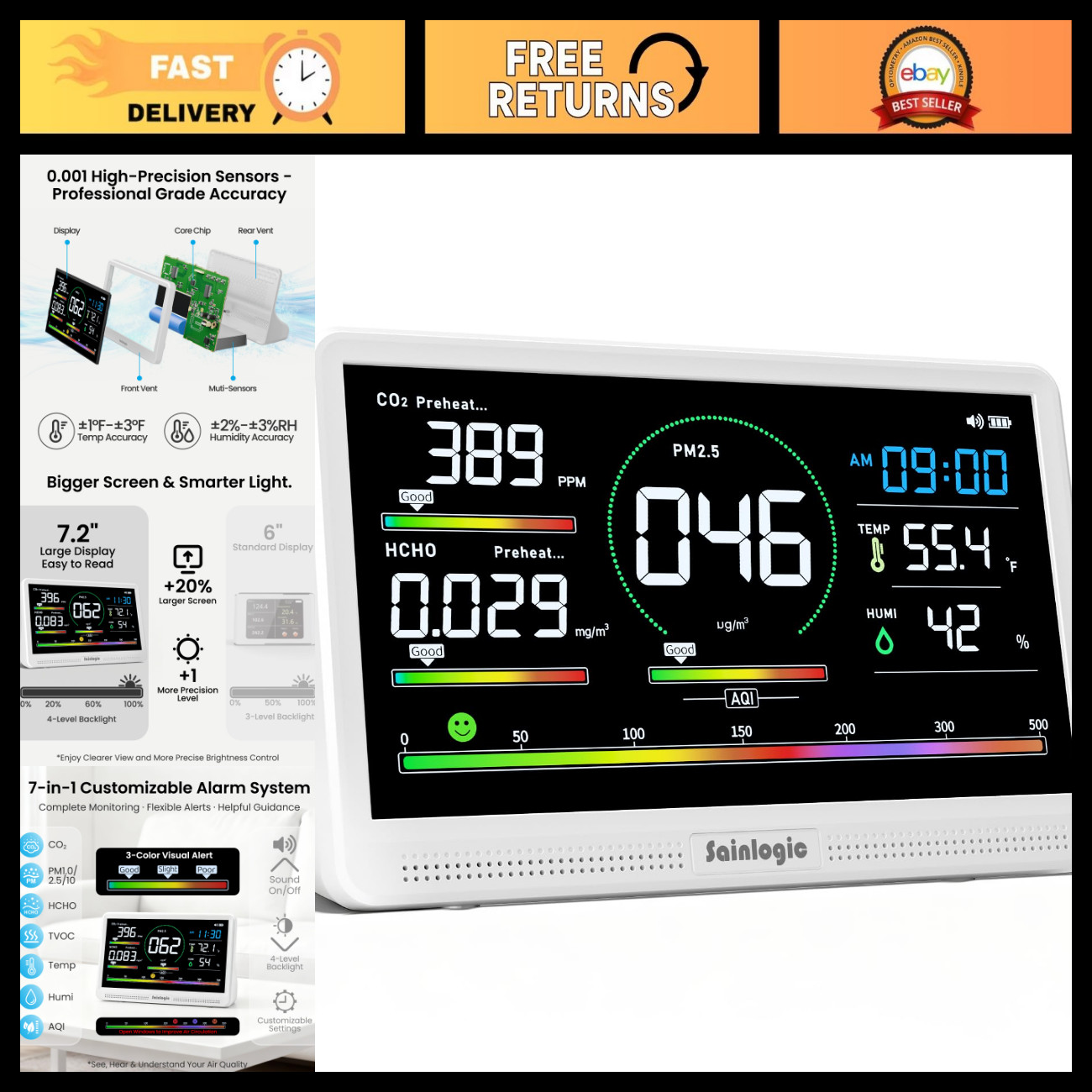 Indoor Air Quality Monitor - 16-in-1 VOC Meter, CO2, HCHO, PM2.5, Humidity, Temp$211.99New · Last checked Nov 24, 2026View on eBay
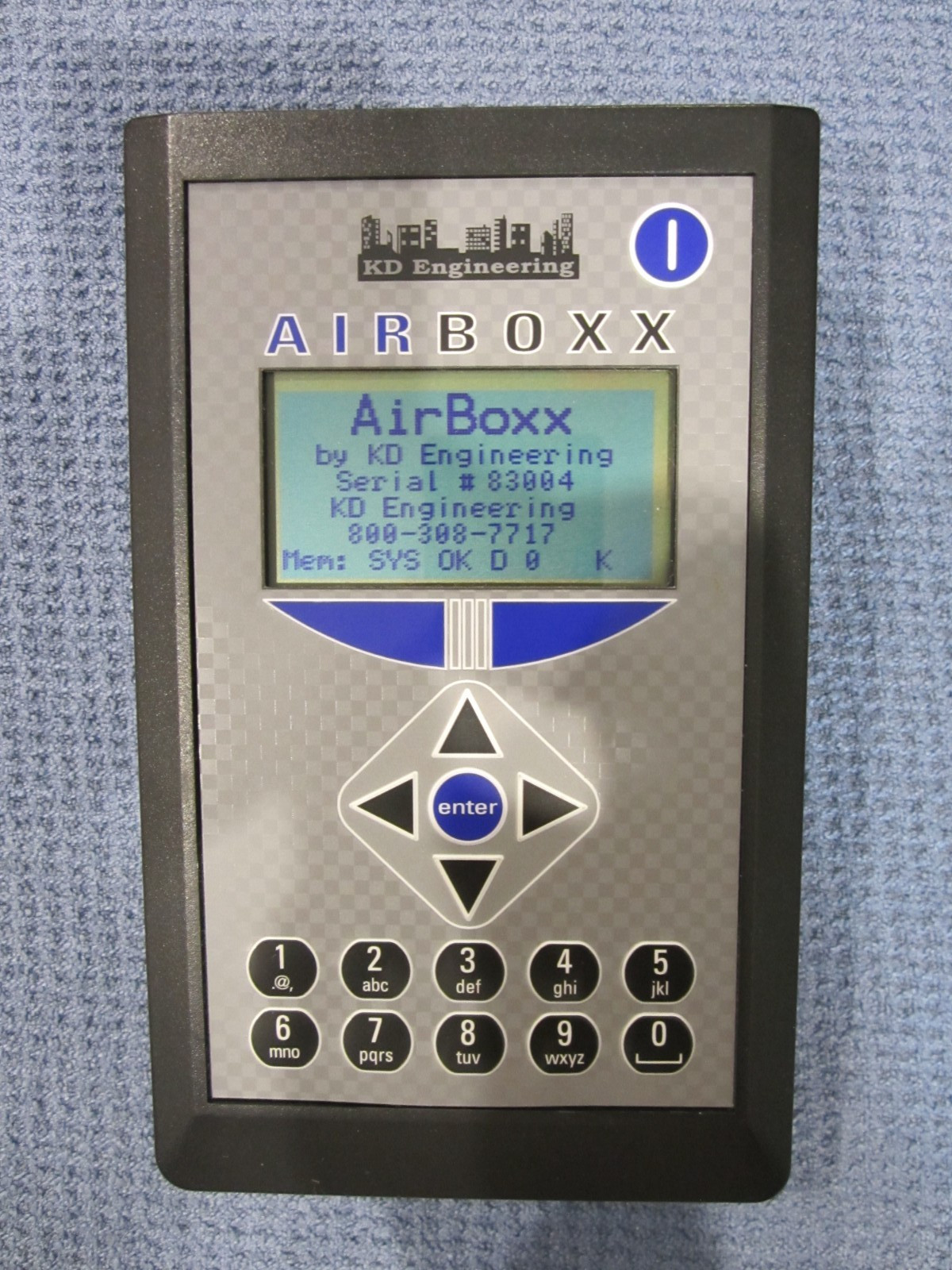 KD Engineering AIRBOXX Indoor Air Quality Monitor$399.99Used · Last checked Nov 24, 2026View on eBay
Highlights
- NDIR (non-dispersive infrared) CO2 sensors deliver ±30-50 ppm accuracy and years of drift-free service, while eCO2 sensors estimate from VOC trends and can be off by hundreds of ppm.
- Laser particle counters measure PM1.0/PM2.5/PM10 via light scattering with ±10% tolerance; units listing only 'AQI' without PM channels usually derive a score from a single VOC sensor.
- Electrochemical HCHO (formaldehyde) cells cost more and last 2-3 years before replacement; semiconductor VOC sensors are cheaper but cross-sensitive to alcohol, perfume, and cooking fumes.
- Display type and data logging separate tiers: e-ink screens (e.g., Inkbird IAM-T1) preserve readability and battery, while Wi-Fi/Bluetooth app models (Airthings Wave) add trend history and remote alerts.
Best use cases
- Best fit: bedrooms and living spaces where CO2 buildup and PM2.5 from cooking or traffic matter — choose an NDIR CO2 + laser PM2.5 unit with app logging; skip VOC-only 'AQI' pucks for this purpose.
- Best fit: allergy or wildfire-smoke households needing real-time PM2.5/PM10 response — pick a laser particle counter with audible AQI alarms; skip units that only show a color-coded score without numeric PM values.
- Best fit: new-build or renovation off-gassing checks — choose a model with dedicated HCHO and TVOC channels and electrochemical cells; skip 16-in-1 budget units whose HCHO channel is a semiconductor sensor with heavy cross-sensitivity.
- Wrong fit: outdoor or garage use — consumer IAQ monitors are calibrated for indoor temperature/humidity ranges and will drift or alarm falsely in high-humidity or extreme-cold environments; use weather-rated outdoor sensors instead.
Buying tips
- Insist on NDIR for CO2: if the spec sheet says 'eCO2', 'CO2 equivalent', or 'VOC-derived', the reading is an estimate, not a measurement — avoid for ventilation decisions.
- Match sensor count to need: a 6-in-1 (CO2, PM2.5, PM10, TVOC, temp, humidity) covers most homes; 9- or 16-in-1 labels usually pad the count with derived or overlapping indices rather than additional physical sensors.
- Check calibration and lifespan terms: NDIR CO2 sensors need little maintenance, laser PM sensors benefit from annual clean-air calibration, and electrochemical HCHO cells require replacement every 2-3 years — confirm the unit supports field calibration.
- Prioritize logging and alerting: Wi-Fi/Bluetooth models with app history and threshold push alerts are worth more than a higher sensor count without data export for diagnosing ventilation problems.
Specs
| CO2 Sensor Type | NDIR (true) vs. eCO2 (estimated) |
|---|---|
| Particulate Channels | Laser PM1.0/PM2.5/PM10 vs. VOC-only AQI |
| VOC/HCHO Sensing | Electrochemical vs. semiconductor |
| Connectivity & Logging | Wi-Fi/Bluetooth app vs. standalone display |
Related searches
What to check before buying
- Placement: mount at breathing height (about 1-1.5 m) away from windows, doors, and HVAC vents; CO2 readings near a vent will read falsely low.
- Power and connectivity: confirm the unit runs on USB-C or included adapter and that Wi-Fi band (2.4 GHz vs. 5 GHz) matches your router before relying on app alerts.
- Environment: verify the operating temperature and humidity range covers your room — most consumer IAQ monitors are rated roughly 0-50°C and 0-95% RH non-condensing.
- Companion parts: for HCHO or CO2 verification, budget for a calibration gas or reference check, and confirm replacement sensor modules are available for your model tier.
FAQ
Data sources: eBay / Amazon listings and product attribute feeds. Updated Nov 29, 2026.
Some links on this page are affiliate links. If you buy after clicking one, we may earn a commission at no extra cost to you. This does not change which products appear here or their order. Affiliate disclosure.