
Photos from current listings. Actual item, color, and included accessories may vary.
Air Quality Detector Buying Guide
Air quality detectors are sensor-based meters that quantify indoor pollutants (PM2.5, PM10, CO2, TVOC, formaldehyde) and comfort metrics (temperature, humidity). The core trade-off is sensor type and calibration: optical particle counters with laser scattering outperform cheap VOC-only sensors, while NDIR CO2 sensors are essential for ventilation tracking. Buy for the specific pollutant you need to monitor; multi-in-one units with 9+ 'AQI' metrics often conflate algorithms and cannot be trusted for formaldehyde or radon without dedicated electrochemical or radon sensors.
Median $156.71 · New & pre-owned listings
Key takeaways
- Particle sensors: laser scattering (true PM2.5/PM10 counts) vs. infrared (trend-only, no size discrimination). Require laser-based for credible PM readings.
- CO2 sensing: NDIR (non-dispersive infrared) gives ppm accuracy; 'eCO2' from TVOC sensors is an estimate and drifts with odors, not ventilation.
- Formaldehyde (HCHO) needs an electrochemical sensor; most budget units infer HCHO from TVOC and are not quantitative. Radon requires a dedicated radon detector.
At a glance
- Category
- Environmental & Indoor Air Measurement
- Last updated
- Nov 29, 2026
Current offers
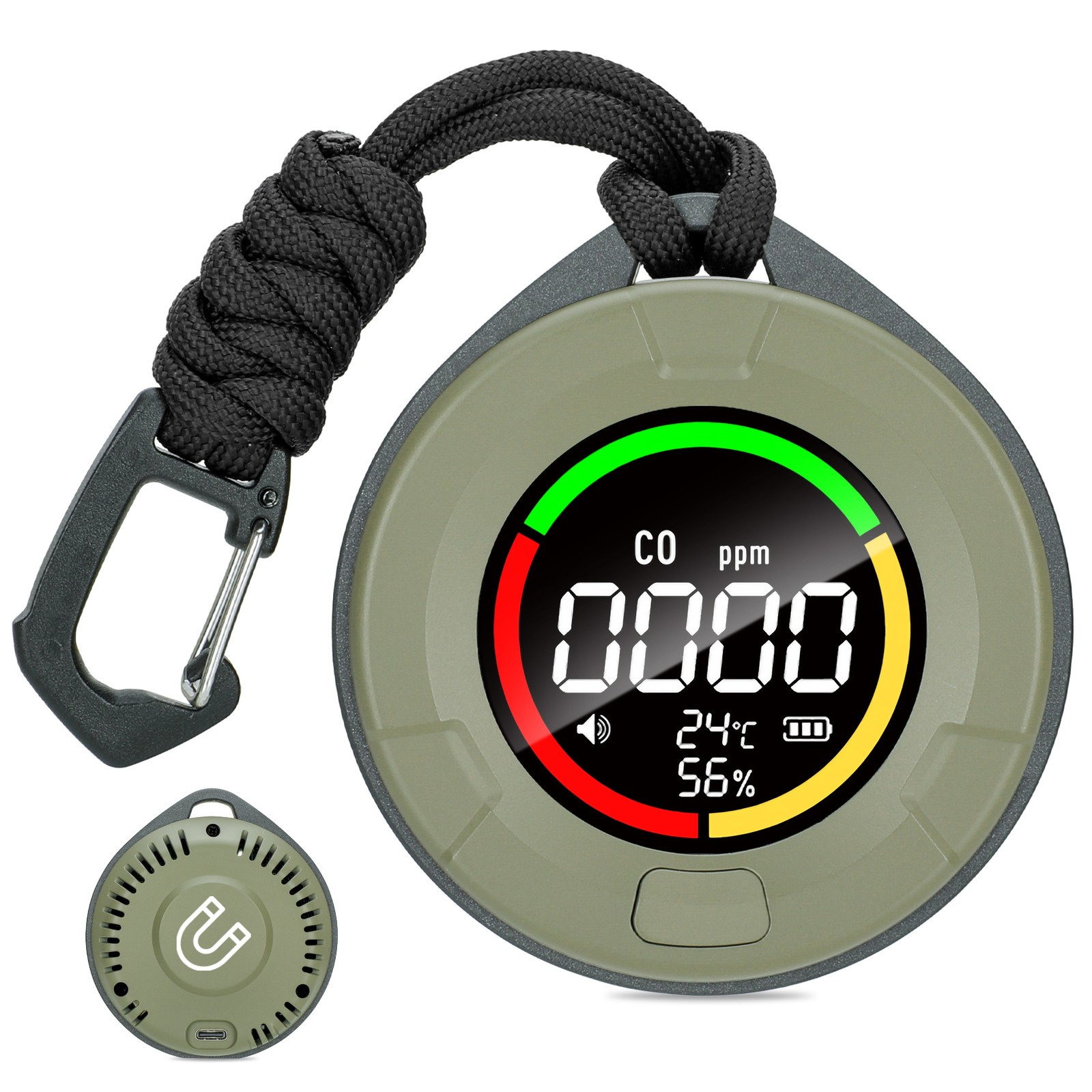 Portable CO2 Detector Mini Indoor air Monitor Home NDIR Sensor 3IN1 US$29.99View on eBay
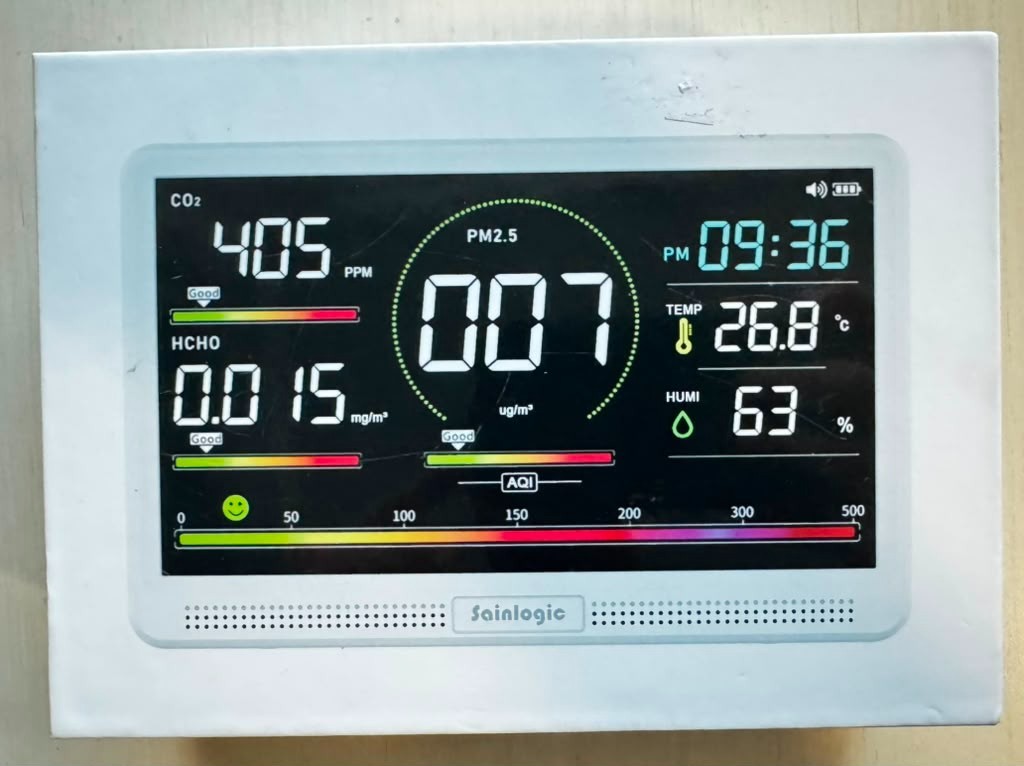 16 in 1 Air Quality Monitor Indoor 7" Display 9 AQI+7 AQI Alerts Air Quality Met$30.00View on eBay
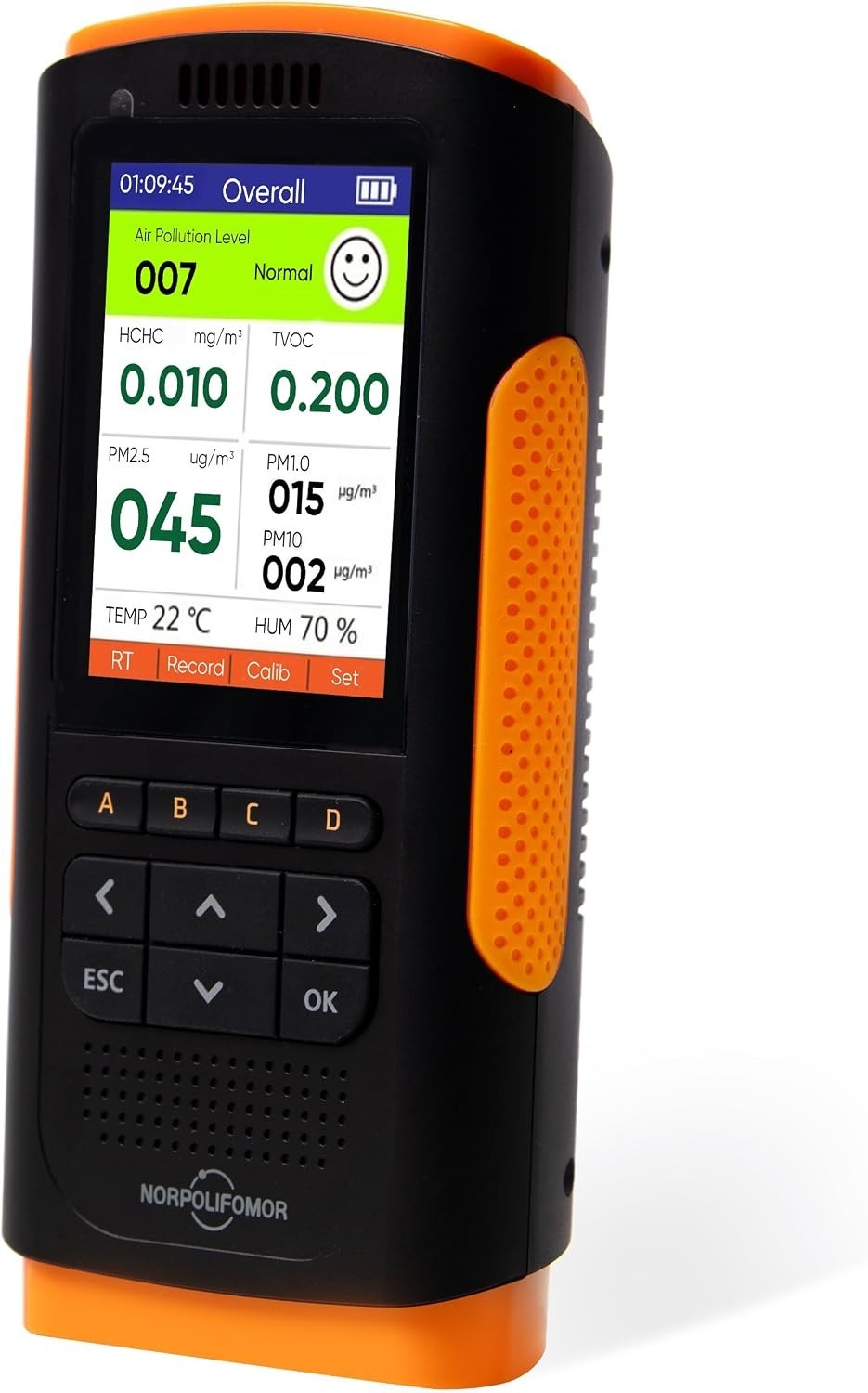 Intelligent Real Time Air Quality Detector AQI Air Quality Monitor, Formaldehyde$35.00View on eBay
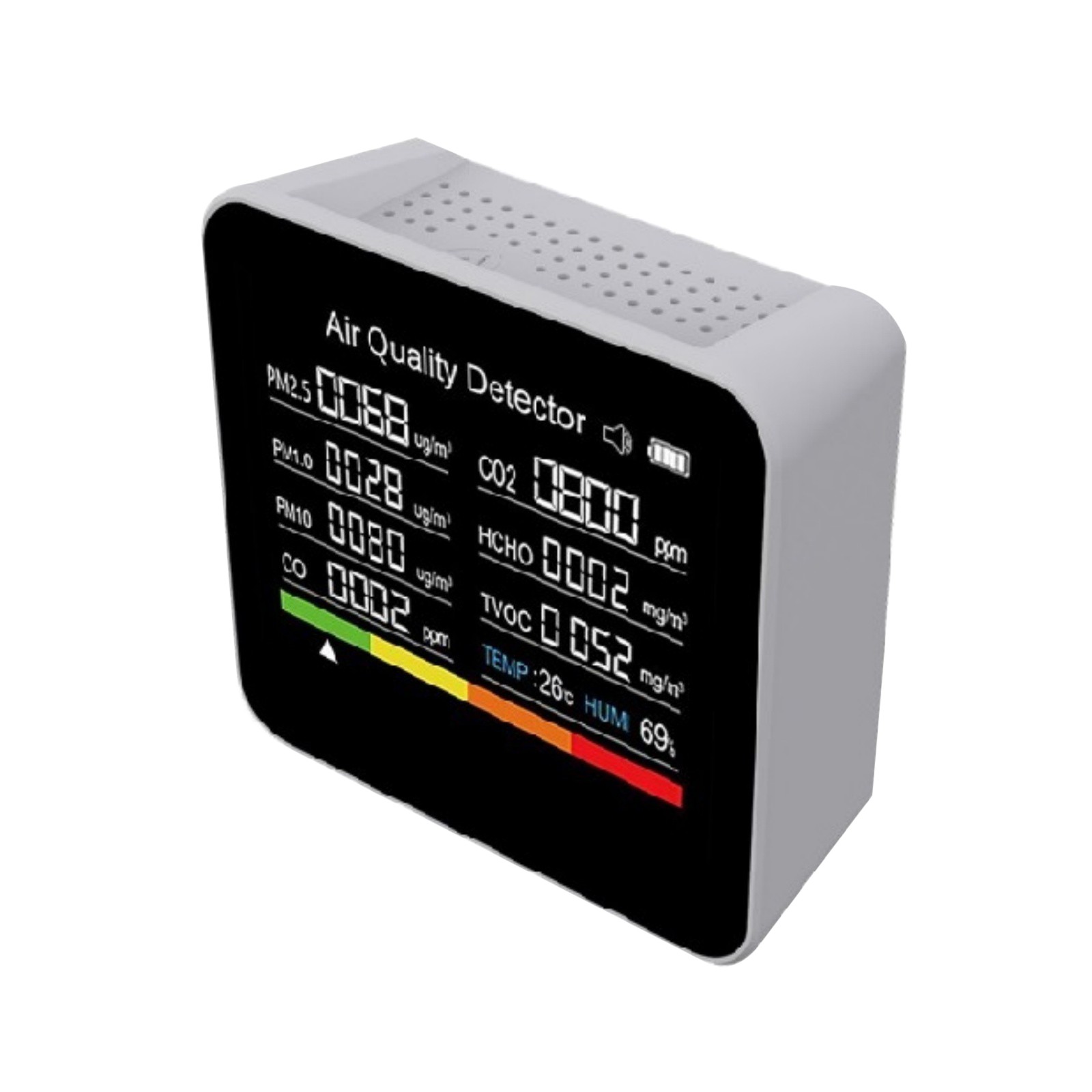 9-in-1 Air Quality Monitor CO2/PM2.5/TVOC/HCHO Detector LED Digital Display$38.80View on eBay
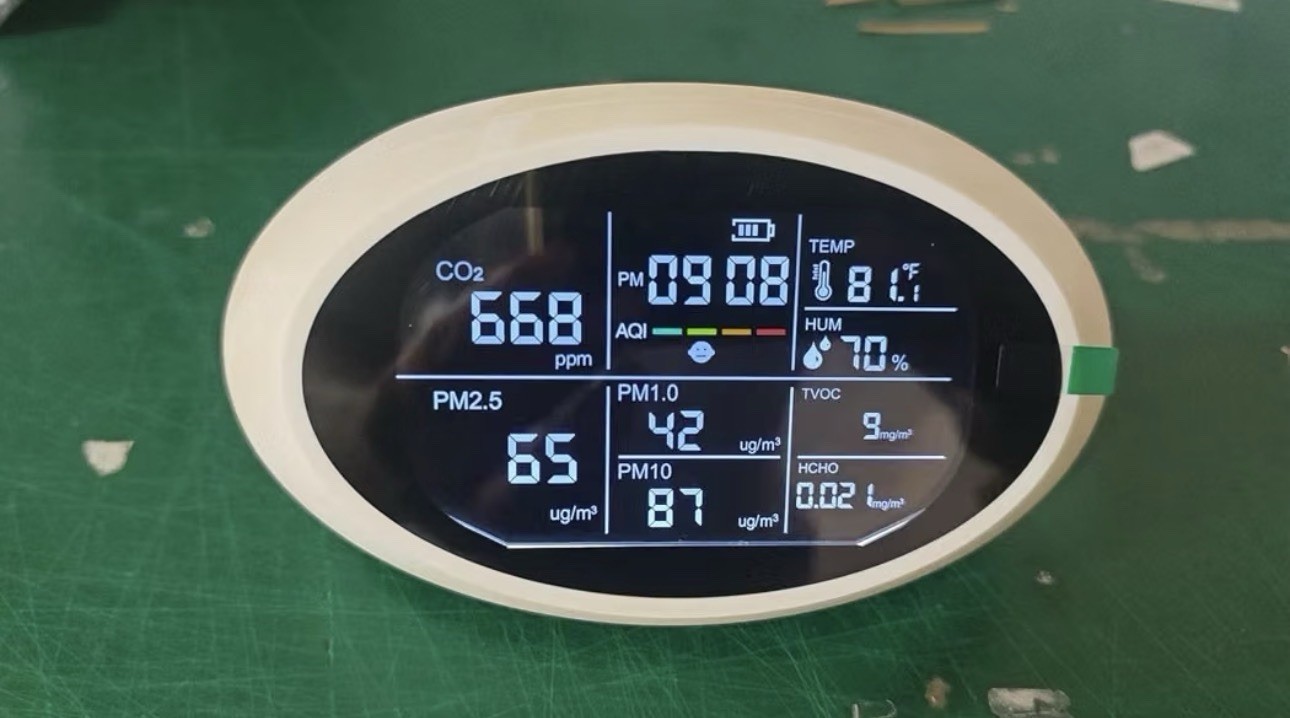 12-in-1 Air Quality Monitor Indoor, Portable Air Quality Monitor, CO2 PM1.0$39.99View on eBay
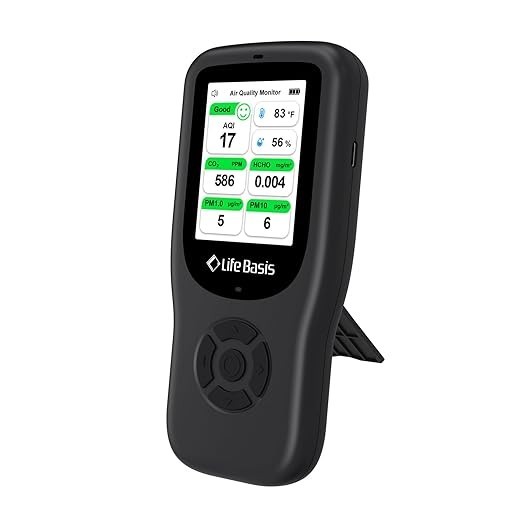 Life Basis Air Quality Monitor Indoor, 11-in-1 Air Quality Detector w. Stand$39.99View on eBay
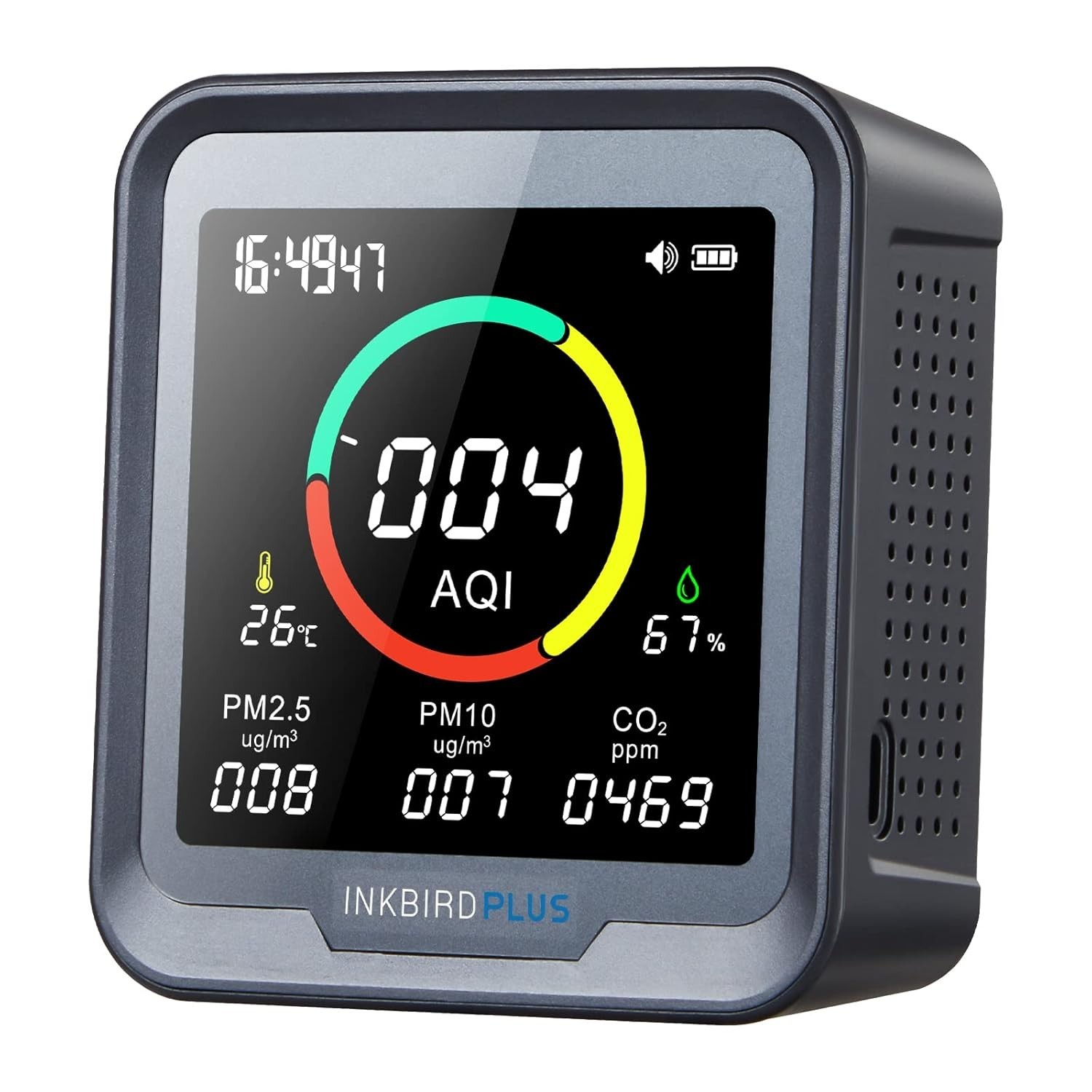 Gas CO2 Detector Air Monitor Quality Tester Temperature Humidity Measuring PM2.5$45.99Last checked Nov 27, 2026View on eBay
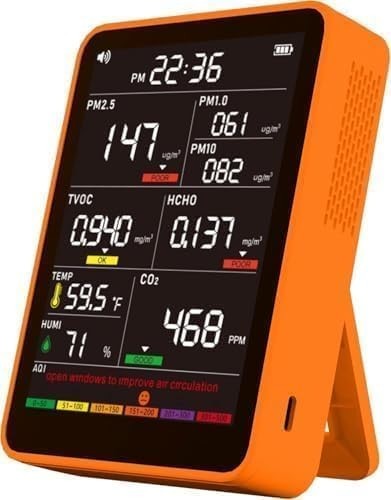 Professional Indoor Air Quality Monitor with AQI Beep Alarms, Portable Real Time$53.99View on eBay
- Professional Indoor Air Quality Monitor Real Time with AQI Beep Alarms Portable$53.99View on eBay
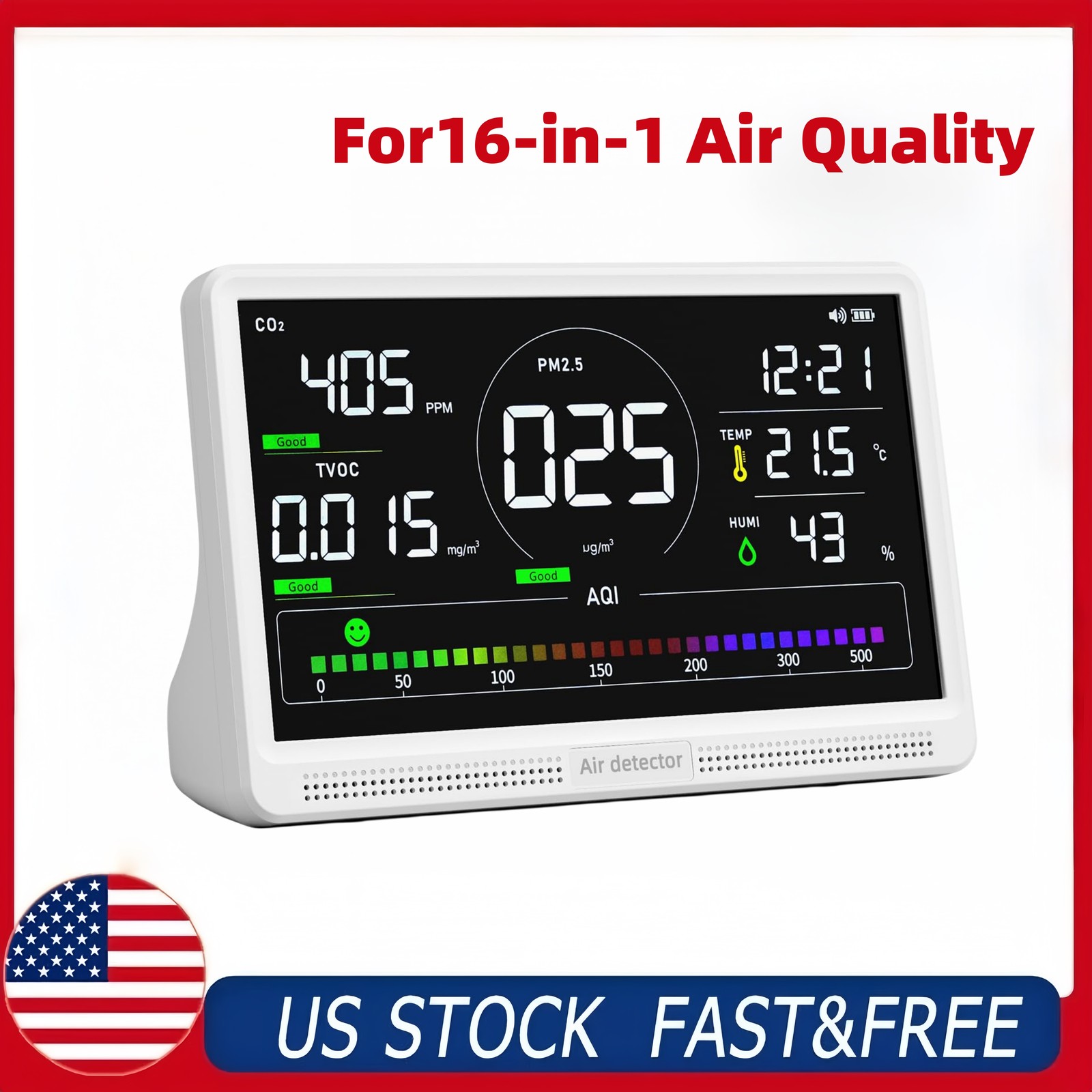 16-in-1 Indoor Air Quality Monitor with CO2, PM2.5, HCHO, TVOC, Temperature$56.99Last checked Nov 27, 2026View on eBay
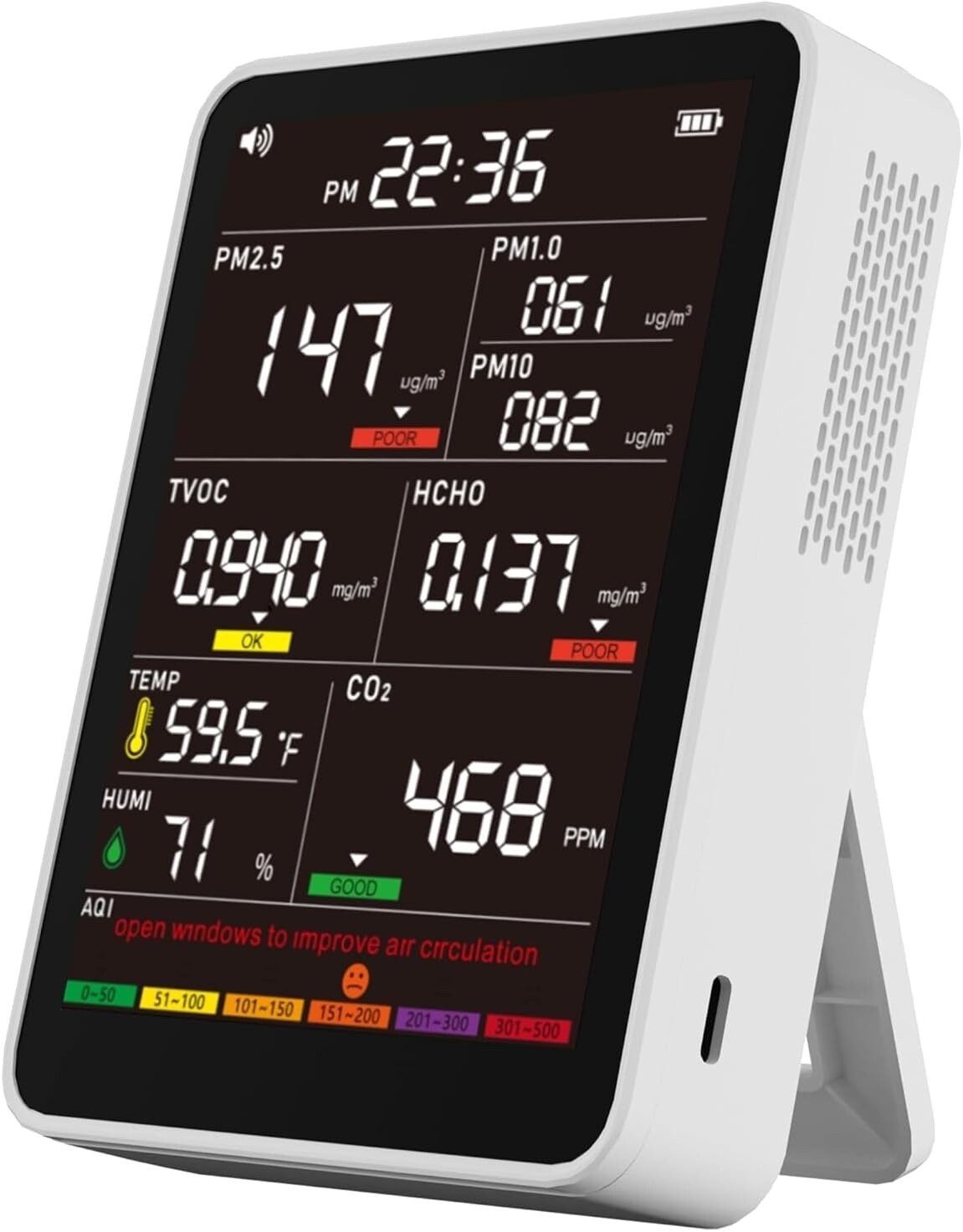 9-in-1 Professional Indoor Air Quality Monitor Indoor Portable AK16$59.99View on eBay
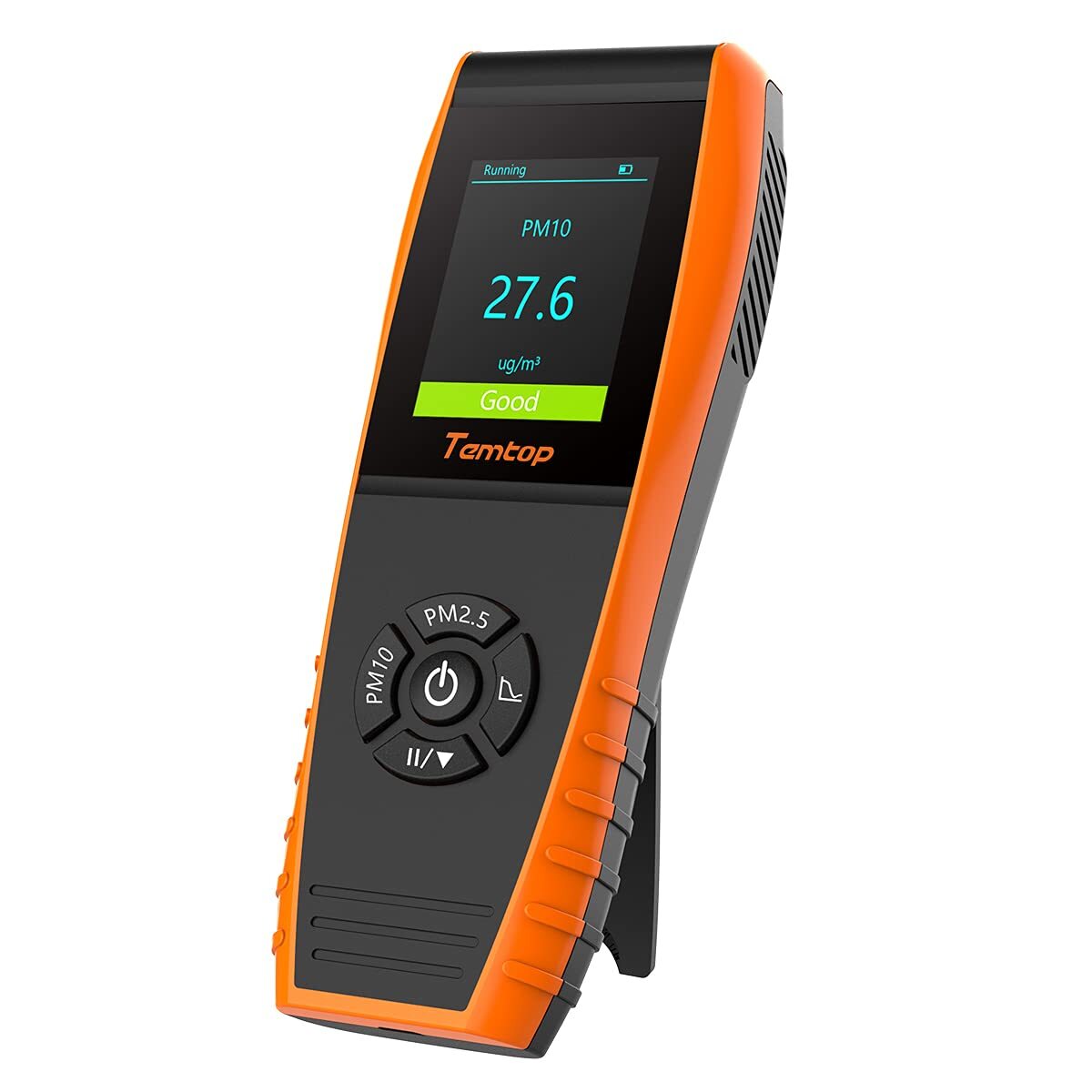 Temtop P600 Air Quality Monitor Particle Detector PM2.5 PM10 Recorder Histogram$69.99Last checked Nov 28, 2026View on eBay
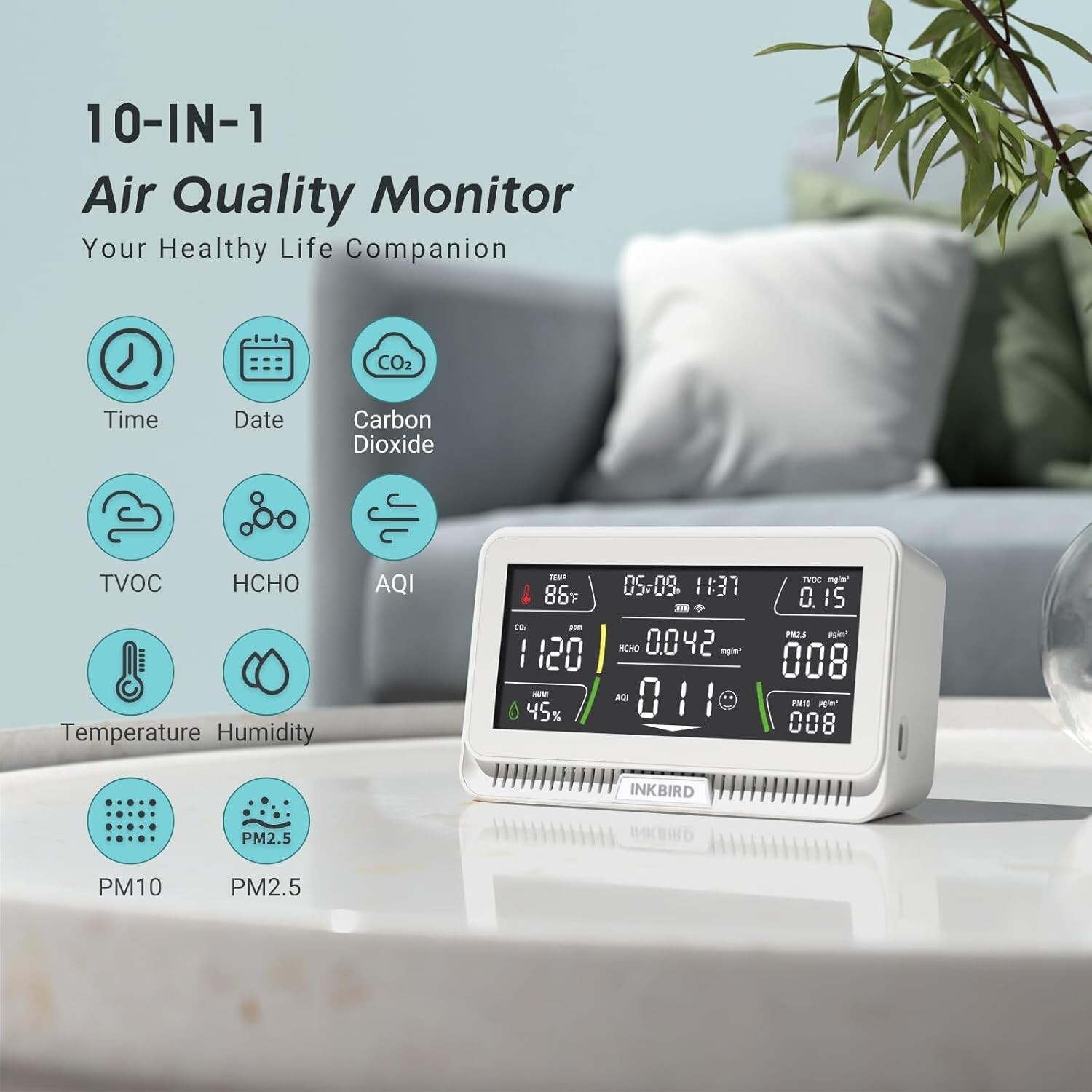 INKBIRD Air Quality Monitor Indoor Co2 Detector Portable 10-in-1 PM2.5 HCHO AQI$70.79View on eBay
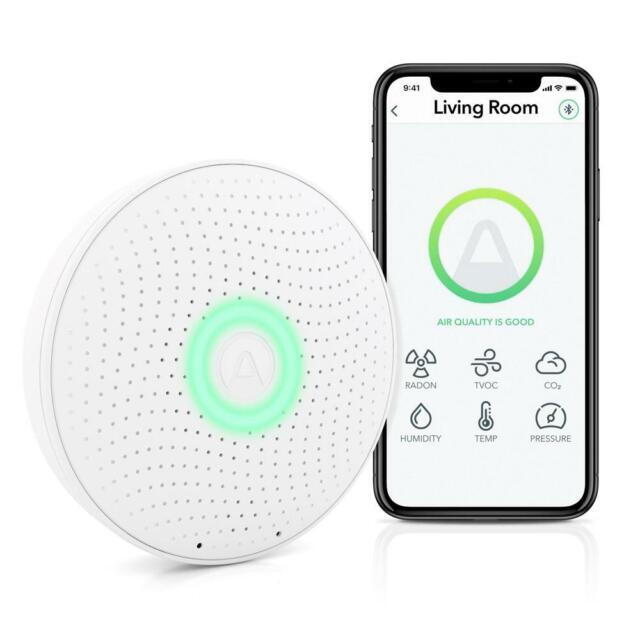 Airthings Wave Plus 2930 Air Quality Monitor$89.00View on eBay
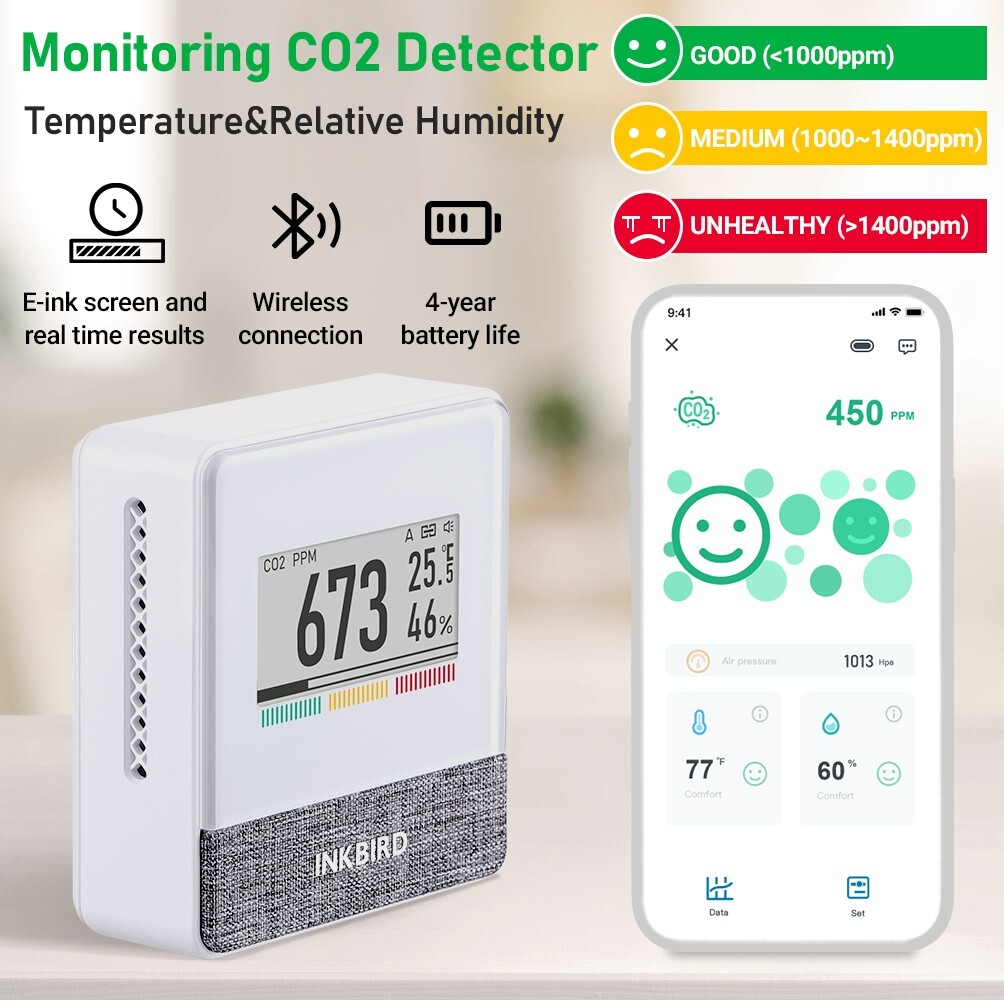 Wireless Indoor Air Quality Monitor INKBIRD IAM-T1 Electronic Ink Display NDIR$89.99Last checked Nov 27, 2026View on eBay
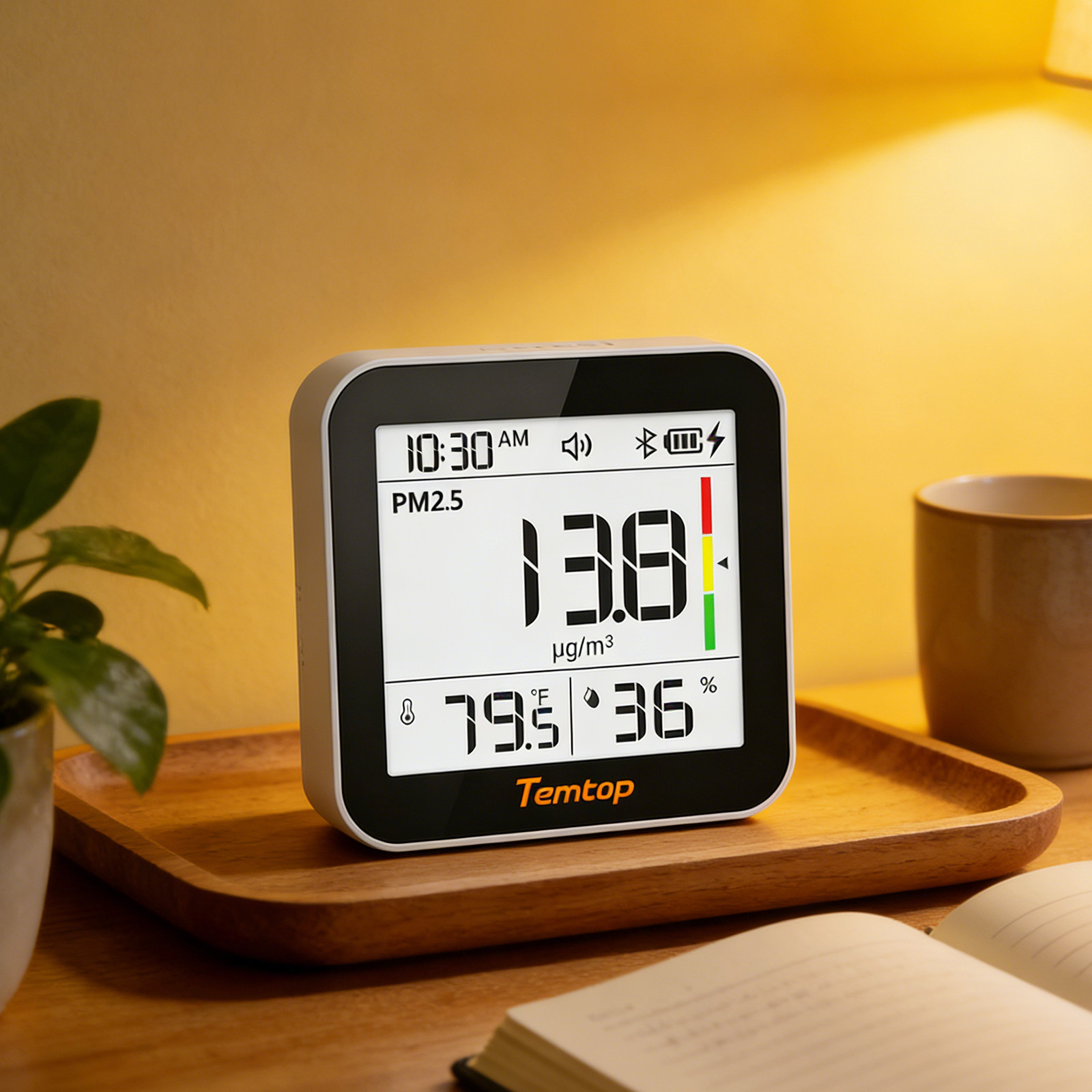 Temtop M10+ Indoor Air Quality Monitor CO2 Detector PM2.5 VOC Home Detector$99.99Last checked Nov 27, 2026View on eBay
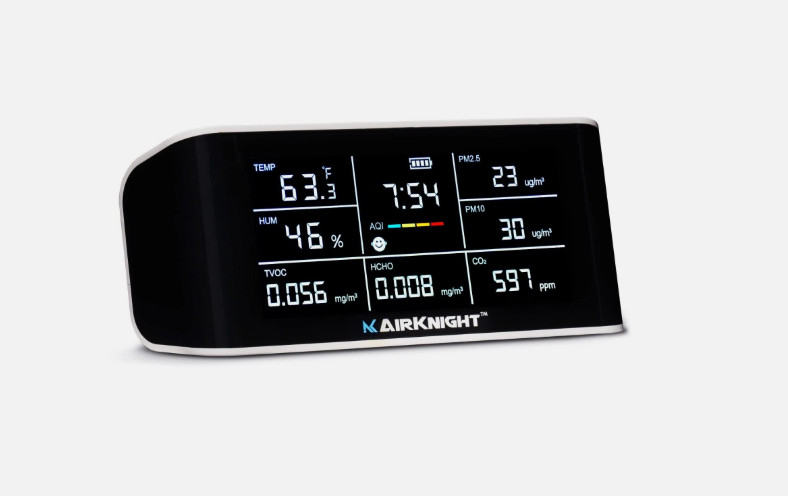 AirKnight 9-in-1 Indoor Air Quality Monitor Indoor Portable CO2 Monitor NEW$100.00View on eBay
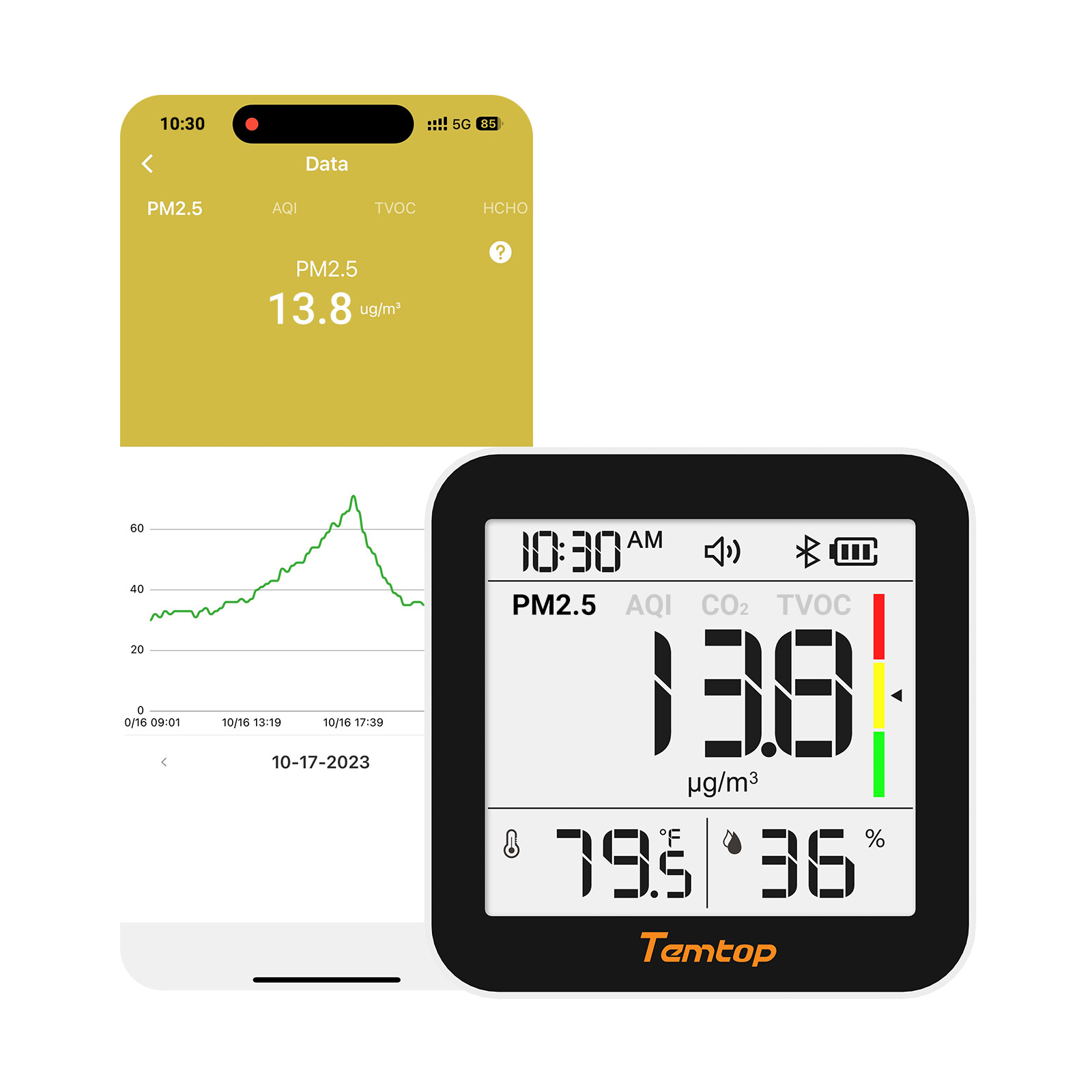 Temtop Indoor Air Quality Monitor 6-in-1 CO2,PM2.5,VOC Detection,temp,Hum, M10+$100.09Last checked Nov 27, 2026View on eBay
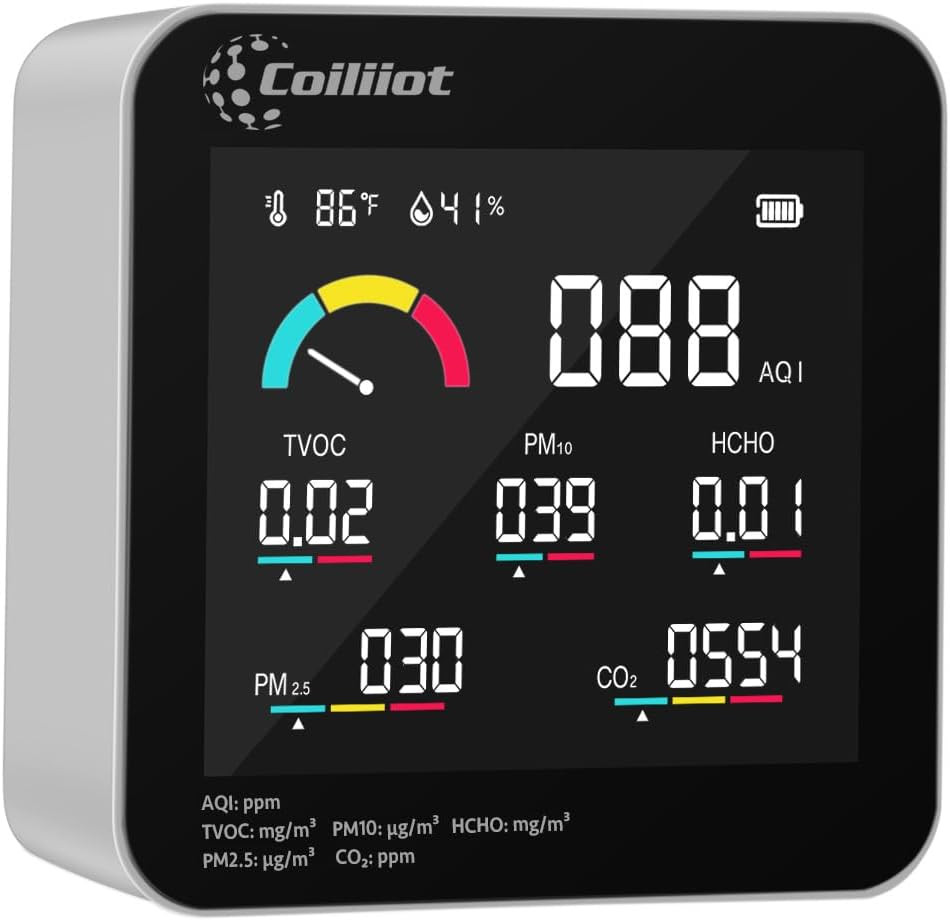 Air Quality Monitor Indoor – CO2 Detector, VOC Meter and AQI Tester Tracks TVOC,$117.32View on eBay
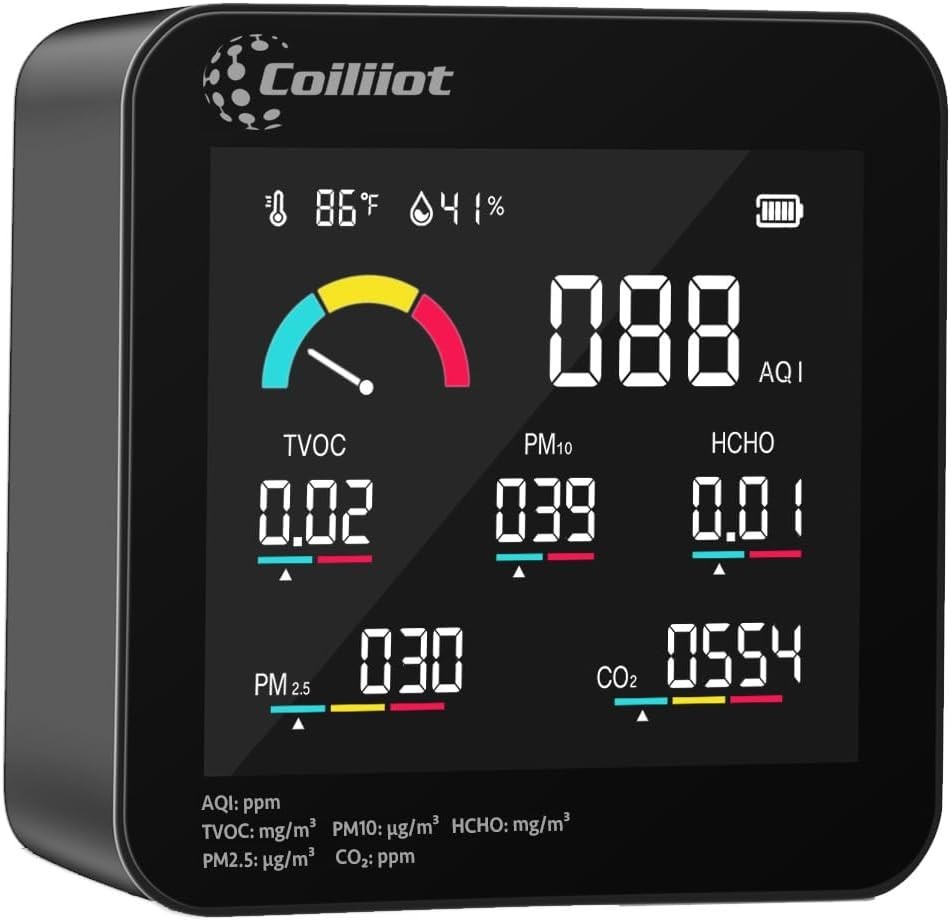 Air Quality Monitor Indoor – CO2 Detector, VOC Meter and AQI Tester Tracks TVOC,$119.32View on eBay
Highlights
- Particle sensors: laser scattering (true PM2.5/PM10 counts) vs. infrared (trend-only, no size discrimination). Require laser-based for credible PM readings.
- CO2 sensing: NDIR (non-dispersive infrared) gives ppm accuracy; 'eCO2' from TVOC sensors is an estimate and drifts with odors, not ventilation.
- Formaldehyde (HCHO) needs an electrochemical sensor; most budget units infer HCHO from TVOC and are not quantitative. Radon requires a dedicated radon detector.
- Display and logging: real-time LCD with AQI color bars is standard; app/Wi-Fi logging and export (CSV) distinguishes monitor-grade units from simple indicators.
Best use cases
- Best fit: home bedroom/office PM2.5 and CO2 tracking — pick a unit with laser particle counter + NDIR CO2, not a 12-in-1 VOC-only display.
- Wrong fit: radon or formaldehyde compliance testing — skip multi-gas consumer detectors and use a dedicated radon test kit or accredited lab sampler.
- Best fit: portable/outdoor spot checks — choose a handheld with rechargeable battery and PM2.5/PM10 only; skip desktop units with AC adapters and no battery.
- Wrong fit: HVAC or clean-room verification — consumer detectors lack calibration certificates; use a calibrated professional particle counter with ISO 21501 compliance.
Buying tips
- Demand laser particle counting for PM2.5/PM10. If the listing says 'infrared particle sensor' or omits the sensor type, treat PM values as relative trend only.
- For CO2 ventilation decisions, verify 'NDIR CO2 sensor' and ppm range (typically 400–5000 ppm). eCO2 from TVOC is not acceptable for fresh-air math.
- HCHO and TVOC are different: TVOC sensors (MOX) respond to solvents and cooking; HCHO requires electrochemical. Do not buy a TVOC-only unit for formaldehyde concerns.
- Check calibration/auto-baseline: units with manual calibration (zero in fresh air) and baseline reset are more trustworthy over months than sealed uncalibrated sensors.
Specs
| Particle Sensor | Laser scattering vs infrared |
|---|---|
| CO2 Sensor | NDIR ppm vs eCO2 estimate |
| Formaldehyde Sensor | Electrochemical vs TVOC-only |
| Data Logging | App/Wi-Fi export vs display-only |
Related searches
What to check before buying
- Room size and placement: detector needs 30–60 minutes to stabilize; place 1–1.5 m above floor, away from windows, doors, and cooking vapors.
- Power: confirm USB-C or micro-USB adapter included; battery units need 4–8 h runtime for portable use. Match to your outlet/voltage (100–240 V).
- Data needs: decide if you need app logging/export (Wi-Fi/Bluetooth) or just local display; app units often require 2.4 GHz Wi-Fi only.
- Companion parts: for radon, order a separate radon test kit; for HVAC filter decisions, pair PM2.5 readings with a differential pressure manometer.
FAQ
Data sources: eBay / Amazon listings and product attribute feeds. Updated Nov 29, 2026.
Some links on this page are affiliate links. If you buy after clicking one, we may earn a commission at no extra cost to you. This does not change which products appear here or their order. Affiliate disclosure.