
Photos from current listings. Actual item, color, and included accessories may vary.
Air Quality Meter Buying Guide
An air quality meter is a sensor-based device that quantifies indoor pollutants—particulates (PM2.5/PM10), gases (CO2, TVOC, formaldehyde), and comfort metrics (temperature, humidity)—to guide ventilation, filtration, and mitigation decisions. The core trade-off is sensor quality and calibration versus feature count: electrochemical and NDIR sensors provide accurate, stable readings, while low-cost semiconductor or uncalibrated sensors drift and mislead. Choose a meter with a documented sensor type, calibration method, and appropriate range for your primary concern; skip multi-parameter units that list many gases without specifying sensor technology or accuracy tolerances.
Median $119.32 · New & pre-owned listings
Key takeaways
- NDIR (non-dispersive infrared) is the gold-standard CO2 sensor—it measures absolute CO2 concentration with ±50 ppm accuracy and minimal drift, unlike low-cost eCO2 sensors that estimate from VOC trends.
- PM2.5 optical sensors use laser scattering; look for a specified particle-size channel (PM1.0/2.5/10) and a minimum detectable particle size around 0.3 µm for reliable indoor particulate tracking.
- Electrochemical formaldehyde (HCHO) and TVOC sensors require periodic calibration (often every 6–12 months) and have cross-sensitivity to alcohol and humidity; semiconductor sensors are cheaper but less selective and drift more.
At a glance
- Category
- Environmental & Indoor Air Measurement
- Last updated
- Nov 29, 2026
Current offers
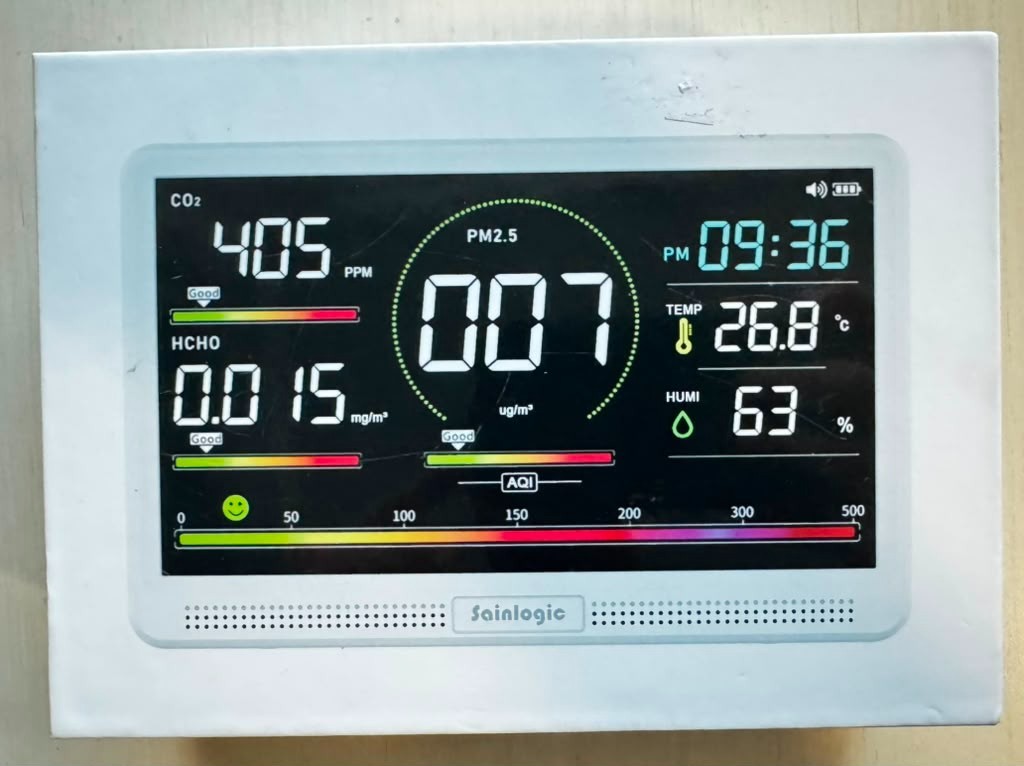 16 in 1 Air Quality Monitor Indoor 7" Display 9 AQI+7 AQI Alerts Air Quality Met$30.00View on eBay
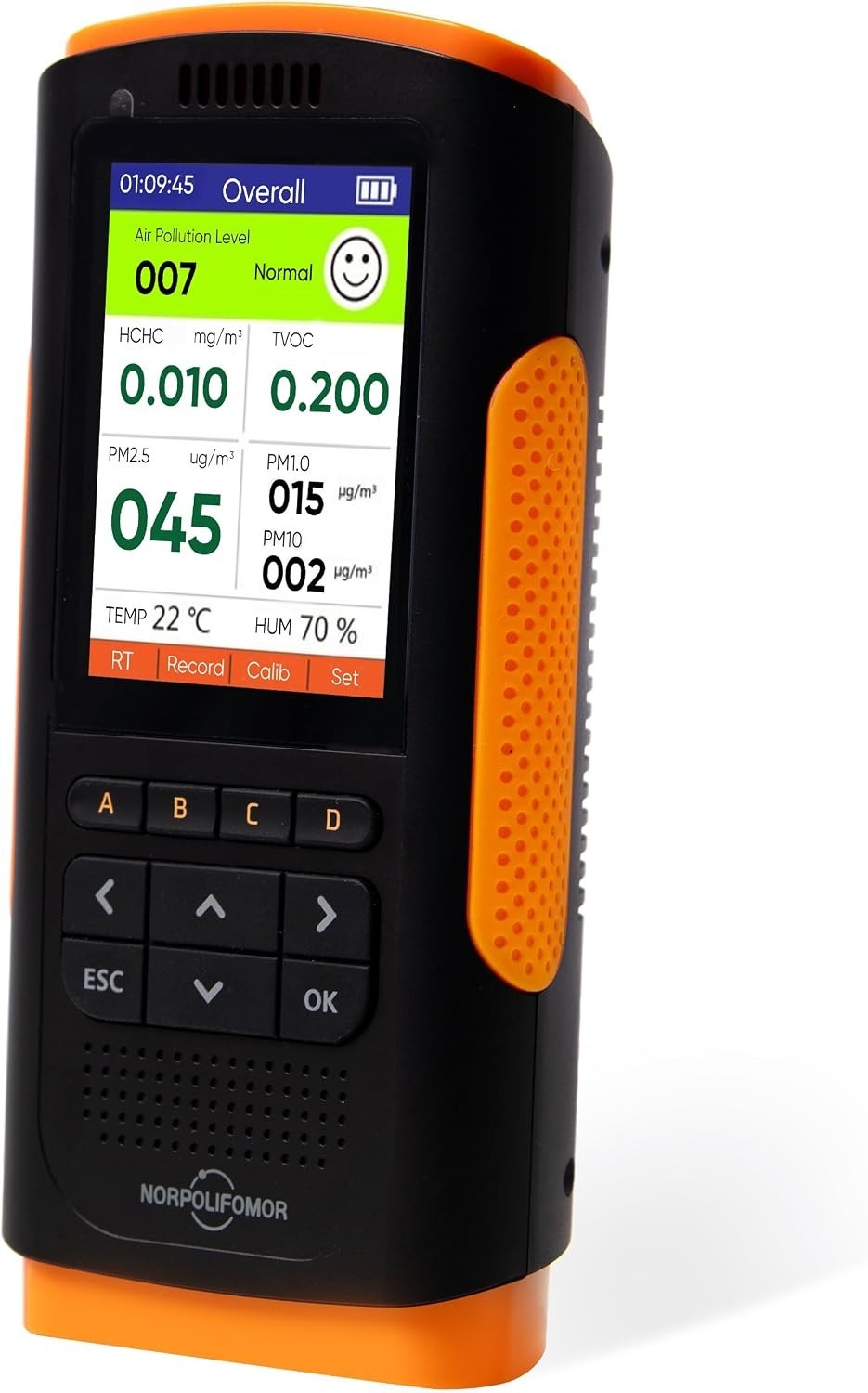 Intelligent Real Time Air Quality Detector AQI Air Quality Monitor, Formaldehyde$35.00View on eBay
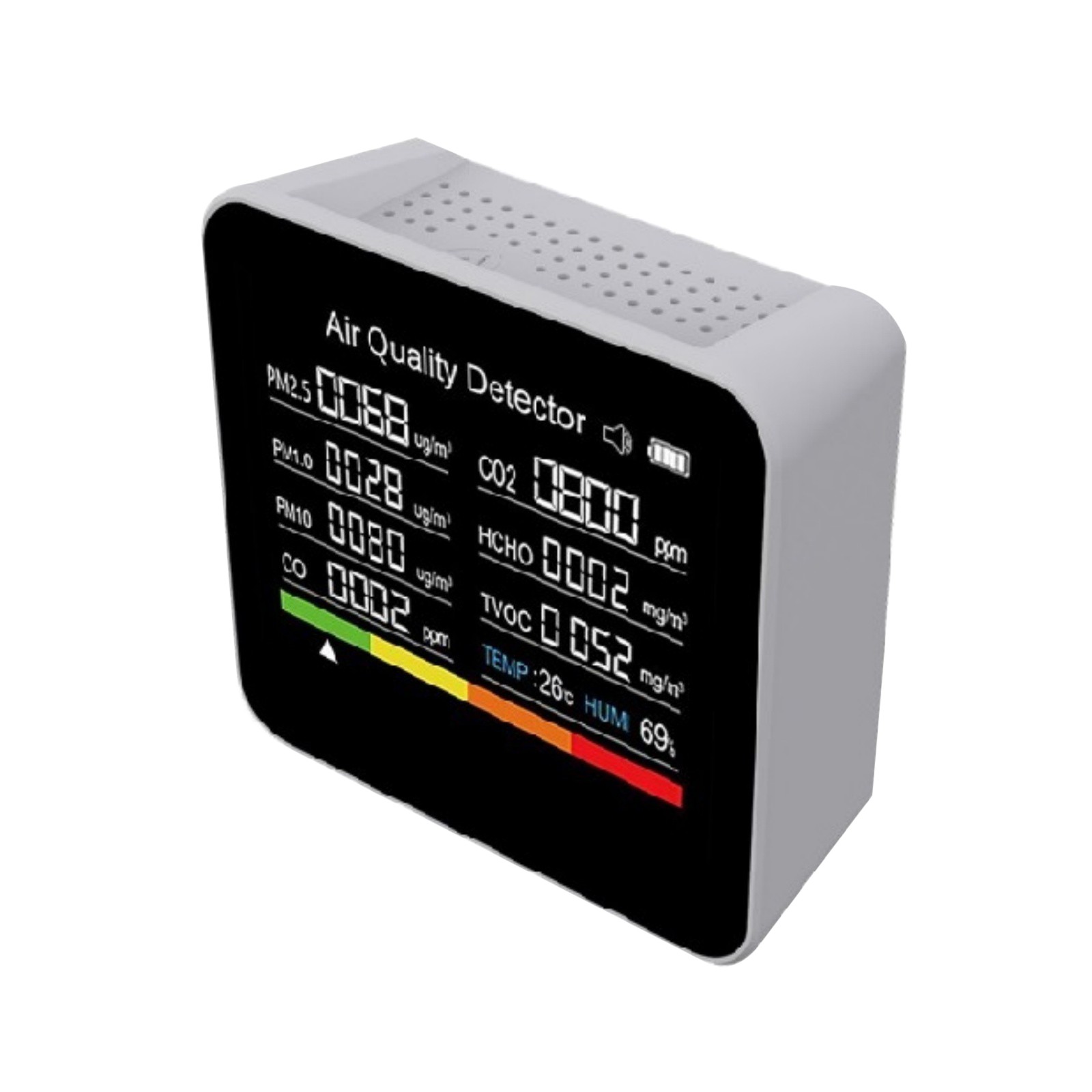 9-in-1 Air Quality Monitor CO2/PM2.5/TVOC/HCHO Detector LED Digital Display$38.80View on eBay
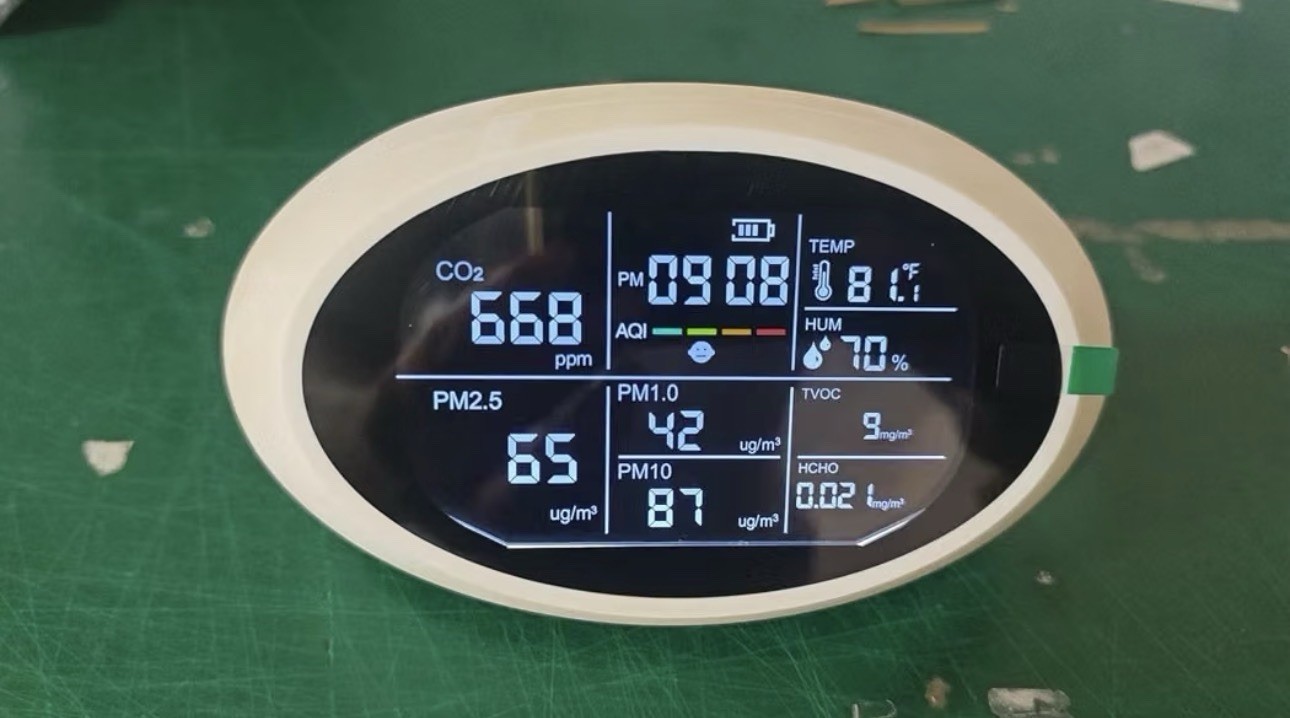 12-in-1 Air Quality Monitor Indoor, Portable Air Quality Monitor, CO2 PM1.0$39.99View on eBay
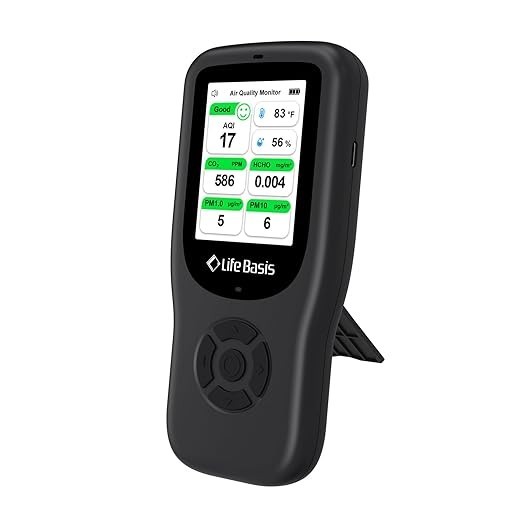 Life Basis Air Quality Monitor Indoor, 11-in-1 Air Quality Detector w. Stand$39.99View on eBay
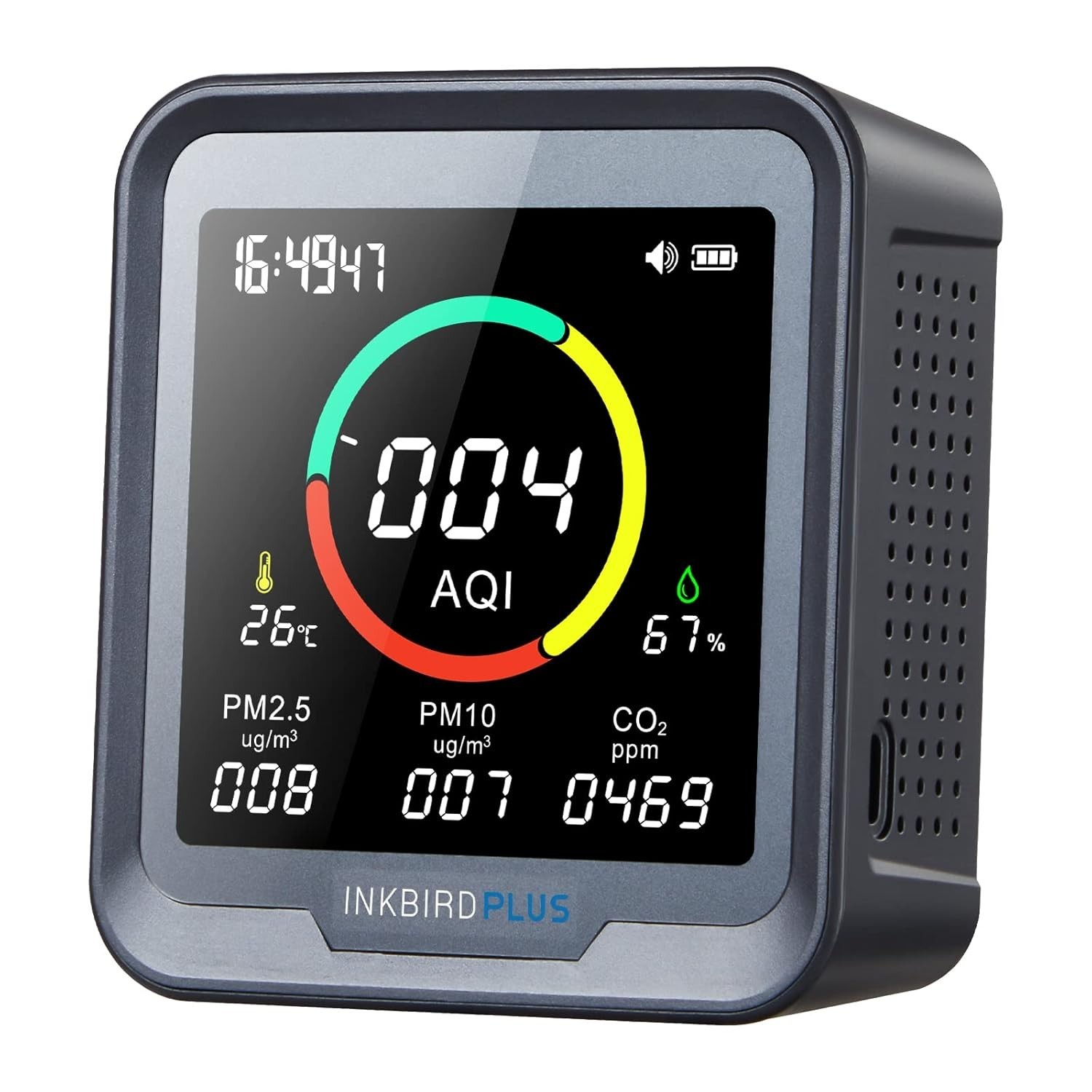 Gas CO2 Detector Air Monitor Quality Tester Temperature Humidity Measuring PM2.5$45.99Last checked Nov 27, 2026View on eBay
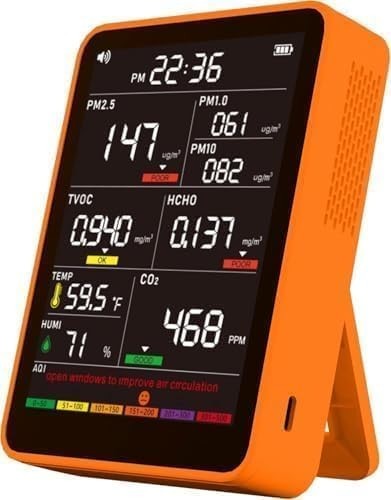 Professional Indoor Air Quality Monitor with AQI Beep Alarms, Portable Real Time$53.99View on eBay
- Professional Indoor Air Quality Monitor Real Time with AQI Beep Alarms Portable$53.99View on eBay
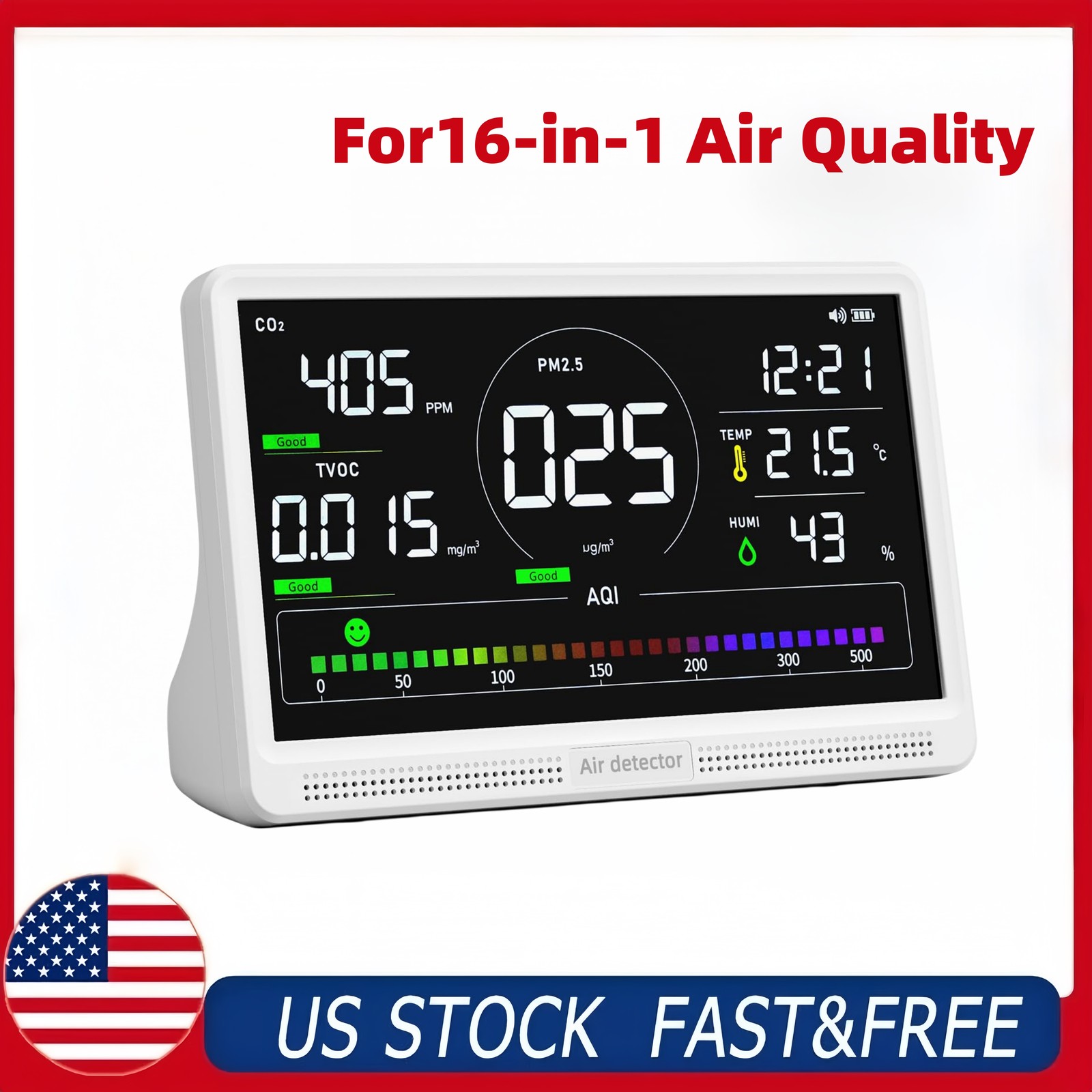 16-in-1 Indoor Air Quality Monitor with CO2, PM2.5, HCHO, TVOC, Temperature$56.99Last checked Nov 27, 2026View on eBay
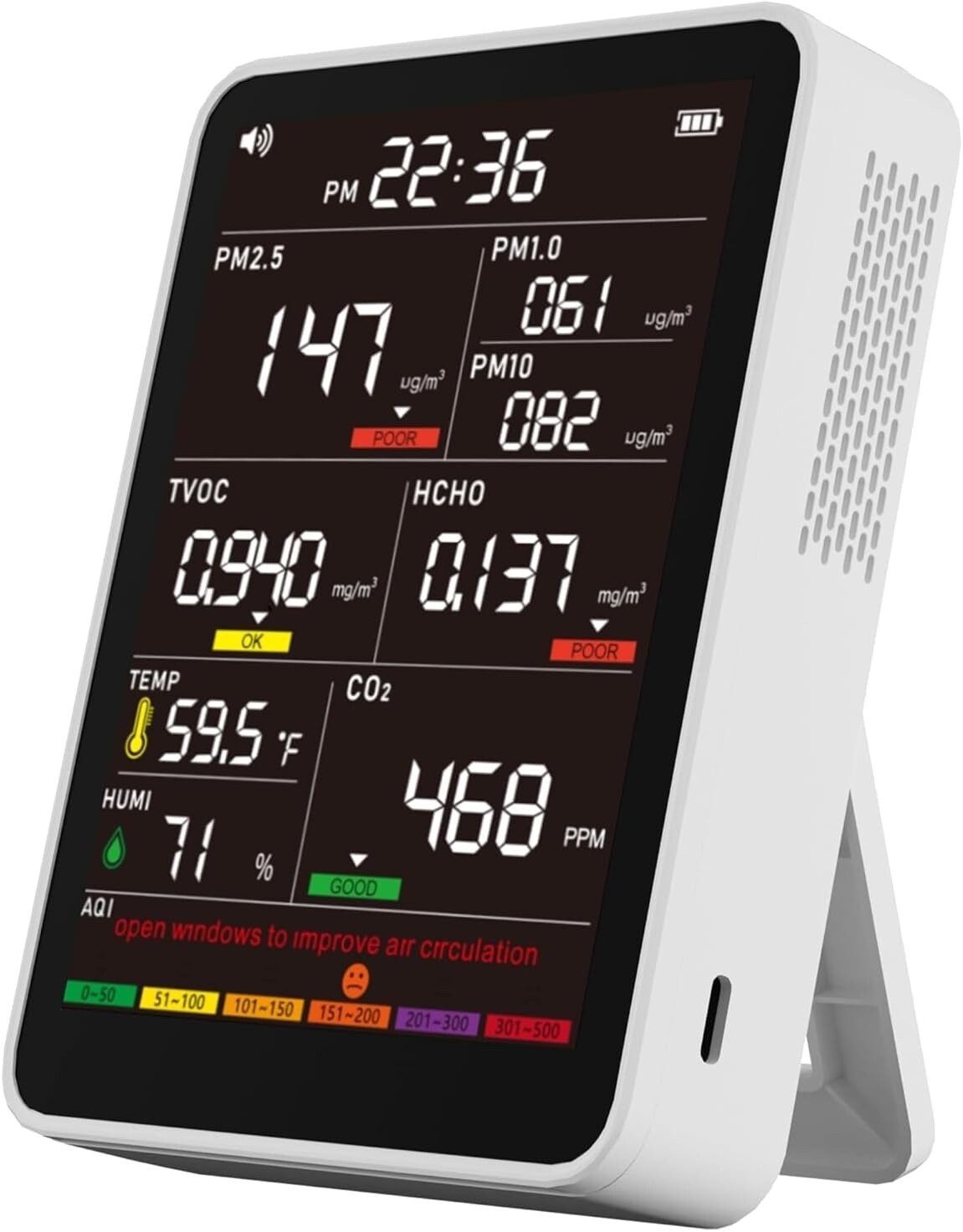 9-in-1 Professional Indoor Air Quality Monitor Indoor Portable AK16$59.99View on eBay
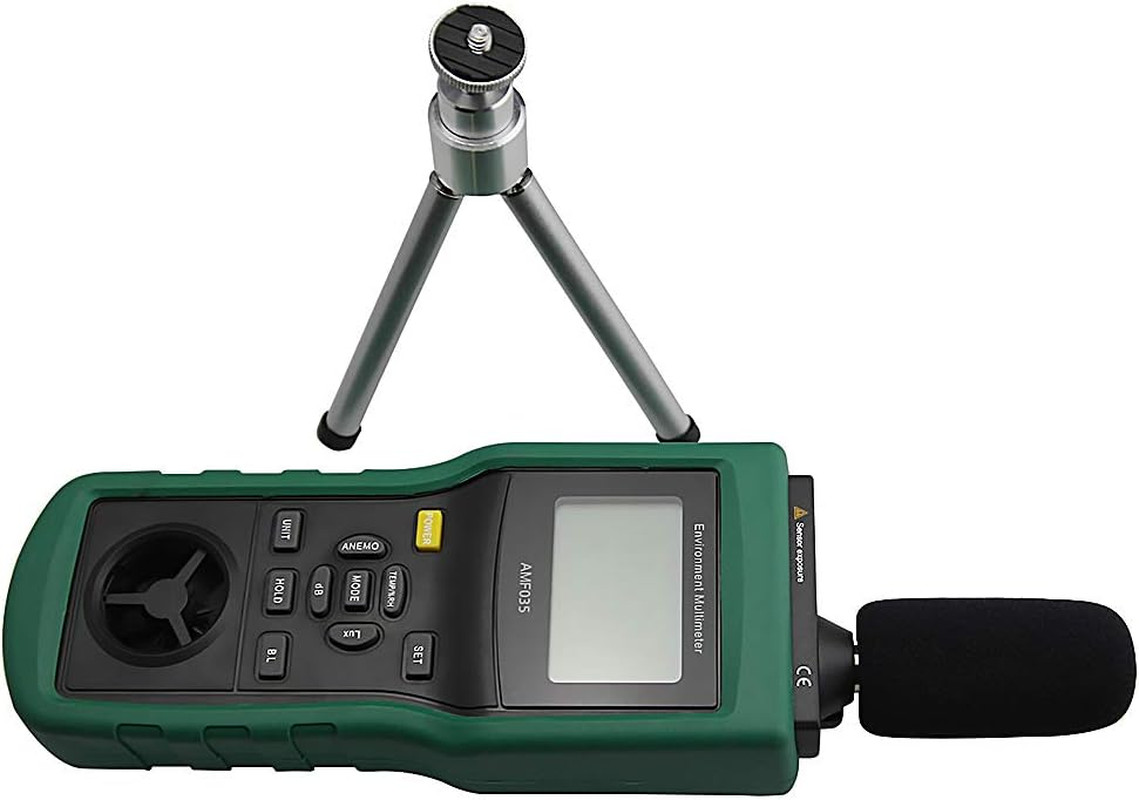 Multi-Functional Environmental Meter Anemometer Sound Level Air Flow Meter LUX M$69.74View on eBay
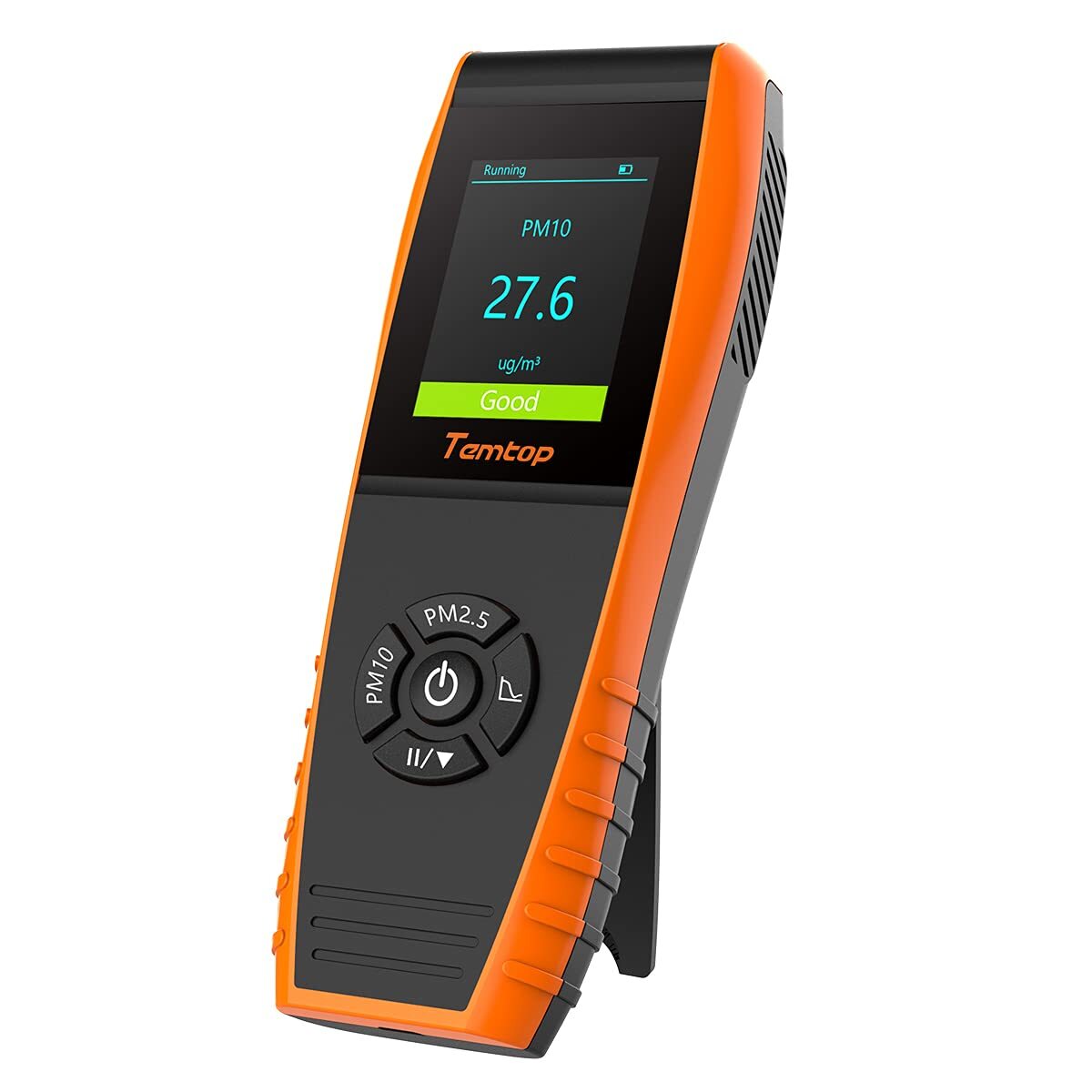 Temtop P600 Air Quality Monitor Particle Detector PM2.5 PM10 Recorder Histogram$69.99Last checked Nov 28, 2026View on eBay
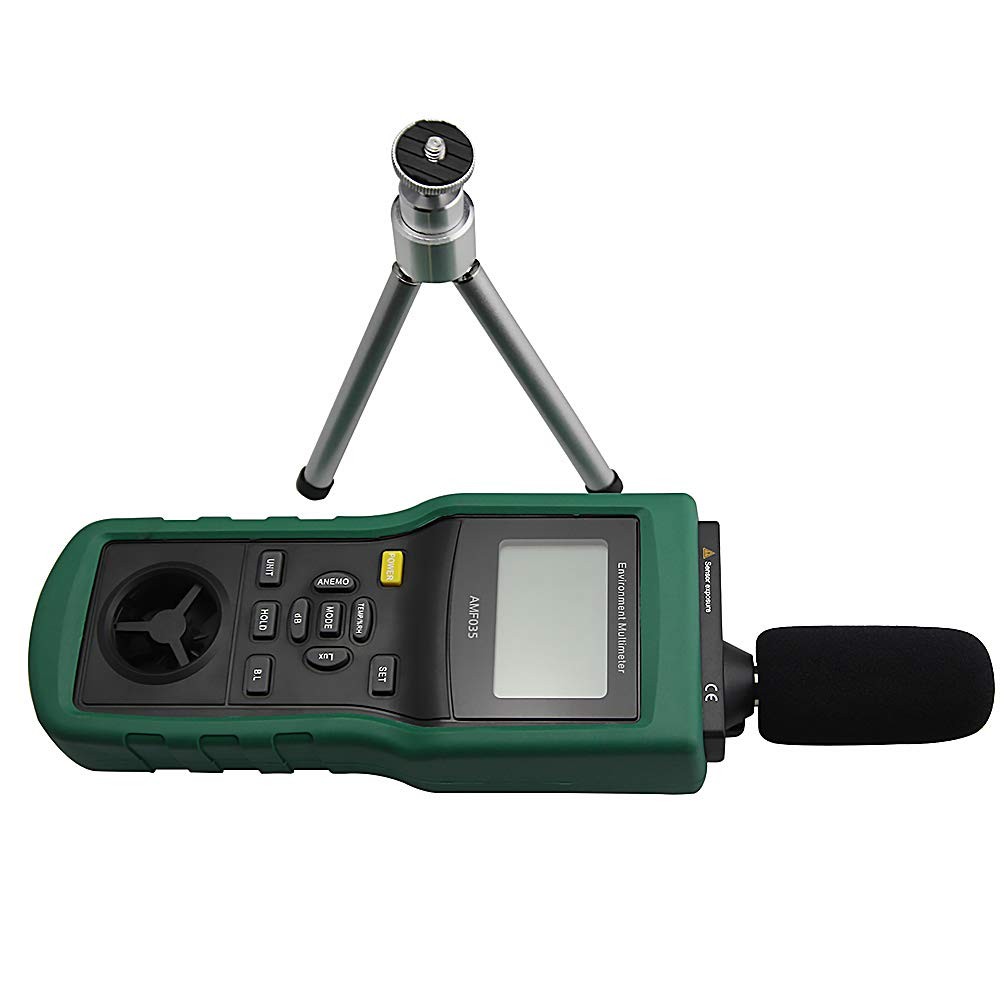 AMTAST Multi-Functional Environmental Meter Anemometer Sound Level Air Flow M...$69.99View on eBay
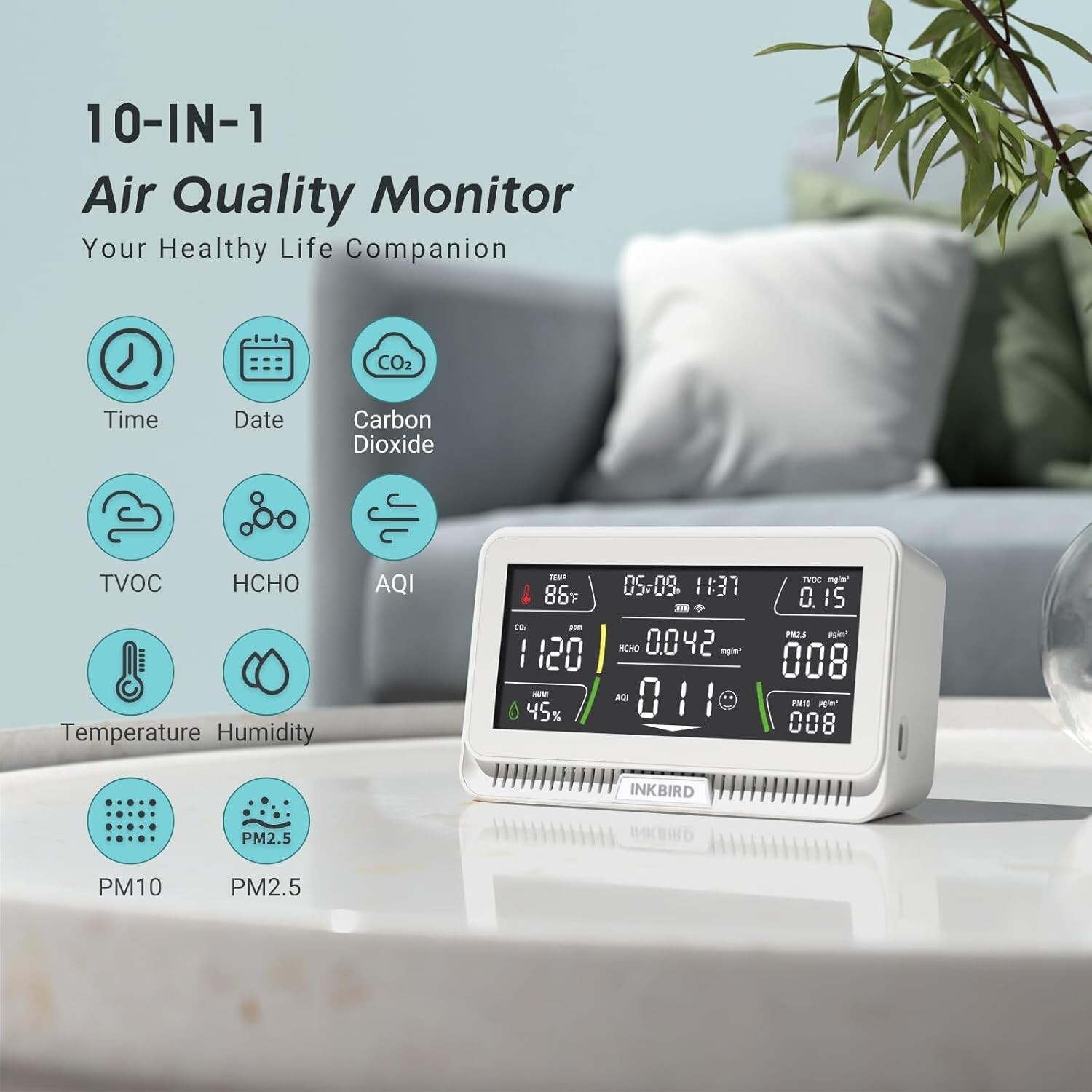 INKBIRD Air Quality Monitor Indoor Co2 Detector Portable 10-in-1 PM2.5 HCHO AQI$70.79View on eBay
- Multi-Function Environmental Meter: Anemometer, Sound, Air Flow, Humidity & LUX$85.99View on eBay
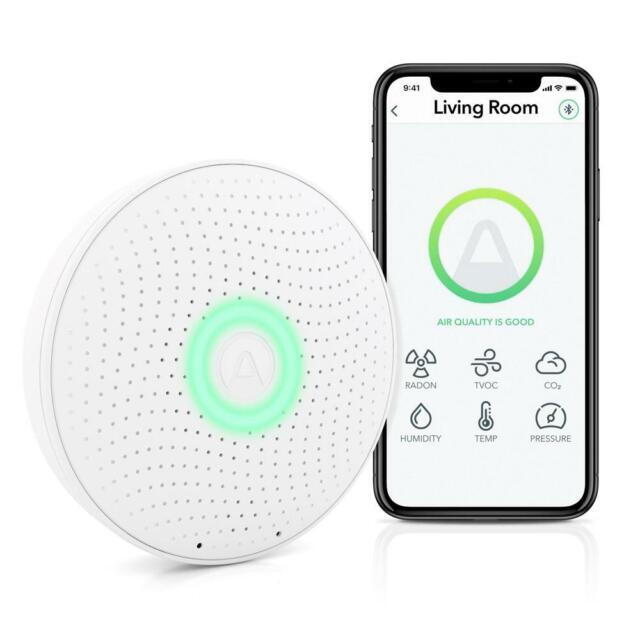 Airthings Wave Plus 2930 Air Quality Monitor$89.00View on eBay
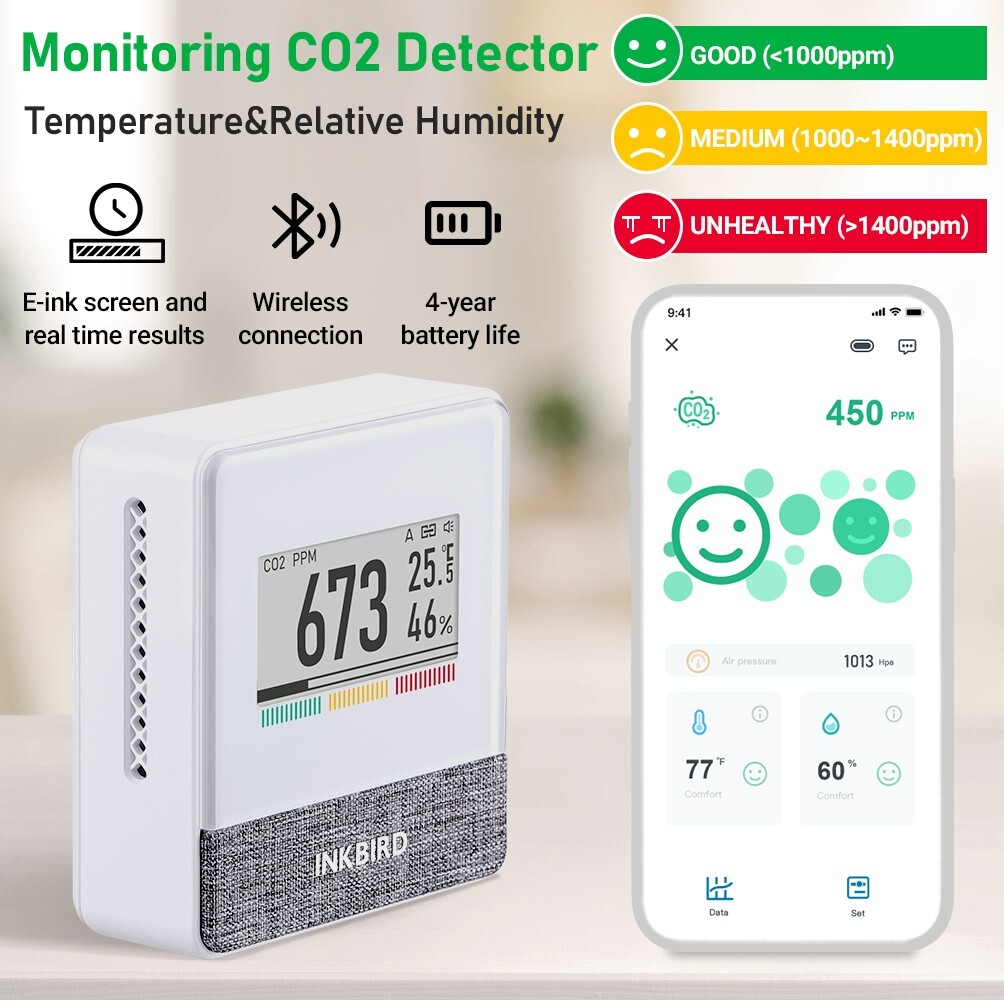 Wireless Indoor Air Quality Monitor INKBIRD IAM-T1 Electronic Ink Display NDIR$89.99Last checked Nov 27, 2026View on eBay
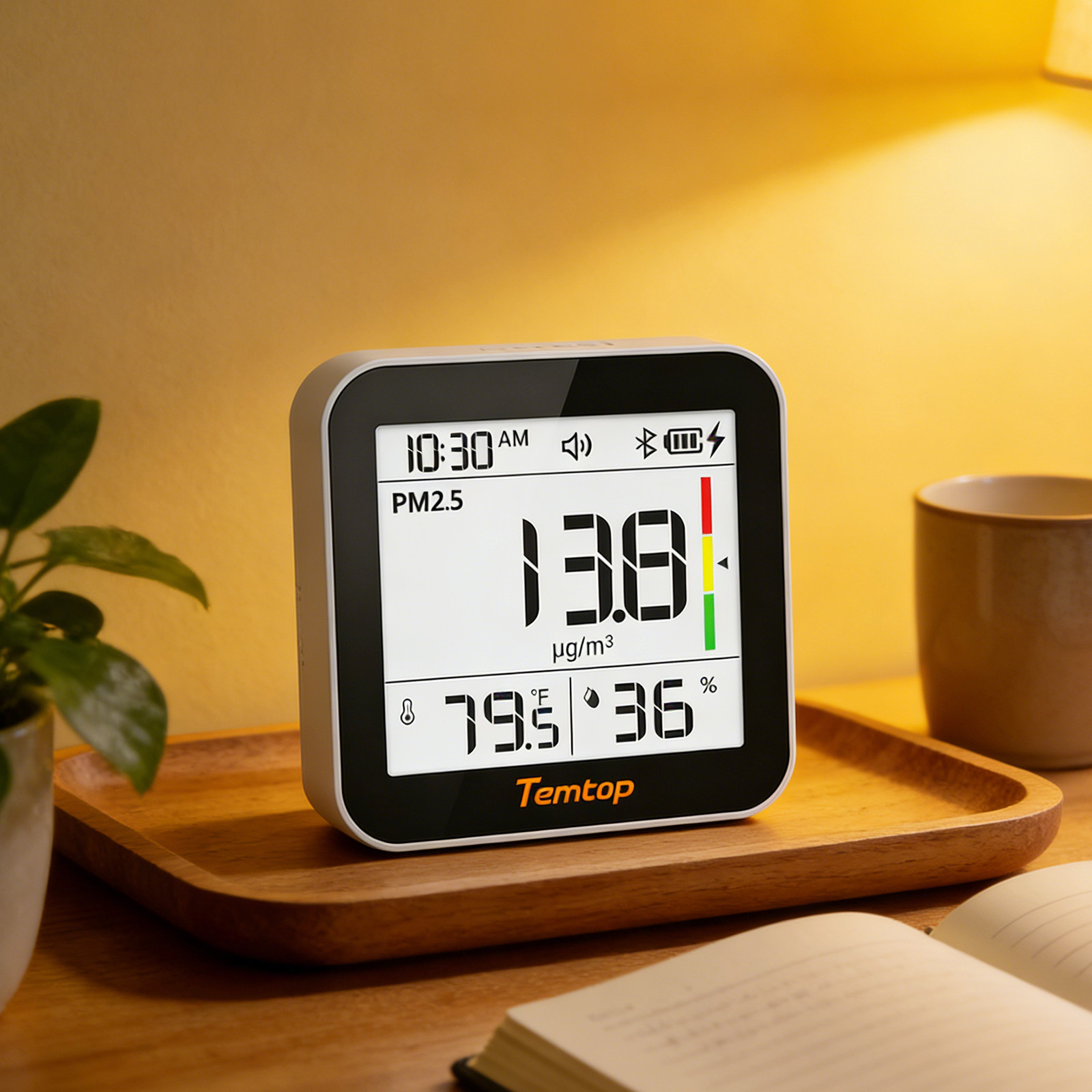 Temtop M10+ Indoor Air Quality Monitor CO2 Detector PM2.5 VOC Home Detector$99.99Last checked Nov 27, 2026View on eBay
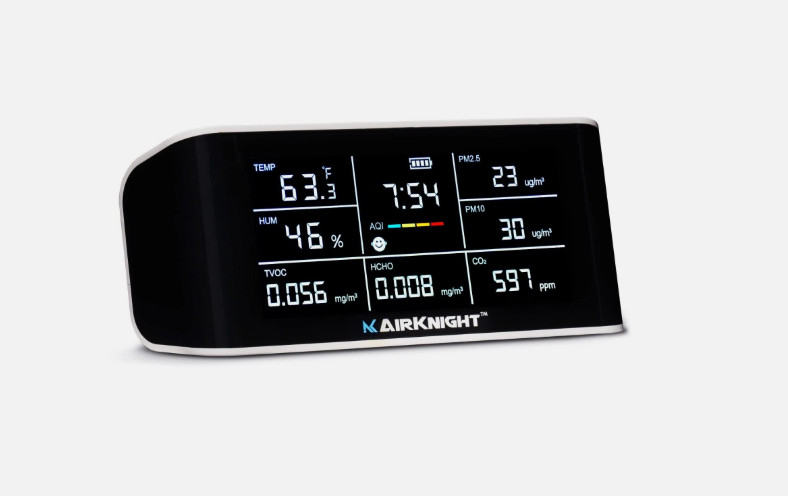 AirKnight 9-in-1 Indoor Air Quality Monitor Indoor Portable CO2 Monitor NEW$100.00View on eBay
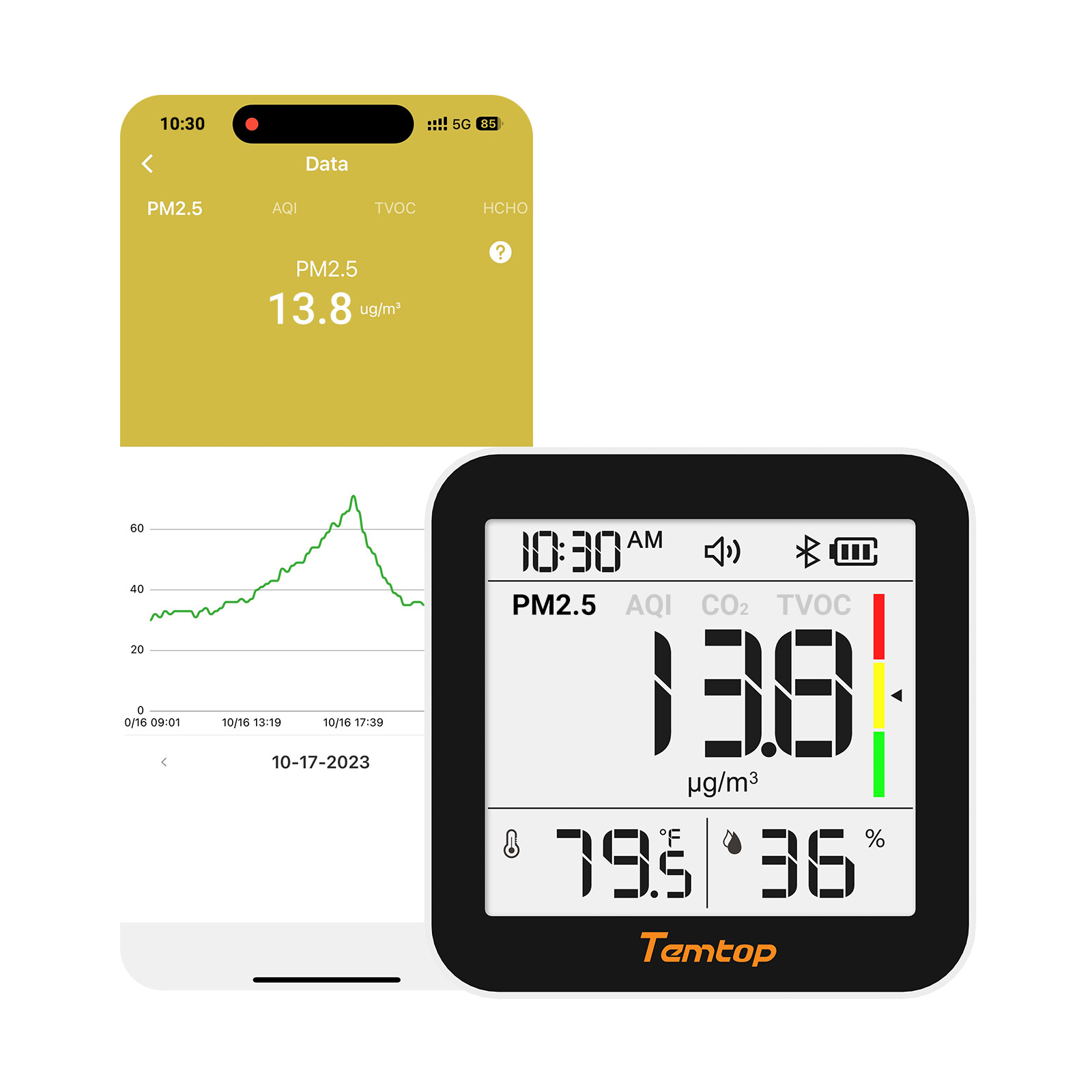 Temtop Indoor Air Quality Monitor 6-in-1 CO2,PM2.5,VOC Detection,temp,Hum, M10+$100.09Last checked Nov 27, 2026View on eBay
Highlights
- NDIR (non-dispersive infrared) is the gold-standard CO2 sensor—it measures absolute CO2 concentration with ±50 ppm accuracy and minimal drift, unlike low-cost eCO2 sensors that estimate from VOC trends.
- PM2.5 optical sensors use laser scattering; look for a specified particle-size channel (PM1.0/2.5/10) and a minimum detectable particle size around 0.3 µm for reliable indoor particulate tracking.
- Electrochemical formaldehyde (HCHO) and TVOC sensors require periodic calibration (often every 6–12 months) and have cross-sensitivity to alcohol and humidity; semiconductor sensors are cheaper but less selective and drift more.
- AQI alert thresholds vary by standard: US EPA AQI breakpoints differ from Chinese GB/T or EU CAQI scales—units with selectable standards or raw µg/m³ readouts give more actionable data than fixed color-only AQI bars.
Best use cases
- Best fit: Homeowners monitoring combustion byproducts and ventilation—choose a meter with NDIR CO2 plus PM2.5 and a real-time display; skip units that only show a composite AQI without raw ppm/µg/m³ values.
- Best fit: Allergy or wildfire-smoke sensitive households—prioritize a laser-scattering PM2.5 sensor with 1-minute update rate and logging; skip multi-gas units that bury particulate accuracy under 12-in-1 feature lists.
- Best fit: New-build or renovation formaldehyde concerns—select a dedicated electrochemical HCHO meter with calibration certificate; skip cheap semiconductor TVOC-only meters for formaldehyde-specific decisions.
- Wrong fit: Outdoor or portable multi-site monitoring—most indoor units lack IP-rated housings and temperature compensation; choose a portable model with rechargeable battery and ambient range specs instead of a plug-in desktop unit.
Buying tips
- Match sensor to pollutant: NDIR for CO2 (range 400–5000 ppm), laser scattering for PM2.5 (0–1000 µg/m³), electrochemical for HCHO (0–2 mg/m³); avoid eCO2 or 'air quality index only' units for critical decisions.
- Check update interval and warm-up: good units refresh every 1–5 seconds for PM and CO2 after a 30–60 second warm-up; slow 5-minute updates miss cooking or ventilation events.
- Verify calibration and data logging: choose meters with user calibration (CO2 baseline, PM zeroing) and onboard memory or app export; units without calibration drift within months.
- For multi-parameter units, prefer 5–7 well-specified sensors over 12-in-1 lists; each additional gas sensor adds cost and cross-sensitivity, so fewer high-quality channels outperform many low-grade ones.
Specs
| CO2 Sensor Type | NDIR (true ppm) vs eCO2 (estimated) |
|---|---|
| PM Sensor Range | 0–1000 µg/m³, 0.3 µm detection |
| Gas Channels | TVOC / HCHO / CO / O3 (electrochemical) |
| Display & Logging | Raw ppm/µg/m³ + app export vs AQI color only |
Related searches
What to check before buying
- Measure your room volume and ventilation: a single meter covers 300–500 sq ft open-plan; larger or multi-room homes need portable units or multiple fixed sensors.
- Confirm power: most desktop meters use USB-C or 5V DC adapters; portable models need rechargeable Li-ion batteries with 8+ hour runtime for room-to-room checks.
- Check display readability: color LCD or LED with raw numeric values (ppm, µg/m³, °C, %RH) and backlight; avoid units that only show color zones without numbers.
- Verify sensor replacement/calibration access: CO2 NDIR sensors last 5–10 years, electrochemical cells 1–2 years; ensure the model allows recalibration or sensor module replacement.
FAQ
Data sources: eBay / Amazon listings and product attribute feeds. Updated Nov 29, 2026.
Some links on this page are affiliate links. If you buy after clicking one, we may earn a commission at no extra cost to you. This does not change which products appear here or their order. Affiliate disclosure.