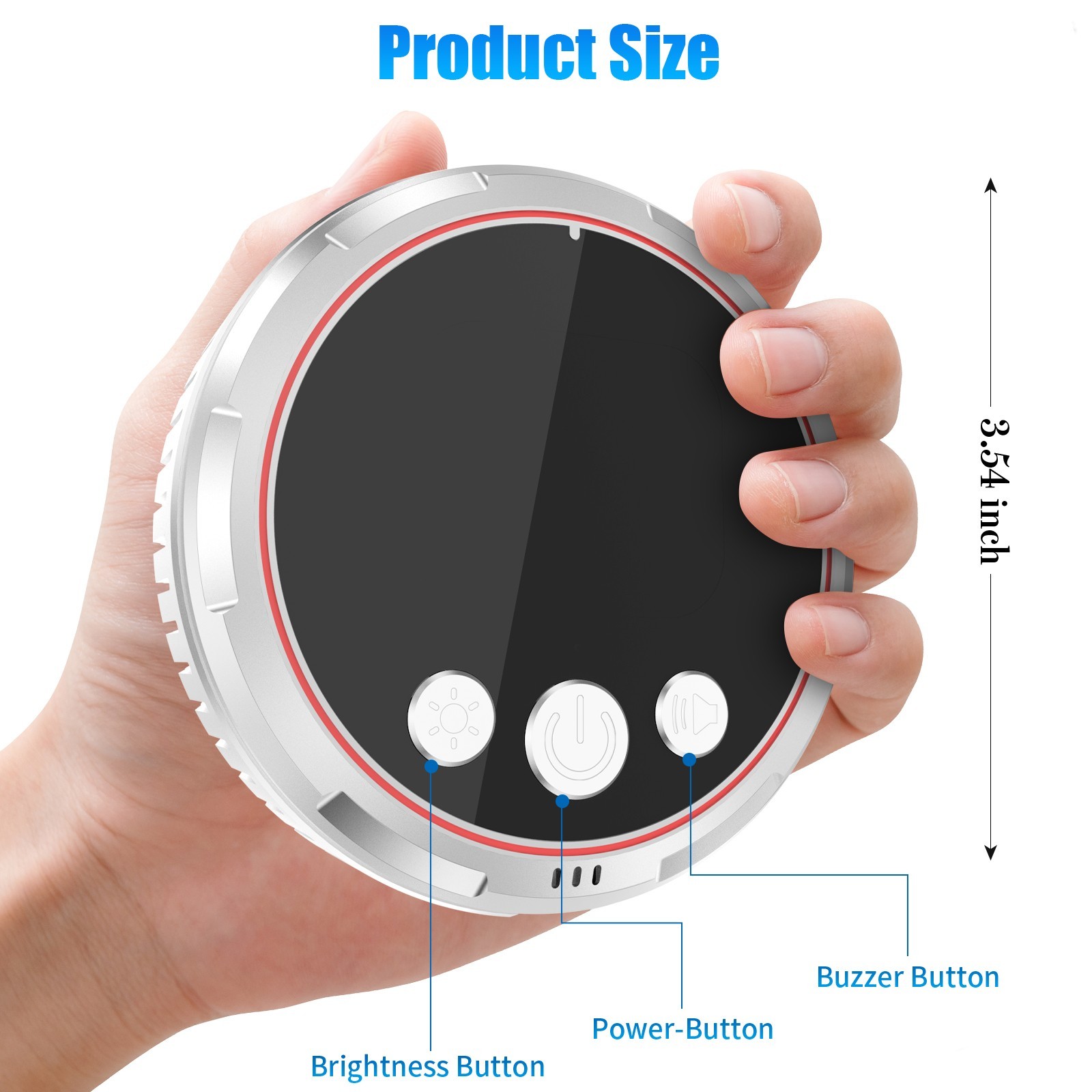

Photos from current listings. Actual item, color, and included accessories may vary.
Air Quality Sensor Buying Guide
An air quality sensor measures particulate matter (PM2.5/PM10), volatile organic compounds (TVOC), CO2, and formaldehyde to quantify indoor pollution you cannot see or smell. The core trade-off is sensor architecture: low-cost MOS (metal-oxide) sensors drift and need frequent recalibration, while NDIR CO2 and laser-scattering PM sensors hold accuracy over years. The decision rule is simple: buy a unit that names its sensing technology and offers calibration or baseline reset—skip sealed multi-in-one displays that list 12 gases but only one cheap chip.
Median $27.29
Key takeaways
- PM sensing uses laser scattering (accurate, fan-assisted) vs infrared LED (cheap, poor below 1 µm); laser modules are the durability benchmark.
- CO2 accuracy requires NDIR (non-dispersive infrared) sensing; MOS or 'eCO2' estimates drift with humidity and are not suitable for ventilation decisions.
- TVOC and formaldehyde need separate electrochemical or PID cells; most budget 9-in-1 units share one MOS sensor and infer all gases.
At a glance
- Category
- Environmental & Indoor Air Measurement
- Last updated
- Nov 28, 2026
Current offers
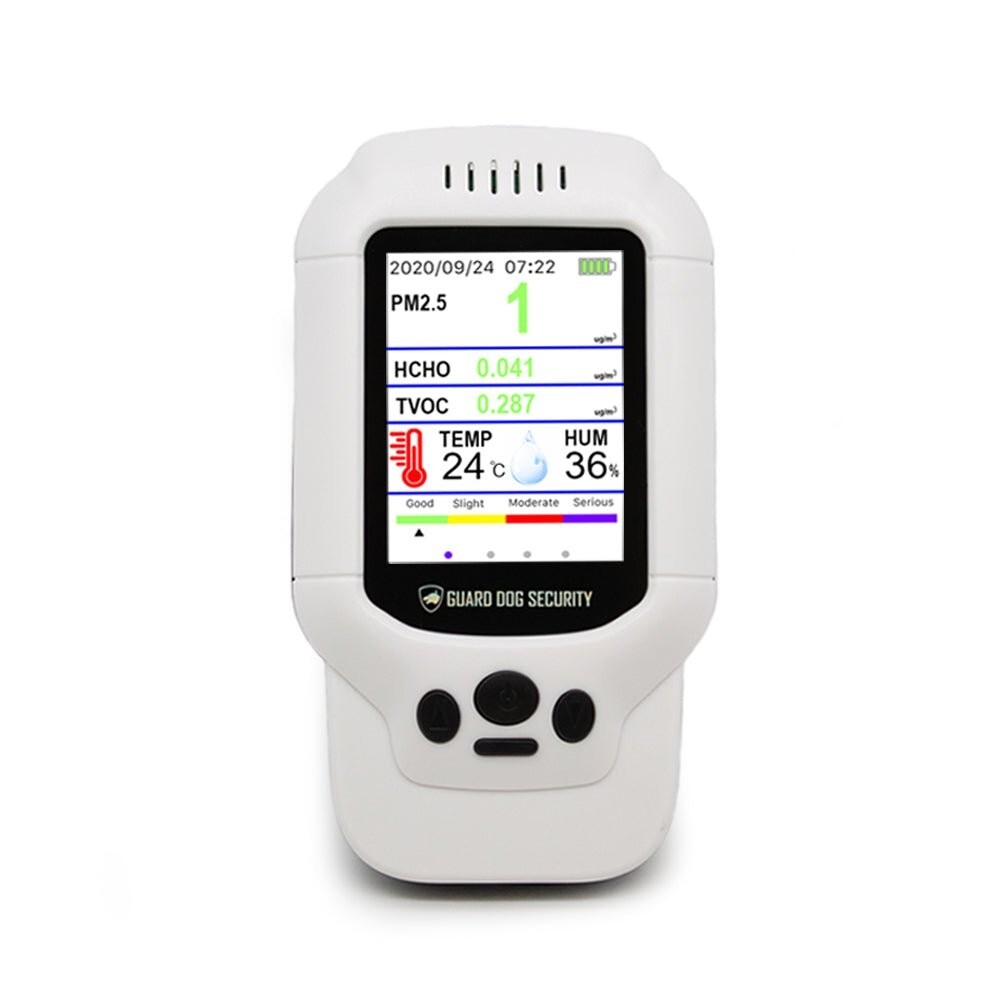
Highlights
- PM sensing uses laser scattering (accurate, fan-assisted) vs infrared LED (cheap, poor below 1 µm); laser modules are the durability benchmark.
- CO2 accuracy requires NDIR (non-dispersive infrared) sensing; MOS or 'eCO2' estimates drift with humidity and are not suitable for ventilation decisions.
- TVOC and formaldehyde need separate electrochemical or PID cells; most budget 9-in-1 units share one MOS sensor and infer all gases.
- AQI alarm tiers (good/moderate/unhealthy) follow national standards; units with adjustable thresholds and history logging outperform single-color displays.
Best use cases
- Best fit for a bedroom or home office: a laser PM2.5 + NDIR CO2 unit with 5-minute logging and USB-C power; skip 12-in-1 gas lists with no named sensor.
- Best fit for wildfire smoke or allergy tracking: a portable laser-scattering PM2.5/PM10 monitor with rechargeable battery and outdoor-rated housing; skip wall-powered display-only units.
- Best fit for a nursery or school: a calibrated NDIR CO2 monitor with traffic-light alerts and no Wi-Fi dependency; skip app-only sensors that cannot alarm standalone.
- Wrong fit for radon: general air quality sensors do not measure radioactive radon gas—buy a dedicated radon detector with EPA-listed test protocol.
Buying tips
- Choose laser-scattering PM sensors over infrared LED; laser modules detect particles down to 0.3 µm and maintain accuracy without frequent cleaning.
- Require NDIR CO2 sensing for ventilation decisions; MOS 'eCO2' readings drift by hundreds of ppm under humidity changes.
- Prefer units with manual baseline calibration (fresh-air reset) and published sensor part numbers; sealed firmware with no calibration path loses accuracy within a year.
- For multi-gas claims, verify separate channels for TVOC and HCHO; a single MOS die cannot selectively measure formaldehyde in a mixed-gas home environment.
Specs
| PM Sensor Type | Laser scattering vs infrared LED |
|---|---|
| CO2 Sensor Type | NDIR vs MOS eCO2 estimate |
| Gas Channels | Separate TVOC/HCHO cells vs shared MOS |
| Power & Logging | USB-C continuous vs 8-12 hr battery |
Related searches
What to check before buying
- Measure the intended room: one sensor covers roughly 300-500 sq ft of well-mixed air; larger or multi-room spaces need multiple units or portable logging.
- Confirm power: USB-C or 5V DC adapter for continuous logging; battery life of 8-12 hours only supports spot checks, not overnight monitoring.
- Check connectivity: Wi-Fi 2.4 GHz for app alerts, or standalone audible alarms if you want no cloud dependency.
- Verify display visibility: large LED/LCD with ppm and AQI number beats color-only indicators for tracking trends.
FAQ
Data sources: eBay / Amazon listings and product attribute feeds. Updated Nov 28, 2026.
Some links on this page are affiliate links. If you buy after clicking one, we may earn a commission at no extra cost to you. This does not change which products appear here or their order. Affiliate disclosure.