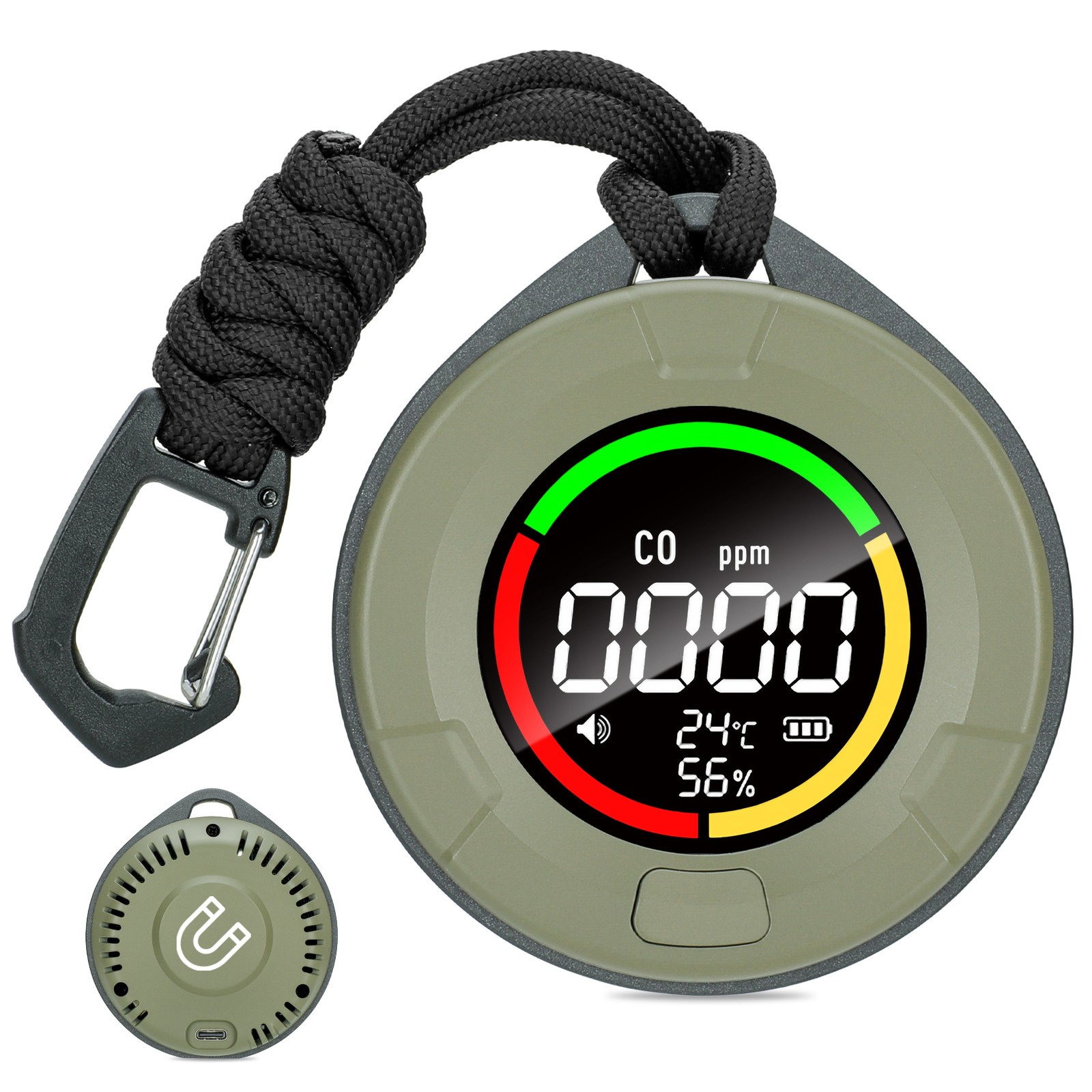

Photos from current listings. Actual item, color, and included accessories may vary.
Home Air Quality Monitor Buying Guide
A home air quality monitor combines particulate (PM2.5/PM10) and gas/VOC sensing with CO2 and climate readouts to turn invisible indoor pollution into actionable numbers. The core trade-off is sensor architecture: low-cost VOC sensors estimate rather than measure, while true NDIR CO2 and laser-scattering particulate sensors deliver defensible data at a higher tier. The decision rule: buy only units that specify the sensing method for each metric, and treat any monitor that aggregates all readings into a single proprietary 'score' as a novelty, not a measurement tool.
Median $64.99
Key takeaways
- CO2 sensing: NDIR (non-dispersive infrared) is the only reliable method; 'eCO2' sensors infer CO2 from VOC proxy and drift without calibration.
- Particulate sensing: laser scattering (optical) detects PM2.5/PM10 in real time; units omitting the laser module report only relative dust trends, not mass concentration.
- VOC sensing: low-cost metal-oxide (MOX) sensors require burn-in and drift seasonally; they flag relative changes, not absolute TVOC in ppb.
At a glance
- Category
- Environmental & Indoor Air Measurement
- Last updated
- Nov 29, 2026
Current offers
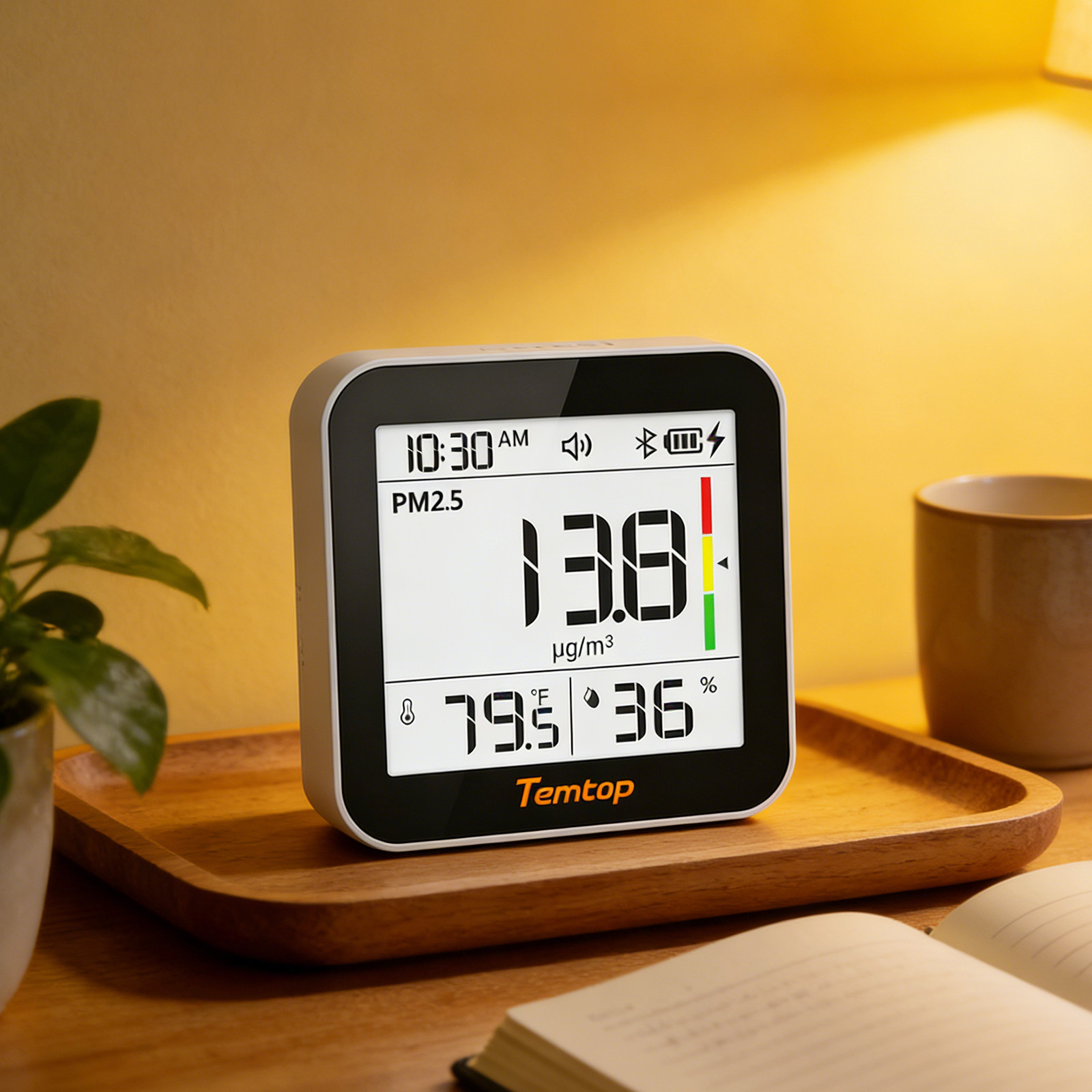
Highlights
- CO2 sensing: NDIR (non-dispersive infrared) is the only reliable method; 'eCO2' sensors infer CO2 from VOC proxy and drift without calibration.
- Particulate sensing: laser scattering (optical) detects PM2.5/PM10 in real time; units omitting the laser module report only relative dust trends, not mass concentration.
- VOC sensing: low-cost metal-oxide (MOX) sensors require burn-in and drift seasonally; they flag relative changes, not absolute TVOC in ppb.
- Multi-parameter marketing: '16-in-1' counts every derived readout (heat index, dew point, time, etc.) as a channel—not 16 independent sensors.
Best use cases
- Best fit: allergy or wildfire-smoke households—choose a laser-scattering PM2.5/PM10 monitor with logging; skip units that report only a relative dust index.
- Best fit: ventilation and classroom/office CO2 management—pick a true NDIR CO2 monitor with traffic-light thresholds at 800/1000/1500 ppm; skip eCO2-only devices.
- Best fit: new-build or renovation VOC watch—use a MOX VOC monitor for trend tracking alongside a PM sensor, but do not treat its ppb figure as calibrated absolute data.
- Wrong fit: buying a single '16-in-1' screen for a nursery or medical-grade claim—separate true NDIR CO2 and laser PM sensing or step up to a calibrated multi-sensor tier.
Buying tips
- Match sensor to metric: NDIR for CO2, laser scattering for PM2.5/PM10, MOX for VOC trends; a single sensor cannot truthfully cover all three.
- Check calibration access: NDIR CO2 units should offer baseline/outdoor calibration (typically 400 ppm fresh-air reference) for long-term accuracy.
- Screen size and placement: choose a display readable at 1–2 m and a stand/wall-mount that puts the intake at breathing height, not on the floor.
- Data continuity: pick models with onboard logging or app export; a monitor without history cannot distinguish a one-off spike from a chronic problem.
Specs
| CO2 Sensor Type | NDIR vs eCO2 (VOC proxy) |
|---|---|
| Particulate Sensing | Laser scattering PM2.5/PM10 |
| VOC Sensor | MOX trend vs calibrated ppb |
| Data & Power | App logging / USB-C or AC |
Related searches
What to check before buying
- Room sizing: one monitor covers a typical open living area; for multi-room homes plan one per zone or a portable unit with a rechargeable battery.
- Power and placement: confirm USB-C or AC adapter and a cable long enough to reach a shelf at 0.8–1.5 m height away from direct sunlight and vents.
- Environment: keep the sensor intake clear of humidifiers, kitchen grease, and open windows—these bias PM and VOC readings.
- Companion needs: for HVAC or purifier control, verify the monitor exposes data via app/API or a display you can read before adjusting ventilation.
FAQ
Data sources: eBay / Amazon listings and product attribute feeds. Updated Nov 29, 2026.
Some links on this page are affiliate links. If you buy after clicking one, we may earn a commission at no extra cost to you. This does not change which products appear here or their order. Affiliate disclosure.