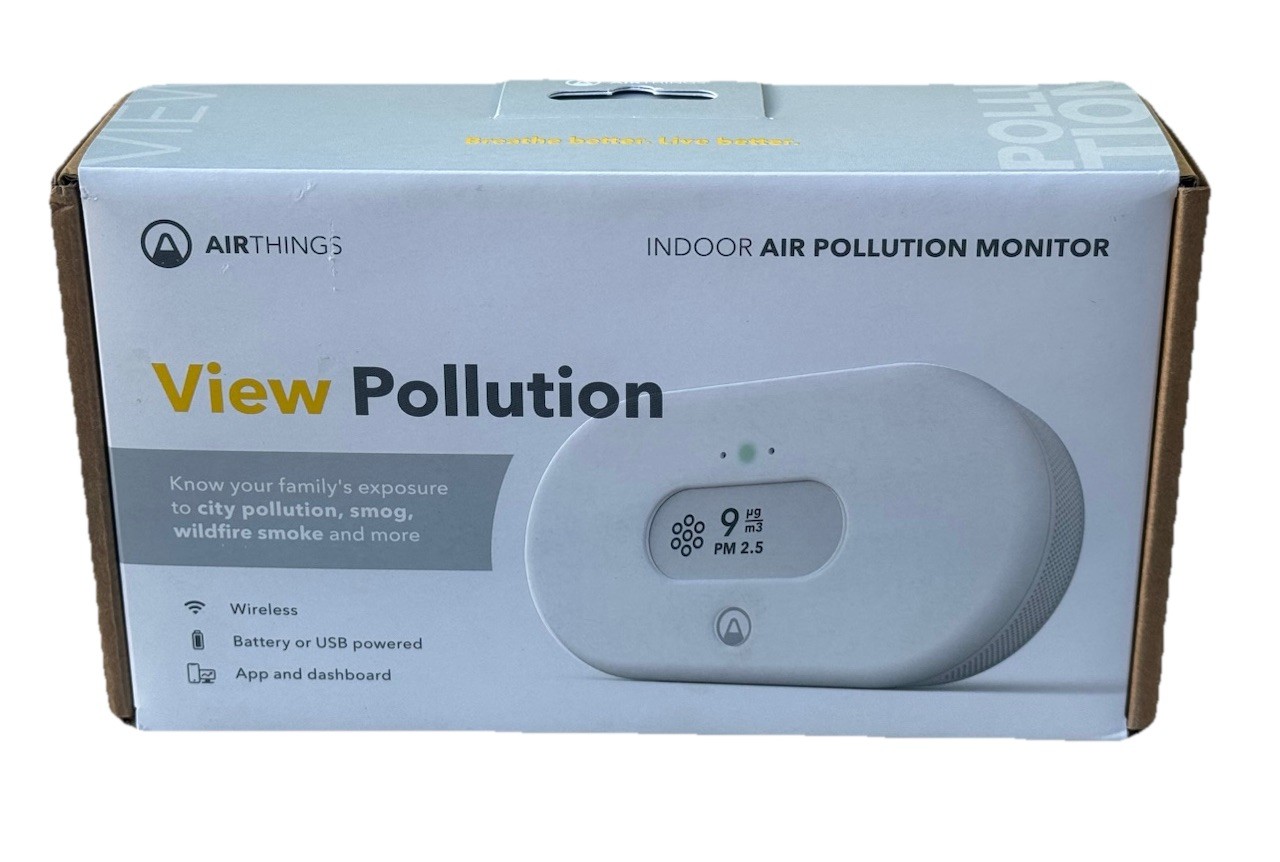

Photos from current listings. Actual item, color, and included accessories may vary.
Indoor Air Pollution Monitor Buying Guide
An indoor air pollution monitor measures particulate matter (PM2.5/PM10), volatile organic compounds (VOCs), and often CO2 or radon to quantify what you are breathing. The core trade-off is sensor architecture: low-cost resistance-based VOC sensors and single-beam optical particle counters drift over months, while laser-scattering PM sensors, electrochemical cells, and dual-beam optics hold calibration. Buy a unit with a replaceable or field-calibratable sensor and published accuracy tolerances; skip sealed, uncalibrated gizmos with no PM2.5 or CO2 channel.
Key takeaways
- PM sensing splits into laser scattering (accurate to ±10% for PM2.5) versus cheap infrared opacity sensors that only trend coarse dust.
- VOC sensing splits into heated metal-oxide (resistance drift, 6–12 month life) versus photoionization (PID) or electrochemical cells with ppb resolution.
- CO2 uses non-dispersive infrared (NDIR) with ±30–50 ppm accuracy; eCO2 estimated from VOC resistance is a guess, not a measurement.
At a glance
- Category
- Environmental & Indoor Air Measurement
- Last updated
- Nov 28, 2026
Current offers
Highlights
- PM sensing splits into laser scattering (accurate to ±10% for PM2.5) versus cheap infrared opacity sensors that only trend coarse dust.
- VOC sensing splits into heated metal-oxide (resistance drift, 6–12 month life) versus photoionization (PID) or electrochemical cells with ppb resolution.
- CO2 uses non-dispersive infrared (NDIR) with ±30–50 ppm accuracy; eCO2 estimated from VOC resistance is a guess, not a measurement.
- Radon-capable units use passive alpha spectrometry chambers; consumer radon monitors need 7–30 day integration windows, not instant readings.
Best use cases
- Pick a laser-scattering PM2.5 + NDIR CO2 unit for a bedroom or home office tracking wildfire smoke, cooking, and ventilation — skip VOC-only units that cannot see particles.
- Pick a multi-sensor unit with radon chamber if you live in a EPA Zone 1 county or below-grade basement; skip it for above-grade homes in low-radon zones.
- Pick a portable, battery-powered monitor for travel and school classrooms; skip fixed AC-powered units that lack logging and phone alerts.
- For mold or chemical-sensitivity concerns, pick a PID or electrochemical VOC unit with ppb resolution; skip metal-oxide VOC index scores that reset and drift.
Buying tips
- Match sensor to pollutant: require laser PM2.5 (±10%), NDIR CO2 (±50 ppm), and a VOC channel with published cross-sensitivity before buying.
- Check calibration policy: units with user-zero calibration in fresh air or replaceable sensor modules last years; sealed sensors become decoration after 12–24 months.
- Verify logging and alerts: local storage plus app push and CSV export matter more than a pretty display for diagnosing a room over weeks.
- For radon, confirm the chamber meets EPA protocol (7-day minimum test) and stores rolling 7-day and long-term averages; instant radon numbers are meaningless.
Specs
| Particle Sensor | Laser scattering vs IR opacity |
|---|---|
| Gas Channels | NDIR CO2 / VOC / radon chamber |
| PM Accuracy | ±10% PM2.5 (laser class) |
| CO2 Accuracy | ±30–50 ppm (NDIR) |
Related searches
What to check before buying
- Measure the room and placement: monitors need 1–2 m breathing height, 1 m from walls, and away from windows, doors, and direct sunlight.
- Confirm power and connectivity: USB-C or AA battery, 2.4 GHz Wi-Fi (most IoT radios do not join 5 GHz), and Bluetooth for setup.
- Check the climate envelope: most optical PM sensors are rated 0–40 °C and 10–90% RH; condensing bathrooms and unheated garages distort readings.
- For radon, know your EPA zone and basement slab type; a monitor is a screening tool, and mitigation decisions need a certified test.
FAQ
Data sources: eBay / Amazon listings and product attribute feeds. Updated Nov 28, 2026.
Some links on this page are affiliate links. If you buy after clicking one, we may earn a commission at no extra cost to you. This does not change which products appear here or their order. Affiliate disclosure.