
Photos from current listings. Actual item, color, and included accessories may vary.
Indoor Air Quality Detector Buying Guide
An indoor air quality detector combines multiple sensors (CO2, PM2.5, VOCs, temperature, humidity) into a single display or app-connected unit; the key trade-off is sensor quality and calibration stability versus the number of features and connectivity. Durable, accurate options use NDIR CO2 sensors and laser-scattering particulate sensors with published accuracy specs, while budget compromises rely on inferred or uncalibrated readings and short-lived electrochemical cells.
Median $55.39
Key takeaways
- CO2 sensing: NDIR (non-dispersive infrared) is the only reliable consumer technology; eCO2 or TVOC-derived estimates drift and misreport ventilation.
- Particulate sensing: laser scattering PM2.5/PM10 sensors with fan airflow give real counts; cheap units use IR obscuration with poor low-concentration accuracy.
- VOC sensing: metal-oxide (MOX) sensors respond to total VOCs but are cross-sensitive to humidity and cooking alcohols; they indicate trends, not absolute ppb.
At a glance
- Category
- Environmental & Indoor Air Measurement
- Last updated
- Nov 28, 2026
Current offers
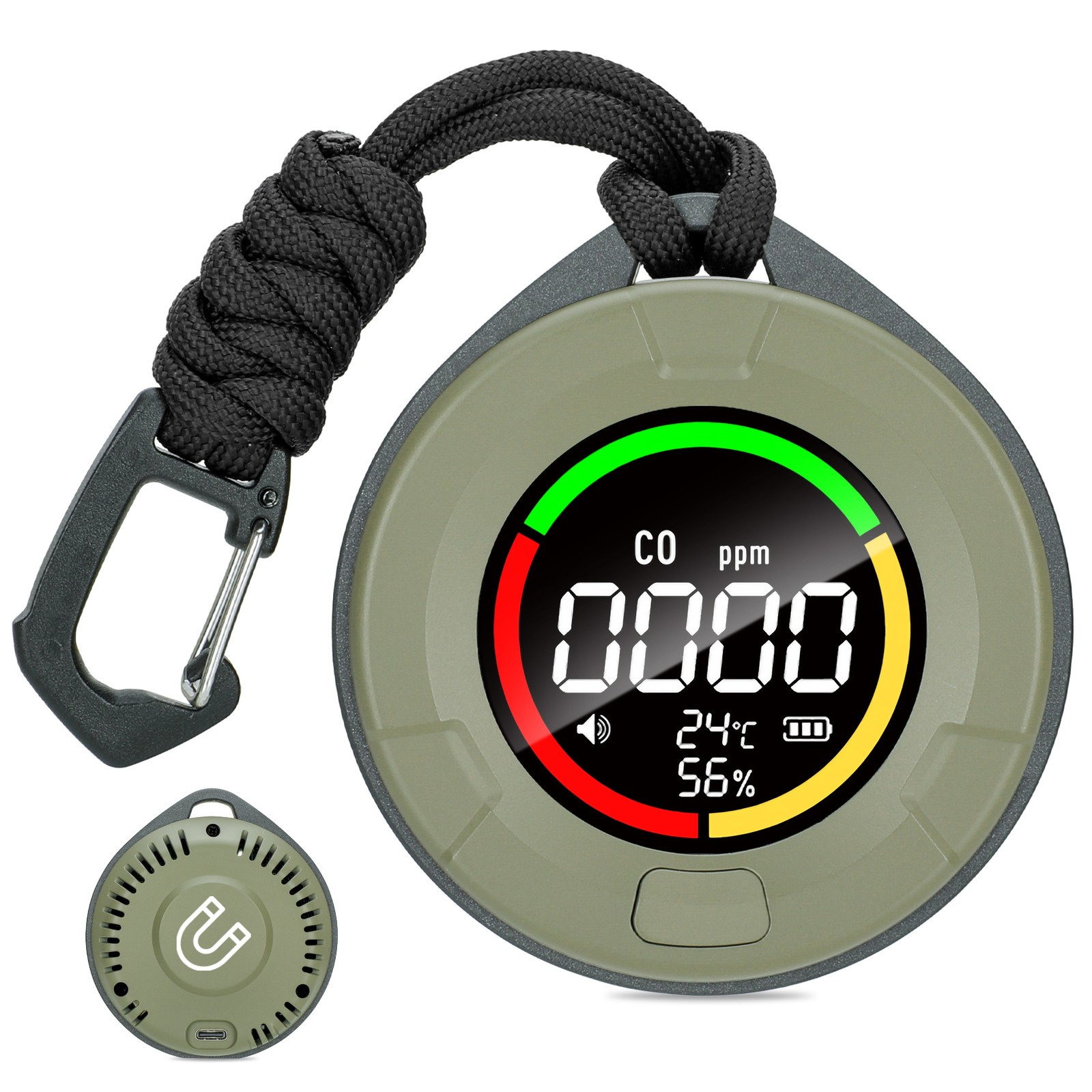 Portable CO2 Detector Mini Indoor air Monitor Home NDIR Sensor 3IN1 US$29.99View on eBay
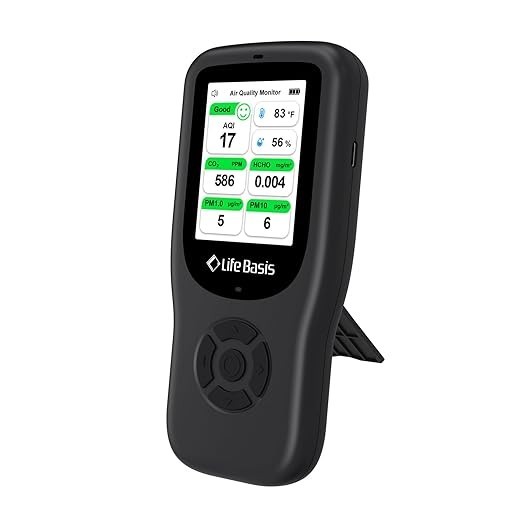 Life Basis Air Quality Monitor Indoor, 11-in-1 Air Quality Detector w. Stand$39.99View on eBay
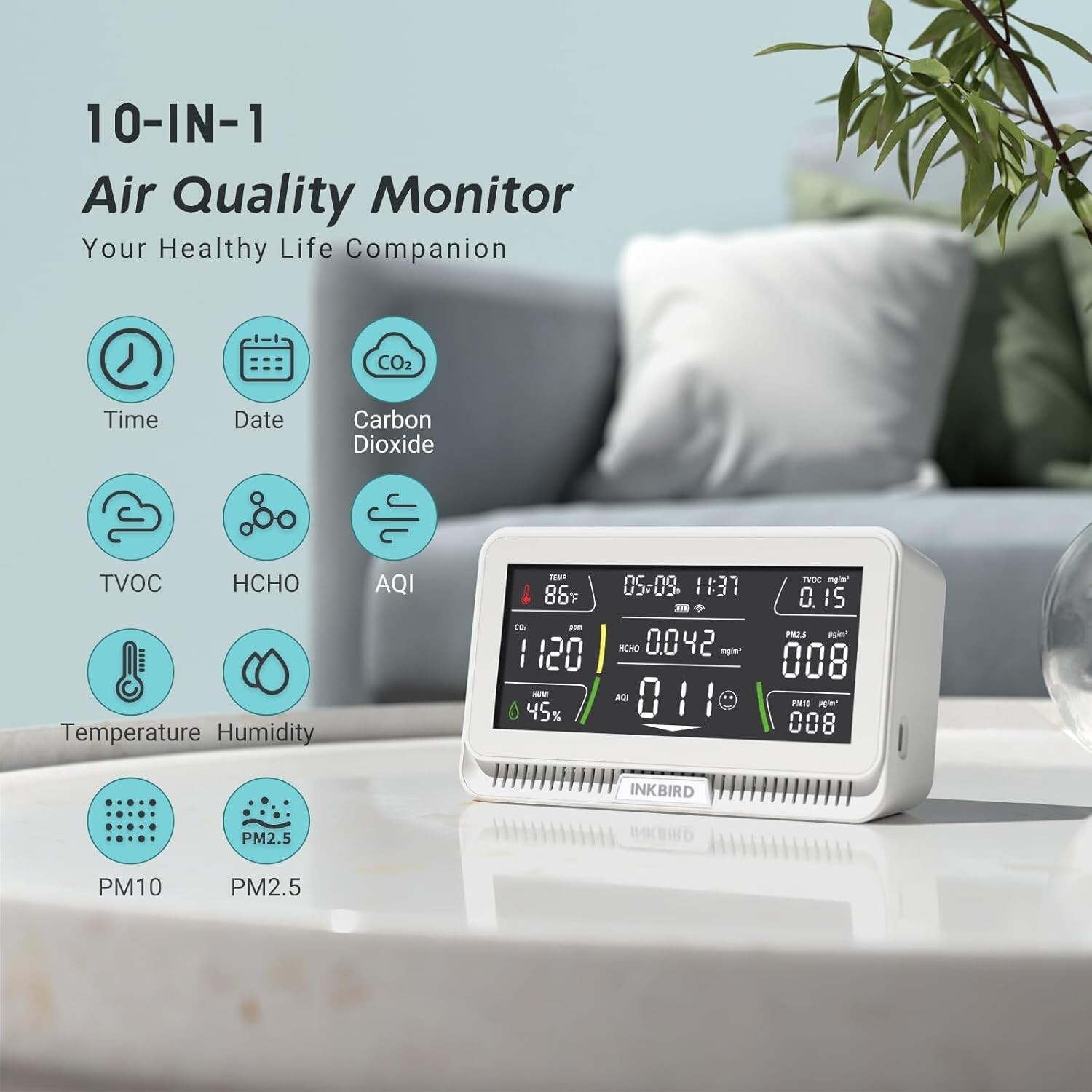 INKBIRD Air Quality Monitor Indoor Co2 Detector Portable 10-in-1 PM2.5 HCHO AQI$70.79View on eBay
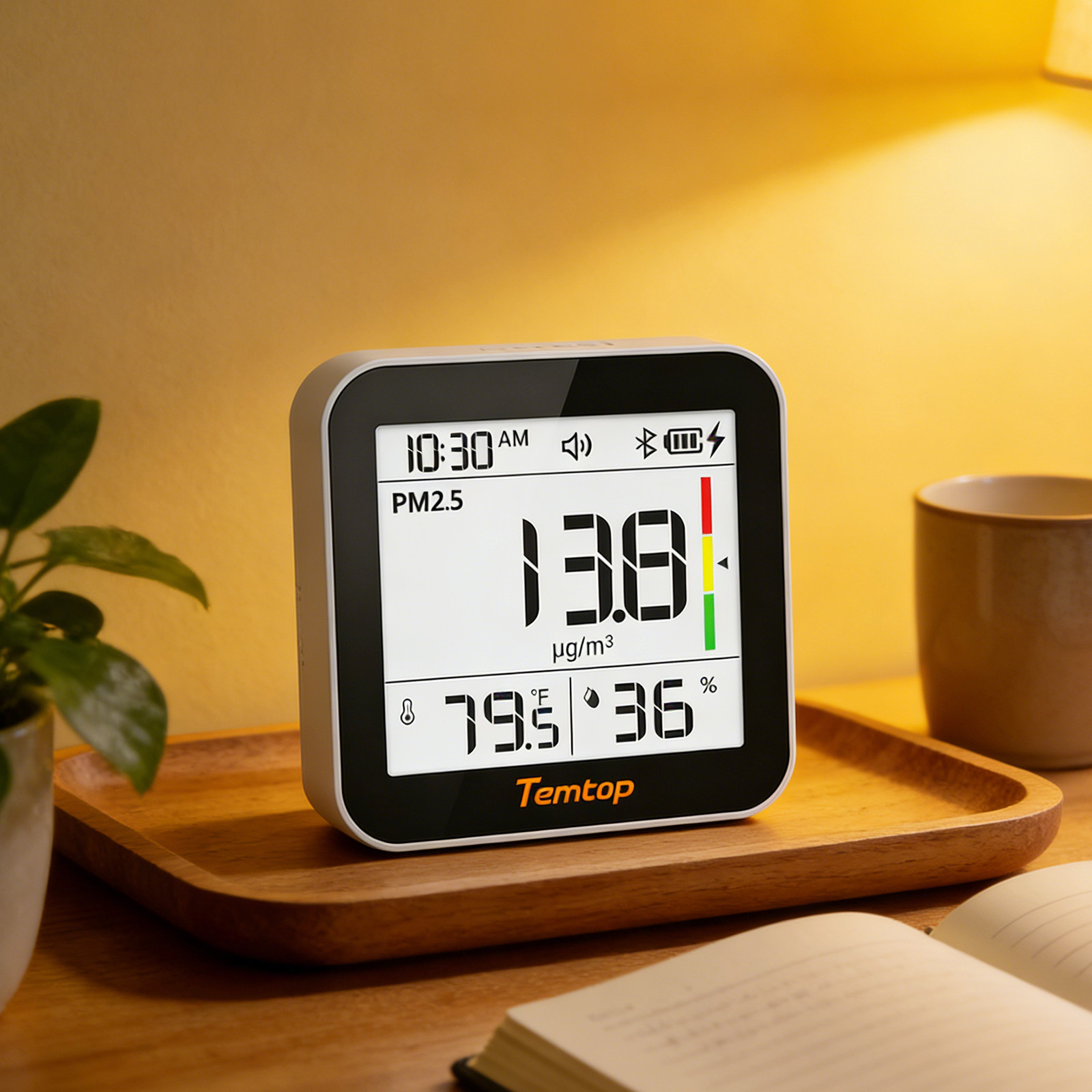 Temtop M10+ Indoor Air Quality Monitor CO2 Detector PM2.5 VOC Home Detector$99.99Last checked Nov 27, 2026View on eBay
Highlights
- CO2 sensing: NDIR (non-dispersive infrared) is the only reliable consumer technology; eCO2 or TVOC-derived estimates drift and misreport ventilation.
- Particulate sensing: laser scattering PM2.5/PM10 sensors with fan airflow give real counts; cheap units use IR obscuration with poor low-concentration accuracy.
- VOC sensing: metal-oxide (MOX) sensors respond to total VOCs but are cross-sensitive to humidity and cooking alcohols; they indicate trends, not absolute ppb.
- Connectivity: Wi-Fi/app models enable logging and alerts but require 2.4 GHz networks; standalone display units work offline with no cloud dependency.
Best use cases
- Best fit: a bedroom or home office where you need CO2 to judge ventilation — pick an NDIR CO2 model with a clear display and optional logging.
- Best fit: a kitchen or near a busy road where PM2.5 spikes matter — choose a laser-scattering PM2.5/PM10 unit with a fan intake, not an IR particle sensor.
- Wrong fit: purchasing a 10-in-1 or 16-in-1 unit as a primary CO2 monitor — the extra channels are often derived or low-grade; prioritize the CO2 sensor type instead.
- Skip app-only units if you lack stable 2.4 GHz Wi-Fi or want instant on-device readings; pick a display model with local alarms.
Buying tips
- Confirm NDIR for CO2; any listing that says 'eCO2' or 'CO2 equivalent' is an estimate from VOC sensors and will not track true ventilation.
- Check PM2.5 accuracy spec (e.g., ±10 µg/m³ or ±15%) and whether it uses laser scattering; IR particle sensors are only indicative.
- For VOC, accept MOX sensors as trend indicators; units claiming ppb-level TVOC accuracy without a PID sensor are overstating capability.
- Match logging interval to use: 1-minute logging for ventilation studies, 5–15 minutes for general awareness; ensure the app exports CSV if you need records.
Specs
| CO2 Sensor | NDIR vs eCO2 estimate |
|---|---|
| Particulate Sensor | Laser scattering vs IR |
| VOC Sensor | MOX trend vs PID absolute |
| Connectivity | Wi-Fi 2.4 GHz / standalone |
Related searches
What to check before buying
- Measure the placement spot: units need 30–60 cm clearance from walls and breath level (1–1.5 m) for representative CO2 readings.
- Confirm power: most are USB-C or micro-USB powered; check whether the unit runs on battery alone and for how long (often 4–8 hours).
- Verify Wi-Fi band: app-controlled models typically require 2.4 GHz; 5 GHz-only networks will fail during setup.
- Check calibration: NDIR CO2 sensors need periodic fresh-air calibration (often manual baseline in outdoor air); confirm the unit supports it.
FAQ
Data sources: eBay / Amazon listings and product attribute feeds. Updated Nov 28, 2026.
Some links on this page are affiliate links. If you buy after clicking one, we may earn a commission at no extra cost to you. This does not change which products appear here or their order. Affiliate disclosure.