
Photos from current listings. Actual item, color, and included accessories may vary.
Indoor CO2 Monitor Buying Guide
An indoor CO2 monitor is a sensor device that measures carbon dioxide concentration to gauge ventilation and air freshness, with NDIR sensors being the only reliable technology for accurate CO2 readings. The core trade-off is sensor quality versus multi-sensor gimmicks: cheap units often use inferred CO2 from VOC sensors, while true monitors use NDIR and display CO2 in ppm. Choose an NDIR-based monitor with a clear ppm readout; skip any unit that only shows an AQI color and cannot display CO2 numerically.
Median $100.00 · Pre-owned listings
Key takeaways
- NDIR (non-dispersive infrared) sensors measure CO2 directly and are accurate to ±(50 ppm + 5% of reading); eCO2 sensors infer from VOC and are unsuitable for ventilation decisions.
- CO2 concentration thresholds: outdoor ~420 ppm, good indoor <800 ppm, stale 1000–1500 ppm, poor >2000 ppm; a monitor must display ppm, not just a colored AQI bar.
- Multi-in-1 units (6-in-1 to 16-in-1) add PM2.5, PM10, HCHO, TVOC, temp, and humidity; the CO2 channel is only as good as its dedicated NDIR sensor, which budget multi-units sometimes omit.
At a glance
- Category
- Environmental & Indoor Air Measurement
- Last updated
- Nov 29, 2026
Current offers
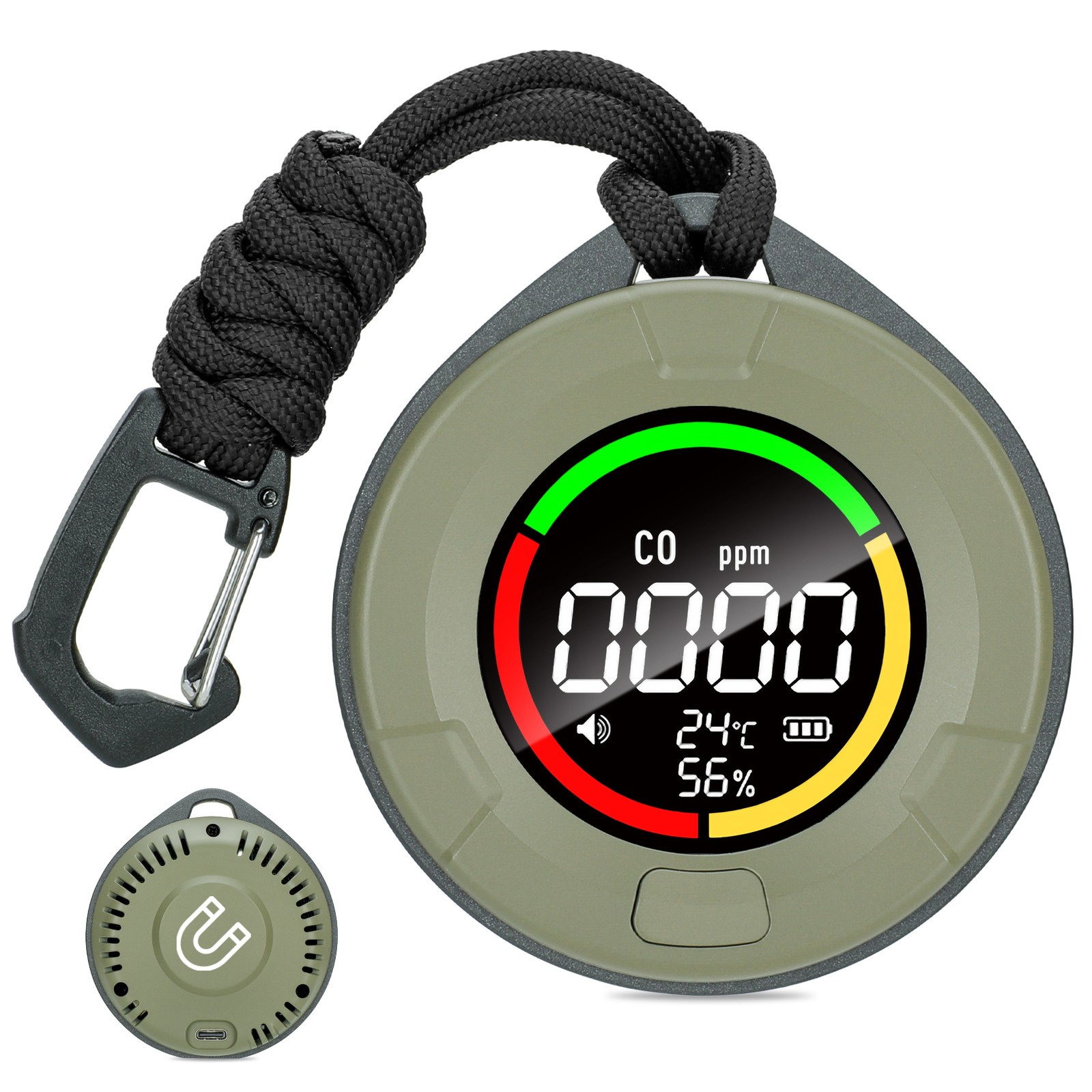 Portable CO2 Detector Mini Indoor air Monitor Home NDIR Sensor 3IN1 US$29.99View on eBay
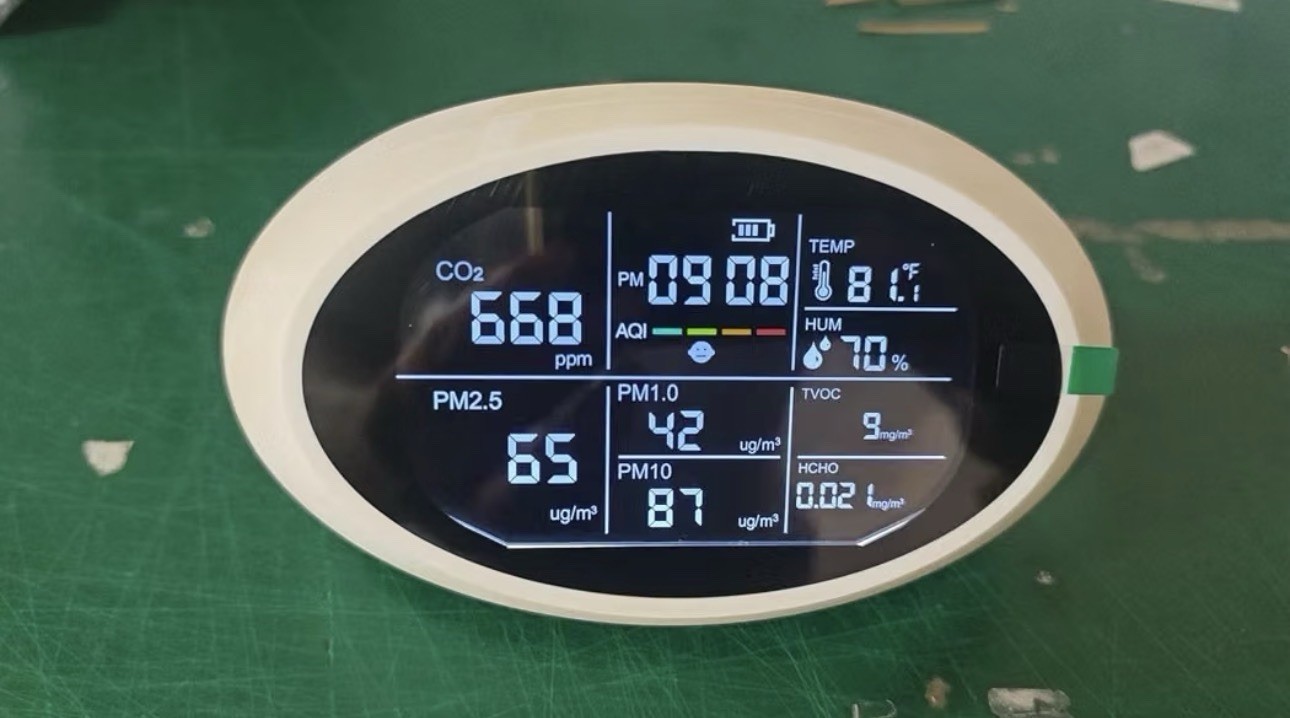 12-in-1 Air Quality Monitor Indoor, Portable Air Quality Monitor, CO2 PM1.0$39.99View on eBay
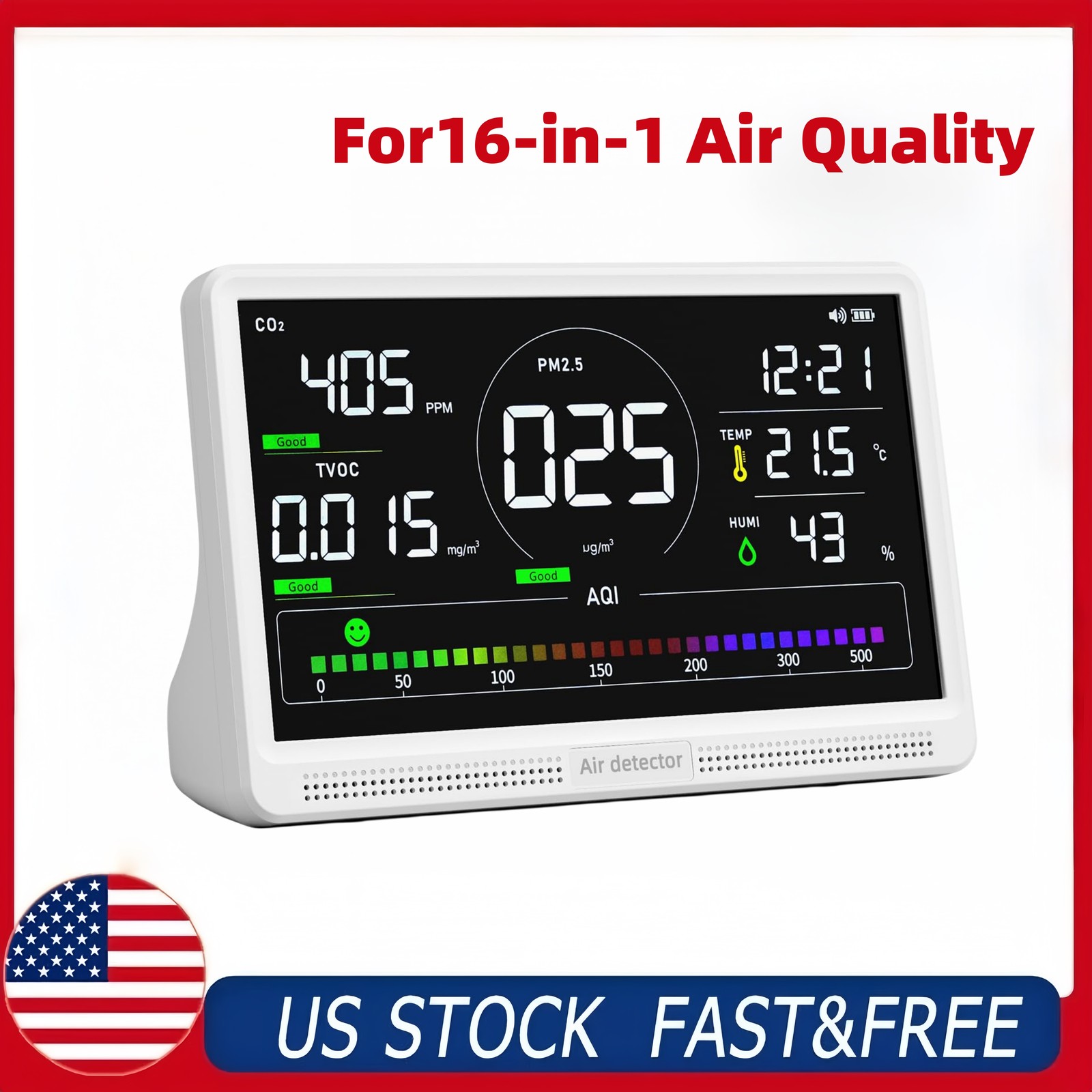 16-in-1 Indoor Air Quality Monitor with CO2, PM2.5, HCHO, TVOC, Temperature$56.99Last checked Nov 27, 2026View on eBay
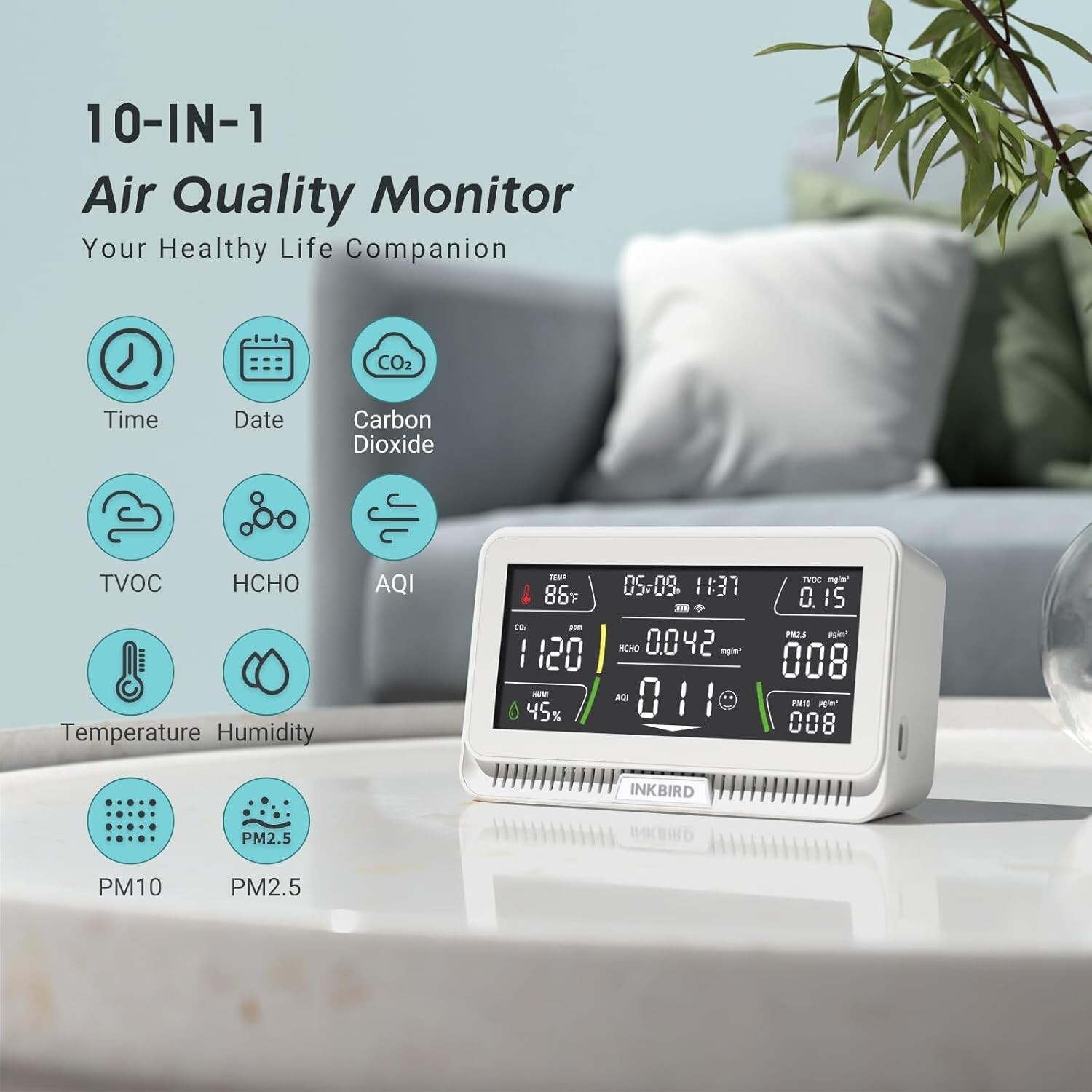 INKBIRD Air Quality Monitor Indoor Co2 Detector Portable 10-in-1 PM2.5 HCHO AQI$70.79View on eBay
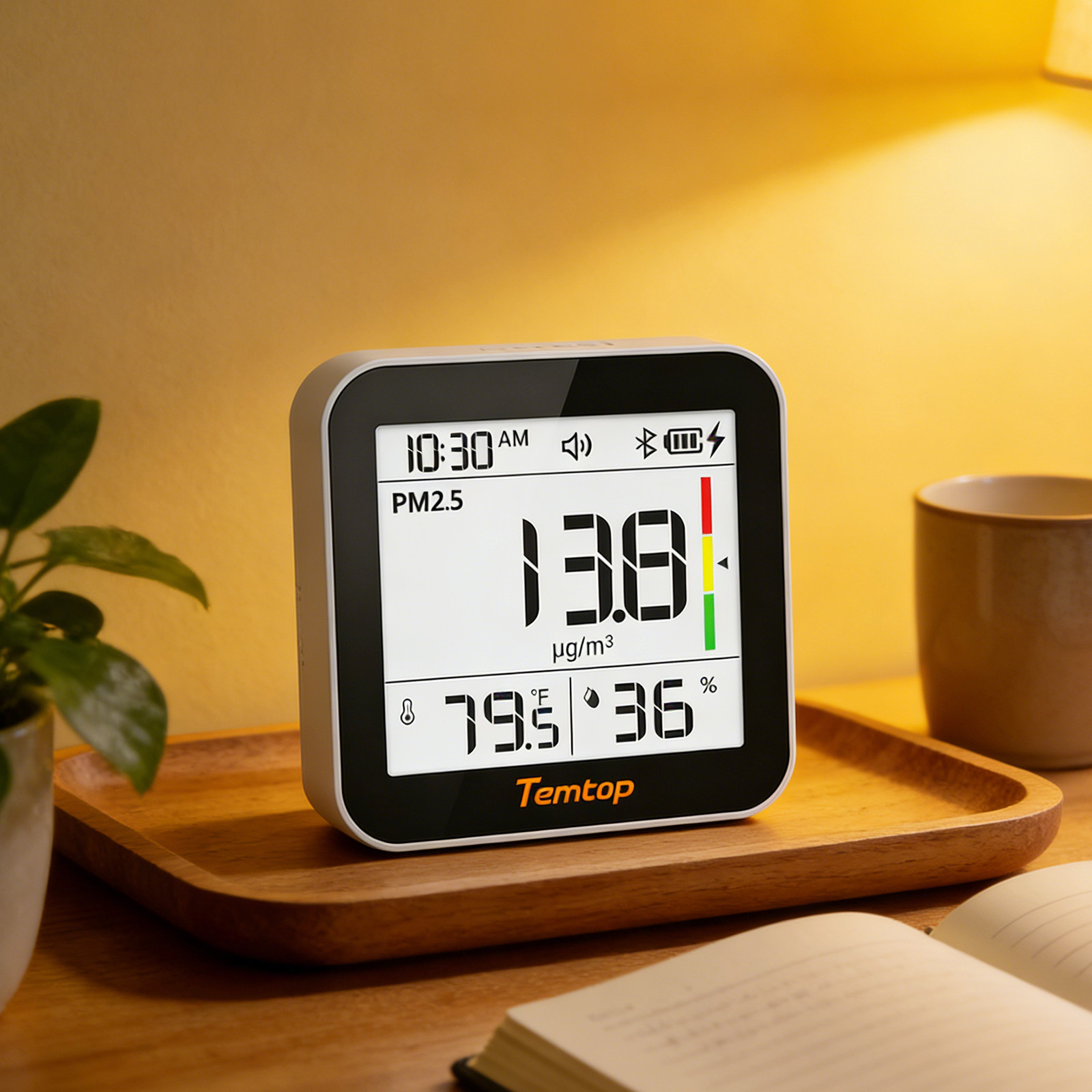 Temtop M10+ Indoor Air Quality Monitor CO2 Detector PM2.5 VOC Home Detector$99.99Last checked Nov 27, 2026View on eBay
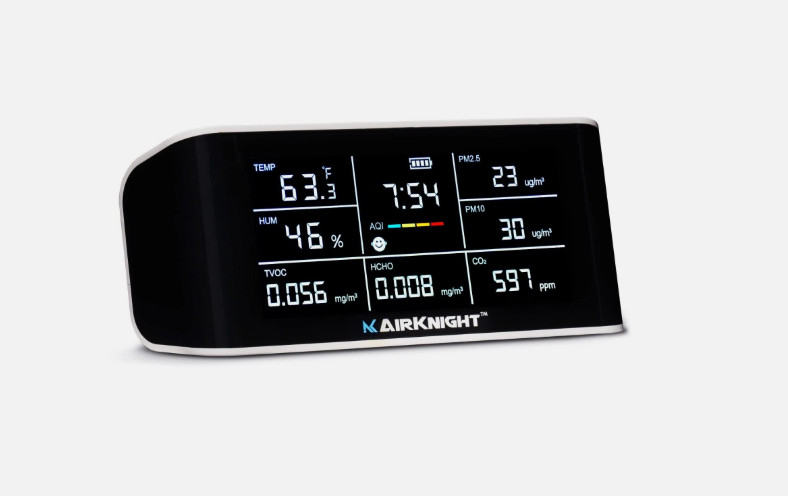 AirKnight 9-in-1 Indoor Air Quality Monitor Indoor Portable CO2 Monitor NEW$100.00View on eBay
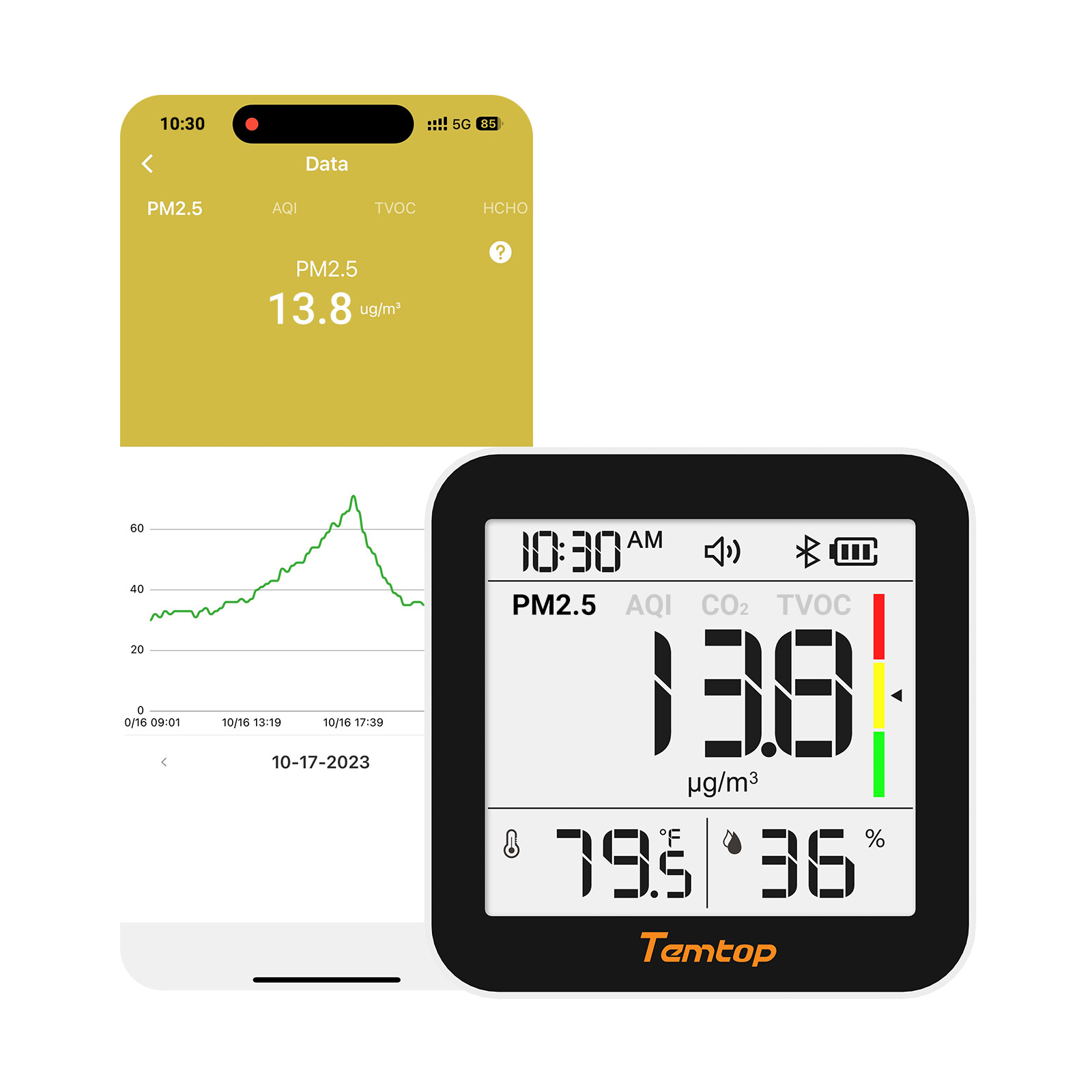 Temtop Indoor Air Quality Monitor 6-in-1 CO2,PM2.5,VOC Detection,temp,Hum, M10+$100.09Last checked Nov 27, 2026View on eBay
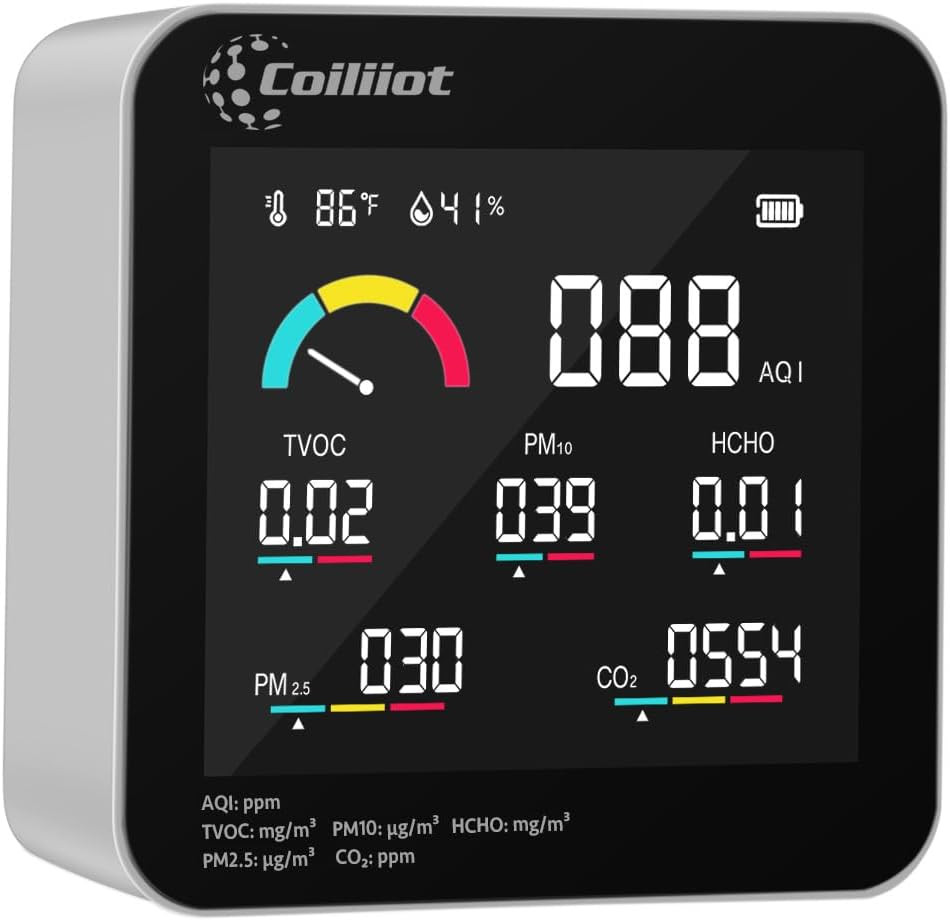 Air Quality Monitor Indoor – CO2 Detector, VOC Meter and AQI Tester Tracks TVOC,$117.32View on eBay
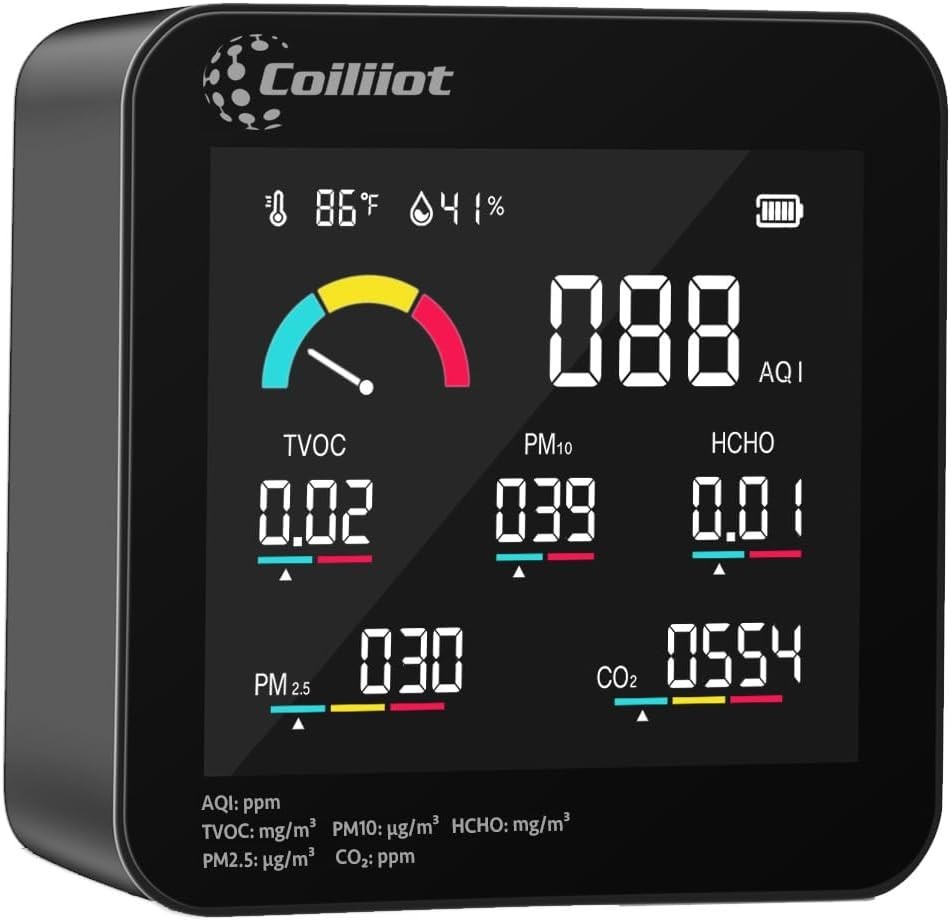 Air Quality Monitor Indoor – CO2 Detector, VOC Meter and AQI Tester Tracks TVOC,$119.32View on eBay
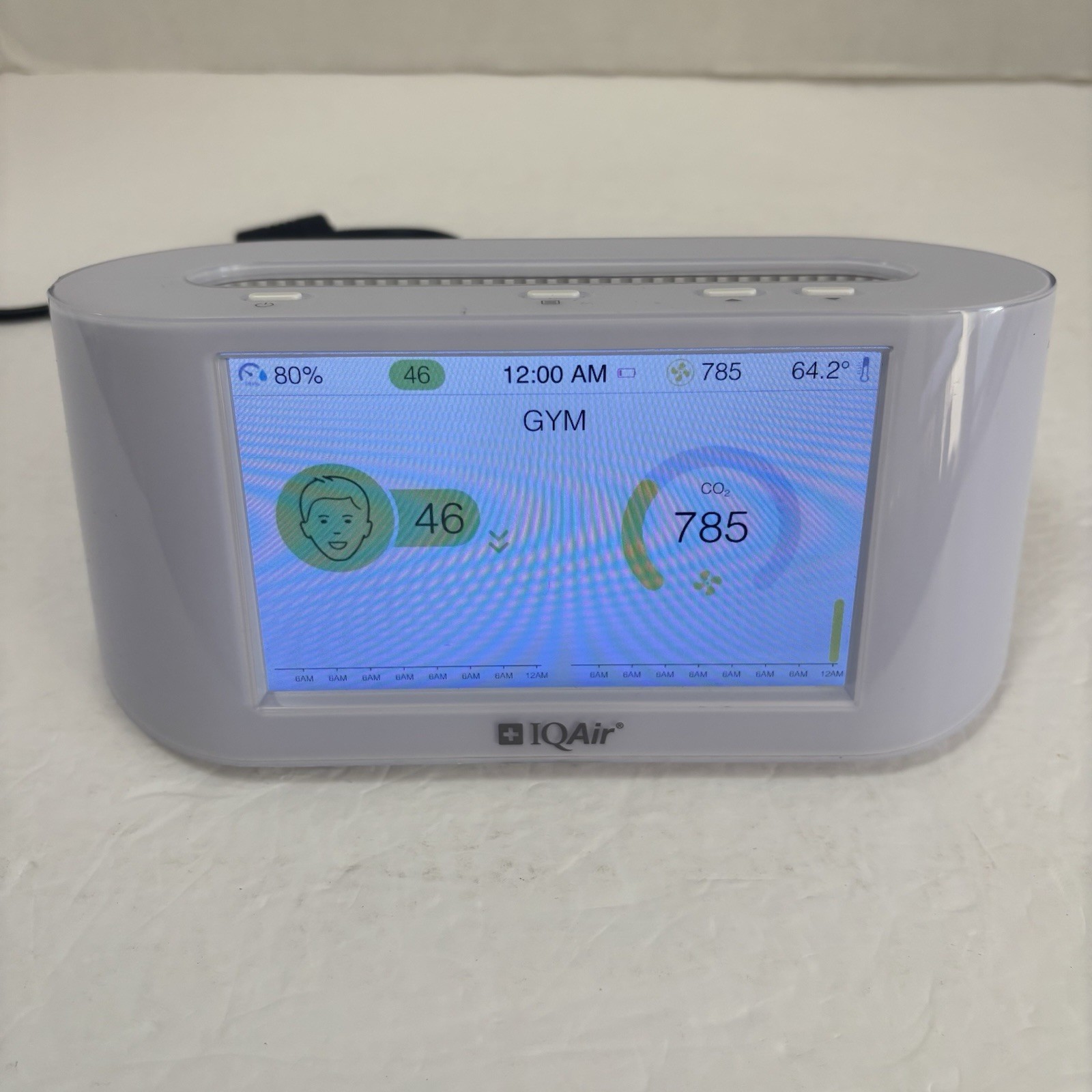 IQAir AirVisual Pro Wi-Fi Indoor/Outdoor Air Quality Monitor Temp Humidity CO2$209.99Used · Last checked Nov 24, 2026View on eBay
Highlights
- NDIR (non-dispersive infrared) sensors measure CO2 directly and are accurate to ±(50 ppm + 5% of reading); eCO2 sensors infer from VOC and are unsuitable for ventilation decisions.
- CO2 concentration thresholds: outdoor ~420 ppm, good indoor <800 ppm, stale 1000–1500 ppm, poor >2000 ppm; a monitor must display ppm, not just a colored AQI bar.
- Multi-in-1 units (6-in-1 to 16-in-1) add PM2.5, PM10, HCHO, TVOC, temp, and humidity; the CO2 channel is only as good as its dedicated NDIR sensor, which budget multi-units sometimes omit.
- Calibration matters: quality monitors offer manual baseline calibration in fresh outdoor air (~400–420 ppm) or automatic baseline calibration (ABC) that assumes periodic fresh-air exposure.
Best use cases
- Best fit: bedrooms and living rooms — pick a plug-in or USB-powered NDIR monitor with ppm display and logging; skip battery-only units with no continuous power option for overnight use.
- Best fit: classrooms, offices, and meeting rooms — choose a monitor with fast response, visible ppm display, and alarm threshold at 1000–1500 ppm to prompt ventilation; skip 16-in-1 units whose CO2 is eCO2-inferred.
- Wrong fit: outdoor or semi-outdoor use — CO2 monitors are calibrated for indoor ranges and weatherproofing is rare; skip unless the unit explicitly rates outdoor operation and temperature range.
- Wrong fit: professional HVAC/IAQ diagnostics — consumer NDIR monitors lack the accuracy and calibration certificates of reference instruments; skip and use a calibrated IAQ meter instead.
Buying tips
- Require an NDIR CO2 sensor and a numeric ppm display; if the listing only shows AQI color bars or claims 'CO2' without NDIR, treat it as an eCO2/VOC estimate and skip it.
- Match sensor count to need: 3-in-1 (CO2, temp, humidity) is sufficient for ventilation checks; 6-in-1 to 10-in-1 adds PM2.5/VOC for general air quality; 16-in-1 rarely adds CO2 accuracy.
- Prefer units with manual calibration or auto-baseline calibration (ABC) and a documented warm-up time (typically 30 seconds to a few minutes) for stable readings.
- Check power: continuous monitoring needs USB or AC power; battery-only monitors drain quickly with NDIR sensors and often drop logging or alarm functions.
Specs
| CO2 Sensor Type | NDIR vs eCO2 (VOC-inferred) |
|---|---|
| CO2 Display | Numeric ppm vs AQI color only |
| Sensor Count | 3-in-1 to 16-in-1 (CO2 core) |
| Power Source | USB/AC continuous vs battery |
Related searches
What to check before buying
- Confirm the room or zone size and whether you need one monitor per room; CO2 is localized, so a single unit does not represent a whole home.
- Verify the unit displays CO2 in ppm on the device itself, not only in a companion app, so readings are visible without a phone.
- Check power source and cable length or battery type; place the monitor at breathing height (1–1.5 m) away from windows, doors, and direct breath.
- Confirm plug/voltage standard (US 110–120 V or USB-C/USB-A) and whether calibration instructions and a baseline procedure are included.
FAQ
Data sources: eBay / Amazon listings and product attribute feeds. Updated Nov 29, 2026.
Some links on this page are affiliate links. If you buy after clicking one, we may earn a commission at no extra cost to you. This does not change which products appear here or their order. Affiliate disclosure.