
Photos from current listings. Actual item, color, and included accessories may vary.
Indoor Outdoor Weather Station Buying Guide
An indoor-outdoor weather station pairs a wireless outdoor sensor array with an indoor display console, turning hyperlocal temperature, humidity, wind, rain, and UV data into an at-a-glance forecast. The core trade-off is sensor completeness and wireless range versus display clarity and power simplicity: budget units stop at temp/humidity, while 7-in-1 arrays add wind, rain, and UV at the cost of stricter siting and battery maintenance. The decision rule is simple—buy the sensor suite your climate actually needs, and reject any unit whose transmission range or sensor grade cannot span your yard-to-console distance reliably.
Median $105.99
Key takeaways
- Sensor tiers separate models: basic 2-in-1 units log only temperature and humidity, while 7-in-1 arrays add wind speed, wind direction, rainfall, UV index, and sometimes light—each extra channel demands correct outdoor siting.
- Wireless range is the hard constraint: budget stations transmit roughly 100 ft (30 m) line-of-sight, and long-range models reach 196 ft (60 m) or more, so wall count and interference decide reliability more than brand.
- Display size and technology drive readability: 7.5-inch color LCD consoles show all channels simultaneously, while compact mono LCDs cycle data and suit nightstands rather than kitchens.
At a glance
- Category
- Environmental & Indoor Air Measurement
- Last updated
- Nov 28, 2026
Current offers
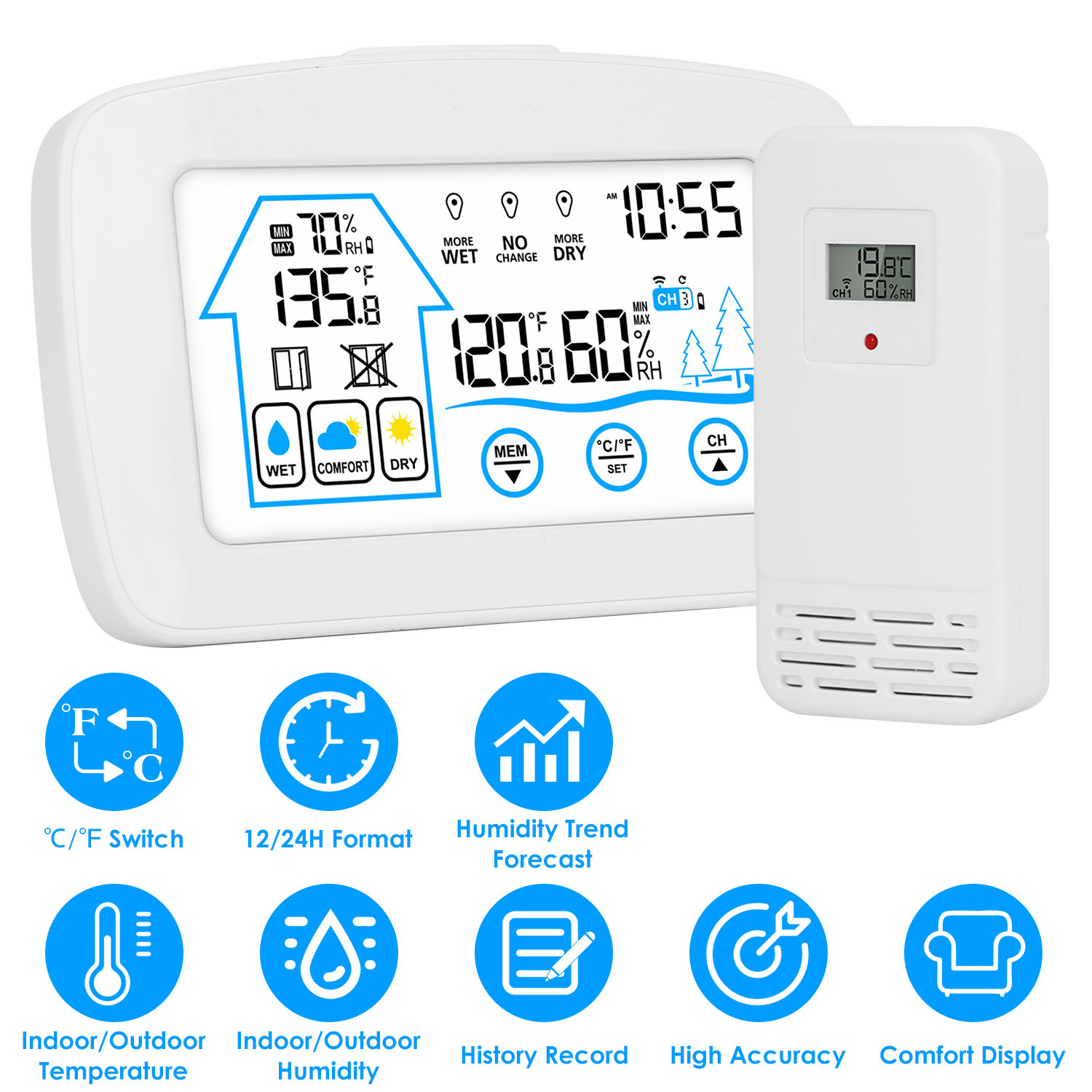 1Pc Wireless Weather Station With Clock 196FT Range Indoor Outdoor Thermometer Sensor Temperature And Humidity Monitor Forecast Battery Powered Backlight Display$39.99View on Mallflare
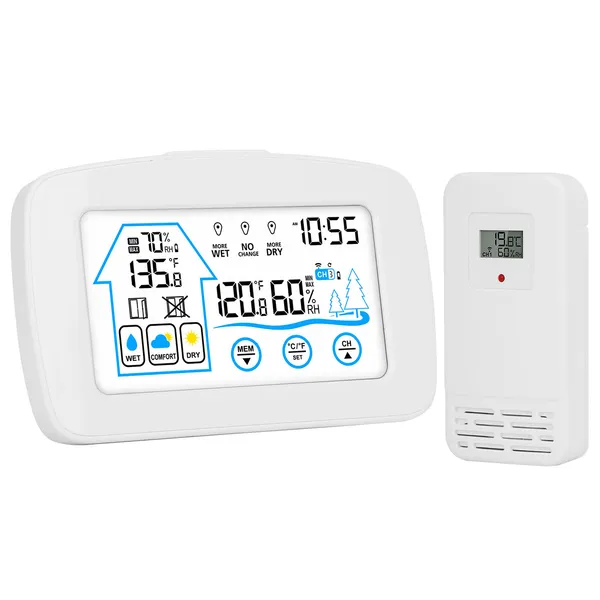 Wireless Weather Station With Clock 196FT Range Indoor Outdoor Thermometer Sensor Temperature And Humidity Monitor Forecast Battery Powered Backlight Display$43.99View on Mallflare
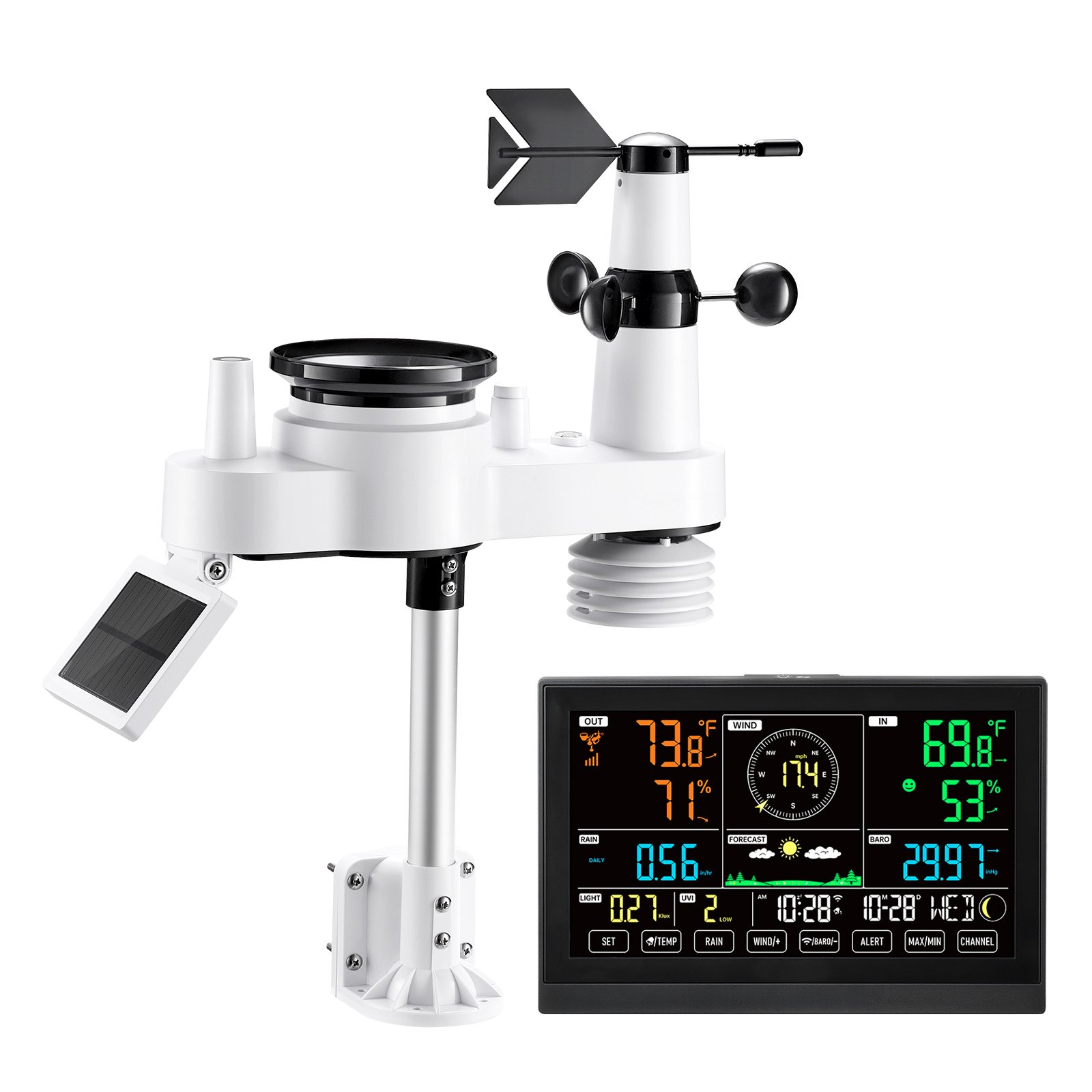 7-in-1 Wi-Fi Weather Station With APP, 7.5-Inch VA Display, Wireless Solar Powered Outdoor Sensor, Rain Gauge, Indoor For Forecast, Wind Speed, Temperature, Humidity, Rainfall$105.99View on Mallflare
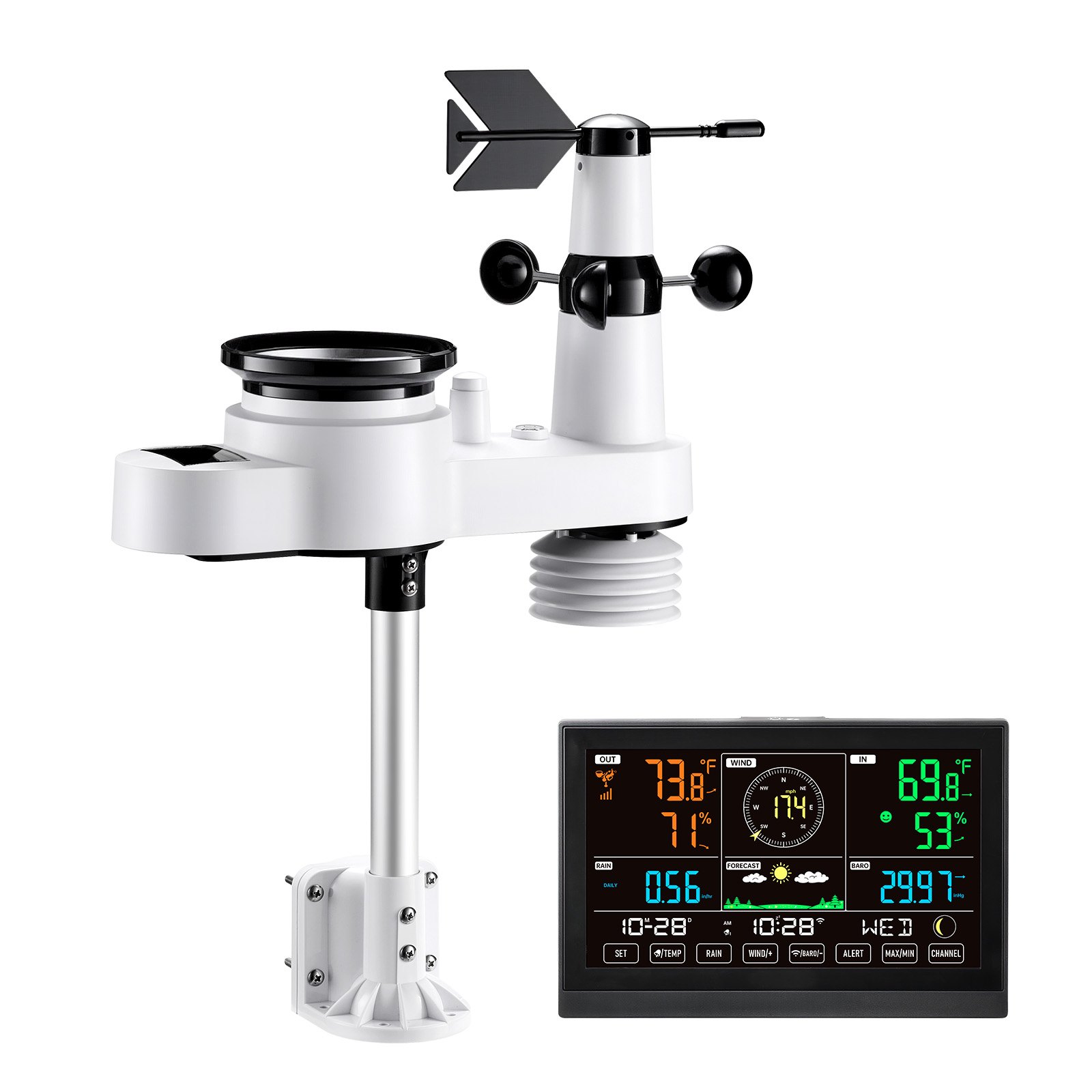 5-in-1 Wi-Fi Weather Station, 7.5-Inch VA Display, Wireless Solar Powered Outdoor Sensor, Rain Gauge, Indoor For Forecast, Wind Speed Direction, Temperature, Humidity, Rainfall$105.99View on Mallflare
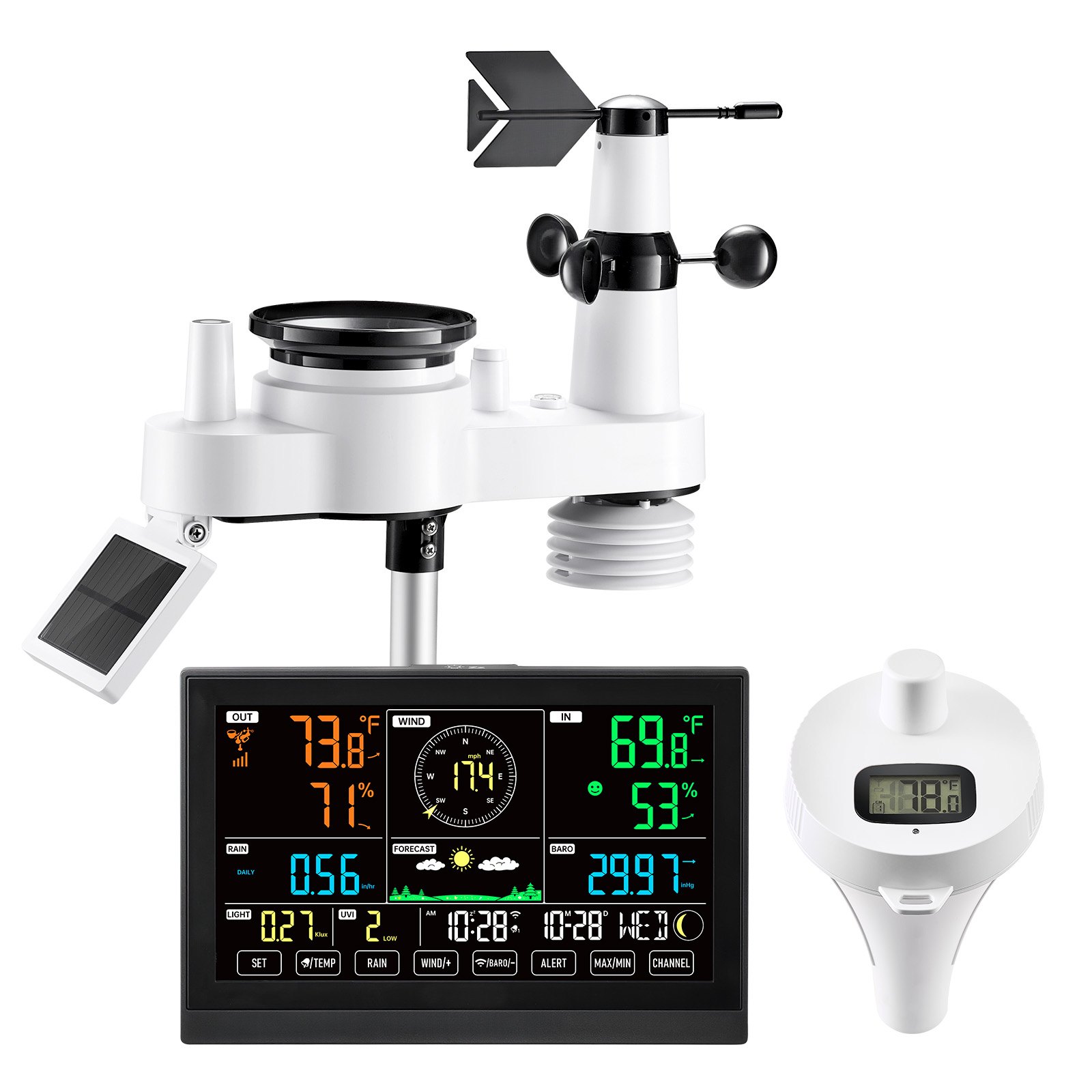 7-in-1 Wi-Fi Weather Station With APP, 7.5 In Display, Wireless Solar Powered Outdoor Sensor, Pool Thermometer, Rain Gauge, Indoor For Forecast, Wind Speed, Temperature$111.99View on Mallflare
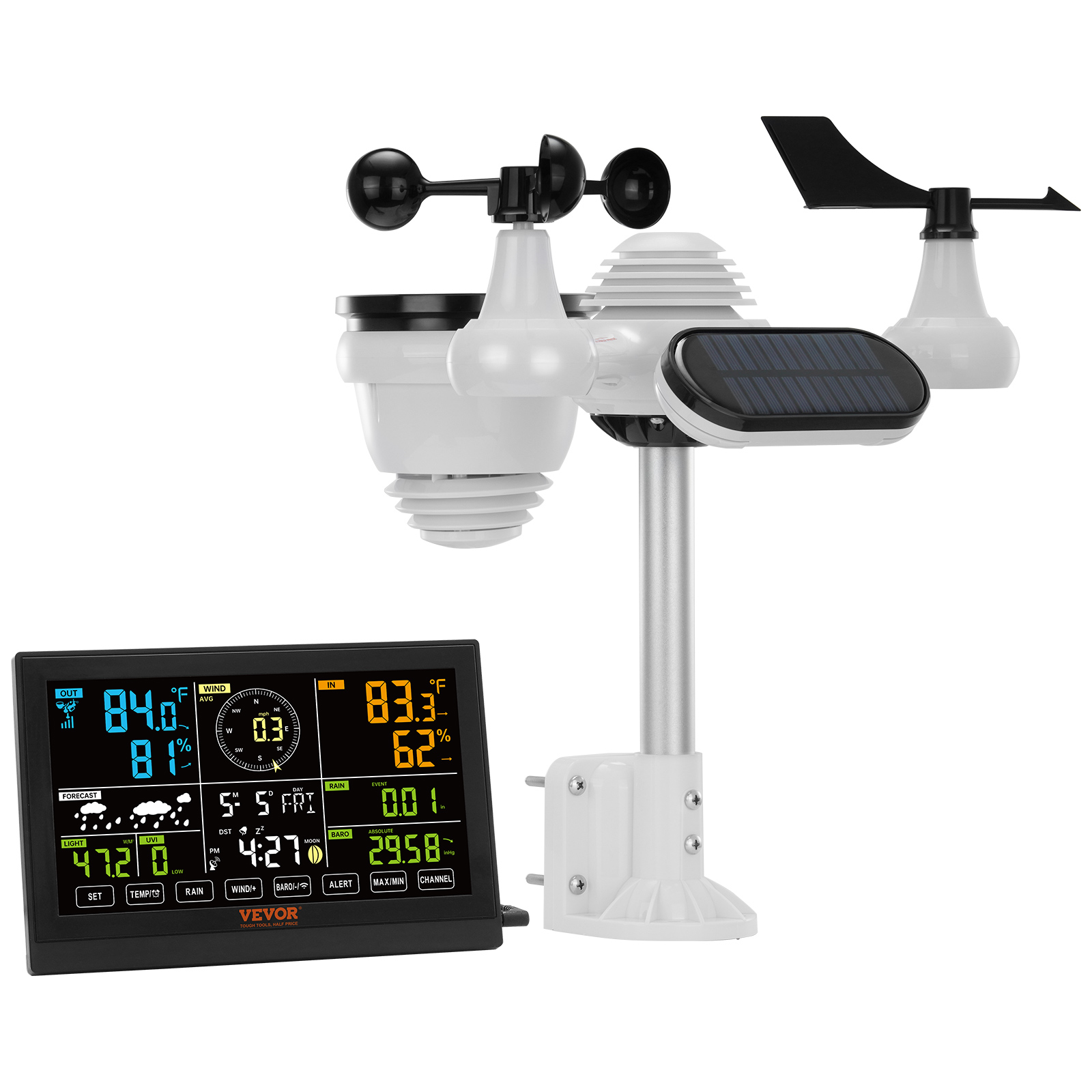 VEVOR 7-in-1 Wireless Weather Station, 7.5 In Large Color Display, Digital Home Indoor Outdoor, For Temperature Humidity Wind Speed,Direction Rain UV, With Forecast Data, Alarm, Alerts$112.99View on Mallflare
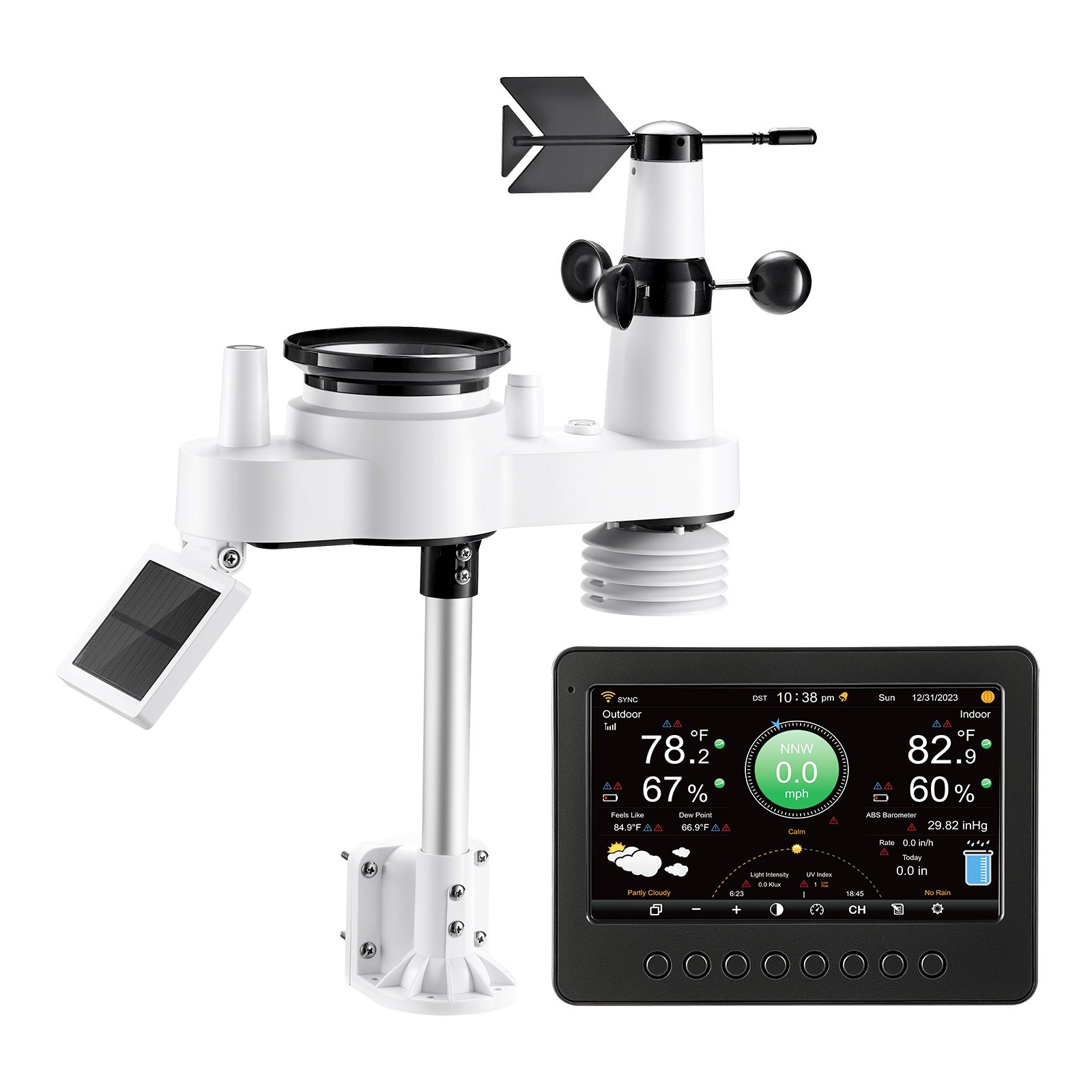 7-in-1 Wi-Fi Weather Station, 7-Inch TFT Display, Wireless Solar Powered Outdoor Sensor, Rain Gauge, Indoor For Forecast, Wind Speed Direction, Temperature, Humidity, Rainfall$146.99View on Mallflare
Highlights
- Sensor tiers separate models: basic 2-in-1 units log only temperature and humidity, while 7-in-1 arrays add wind speed, wind direction, rainfall, UV index, and sometimes light—each extra channel demands correct outdoor siting.
- Wireless range is the hard constraint: budget stations transmit roughly 100 ft (30 m) line-of-sight, and long-range models reach 196 ft (60 m) or more, so wall count and interference decide reliability more than brand.
- Display size and technology drive readability: 7.5-inch color LCD consoles show all channels simultaneously, while compact mono LCDs cycle data and suit nightstands rather than kitchens.
- Power architecture splits into battery-only consoles (portable, no cord clutter) versus USB-mains consoles with battery backup (continuous backlight, but a wall outlet is required at the display location).
Best use cases
- Best fit: a 7-in-1 color-display station for gardeners, roofers, or anyone making irrigation, spraying, or outdoor-work decisions—wind, rain, and UV data justify the higher sensor cost.
- Best fit: a 2-in-1 temp/humidity station for apartment dwellers or office users who only need indoor comfort and a local outdoor reading with minimal setup and no moving parts.
- Wrong fit: installing a 7-in-1 anemometer under a roof overhang or beside a wall—turbulence corrupts wind and rain readings, so pick a basic sensor or relocate the array to open ground.
- Skip: battery-only consoles if you want a permanently lit display in a bright room; choose a USB-powered console with backup batteries instead.
Buying tips
- Measure the true path from proposed sensor site to console: add 20–30% margin over the stated range, because 196 ft ratings assume clear line-of-sight and drop sharply through exterior walls.
- Match sensor suite to climate decisions: if you never act on rain or wind, a 2-in-1 unit saves money and eliminates anemometer bearing wear and rain-gauge clogging maintenance.
- Prefer consoles with backlight plus battery backup: mains power keeps the display lit, while AA backup preserves settings and logging through outages.
- Check sensor power type: solar-assisted arrays reduce battery swaps but still carry backup cells, and exposed alkaline cells in a sealed sensor bay degrade faster in temperature extremes—lithium AA cells are the durable choice.
Specs
| Sensor Suite | 2-in-1 temp/humidity vs 7-in-1 full array |
|---|---|
| Wireless Range | ~100 ft basic / ~196 ft long-range (LOS) |
| Display Type | 7.5 in color LCD vs compact mono LCD |
| Power Source | Battery-only vs USB mains + battery backup |
Related searches
What to check before buying
- Confirm a mounting plan: the outdoor array needs a pole or bracket 5–6 ft above ground in open air, at least 4× the height of nearby obstacles away from walls and trees.
- Verify the console location has an outlet if you choose a USB-powered display, and measure the display footprint against your shelf or counter space.
- Check that your home's exterior wall construction (brick, stucco, metal siding) won't kill the wireless link—place the console on an interior wall facing the sensor.
- Confirm the station includes the sensor mount and that you have the correct battery count and type (typically AA or AAA) on hand before installation day.
FAQ
Data sources: eBay / Amazon listings and product attribute feeds. Updated Nov 28, 2026.
Some links on this page are affiliate links. If you buy after clicking one, we may earn a commission at no extra cost to you. This does not change which products appear here or their order. Affiliate disclosure.