
Photos from current listings. Actual item, color, and included accessories may vary.
Indoor Weather Station Buying Guide
An indoor weather station pairs a base display with wireless outdoor sensors to track temperature, humidity, and often wind, rain, and UV from inside the home. The core trade-off is sensor architecture and RF reliability versus display features: cheap units use fixed-code 433 MHz links and uncalibrated sensors, while durable models use 868/915 MHz frequency-hopping, shielded sensor housings, and solar or lithium backup. The decision rule: buy only if the listing states a named sensor protocol, sensor operating range, and RF range with line-of-sight math — otherwise you are buying a disposable display, not a measurement instrument.
Median $105.99
Key takeaways
- RF link: 433 MHz fixed-code units drop signal through 2 exterior walls; 868/915 MHz frequency-hopping with 196 ft+ line-of-sight is the durable tier.
- Sensor accuracy: ±0.5°C / ±3% RH requires a calibrated sensor; ±1°C / ±5% RH is typical of budget all-in-one outdoor transmitters.
- All-in-one 7-in-1 sensor arrays (temp, humidity, wind speed/direction, rain, UV, light) need solar or lithium AA backup to survive winter.
At a glance
- Category
- Environmental & Indoor Air Measurement
- Last updated
- Nov 28, 2026
Current offers
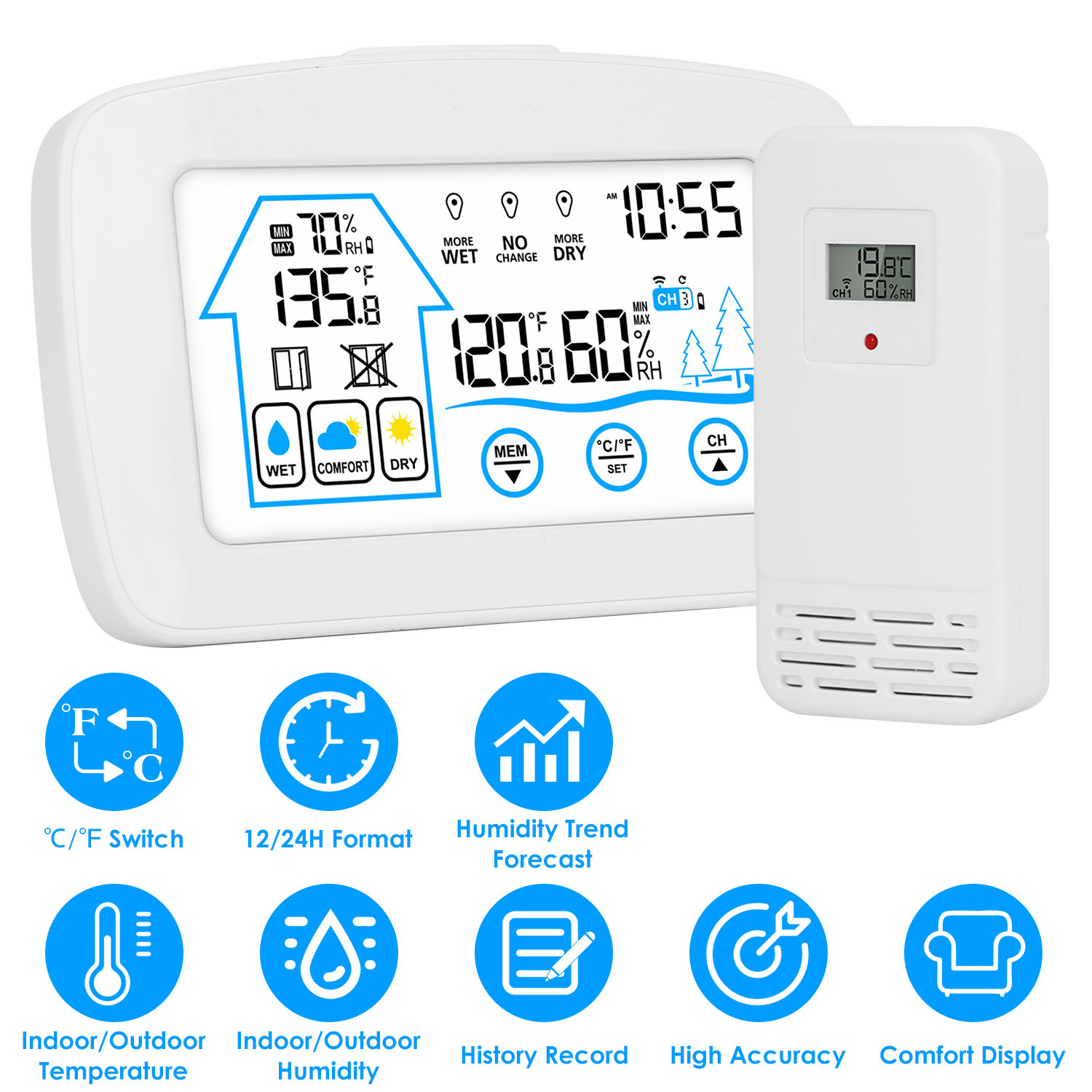 1Pc Wireless Weather Station With Clock 196FT Range Indoor Outdoor Thermometer Sensor Temperature And Humidity Monitor Forecast Battery Powered Backlight Display$39.99View on Mallflare
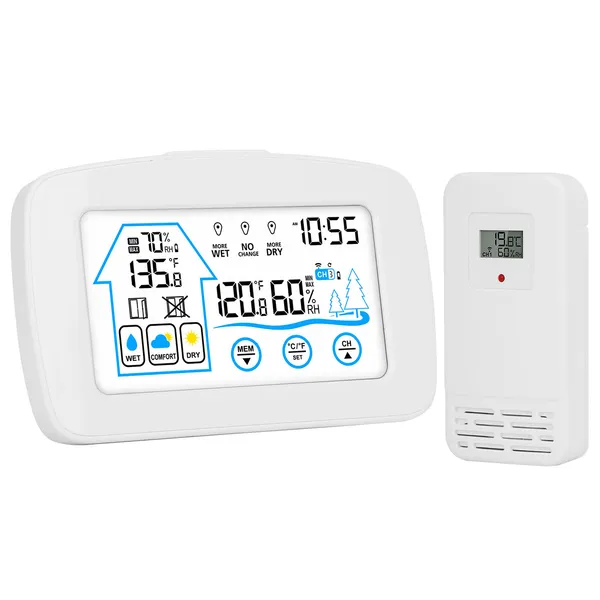 Wireless Weather Station With Clock 196FT Range Indoor Outdoor Thermometer Sensor Temperature And Humidity Monitor Forecast Battery Powered Backlight Display$43.99View on Mallflare
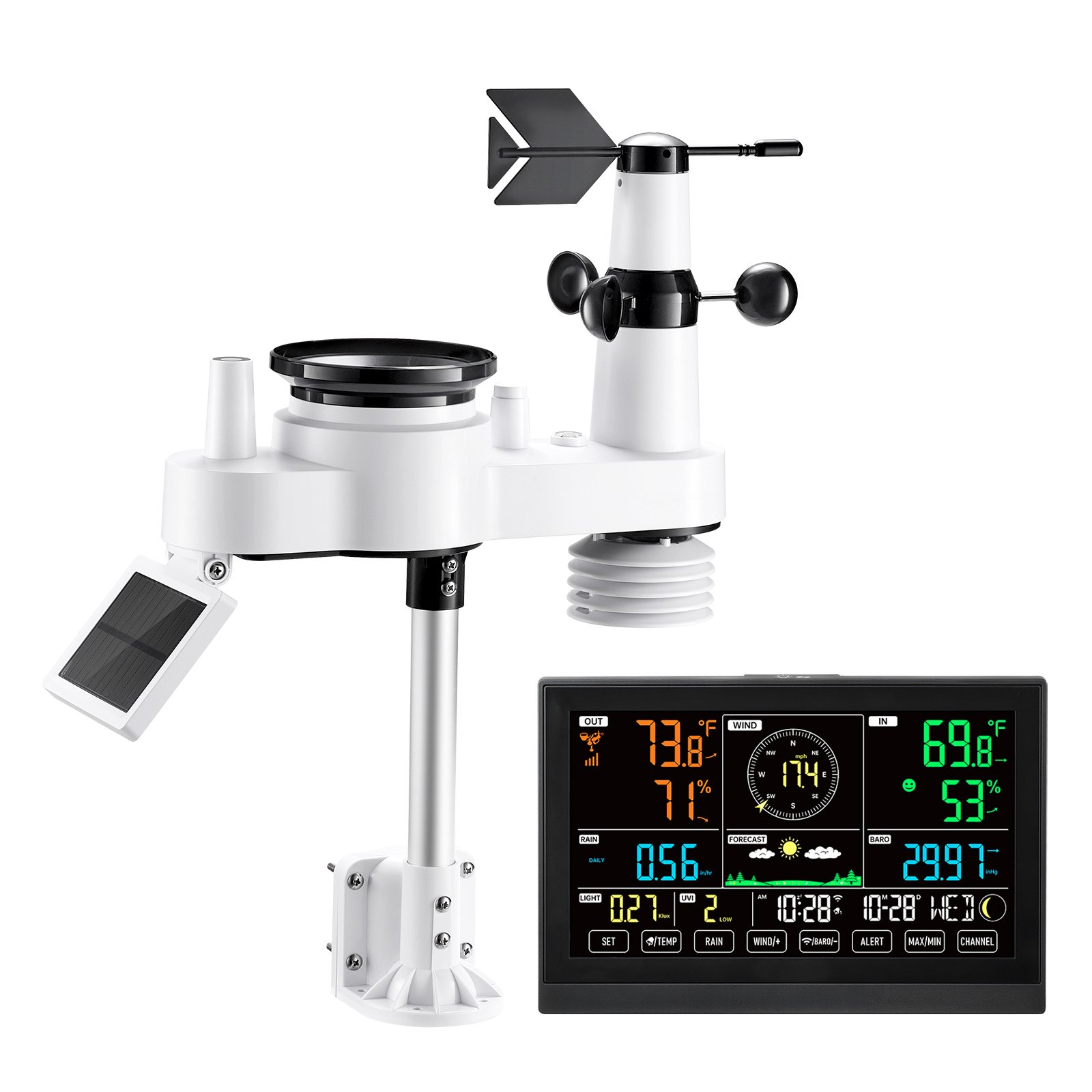 7-in-1 Wi-Fi Weather Station With APP, 7.5-Inch VA Display, Wireless Solar Powered Outdoor Sensor, Rain Gauge, Indoor For Forecast, Wind Speed, Temperature, Humidity, Rainfall$105.99View on Mallflare
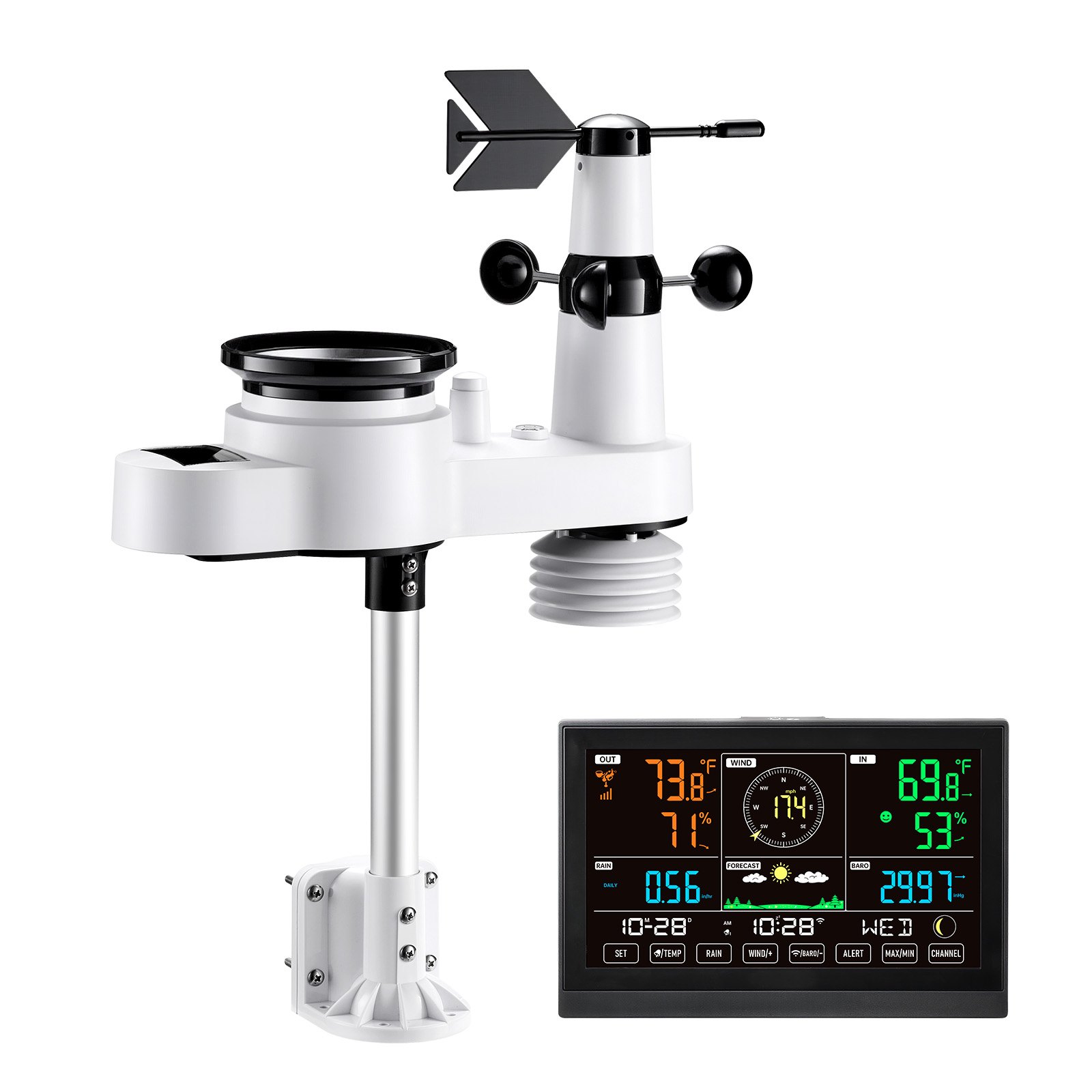 5-in-1 Wi-Fi Weather Station, 7.5-Inch VA Display, Wireless Solar Powered Outdoor Sensor, Rain Gauge, Indoor For Forecast, Wind Speed Direction, Temperature, Humidity, Rainfall$105.99View on Mallflare
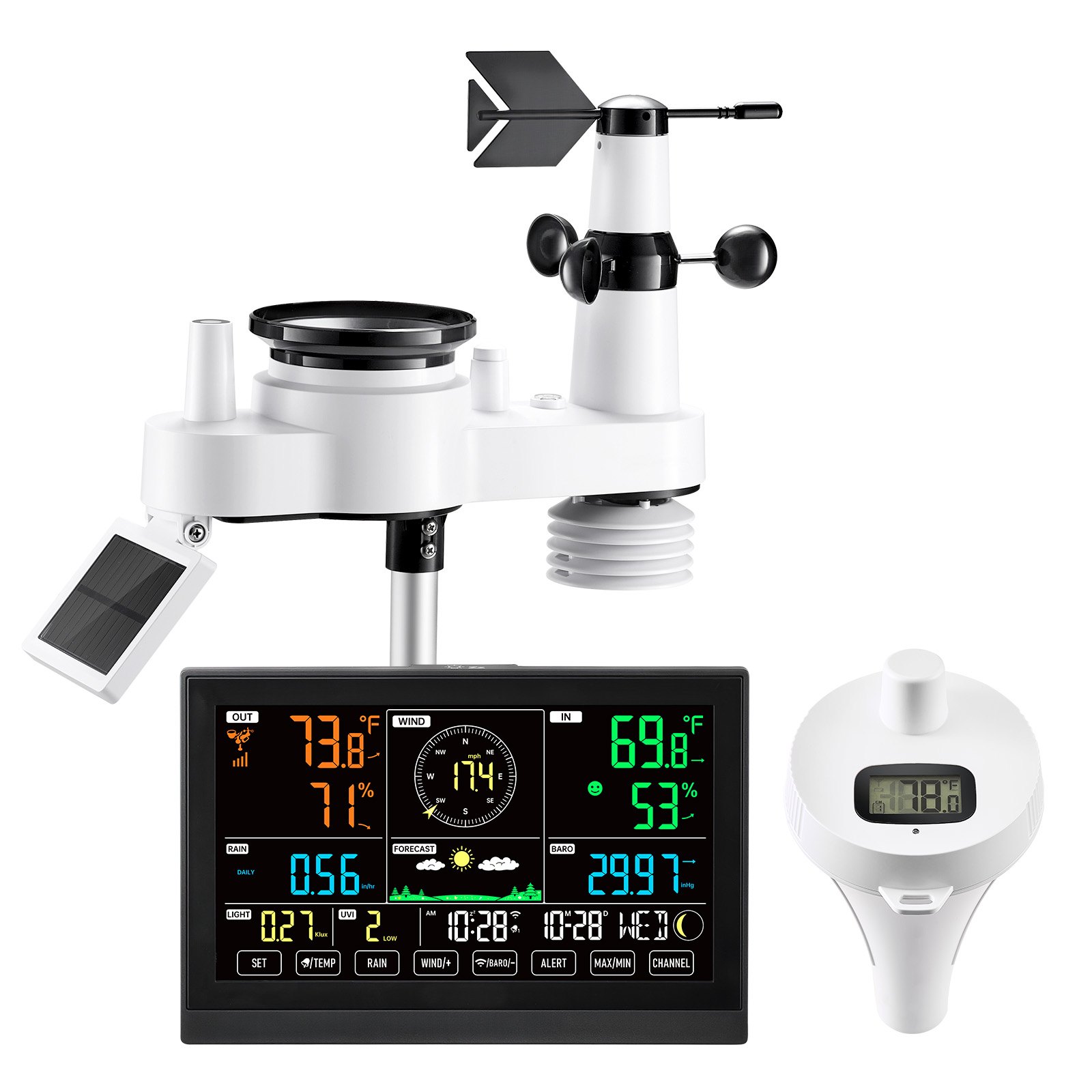 7-in-1 Wi-Fi Weather Station With APP, 7.5 In Display, Wireless Solar Powered Outdoor Sensor, Pool Thermometer, Rain Gauge, Indoor For Forecast, Wind Speed, Temperature$111.99View on Mallflare
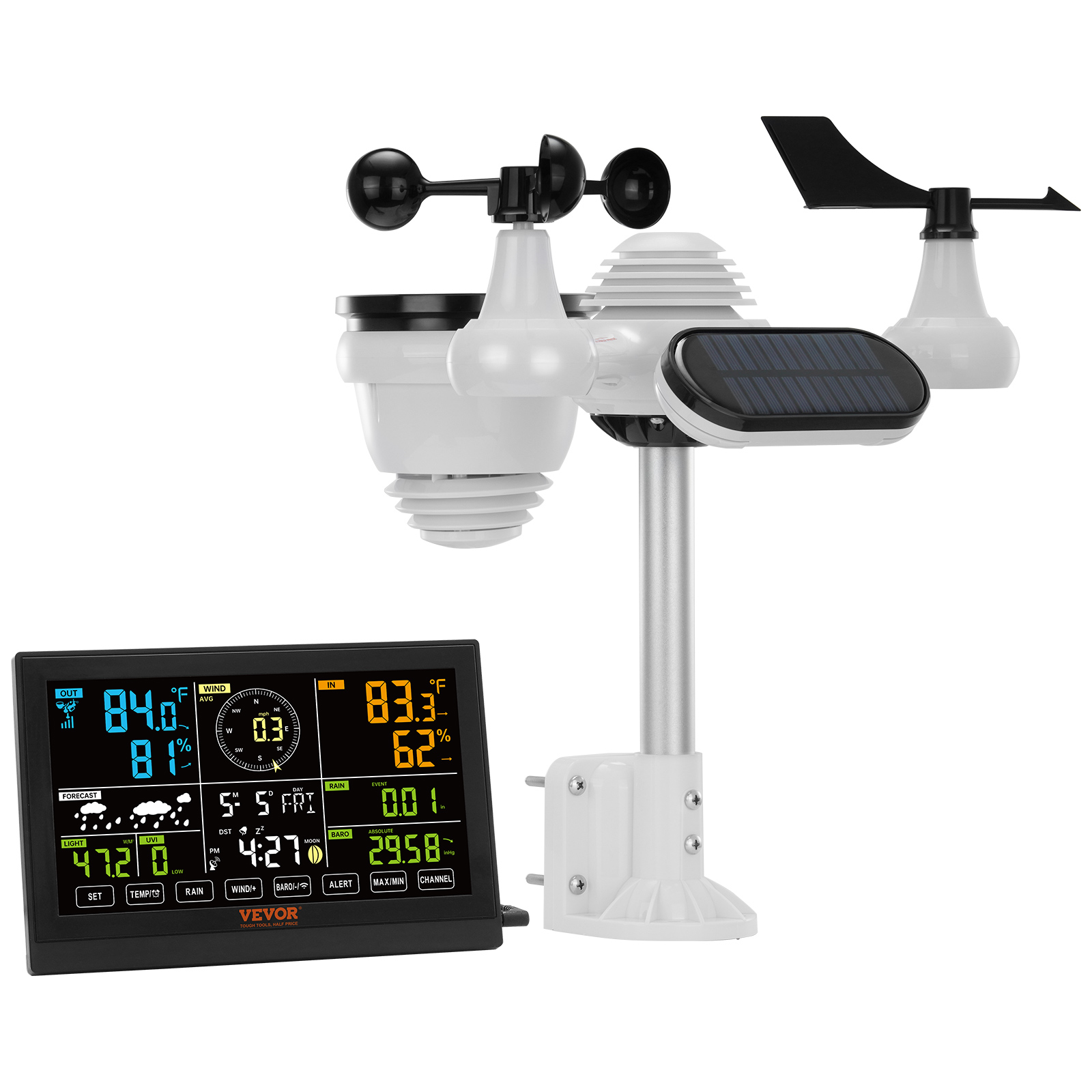 VEVOR 7-in-1 Wireless Weather Station, 7.5 In Large Color Display, Digital Home Indoor Outdoor, For Temperature Humidity Wind Speed,Direction Rain UV, With Forecast Data, Alarm, Alerts$112.99View on Mallflare
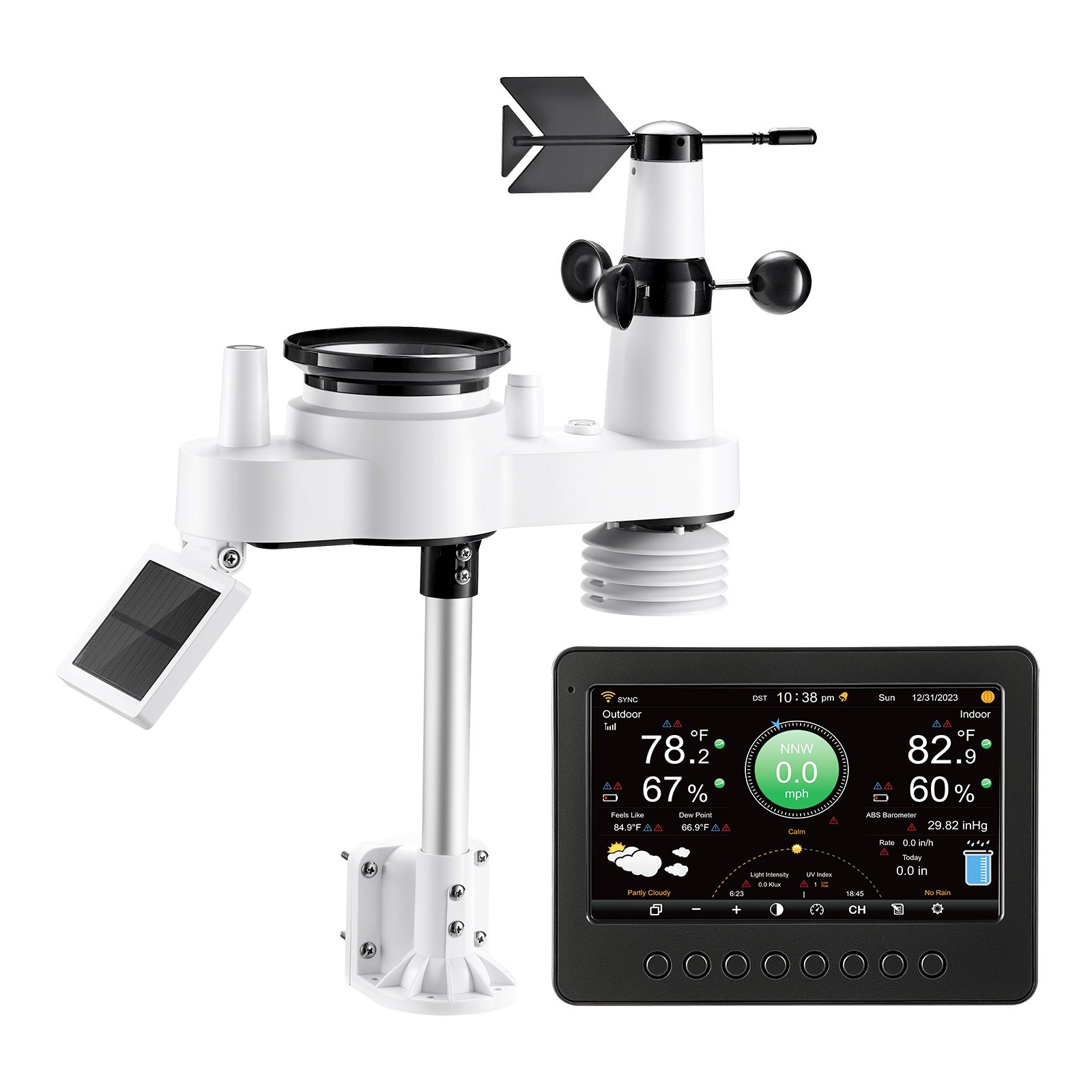 7-in-1 Wi-Fi Weather Station, 7-Inch TFT Display, Wireless Solar Powered Outdoor Sensor, Rain Gauge, Indoor For Forecast, Wind Speed Direction, Temperature, Humidity, Rainfall$146.99View on Mallflare
Highlights
- RF link: 433 MHz fixed-code units drop signal through 2 exterior walls; 868/915 MHz frequency-hopping with 196 ft+ line-of-sight is the durable tier.
- Sensor accuracy: ±0.5°C / ±3% RH requires a calibrated sensor; ±1°C / ±5% RH is typical of budget all-in-one outdoor transmitters.
- All-in-one 7-in-1 sensor arrays (temp, humidity, wind speed/direction, rain, UV, light) need solar or lithium AA backup to survive winter.
- Color LCD base stations with backlight and forecast icons are display features; barometric pressure trending and dew point are the measurement features.
Best use cases
- Best fit: a temperature/humidity-only wireless station with one shielded outdoor sensor for apartment balconies and covered porches — skip 7-in-1 arrays that need unobstructed wind and rain exposure.
- Best fit: a 7-in-1 solar sensor array with a large color display for detached houses with a clear mounting pole — skip wall-mounted budget units that cannot separate the rain gauge from the wind vane.
- Best fit: a multi-channel station (3+ channels) when monitoring a greenhouse, basement, and garage simultaneously — skip single-channel kits that cannot add sensors.
- Wrong fit: buying a forecast-capable station for weather prediction — forecast icons are pressure-trend extrapolations over 12–24 hours, not local radar, so use it as a trend indicator only.
Buying tips
- Measure the RF path: each exterior wall or metal-backed siding costs roughly 30–50% of rated range; pick a station rated at least 3× your actual distance.
- Match sensor to exposure: wind speed and rain need a 2 m+ pole with 360° clear fetch; temperature/humidity sensors need a radiation shield and shade, not direct sun.
- Check sensor power: solar-assisted arrays still need AA lithium backup below -20°C; alkaline cells fail at -18°C, so buy lithium if winters are cold.
- Verify display power and backup: base stations with battery backup keep time and min/max records through outages; USB-only displays reset on power loss.
Specs
| RF Protocol | 433 MHz fixed vs 868/915 MHz hopping |
|---|---|
| Sensor Accuracy | ±0.5°C/±3% RH vs ±1°C/±5% RH |
| Sensor Array | Temp/humidity vs 7-in-1 solar |
| Display Power | USB-only vs battery backup |
Related searches
What to check before buying
- Confirm outdoor mounting: a pole, fence post, or eave bracket with clear wind/rain exposure for 7-in-1 arrays; a shaded north wall for temp/humidity-only sensors.
- Check indoor display placement: 5–10 ft from Wi-Fi routers and metal appliances to avoid 433/868 MHz interference, with an outlet or USB power nearby.
- Verify sensor operating range: at least -40°C to 60°C for cold climates, and IPX4 or better housing for rain-exposed arrays.
- Confirm channel expansion: buy a base that supports 3+ extra sensors if you plan to add soil, pool, or second-room probes later.
FAQ
Data sources: eBay / Amazon listings and product attribute feeds. Updated Nov 28, 2026.
Some links on this page are affiliate links. If you buy after clicking one, we may earn a commission at no extra cost to you. This does not change which products appear here or their order. Affiliate disclosure.