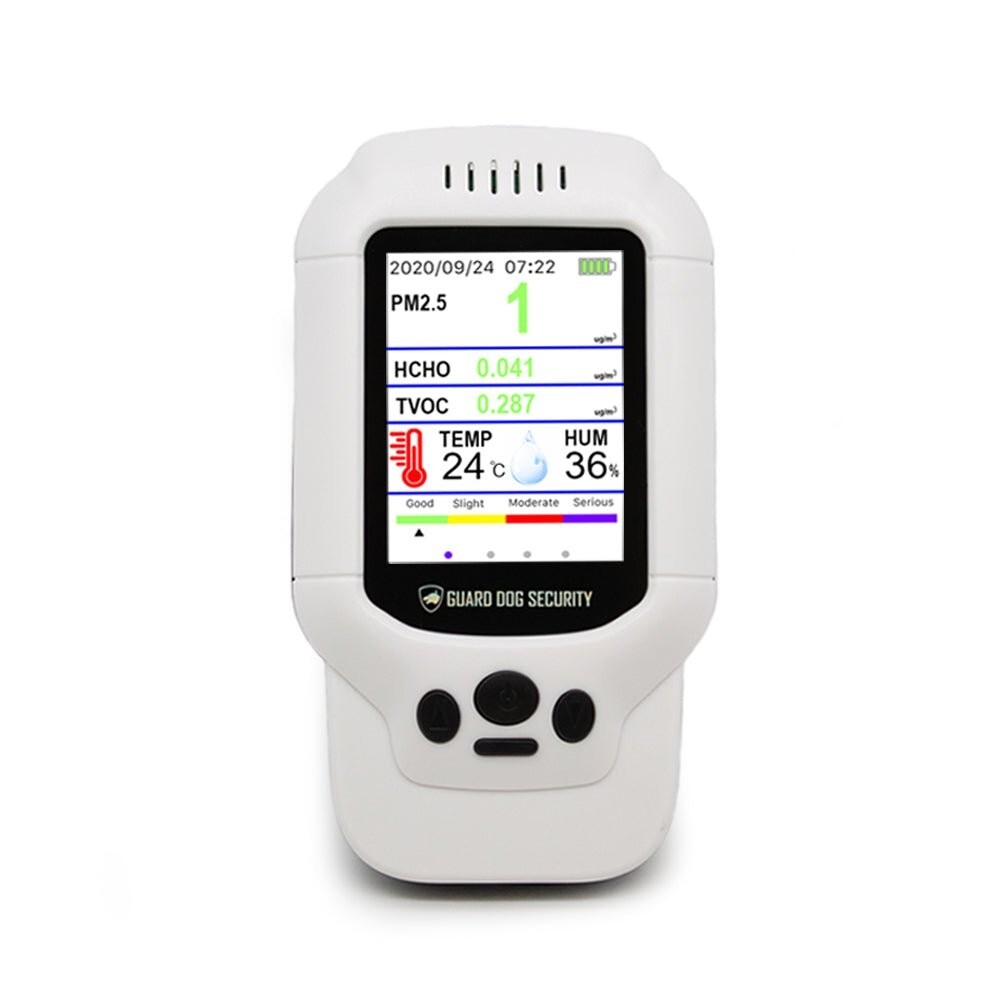

Photos from current listings. Actual item, color, and included accessories may vary.
Pm2 5 Air Quality Sensor Buying Guide
PM2.5 air quality sensors are optical particle counters that estimate fine particulate concentration (≤2.5 µm) via laser scattering, used in indoor monitors, HVAC integration, and portable outdoor sampling. The core trade-off is optical-engine quality versus calibration and enclosure: durable units pair a true laser nephelometer with temperature/humidity compensation and a protected airflow path, while compromises use low-grade IR LEDs or unsealed fan intakes that drift under humidity. The decision rule: buy a laser-scattering sensor with a rated PM2.5 range and compensated RH output for reliable readings; skip bare IR or uncalibrated modules unless you only need coarse trend indication.
Key takeaways
- Laser nephelometer (laser scattering) sensors resolve 0.3–2.5 µm particles and outperform IR LED units, which blur fine fractions and degrade with dust fouling.
- RH/temperature compensation matters: without it, hygroscopic particle growth causes 20–40% PM2.5 over-reads above ~70% relative humidity.
- Consumer PM sensors typically report 0–500 or 0–1000 µg/m³; accuracy is usually specified as ±10–15% at low concentrations, worsening at the top of range.
At a glance
- Category
- Environmental & Indoor Air Measurement
- Last updated
- Nov 28, 2026
Current offers
Highlights
- Laser nephelometer (laser scattering) sensors resolve 0.3–2.5 µm particles and outperform IR LED units, which blur fine fractions and degrade with dust fouling.
- RH/temperature compensation matters: without it, hygroscopic particle growth causes 20–40% PM2.5 over-reads above ~70% relative humidity.
- Consumer PM sensors typically report 0–500 or 0–1000 µg/m³; accuracy is usually specified as ±10–15% at low concentrations, worsening at the top of range.
- Protected airflow designs (fan + filter/mesh intake) resist dust buildup; open optical chambers foul faster and require more frequent cleaning.
Best use cases
- Indoor living-space monitoring: choose a laser PM2.5 sensor with RH compensation and a display; skip bare IR modules, which mislead during cooking and humid days.
- HVAC or smart-home integration: pick a module with UART/I²C or Wi-Fi output and documented protocol; skip consumer-only displays that lack an API.
- Portable outdoor sampling: select a sealed, battery-powered unit rated for outdoor humidity and temperature range; skip open-chamber indoor monitors exposed to rain and dust.
- Coarse trend-only use (workshop, garage): an inexpensive IR sensor is acceptable for spotting smoke or dust spikes; do not treat its absolute µg/m³ as calibrated data.
Buying tips
- Require laser scattering, not IR: check the sensor element spec, since laser types track 0.3 µm particles and hold calibration better.
- Match reporting range to use: 0–500 µg/m³ covers typical indoor/urban air; select 0–1000 µg/m³ only for wildfire or industrial smoke tracking.
- For automation, confirm a documented output (UART, I²C, or Wi-Fi/MQTT) and data interval; display-only units cannot feed a controller.
- Prefer units listing RH/temperature compensation and a cleanable or replaceable filter; uncompensated sensors drift in bathrooms, kitchens, and coastal air.
Specs
| Sensor Principle | Laser scattering vs IR LED |
|---|---|
| Particle Range | 0.3–2.5 µm (laser) / coarse (IR) |
| PM2.5 Range | 0–500 / 0–1000 µg/m³ |
| Output Interface | Display / UART / I²C / Wi-Fi |
Related searches
What to check before buying
- Confirm sensor type, particle size range, and PM2.5 measurement range in the spec sheet before comparing models.
- Check power and interface: USB/battery for portables, 5V or 3.3V with UART/I²C for modules, and plug standard for wall units.
- Verify environment rating for outdoor use (IP rating or sealed enclosure) and operating humidity/temperature limits.
- Measure placement space and airflow clearance; sensors need unobstructed air and should sit away from direct steam, cooking, and sunlight.
FAQ
Data sources: eBay / Amazon listings and product attribute feeds. Updated Nov 28, 2026.
Some links on this page are affiliate links. If you buy after clicking one, we may earn a commission at no extra cost to you. This does not change which products appear here or their order. Affiliate disclosure.