
Photos from current listings. Actual item, color, and included accessories may vary.
Portable Air Quality Monitor Buying Guide
Portable air quality monitors are handheld or tabletop devices that measure indoor pollutants like PM2.5, CO2, VOCs, and sometimes HCHO, temperature, and humidity. The key trade-off is between true sensor accuracy (NDIR CO2, laser-scattering PM) and low-cost e-waste sensors that estimate rather than measure. Choose a monitor with at least an NDIR CO2 sensor and a laser particle counter; skip any unit that lists 'AQI' without disclosing sensor type.
Median $139.66 · New & pre-owned listings
Key takeaways
- NDIR (non-dispersive infrared) CO2 sensors are the only reliable low-cost CO2 technology; eCO2 sensors estimate from VOCs and drift badly in clean air.
- Laser-scattering PM sensors (e.g., Plantower PMS5003) measure PM1.0/PM2.5/PM10 directly; cheaper units infer PM from a single optical count and underreport fine dust.
- Electrochemical HCHO and VOC sensors degrade over 1-2 years and require recalibration; photoionization (PID) VOC sensors are lab-grade and rarely found in portable consumer units.
At a glance
- Category
- Environmental & Indoor Air Measurement
- Last updated
- Nov 29, 2026
Current offers
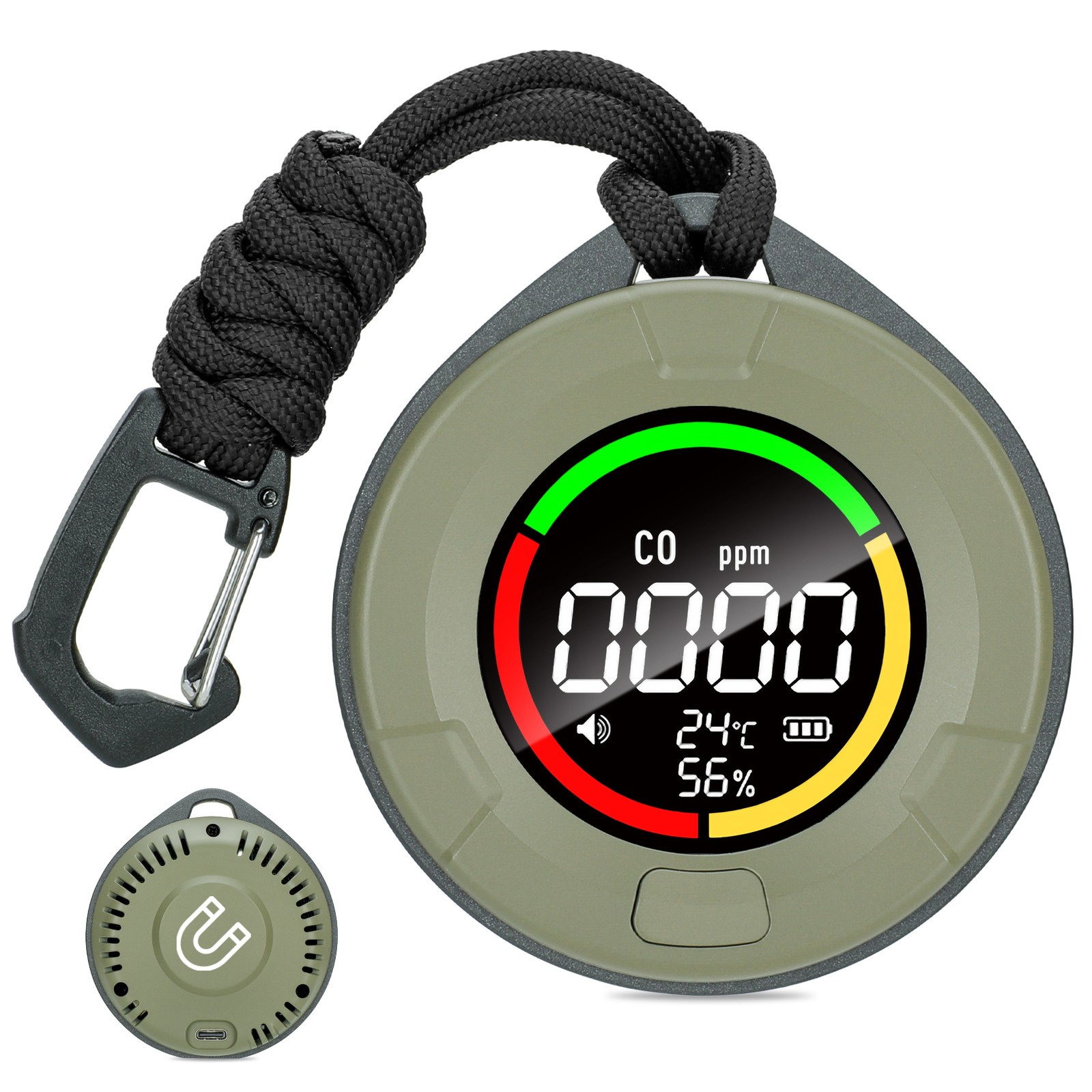 Portable CO2 Detector Mini Indoor air Monitor Home NDIR Sensor 3IN1 US$29.99View on eBay
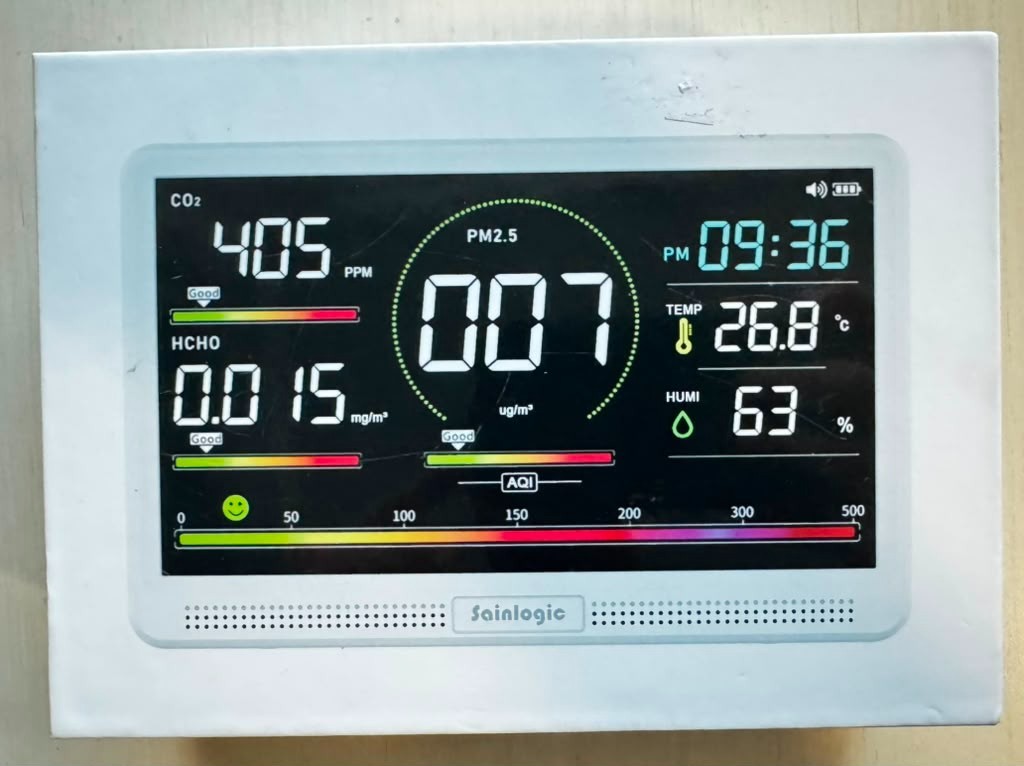 16 in 1 Air Quality Monitor Indoor 7" Display 9 AQI+7 AQI Alerts Air Quality Met$30.00View on eBay
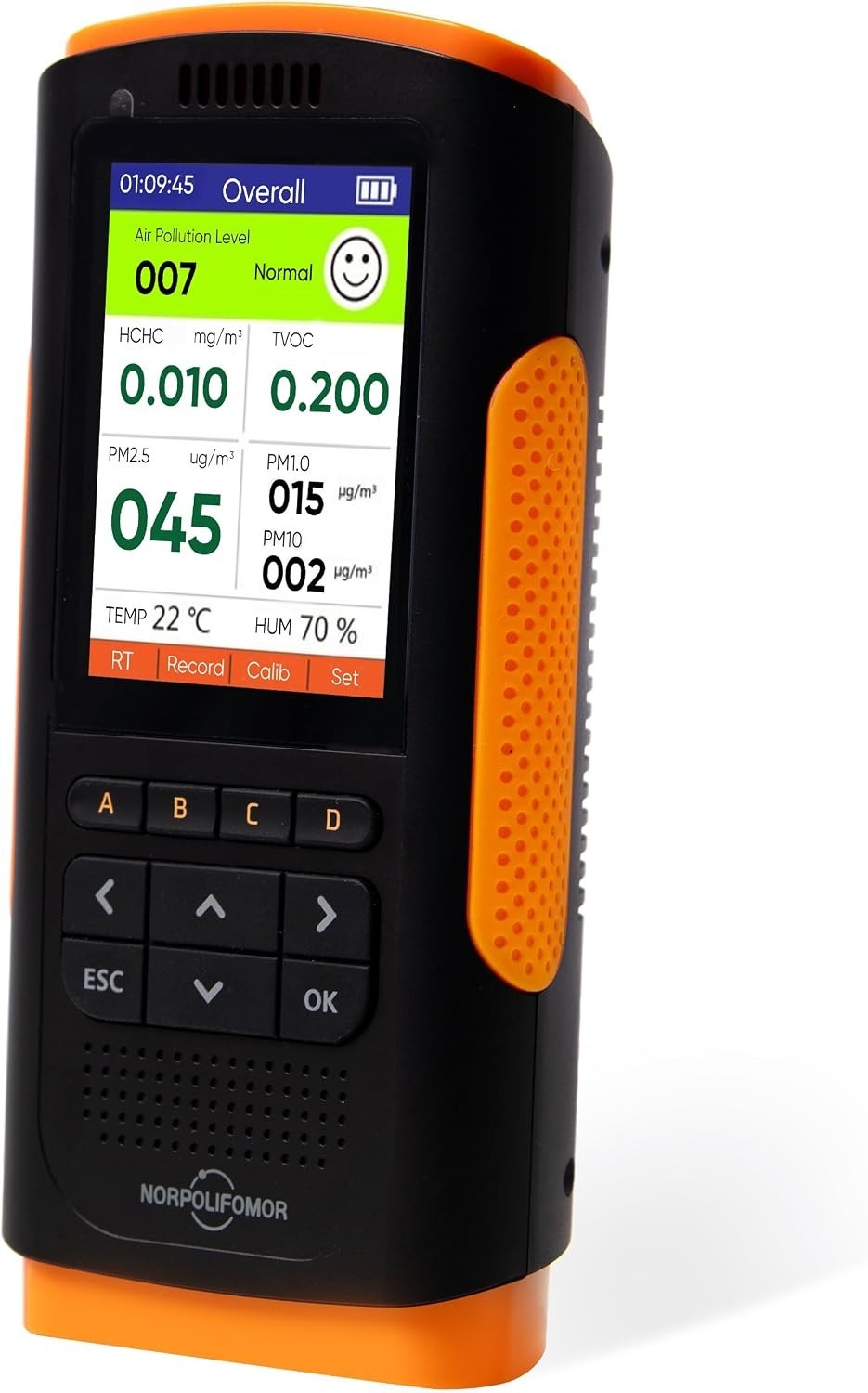 Intelligent Real Time Air Quality Detector AQI Air Quality Monitor, Formaldehyde$35.00View on eBay
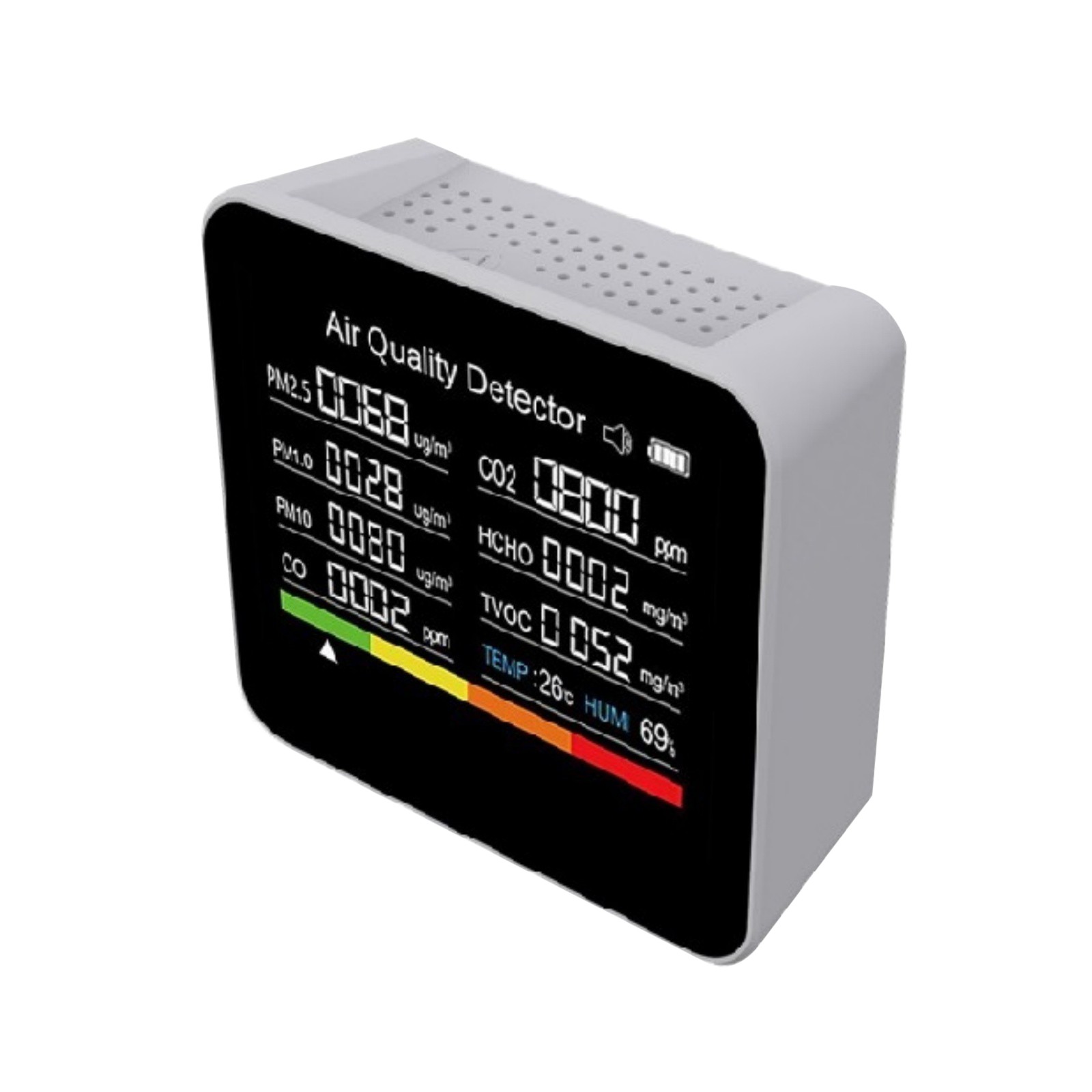 9-in-1 Air Quality Monitor CO2/PM2.5/TVOC/HCHO Detector LED Digital Display$38.80View on eBay
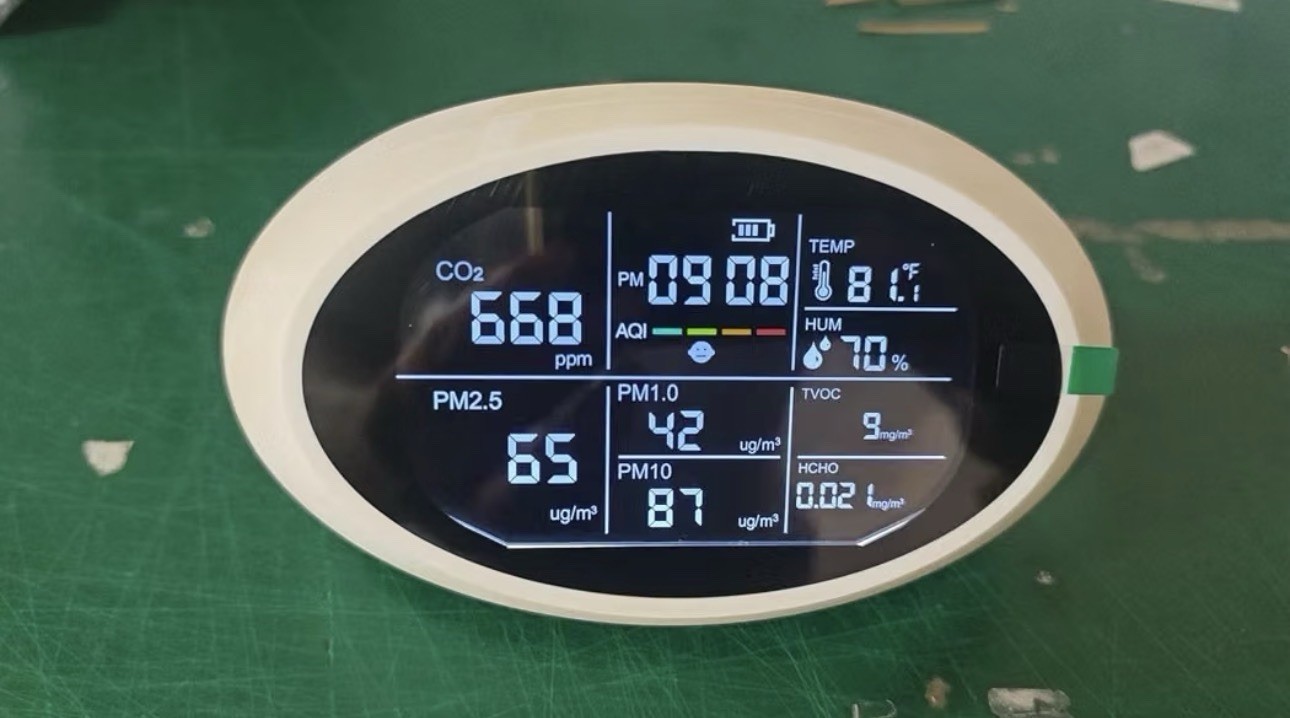 12-in-1 Air Quality Monitor Indoor, Portable Air Quality Monitor, CO2 PM1.0$39.99View on eBay
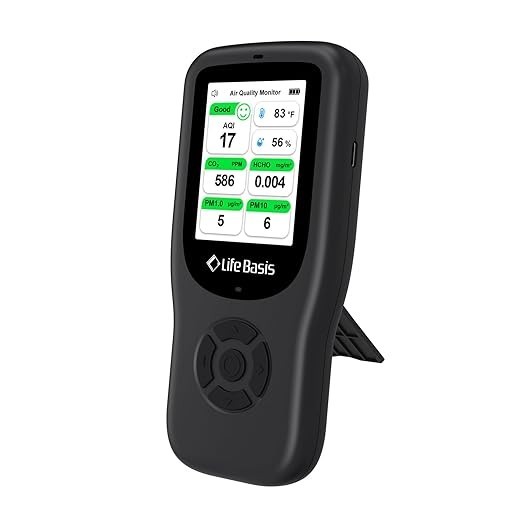 Life Basis Air Quality Monitor Indoor, 11-in-1 Air Quality Detector w. Stand$39.99View on eBay
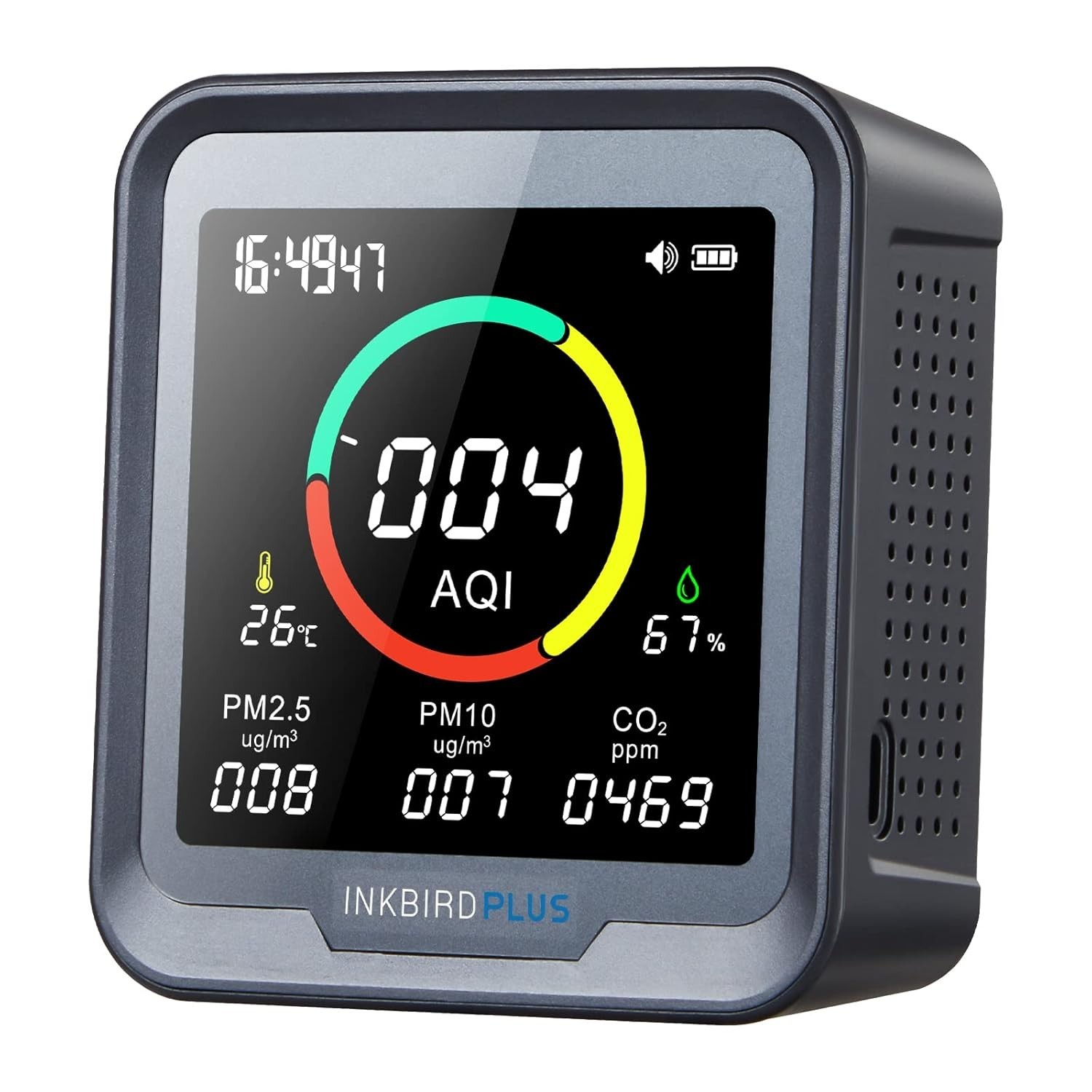 Gas CO2 Detector Air Monitor Quality Tester Temperature Humidity Measuring PM2.5$45.99Last checked Nov 27, 2026View on eBay
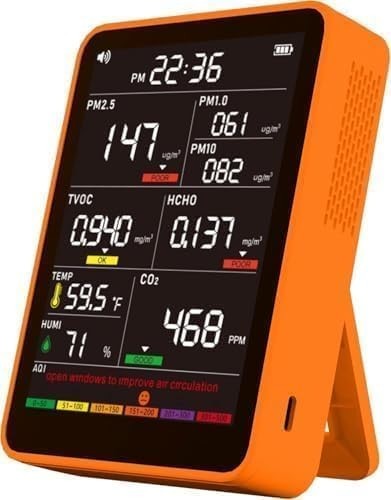 Professional Indoor Air Quality Monitor with AQI Beep Alarms, Portable Real Time$53.99View on eBay
- Professional Indoor Air Quality Monitor Real Time with AQI Beep Alarms Portable$53.99View on eBay
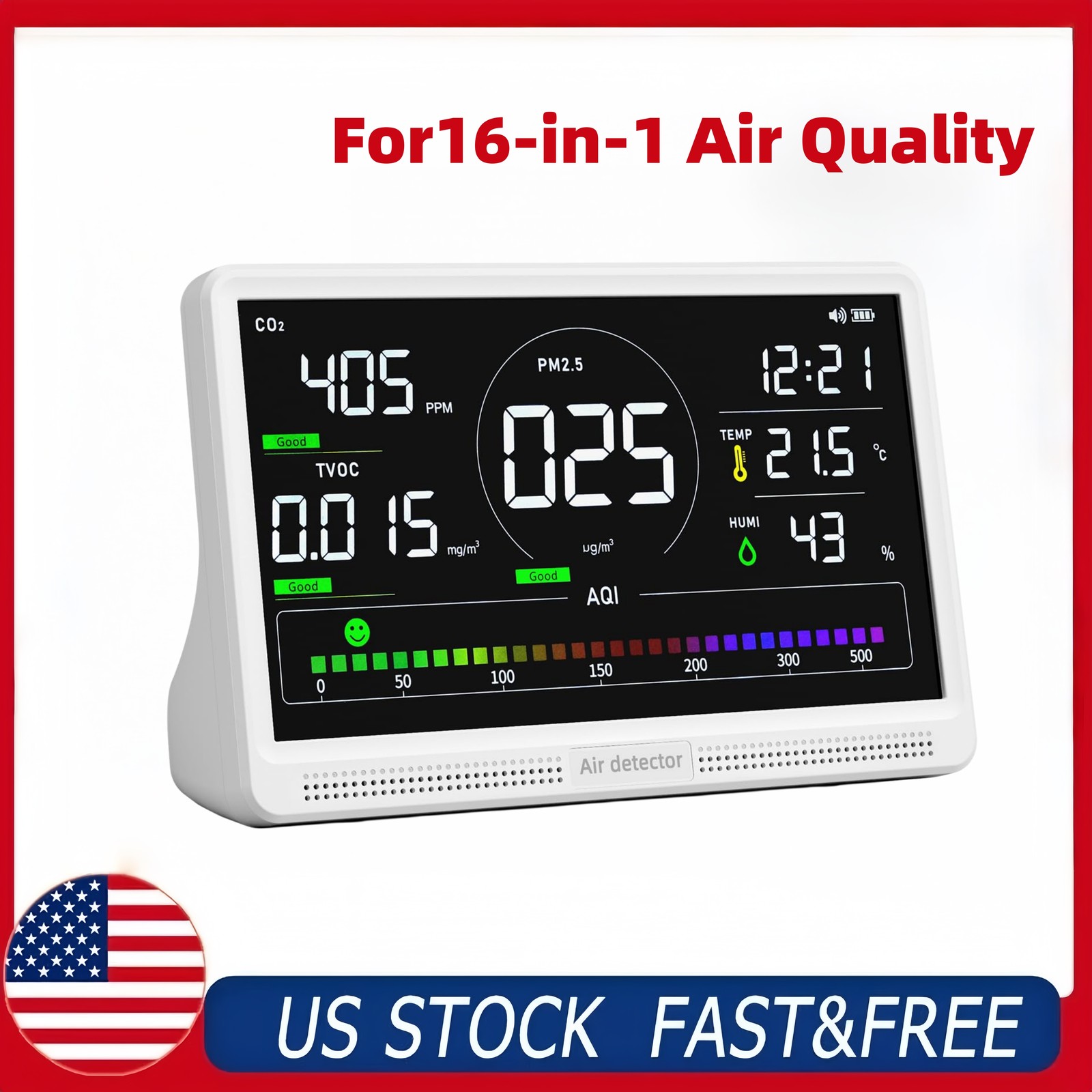 16-in-1 Indoor Air Quality Monitor with CO2, PM2.5, HCHO, TVOC, Temperature$56.99Last checked Nov 27, 2026View on eBay
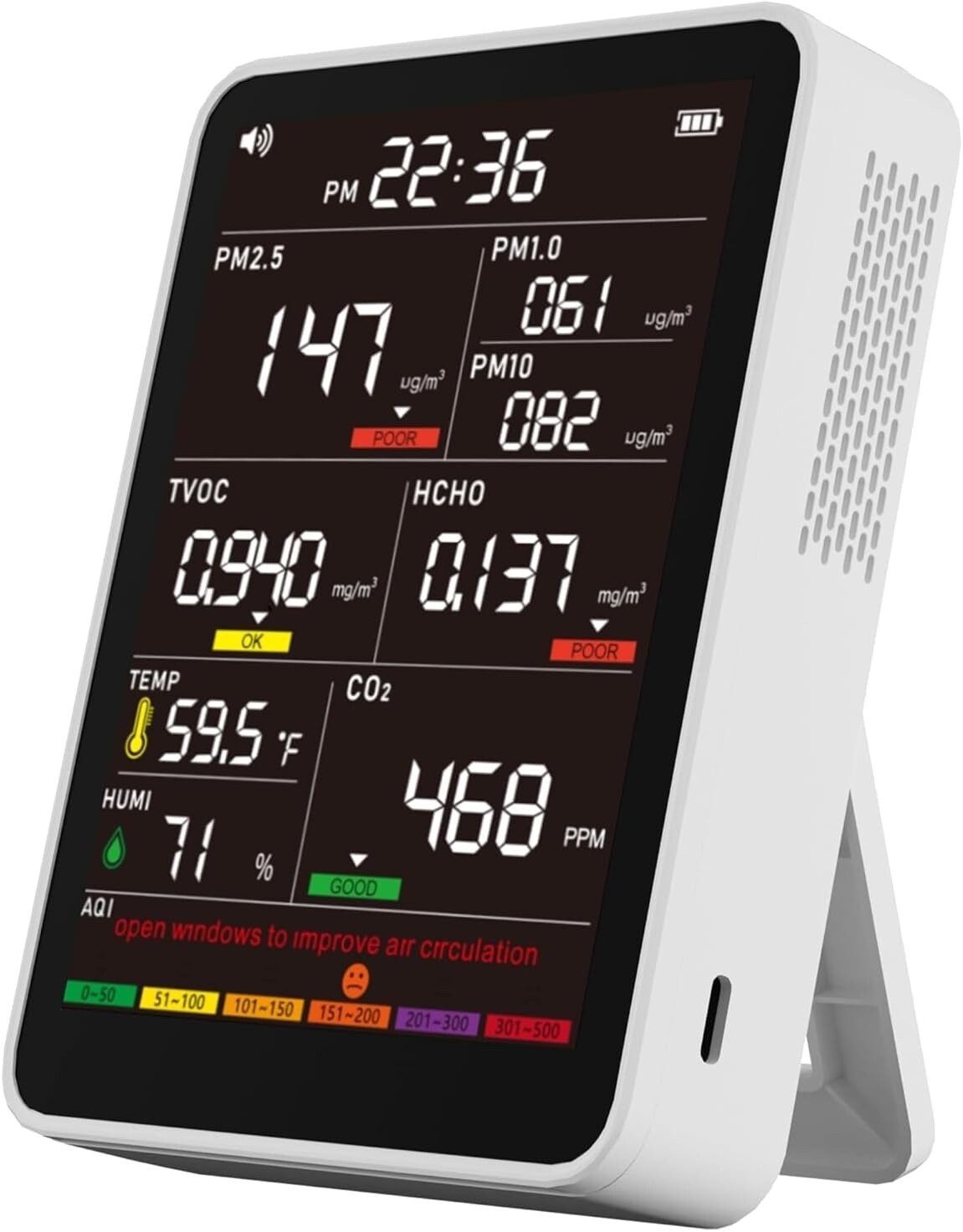 9-in-1 Professional Indoor Air Quality Monitor Indoor Portable AK16$59.99View on eBay
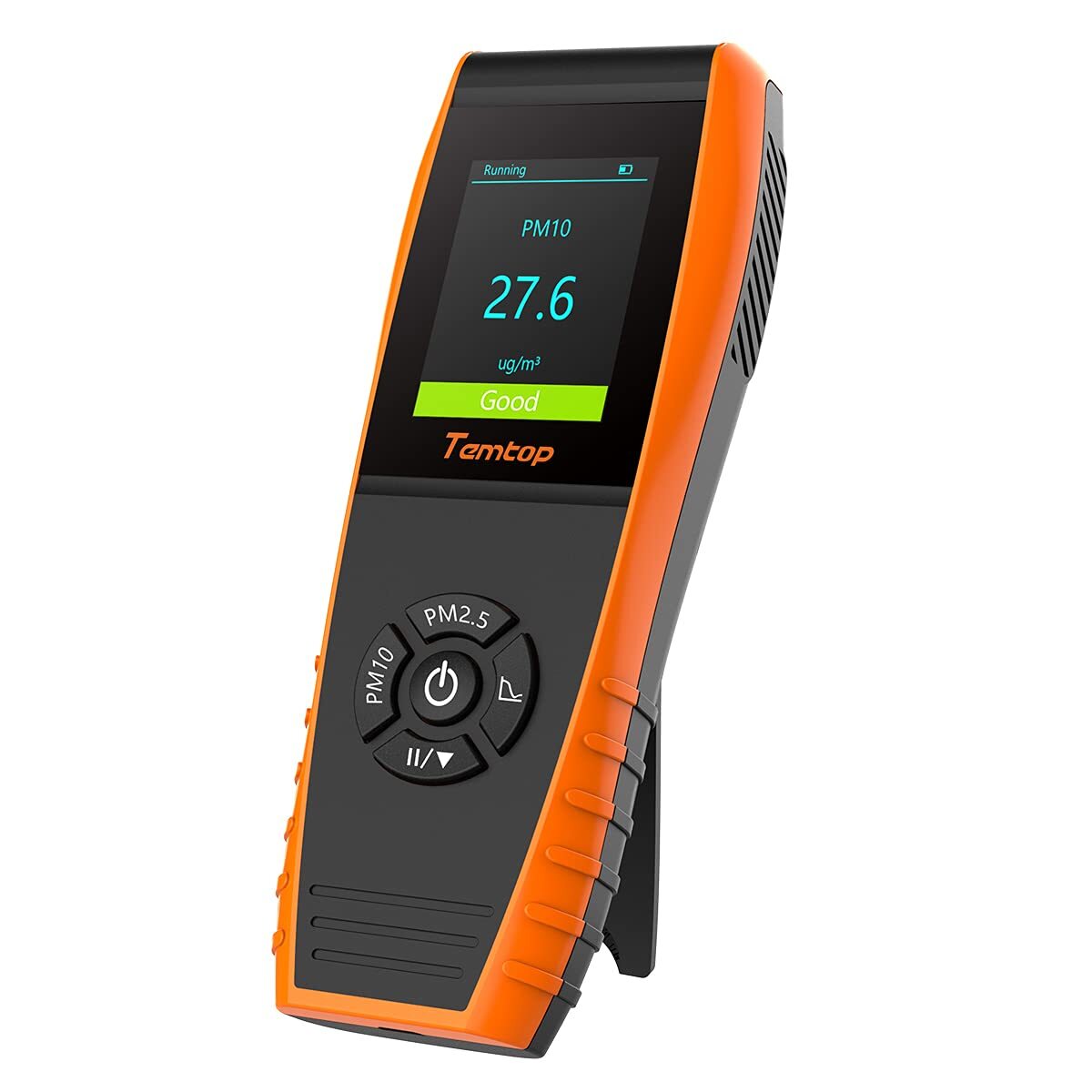 Temtop P600 Air Quality Monitor Particle Detector PM2.5 PM10 Recorder Histogram$69.99Last checked Nov 28, 2026View on eBay
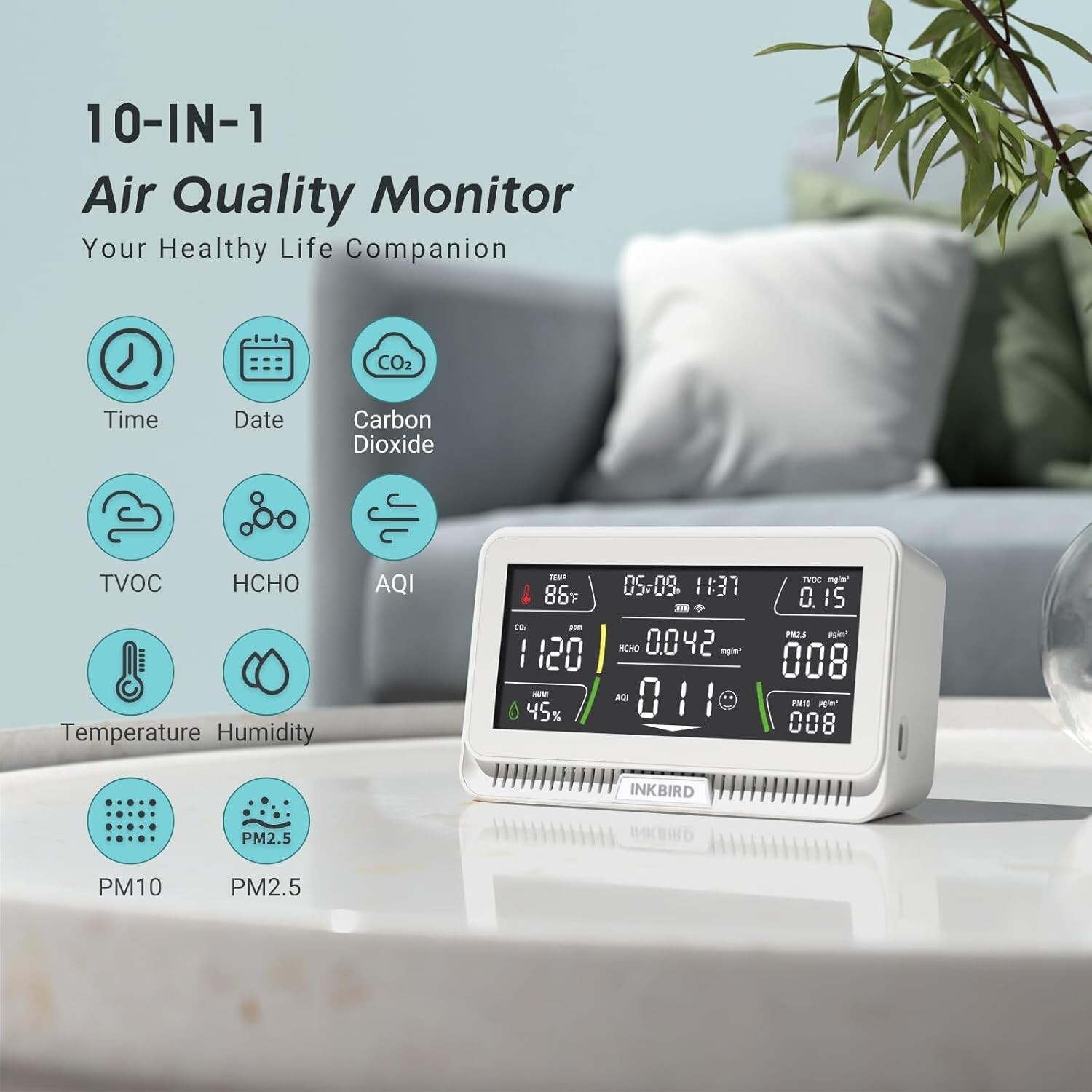 INKBIRD Air Quality Monitor Indoor Co2 Detector Portable 10-in-1 PM2.5 HCHO AQI$70.79View on eBay
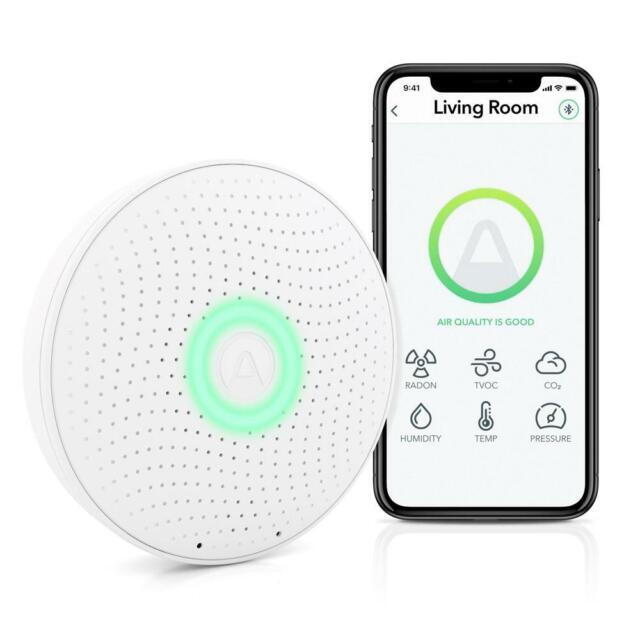 Airthings Wave Plus 2930 Air Quality Monitor$89.00View on eBay
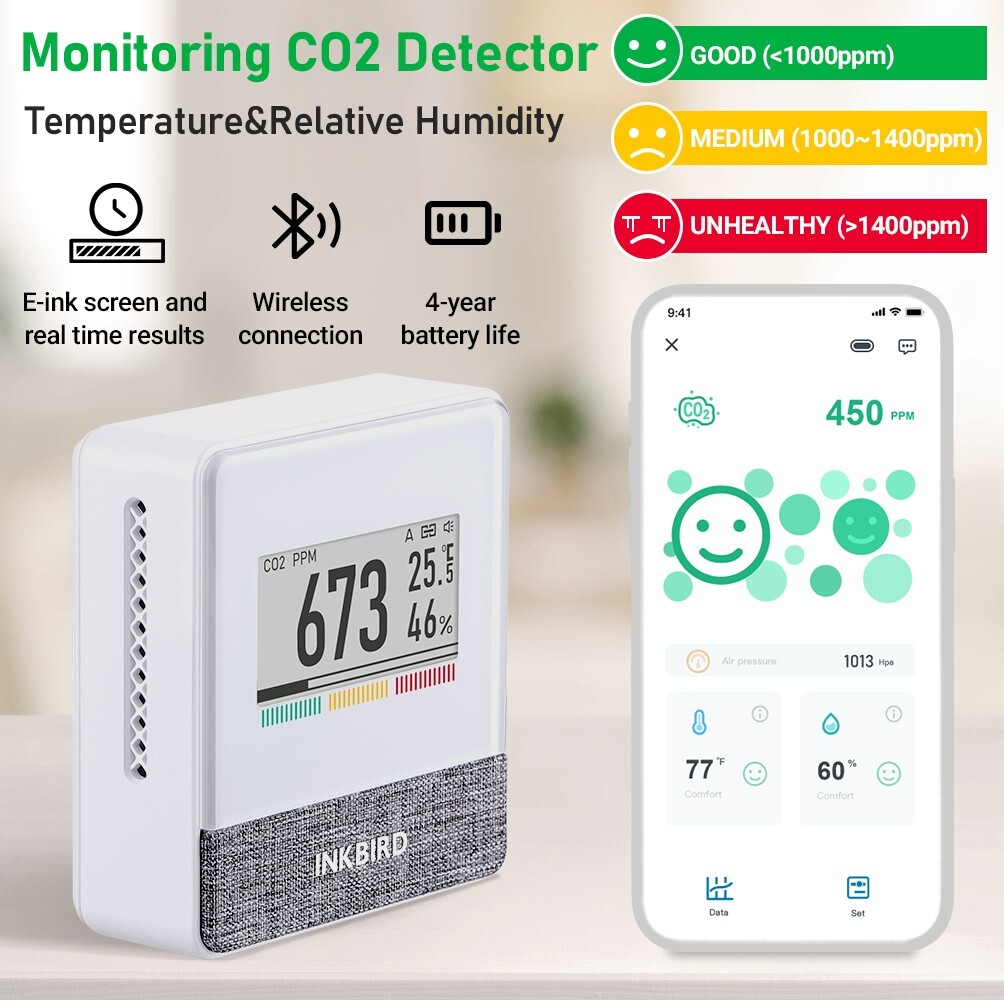 Wireless Indoor Air Quality Monitor INKBIRD IAM-T1 Electronic Ink Display NDIR$89.99Last checked Nov 27, 2026View on eBay
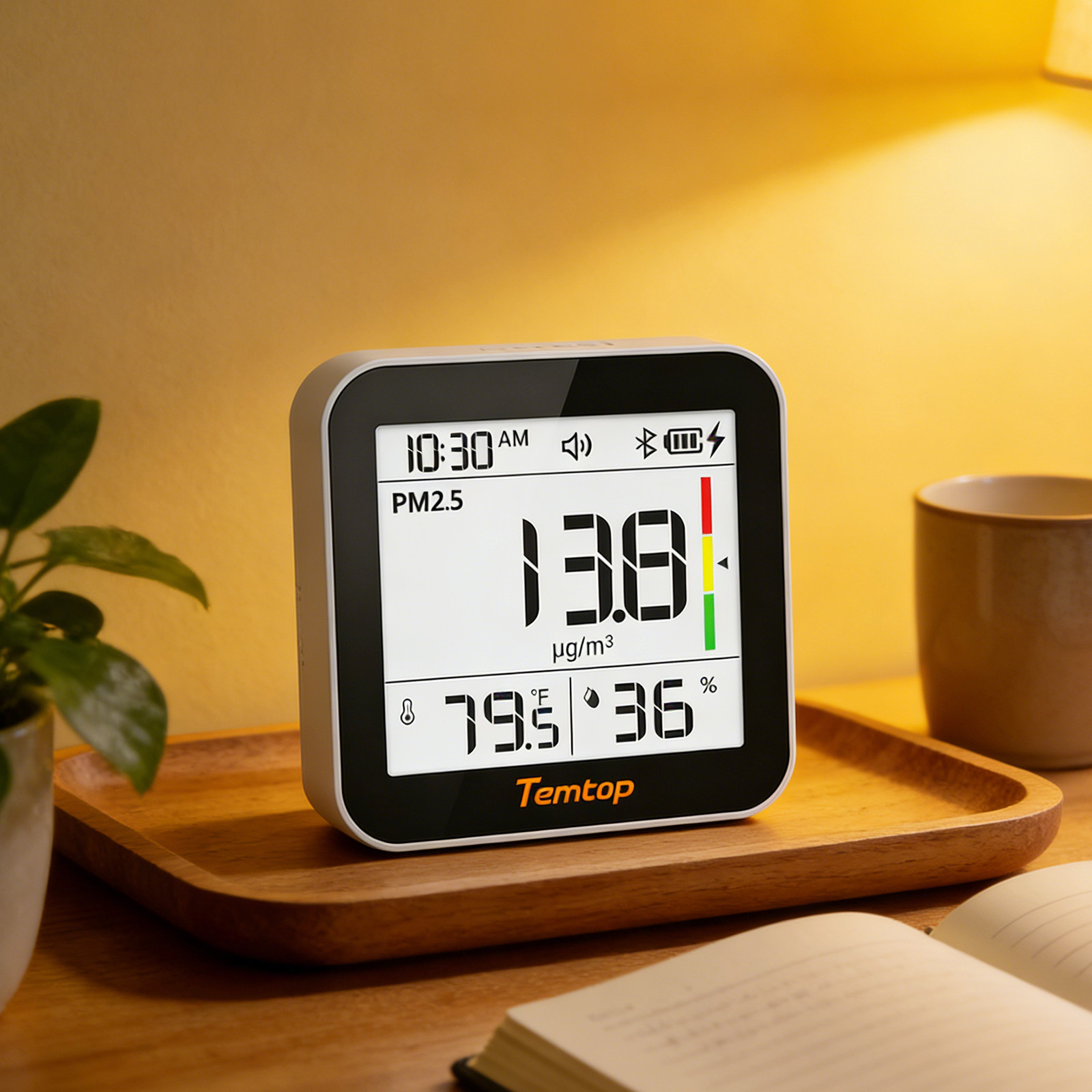 Temtop M10+ Indoor Air Quality Monitor CO2 Detector PM2.5 VOC Home Detector$99.99Last checked Nov 27, 2026View on eBay
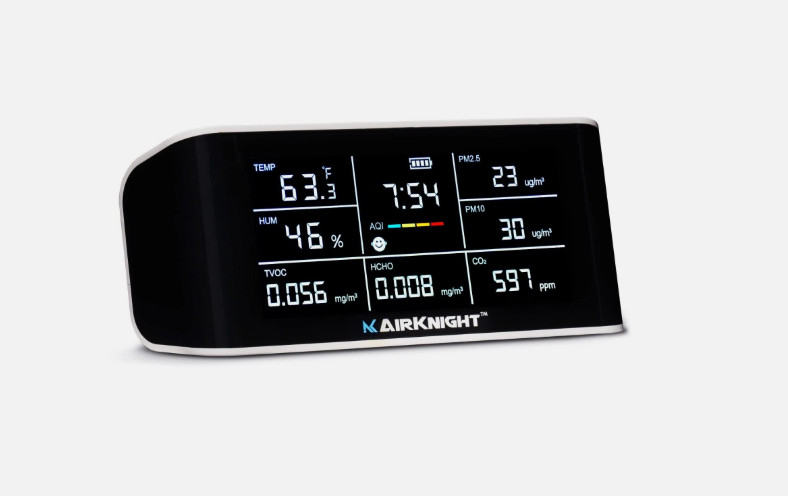 AirKnight 9-in-1 Indoor Air Quality Monitor Indoor Portable CO2 Monitor NEW$100.00View on eBay
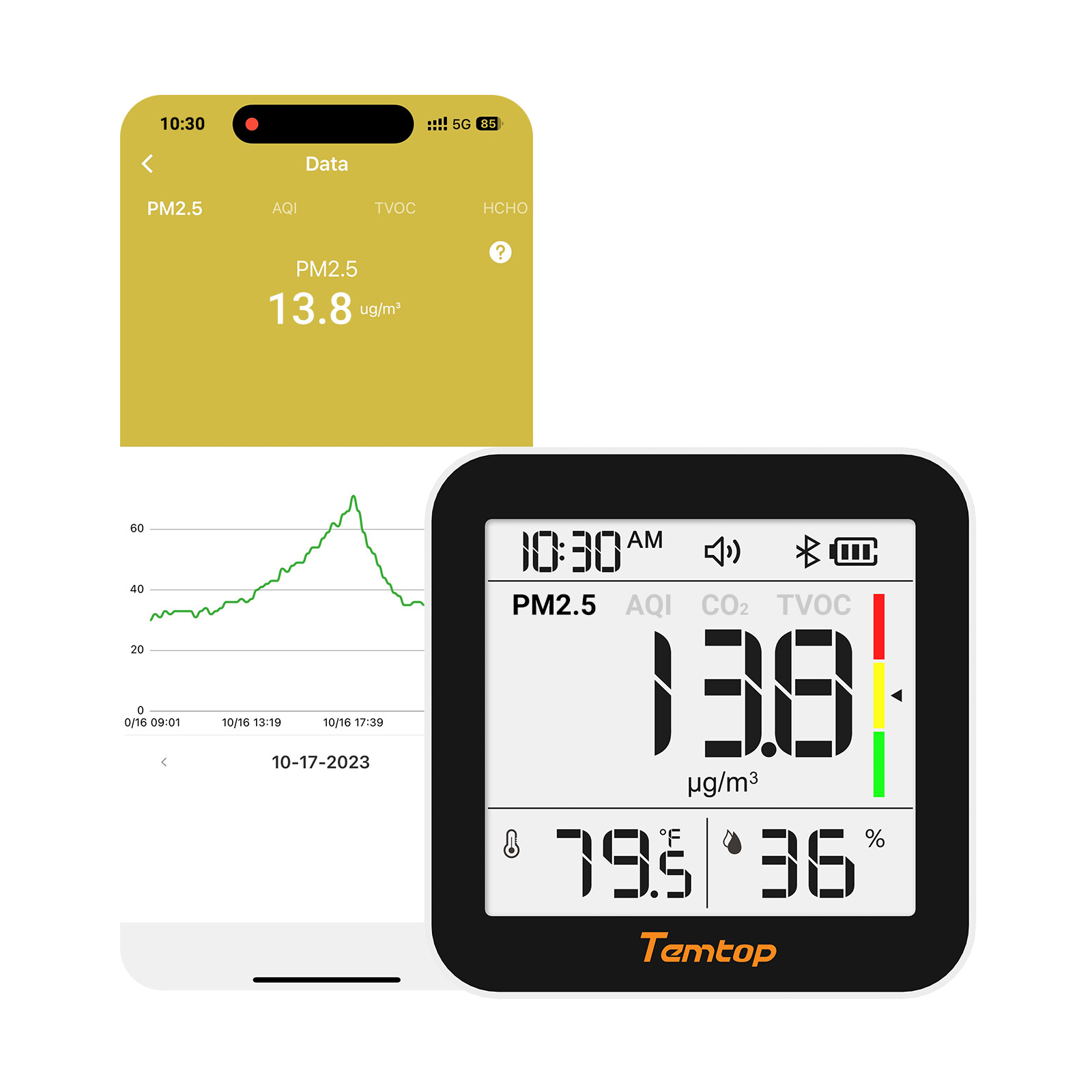 Temtop Indoor Air Quality Monitor 6-in-1 CO2,PM2.5,VOC Detection,temp,Hum, M10+$100.09Last checked Nov 27, 2026View on eBay
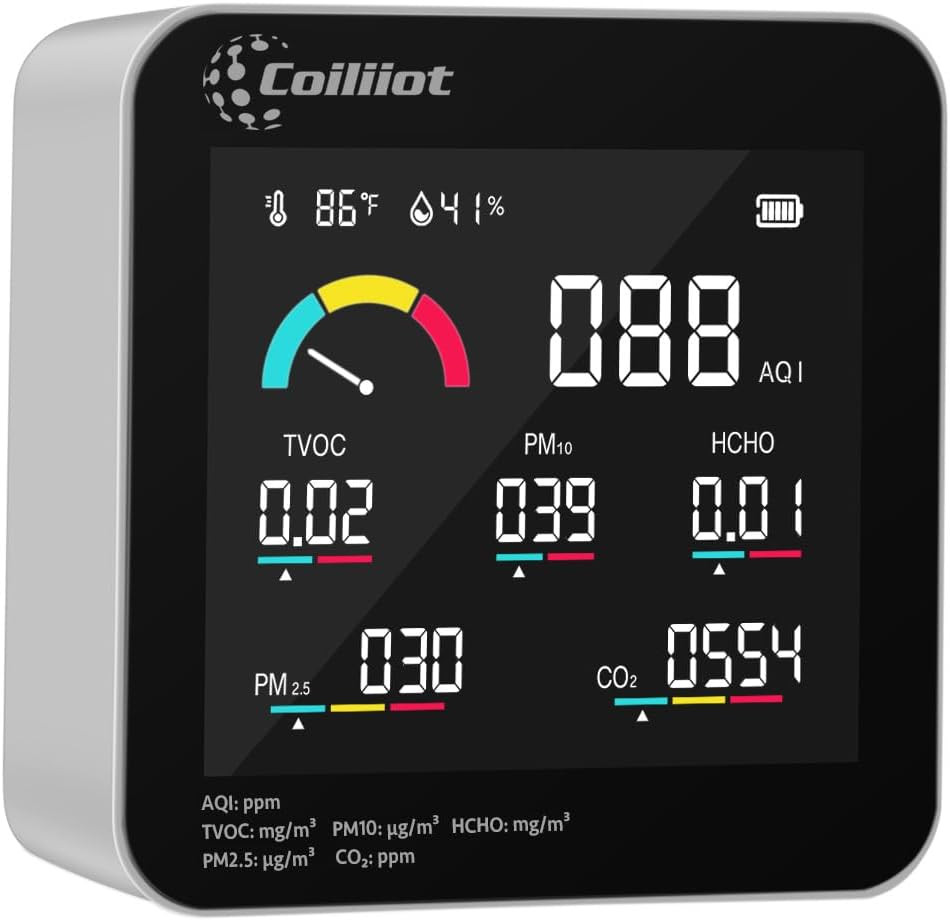 Air Quality Monitor Indoor – CO2 Detector, VOC Meter and AQI Tester Tracks TVOC,$117.32View on eBay
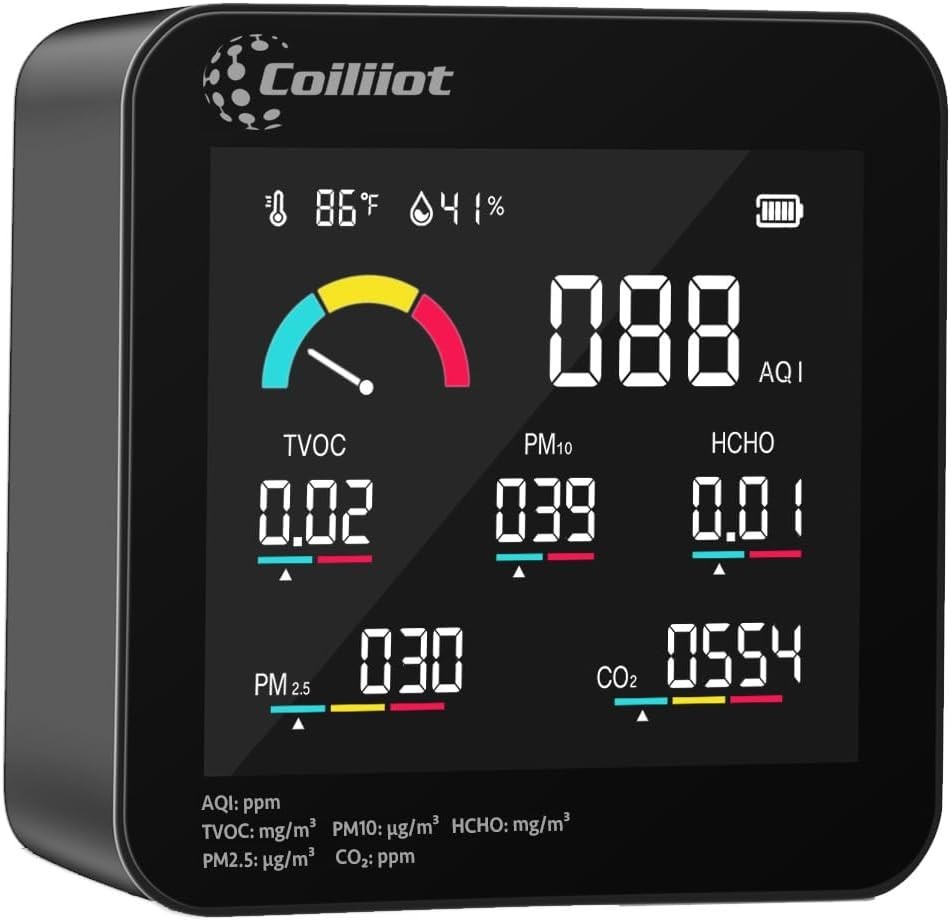 Air Quality Monitor Indoor – CO2 Detector, VOC Meter and AQI Tester Tracks TVOC,$119.32View on eBay
Highlights
- NDIR (non-dispersive infrared) CO2 sensors are the only reliable low-cost CO2 technology; eCO2 sensors estimate from VOCs and drift badly in clean air.
- Laser-scattering PM sensors (e.g., Plantower PMS5003) measure PM1.0/PM2.5/PM10 directly; cheaper units infer PM from a single optical count and underreport fine dust.
- Electrochemical HCHO and VOC sensors degrade over 1-2 years and require recalibration; photoionization (PID) VOC sensors are lab-grade and rarely found in portable consumer units.
- 9-in-1 and 12-in-1 labels usually mean added temperature, humidity, and time/date displays, not extra pollutant sensors; verify the sensor list, not the feature count.
Best use cases
- Best for indoor CO2 monitoring (bedrooms, classrooms, offices): choose a unit with a true NDIR CO2 sensor rated 400-5000 ppm and audible alarm above 1000-1500 ppm.
- Best for wildfire smoke or allergy tracking: pick a monitor with laser PM2.5 and PM10 channels reporting µg/m³ in real time, not just a color-coded AQI bar.
- Wrong fit: outdoor use or harsh environments—portable monitors are not weatherproof and PM readings are skewed by wind and humidity unless the unit has a drying tube or heated inlet.
- Skip multi-gas '12-in-1' units with no sensor disclosure for health decisions; they are novelty displays, not measurement instruments.
Buying tips
- Demand explicit sensor models: NDIR for CO2 (e.g., Senseair, Cubic) and laser particle counting for PM; 'eCO2' or 'VOC-derived CO2' is an estimate, not a measurement.
- Match range to use: CO2 range 400-5000 ppm covers indoor air; PM2.5 range to at least 500 µg/m³ covers smoke events; HCHO range 0-1 mg/m³ covers typical indoor levels.
- Check data logging and export (CSV/app) if you need trend analysis; units without logging only show instantaneous values and cannot prove ventilation performance.
- Prefer units with calibration instructions or auto-baseline calibration (ABC) for CO2; sensors without calibration drift and become unreliable within months.
Specs
| CO2 Sensor Type | NDIR (true) vs eCO2 (estimated) |
|---|---|
| PM Sensor | Laser scattering vs optical count |
| Measured Channels | PM2.5, CO2, VOC, HCHO, T/RH |
| Power & Portability | USB-C / battery, handheld vs tabletop |
Related searches
What to check before buying
- Confirm the monitor has a true NDIR CO2 sensor if CO2 is your primary concern; otherwise you are buying a VOC-based estimate.
- Verify power: most portables use USB-C or micro-USB; check whether it runs on battery or only USB power for true portability.
- Check display readability and alarm thresholds: audible beep and visual AQI color bars help in shared spaces without staring at numbers.
- Plan for placement: keep 1-1.5 m from occupants and away from direct sunlight, doors, and windows; CO2 readings are only meaningful in occupied, closed rooms.
FAQ
Data sources: eBay / Amazon listings and product attribute feeds. Updated Nov 29, 2026.
Some links on this page are affiliate links. If you buy after clicking one, we may earn a commission at no extra cost to you. This does not change which products appear here or their order. Affiliate disclosure.