
Photos from current listings. Actual item, color, and included accessories may vary.
Portable CO2 Detector Buying Guide
Portable CO2 detectors are battery-powered indoor air monitors that use non-dispersive infrared (NDIR) sensing to warn you when exhaled CO2 accumulates past ventilation-safe thresholds. The core trade-off is sensor quality and calibration stability versus display gimmicks: true NDIR optical benches hold accuracy for years, while low-cost 'eCO2' sensors infer CO2 from VOC proxies and drift badly. Buy NDIR or skip it; anything without a specified NDIR wavelength and a stated accuracy tolerance is a compromise, not a measurement instrument.
Median $99.99 · Pre-owned listings
Key takeaways
- True CO2 measurement requires an NDIR optical sensor tuned to the 4.26 µm absorption band; 'eCO2' or VOC-proxy sensors cannot resolve actual CO2 ppm and should be avoided for ventilation decisions.
- NDIR accuracy is typically specified as ±(30-50 ppm + 3-5% of reading); units without a published accuracy figure are uncalibrated consumer toys.
- ABC (automatic baseline calibration) assumes periodic exposure to fresh outdoor air (~420 ppm); units locked in closed rooms without ABC will drift upward and over-alarm.
At a glance
- Category
- Environmental & Indoor Air Measurement
- Last updated
- Nov 28, 2026
Current offers
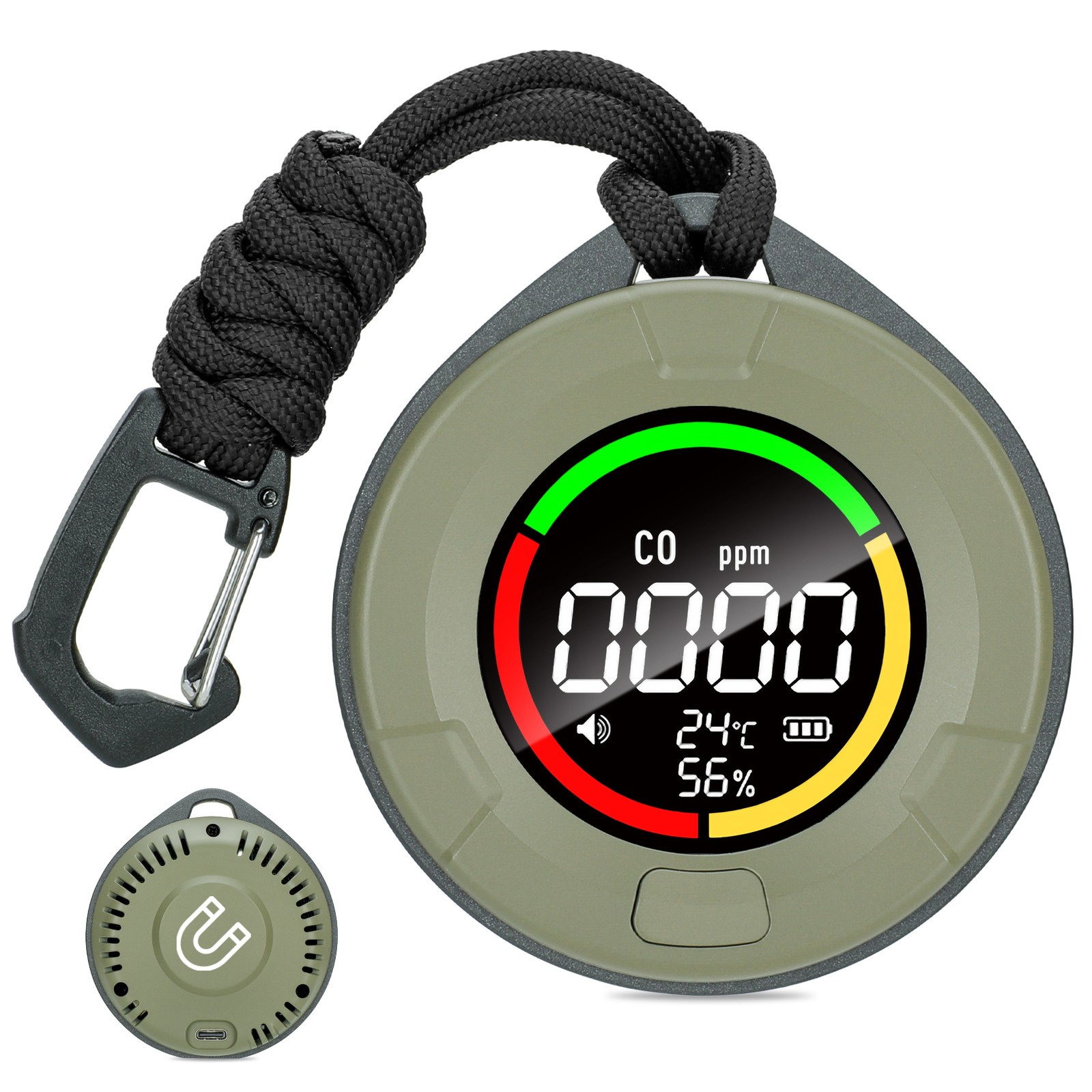 Portable CO2 Detector Mini Indoor air Monitor Home NDIR Sensor 3IN1 US$29.99View on eBay
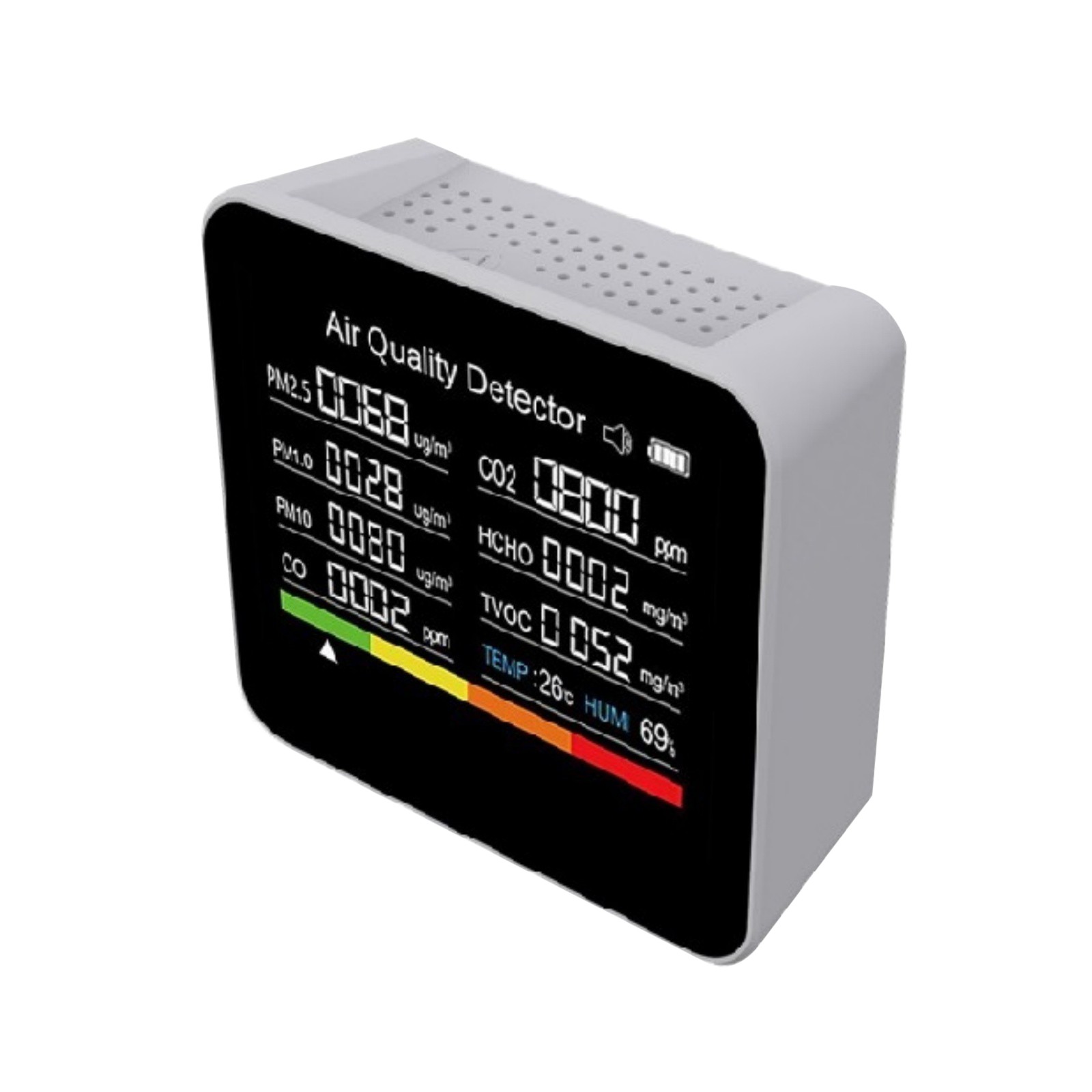 9-in-1 Air Quality Monitor CO2/PM2.5/TVOC/HCHO Detector LED Digital Display$38.80View on eBay
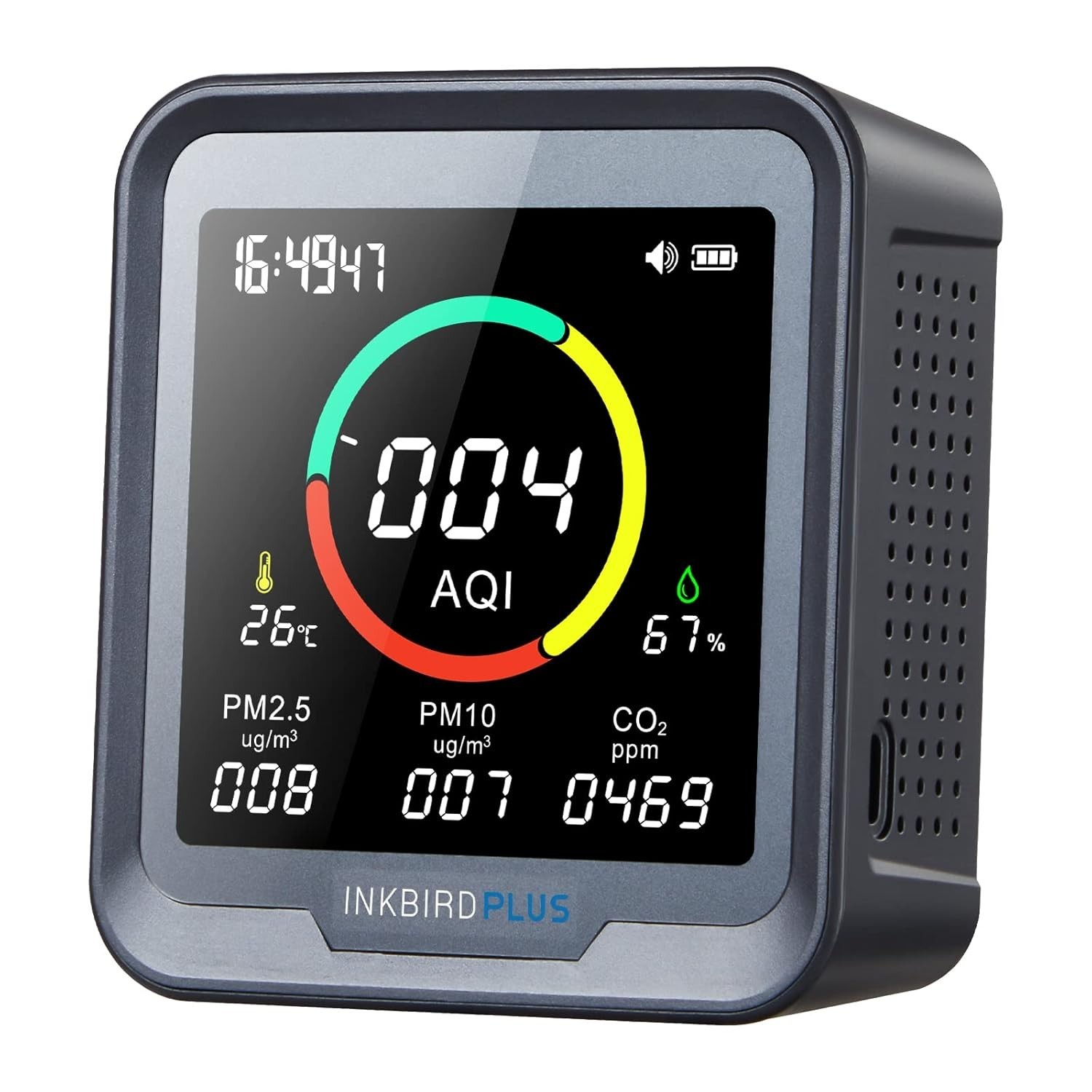 Gas CO2 Detector Air Monitor Quality Tester Temperature Humidity Measuring PM2.5$45.99Last checked Nov 27, 2026View on eBay
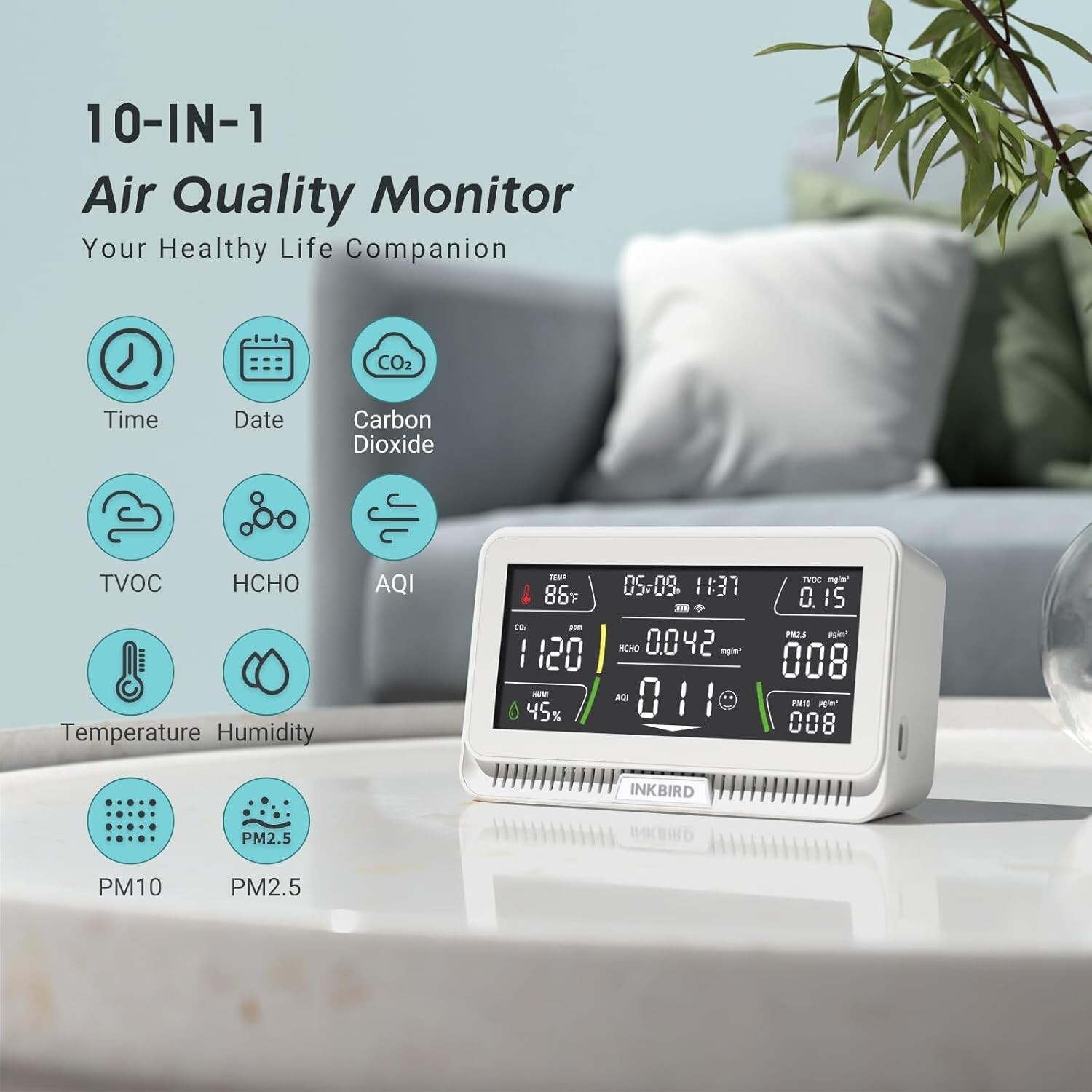 INKBIRD Air Quality Monitor Indoor Co2 Detector Portable 10-in-1 PM2.5 HCHO AQI$70.79View on eBay
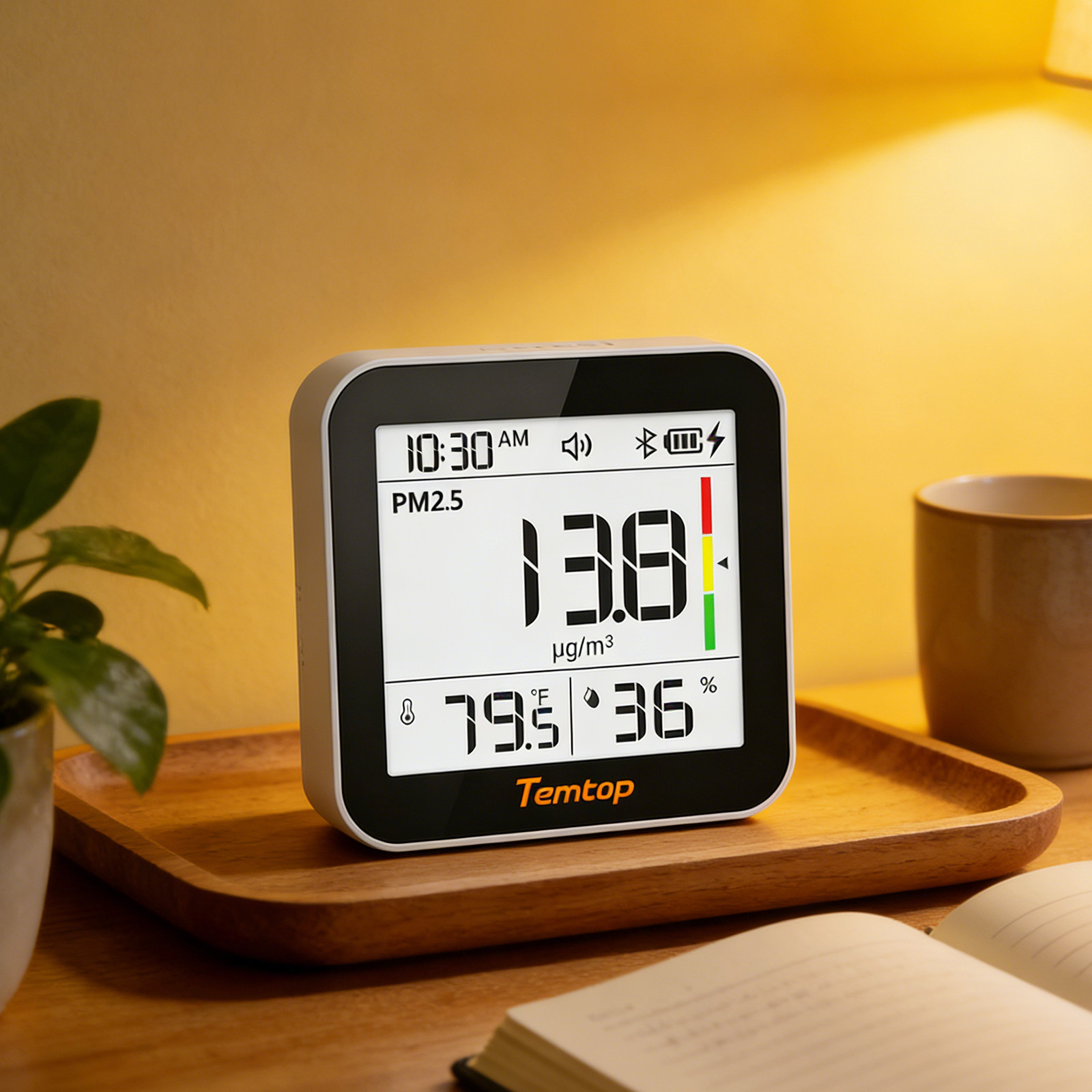 Temtop M10+ Indoor Air Quality Monitor CO2 Detector PM2.5 VOC Home Detector$99.99Last checked Nov 27, 2026View on eBay
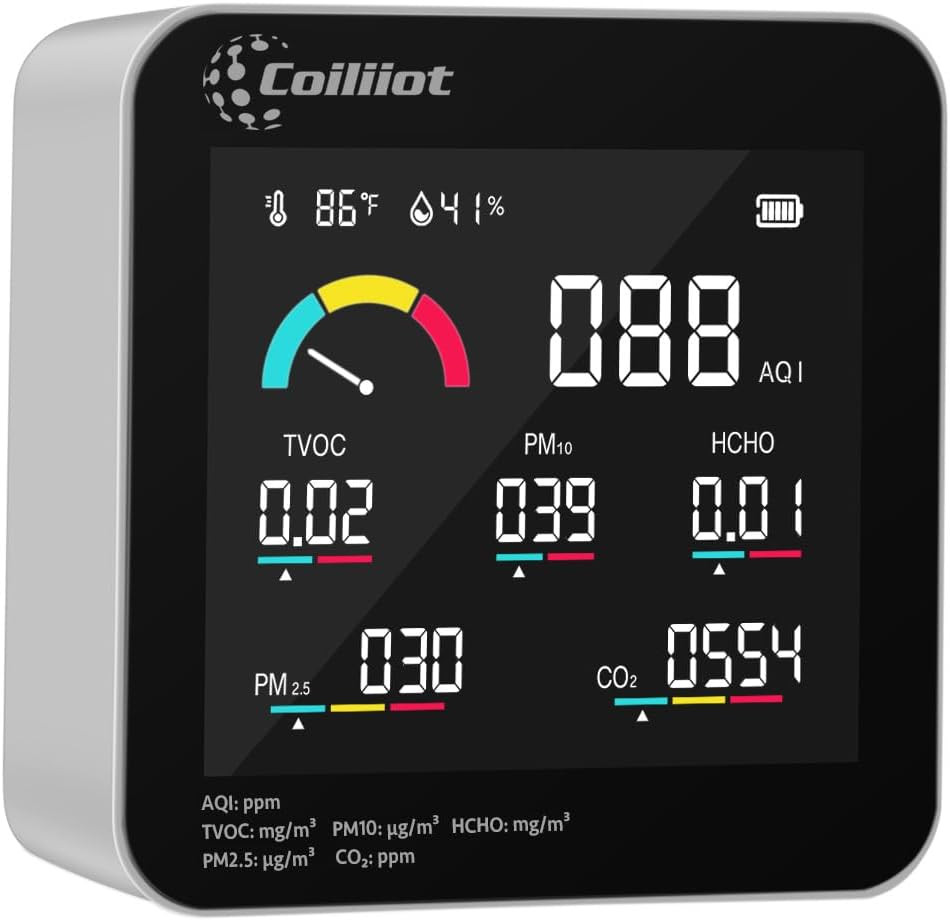 Air Quality Monitor Indoor – CO2 Detector, VOC Meter and AQI Tester Tracks TVOC,$117.32View on eBay
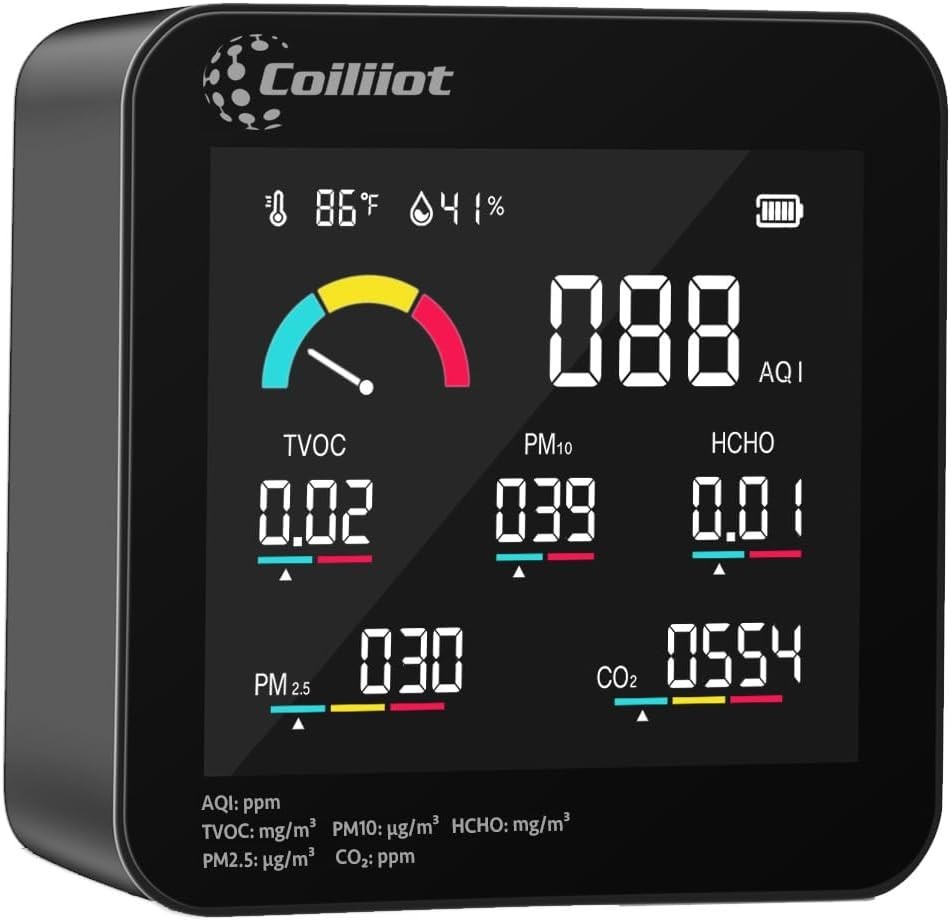 Air Quality Monitor Indoor – CO2 Detector, VOC Meter and AQI Tester Tracks TVOC,$119.32View on eBay
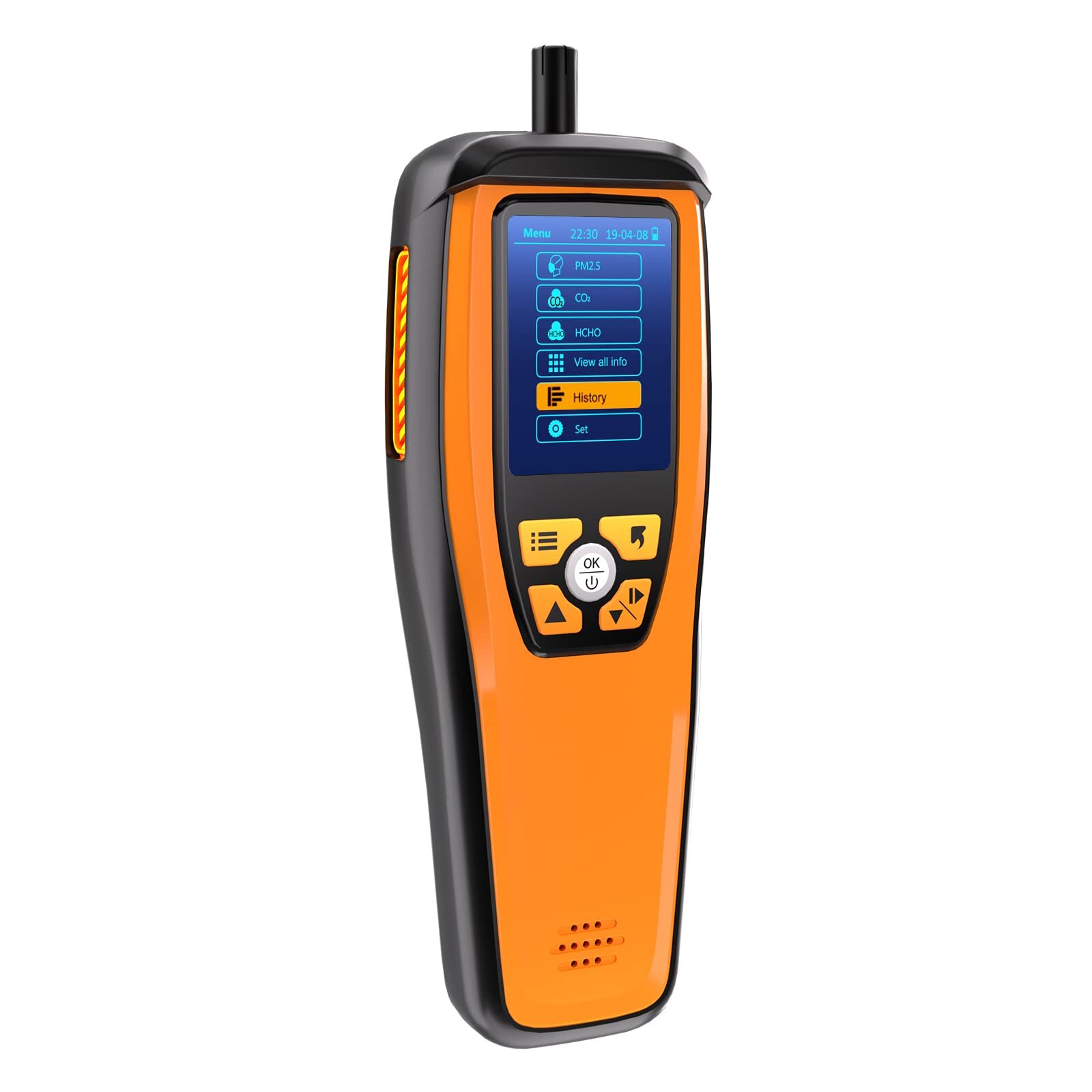 Temtop M2000 2nd Air Quality Monitor PM2.5/10 CO2 HCHO Formaldehyde Detector$209.99Last checked Nov 18, 2026View on eBay
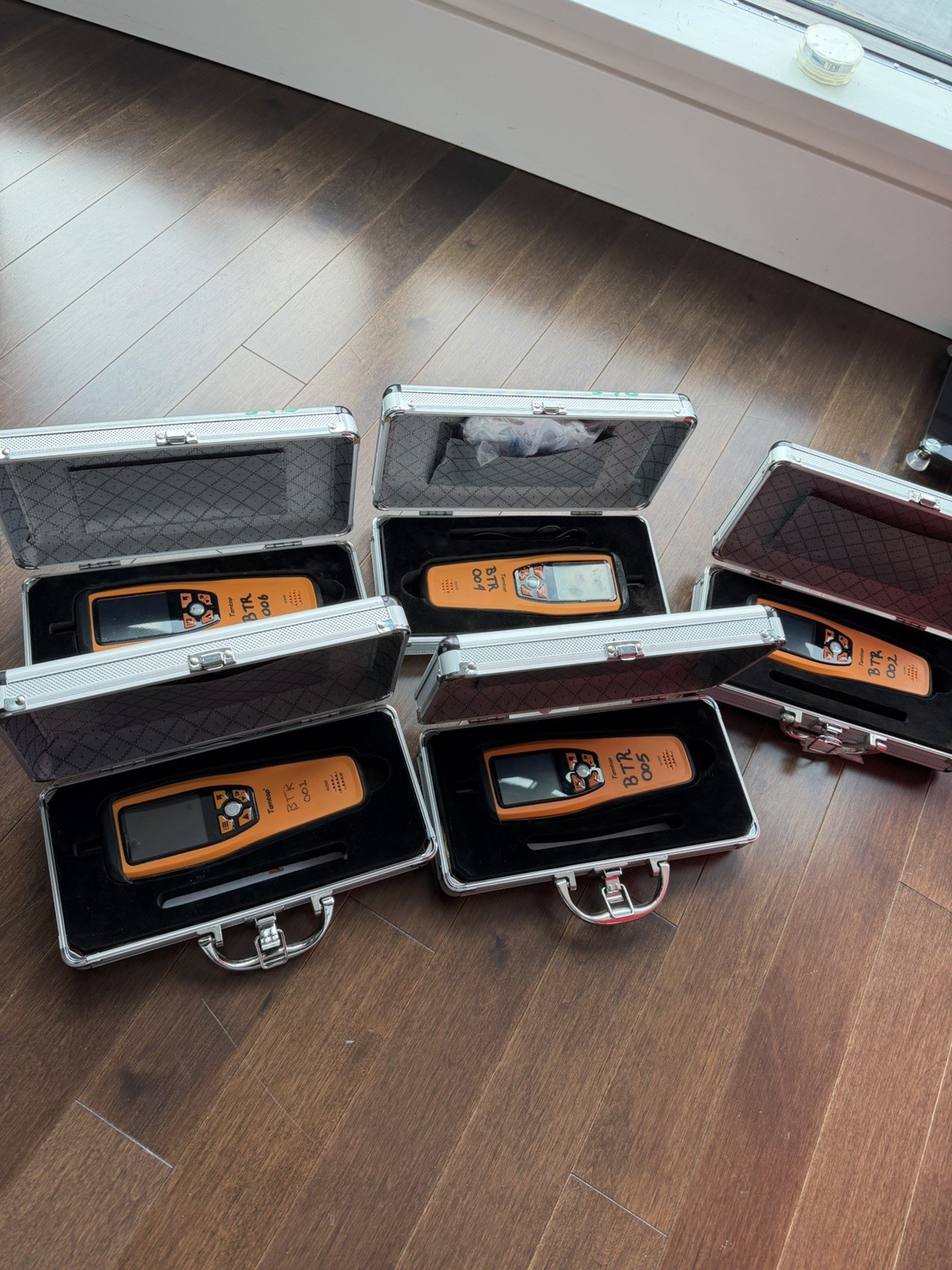 Temtop M2000 2nd Air Quality Monitor PM2.5/10 CO2 HCHO Formaldehyde Detector$557.03Used · Last checked Nov 24, 2026View on eBay
Highlights
- True CO2 measurement requires an NDIR optical sensor tuned to the 4.26 µm absorption band; 'eCO2' or VOC-proxy sensors cannot resolve actual CO2 ppm and should be avoided for ventilation decisions.
- NDIR accuracy is typically specified as ±(30-50 ppm + 3-5% of reading); units without a published accuracy figure are uncalibrated consumer toys.
- ABC (automatic baseline calibration) assumes periodic exposure to fresh outdoor air (~420 ppm); units locked in closed rooms without ABC will drift upward and over-alarm.
- Multi-gas '3-in-1' or '10-in-1' displays add temperature, humidity, PM2.5, HCHO and AQI, but only the NDIR channel measures CO2; extra channels are convenience, not accuracy.
Best use cases
- Bedroom and office ventilation checks: pick a standalone NDIR unit with a clear ppm readout and audible alarm above 1,000-1,500 ppm; skip multi-gas screens that bury the CO2 number.
- HVAC or greenhouse CO2 control: choose a controller with a wired remote NDIR probe (15 ft cable) and relay/analog output; skip handheld consumer displays with no control interface.
- On-the-go and car cabin checks: pick a compact rechargeable unit with fast warm-up and logging; skip plug-in-only monitors that need mains power and long stabilization.
Buying tips
- Demand an explicit NDIR spec: sensor type, measurement range (typically 400-5,000 ppm), and stated accuracy. No NDIR, no buy.
- Match alarm thresholds to use: 1,000 ppm for good ventilation, 1,500 ppm as a cognitive-performance warning, 2,000+ ppm for urgent air exchange.
- Prefer units with ABC enabled by default for home use, or manual calibration in fresh outdoor air (~420 ppm) for closed-room monitoring.
- Check power architecture: rechargeable Li-ion for portability, USB-C for convenience, or mains adapter for continuous 24/7 logging; battery life under 8 hours limits overnight bedroom use.
Specs
| CO2 Sensor | NDIR optical vs eCO2 VOC-proxy |
|---|---|
| Accuracy | ±(30-50 ppm + 3-5%) typical NDIR |
| Range | 400-5,000 ppm (home) |
| Alarm Threshold | 1,000 / 1,500 / 2,000 ppm tiers |
Related searches
What to check before buying
- Measure your monitoring spot: the unit needs free airflow, away from windows, doors, and direct breath; a 15 ft probe cable helps place the sensor at breathing height.
- Confirm power: USB-C or micro-USB charging, battery capacity in mAh, and whether it runs while charging for continuous bedside use.
- Check display readability: ppm figures large enough to read from bed or desk, backlight, and an audible alarm you can hear across a room.
- Verify logging/export: on-device history or app/CSV export if you need to prove ventilation trends; many cheap units show live numbers only.
FAQ
Data sources: eBay / Amazon listings and product attribute feeds. Updated Nov 28, 2026.
Some links on this page are affiliate links. If you buy after clicking one, we may earn a commission at no extra cost to you. This does not change which products appear here or their order. Affiliate disclosure.