
Photos from current listings. Actual item, color, and included accessories may vary.
Portable Weather Station Buying Guide
A portable weather station is a compact, battery-powered sensor cluster that measures wind, temperature, humidity, and pressure for on-the-go or temporary deployment—not a fixed home weather station. The core trade-off is between all-in-one handheld anemometers with basic sensors and modular tripod-mounted units with external wind cups and solar radiation shields; the latter costs more but delivers stable, calibrated readings in sustained outdoor use. The decision rule: choose a sealed, IP-rated unit with replaceable batteries and a wired or Bluetooth external wind sensor for any deployment beyond casual spot checks; skip pocket-only devices with integrated spinning vanes if you need continuous logging or multi-day accuracy.
Median $105.99
Key takeaways
- Wind sensing splits into three architectures: mechanical cup-and-vane (durable, needs 0.5–1 m/s threshold), ultrasonic (no moving parts, but sensitive to rain/ice), and hot-wire (fast response, fragile in gusts).
- Battery life scales with transmit interval: 1-minute logging drains a 2×AA pack in days, while 5–15 minute intervals with BLE only can last one to two seasons on lithium AA cells.
- Construction grade matters more than sensor count: IPX4 handles splashes only; IP65/IP66 seals against dust and jet spray, and UV-stabilized ABS or polycarbonate housings resist yellowing and cracking.
At a glance
- Category
- Environmental & Indoor Air Measurement
- Last updated
- Nov 28, 2026
Current offers
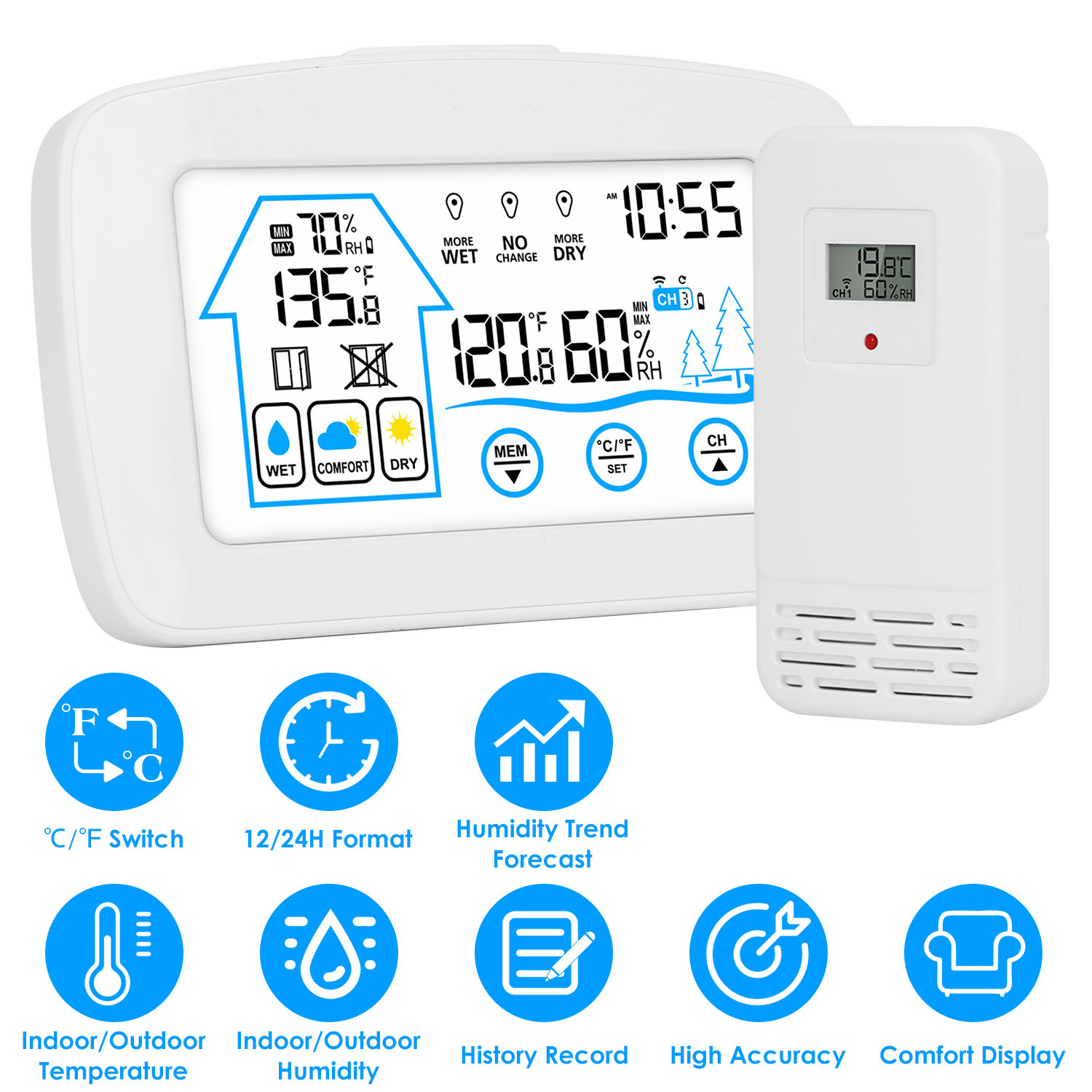 1Pc Wireless Weather Station With Clock 196FT Range Indoor Outdoor Thermometer Sensor Temperature And Humidity Monitor Forecast Battery Powered Backlight Display$39.99View on Mallflare
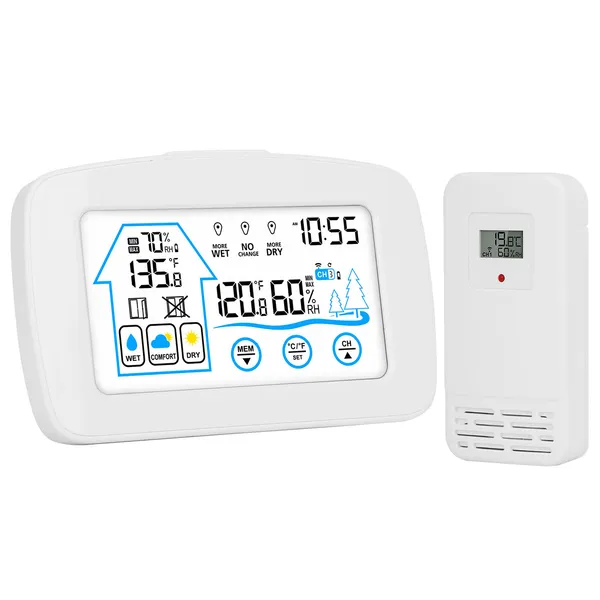 Wireless Weather Station With Clock 196FT Range Indoor Outdoor Thermometer Sensor Temperature And Humidity Monitor Forecast Battery Powered Backlight Display$43.99View on Mallflare
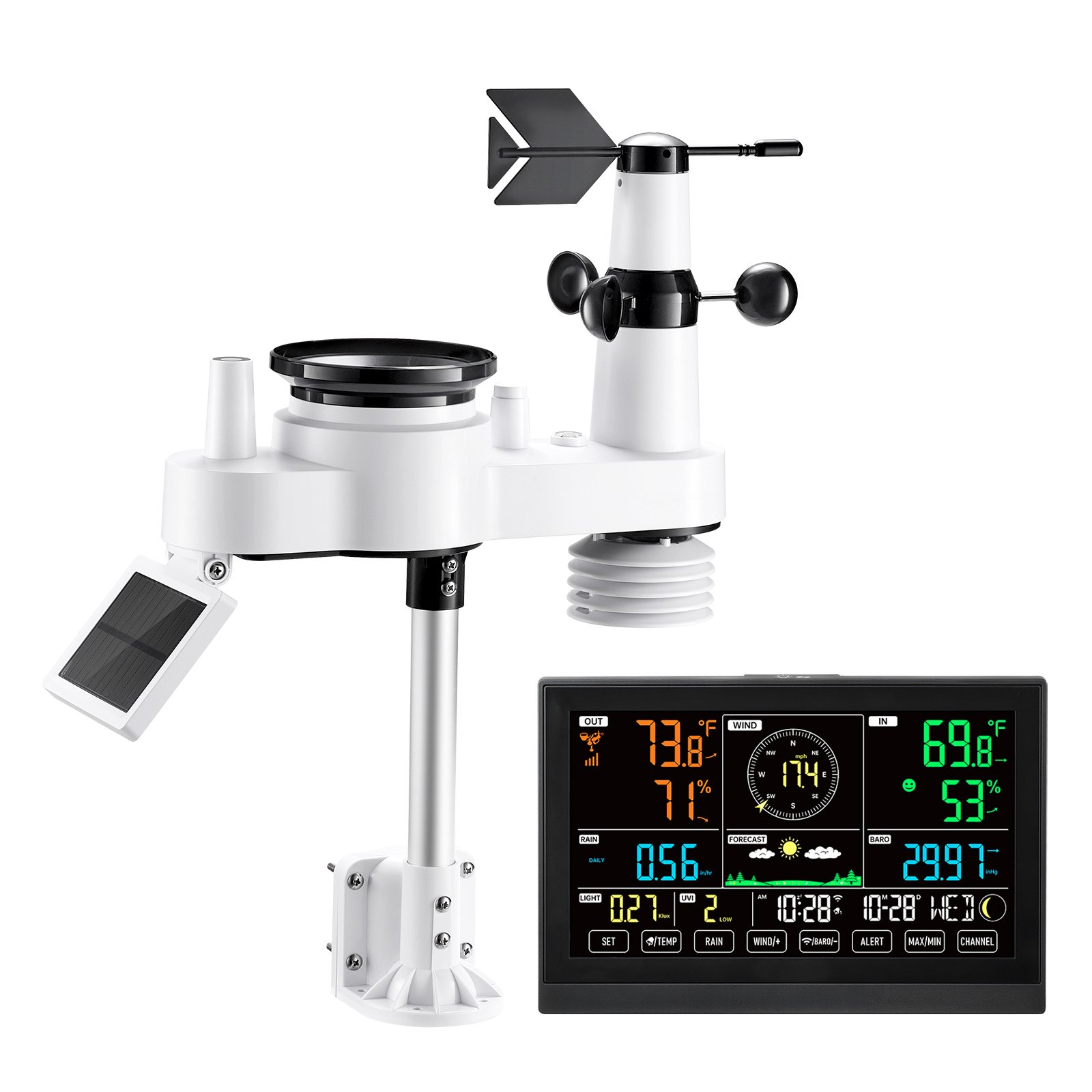 7-in-1 Wi-Fi Weather Station With APP, 7.5-Inch VA Display, Wireless Solar Powered Outdoor Sensor, Rain Gauge, Indoor For Forecast, Wind Speed, Temperature, Humidity, Rainfall$105.99View on Mallflare
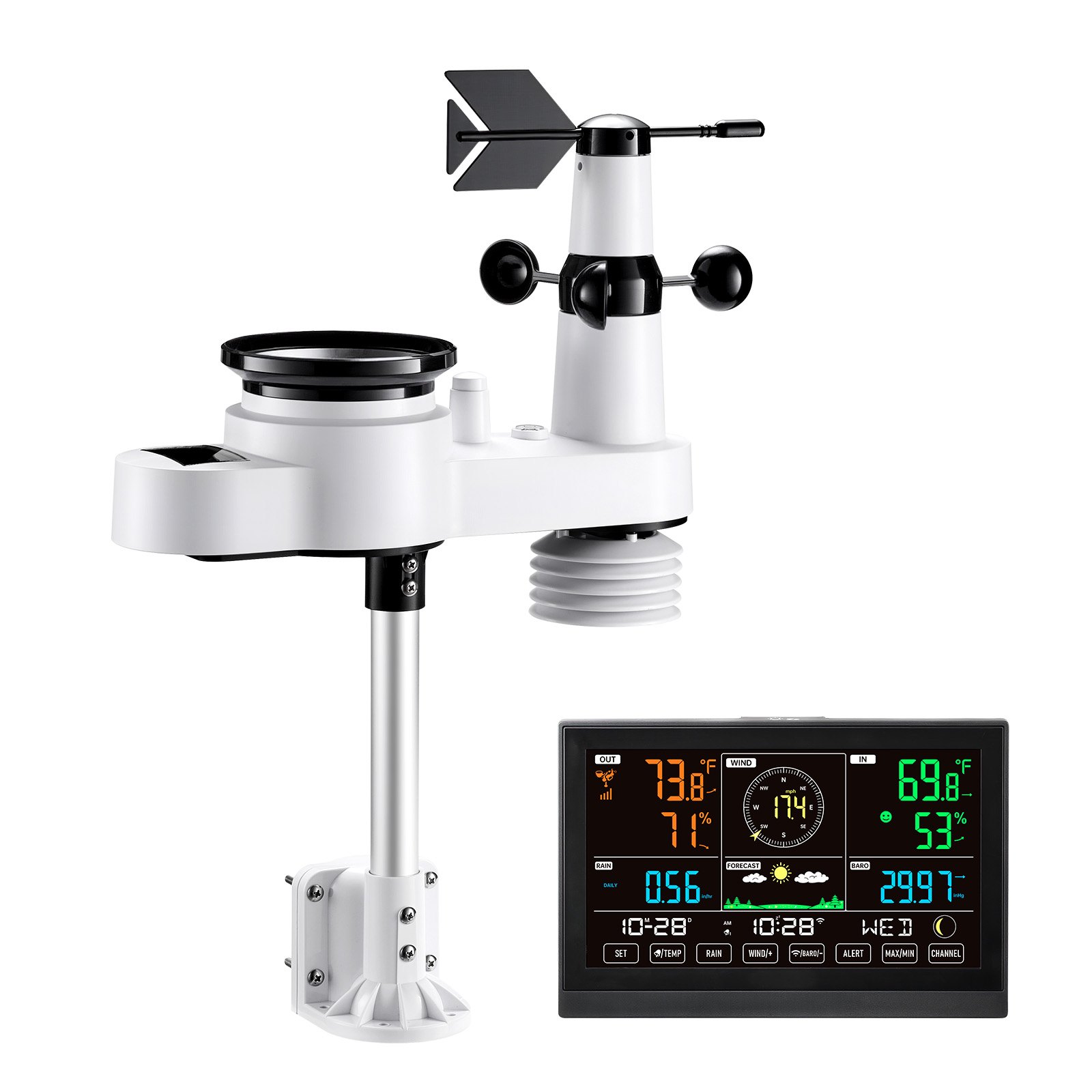 5-in-1 Wi-Fi Weather Station, 7.5-Inch VA Display, Wireless Solar Powered Outdoor Sensor, Rain Gauge, Indoor For Forecast, Wind Speed Direction, Temperature, Humidity, Rainfall$105.99View on Mallflare
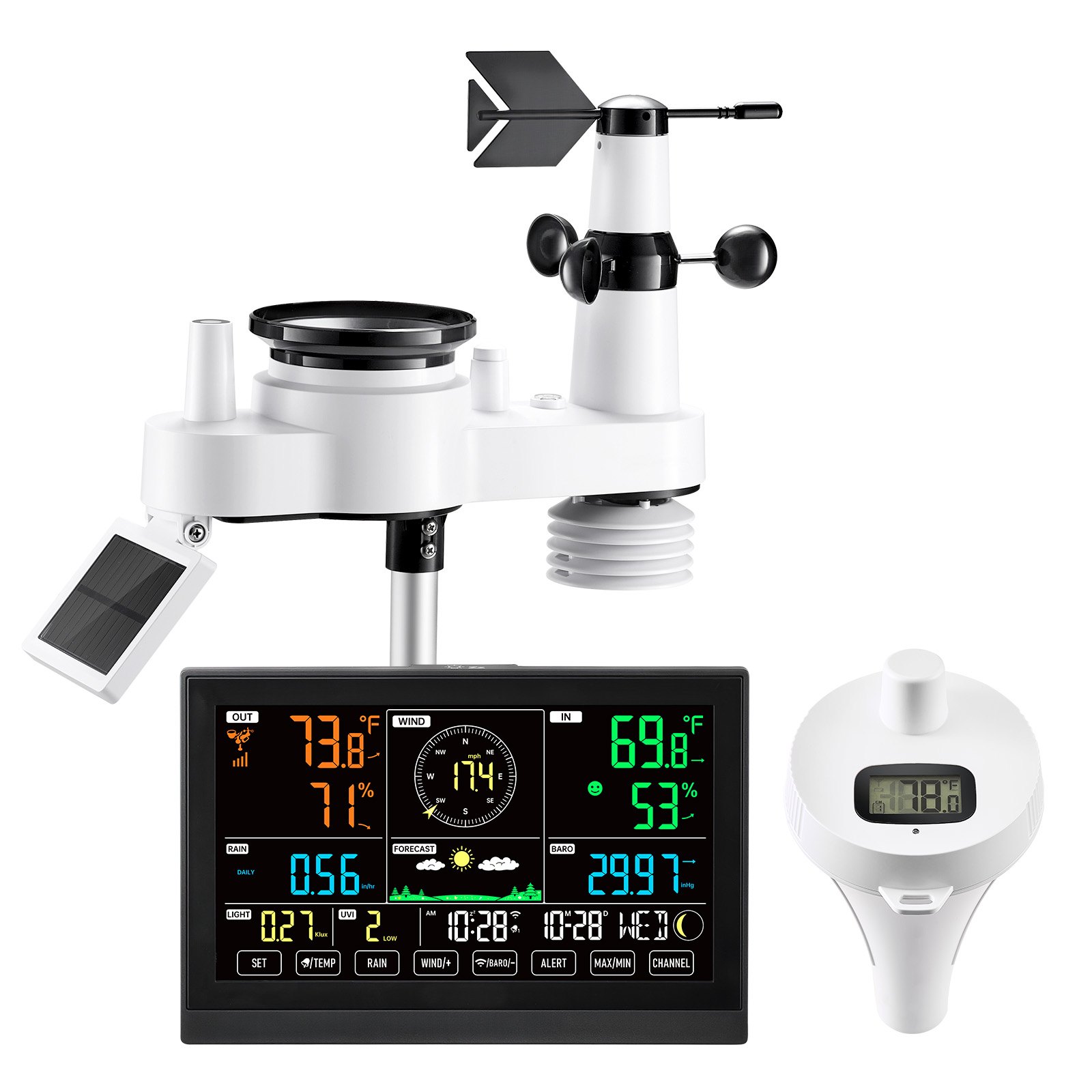 7-in-1 Wi-Fi Weather Station With APP, 7.5 In Display, Wireless Solar Powered Outdoor Sensor, Pool Thermometer, Rain Gauge, Indoor For Forecast, Wind Speed, Temperature$111.99View on Mallflare
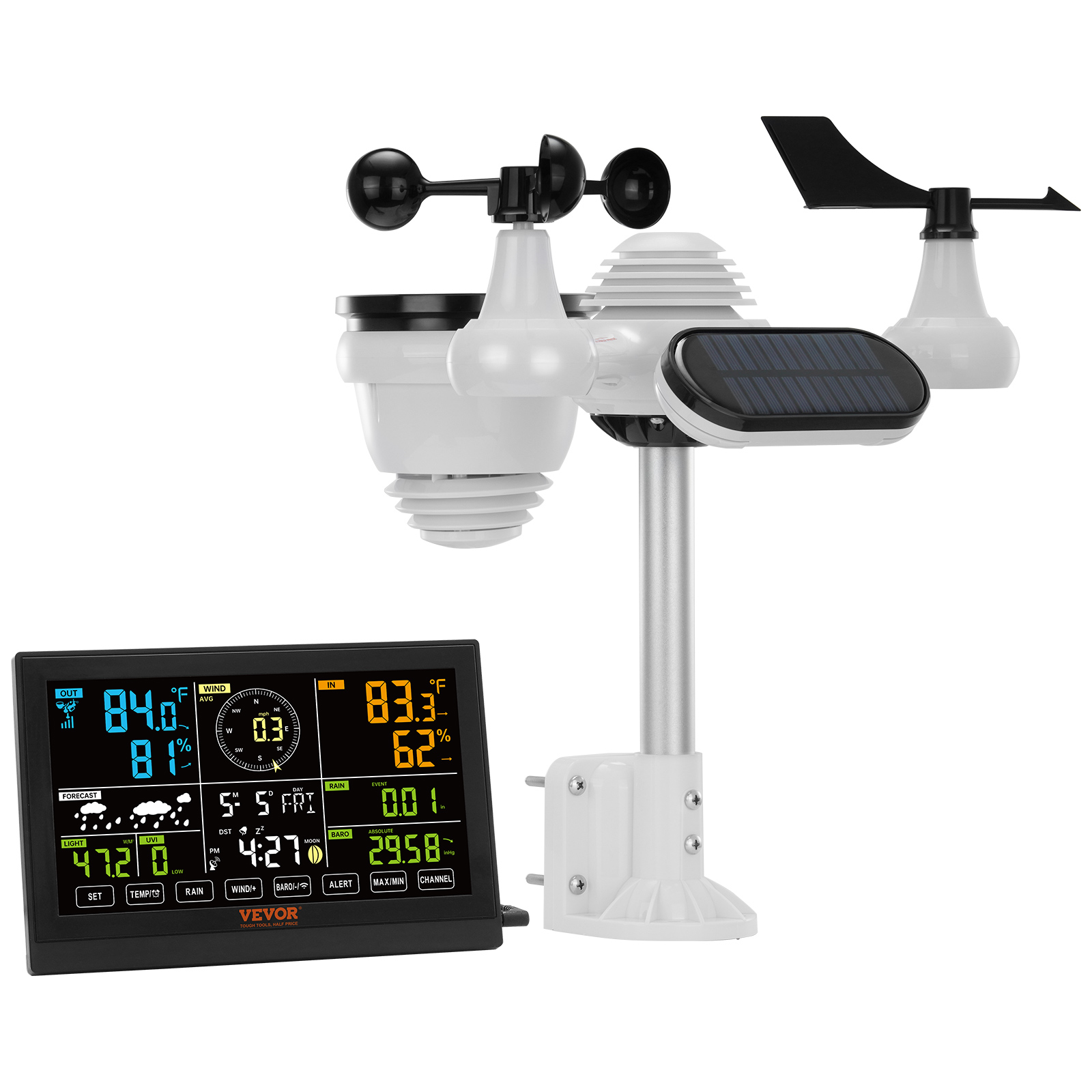 VEVOR 7-in-1 Wireless Weather Station, 7.5 In Large Color Display, Digital Home Indoor Outdoor, For Temperature Humidity Wind Speed,Direction Rain UV, With Forecast Data, Alarm, Alerts$112.99View on Mallflare
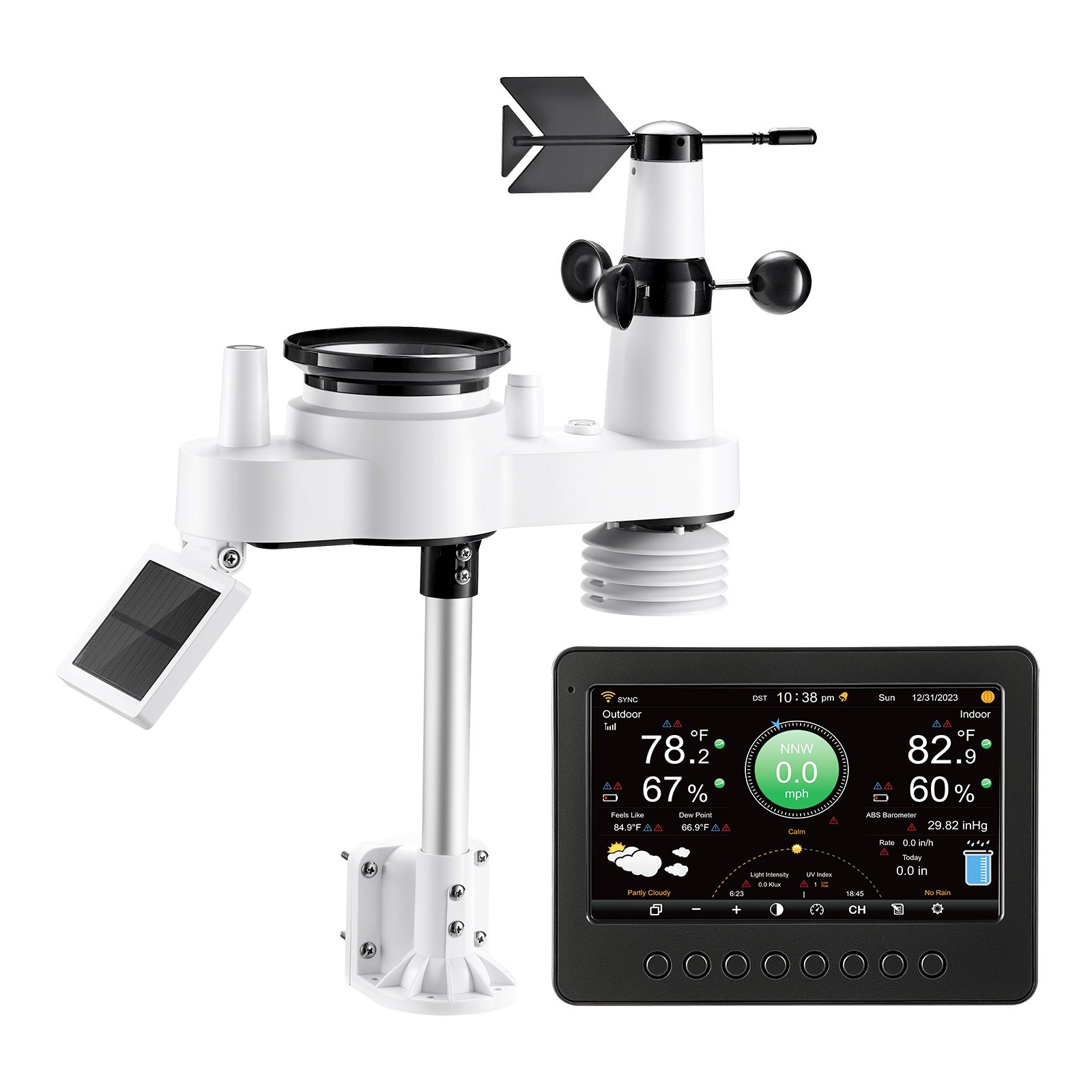 7-in-1 Wi-Fi Weather Station, 7-Inch TFT Display, Wireless Solar Powered Outdoor Sensor, Rain Gauge, Indoor For Forecast, Wind Speed Direction, Temperature, Humidity, Rainfall$146.99View on Mallflare
Highlights
- Wind sensing splits into three architectures: mechanical cup-and-vane (durable, needs 0.5–1 m/s threshold), ultrasonic (no moving parts, but sensitive to rain/ice), and hot-wire (fast response, fragile in gusts).
- Battery life scales with transmit interval: 1-minute logging drains a 2×AA pack in days, while 5–15 minute intervals with BLE only can last one to two seasons on lithium AA cells.
- Construction grade matters more than sensor count: IPX4 handles splashes only; IP65/IP66 seals against dust and jet spray, and UV-stabilized ABS or polycarbonate housings resist yellowing and cracking.
- Accuracy tiers are defined by sensor class: ±0.3 °C temperature and ±3% RH is the practical benchmark for reputable portable units; ±1 °C/±5% RH indicates budget sensor packages that drift with sun exposure.
Best use cases
- Best fit: tripod-mounted modular unit with external cup anemometer, radiation shield, and Bluetooth logging for sailing regattas, construction sites, or agricultural scouting—skip pocket handhelds for these because body heat and hand shielding corrupt wind and humidity readings.
- Best fit: sealed handheld anemometer with integrated temp/humidity and a lanyard for hiking, paragliding, or HVAC duct checks—skip tripod stations here because setup time and wind vane alignment matter more than multi-day logging.
- Best fit: solar-powered remote station with 100 m+ radio range and cloud upload for remote property or research plots—skip Bluetooth-only units, which cap at roughly 30–50 m line-of-sight and cannot report when you are away.
- Wrong fit: any portable station marketed for permanent rooftop mounting—skip it and buy a fixed home station, because portable housings lack the radiation shield size and mast rigidity for continuous 24/7 exposure.
Buying tips
- Match wind sensor threshold to your use: cup anemometers start around 0.5–1 m/s and handle gusts to 40–50 m/s; ultrasonic units read 0 m/s but ice over in freezing rain, so pair with a heated option or skip for winter deployment.
- Size the battery chemistry to temperature: alkaline AA cells lose most capacity below −10 °C; specify lithium AA or a built-in Li-ion pack rated to −20 °C if the station will see sub-freezing nights.
- Check wireless protocol and range before buying: Bluetooth LE covers roughly 30–50 m open air; 433/868/915 MHz sub-GHz links reach 100–300 m and penetrate walls better—pick sub-GHz for any station not within sight of your phone.
- Confirm mounting hardware is included or standardized: most modular tripod stations use a 1/4″-20 or 3/8″-16 thread; if the mast or tripod is not bundled, budget for a photography-style tripod and a stake kit for soft ground.
Specs
| Wind Sensor Type | Cup/vane vs ultrasonic vs hot-wire |
|---|---|
| Wireless Protocol | BLE 30-50 m / sub-GHz 100-300 m |
| Ingress Protection | IPX4 splash vs IP65/IP66 dust-tight |
| Operating Temp Range | -20 to 60 °C (Li-ion/remote tier) |
Related searches
What to check before buying
- Measure your deployment footprint: tripod stations need a 1–2 m² clear area with a 2–3 m mast height for true wind readings; handhelds only need a lanyard and a clear arm extension away from your body.
- Confirm the IP rating and operating temperature range against your climate: IP65 or better for dusty/rainy sites, and a lower limit at least 10 °C below your coldest expected night for battery and LCD survival.
- Verify power and plug standard: USB-C charging is now standard on Li-ion handhelds, while remote stations often use AA or solar panels with barrel connectors—match to your existing power banks and spare cells.
- Check companion parts and app support: Bluetooth units need a phone app with logging/export; sub-GHz stations need a console or gateway—confirm the app or console is included and supports CSV export for your records.
FAQ
Data sources: eBay / Amazon listings and product attribute feeds. Updated Nov 28, 2026.
Some links on this page are affiliate links. If you buy after clicking one, we may earn a commission at no extra cost to you. This does not change which products appear here or their order. Affiliate disclosure.