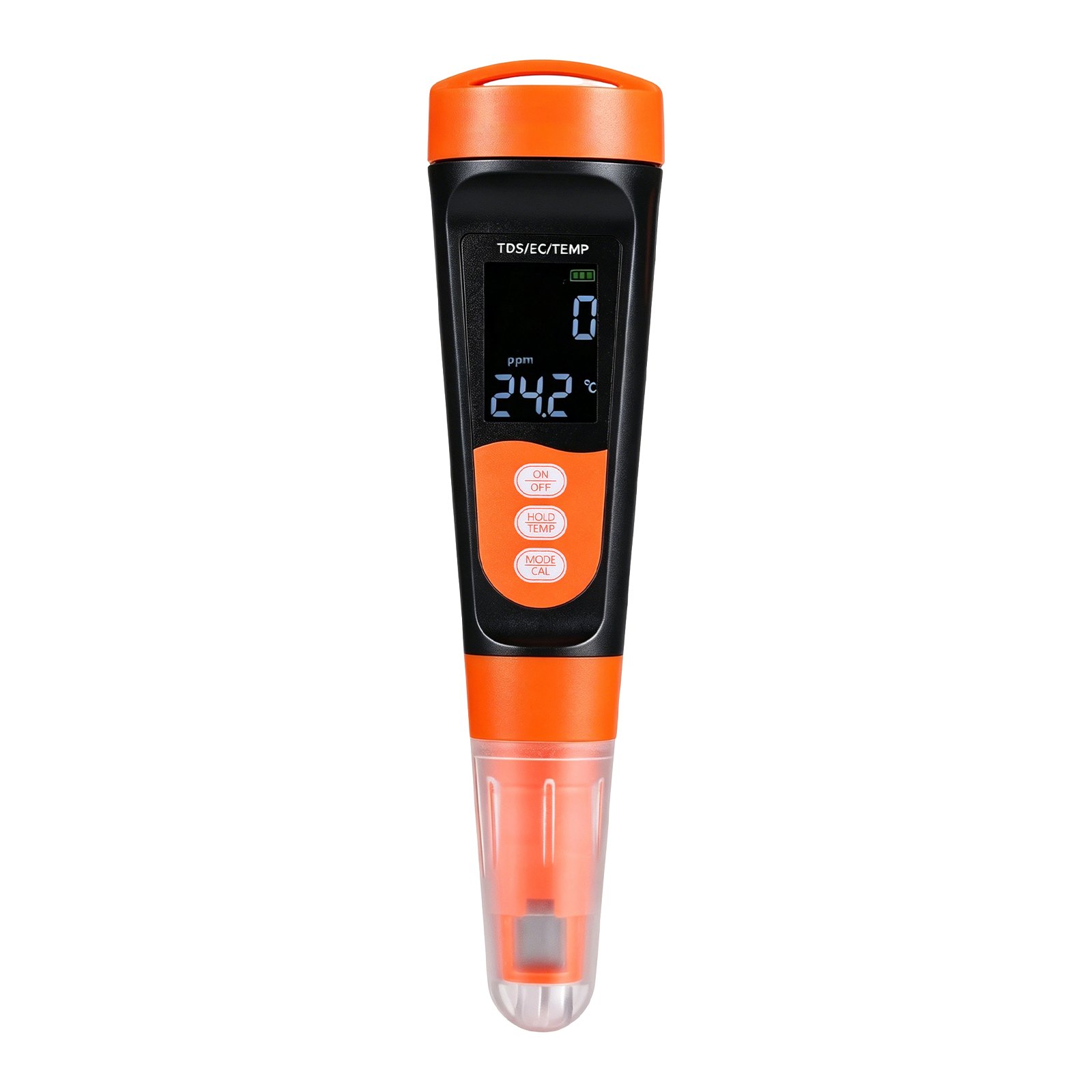

Photos from current listings. Actual item, color, and included accessories may vary.
Ppm Meter Water Buying Guide
A ppm meter for water measures total dissolved solids (TDS) via electrical conductivity, giving a fast estimate of water purity for drinking, brewing, aquariums, and hydroponics. The core trade-off is between basic 2-electrode pen-style meters with ±2% accuracy and laboratory-grade 4-electrode or benchtop units that resist electrode polarization and drift. Buy a meter with automatic temperature compensation (ATC) and a stated accuracy of ±2% or better; skip any unit that lacks ATC or publishes no accuracy figure.
Key takeaways
- 2-electrode pens suit general drinking-water checks but suffer polarization drift; 4-electrode cells maintain accuracy in high-TDS or varying-temperature samples.
- ATC normalizes readings to 25°C; without it, a 10°C sample shift can skew TDS readings by roughly 1.5-2% per °C depending on dissolved ion mix.
- 0-9990 ppm range covers nearly all potable and agricultural water; 0-999 ppm resolution (1 ppm steps) matters most for low-mineral drinking water and RO output.
At a glance
- Category
- Environmental & Indoor Air Measurement
- Last updated
- Nov 28, 2026
Current offers
Highlights
- 2-electrode pens suit general drinking-water checks but suffer polarization drift; 4-electrode cells maintain accuracy in high-TDS or varying-temperature samples.
- ATC normalizes readings to 25°C; without it, a 10°C sample shift can skew TDS readings by roughly 1.5-2% per °C depending on dissolved ion mix.
- 0-9990 ppm range covers nearly all potable and agricultural water; 0-999 ppm resolution (1 ppm steps) matters most for low-mineral drinking water and RO output.
- Factory calibration with 342 ppm or 1413 µS/cm standard solution is mandatory; meters with only push-button 'calibration' and no solution reference are not verifiable.
Best use cases
- Best fit: pen-style ATC meter with ±2% accuracy and 0-9990 ppm range for routine tap, filtered, and bottled drinking-water checks — skip benchtop units unless you need audit-grade records.
- Best fit: 4-electrode or high-range meter for hydroponic nutrient solutions and reef aquariums where TDS frequently exceeds 1000 ppm and temperature swings are large.
- Wrong fit: a basic 2-electrode pen for reef salinity or laboratory compliance work — use a dedicated conductivity/salinity meter with stated cell constant and calibration certificate instead.
- Best fit: compact 0-999 ppm-resolution meter for reverse-osmosis membrane performance testing — skip high-range-only meters that lose 1 ppm resolution below 100 ppm.
Buying tips
- Demand ATC and a stated accuracy of ±2% full-scale or better; meters quoting only 'high accuracy' without a number are unverifiable.
- Match range to use: 0-999 ppm for RO/drinking precision, 0-9990 ppm for hydroponics and general water, 0-19,999 ppm for brackish or wastewater.
- Prefer 4-electrode conductivity cells over 2-electrode pens when readings will exceed 1000 ppm or sample temperatures vary more than 10°C.
- Confirm calibration via 342 ppm or 1413 µS/cm standard solution and check whether calibration is manual (trim pot or button) or automatic — manual is fine if documented.
Specs
| Electrode Type | 2-electrode pen vs 4-electrode cell |
|---|---|
| TDS Range | 0-999 / 0-9990 / 0-19999 ppm |
| Accuracy & ATC | ±2% FS with automatic temp comp |
| Calibration Standard | 342 ppm or 1413 µS/cm solution |
Related searches
What to check before buying
- Verify the meter's stated range covers both your lowest expected reading (RO output can be under 20 ppm) and your highest (hydroponic reservoirs often 800-2000 ppm).
- Check that ATC is specified and that the meter displays temperature alongside TDS, so you can flag readings taken outside the compensated range.
- Confirm the electrode type (2-electrode vs 4-electrode) and whether the cell is replaceable or cleanable — sealed non-serviceable cells have a shorter working life.
- Ensure you have or can obtain 342 ppm or 1413 µS/cm calibration solution; a meter without a calibration reference cannot be trusted for comparative measurements.
FAQ
Data sources: eBay / Amazon listings and product attribute feeds. Updated Nov 28, 2026.
Some links on this page are affiliate links. If you buy after clicking one, we may earn a commission at no extra cost to you. This does not change which products appear here or their order. Affiliate disclosure.