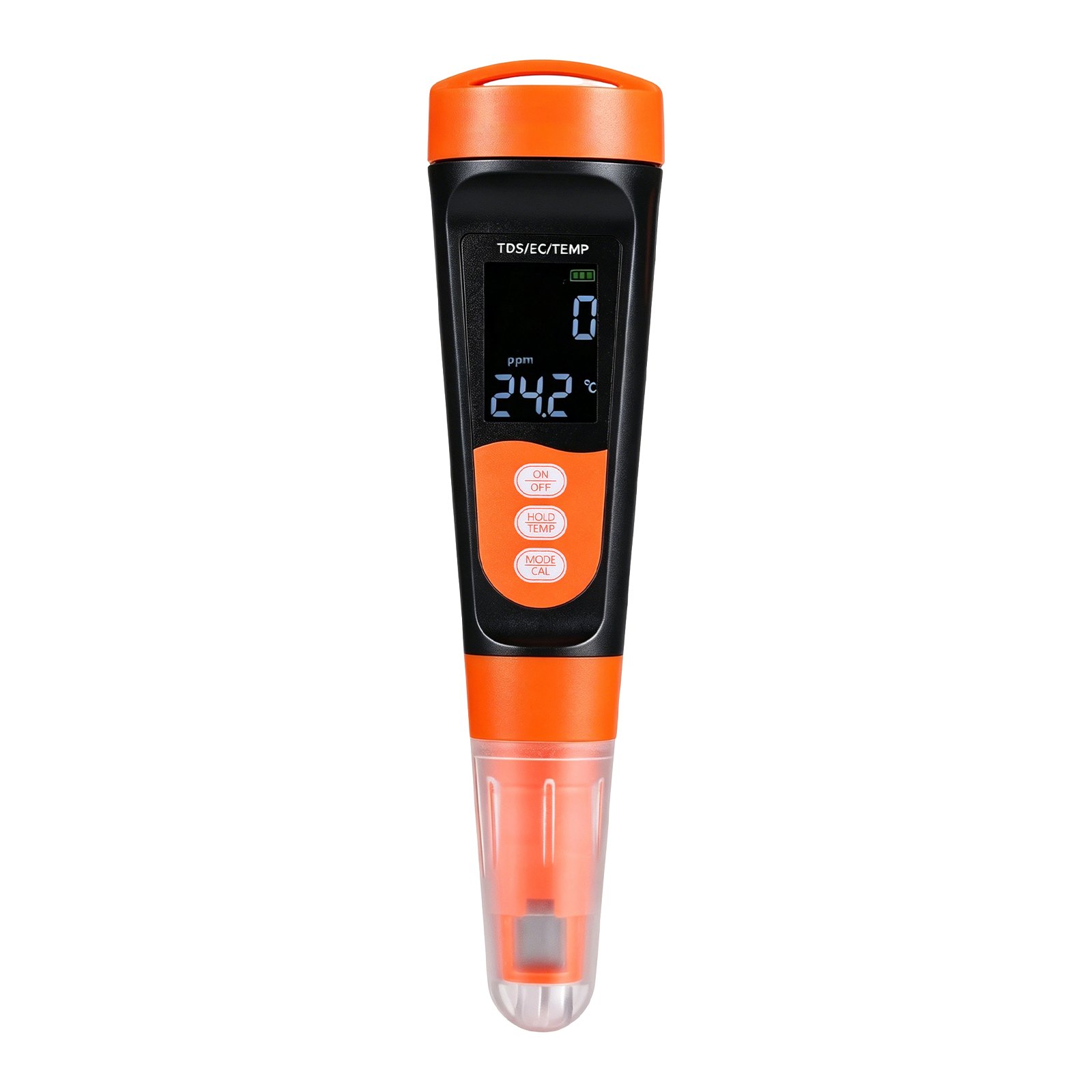

Photos from current listings. Actual item, color, and included accessories may vary.
Tds Meter Buying Guide
A TDS meter is a handheld conductivity probe that estimates total dissolved solids in water, with accuracy and durability determined by electrode material, temperature compensation, and calibration design. The core trade-off is between basic two-electrode units with ±2% full-scale accuracy and lab-grade four-electrode or glass-body probes with replaceable sensors. Buy a meter with automatic temperature compensation (ATC) and a stated accuracy of ±2% or better; skip any unit without ATC or a replaceable electrode.
Key takeaways
- Electrode material separates durable from disposable: titanium or platinum-coated probes resist corrosion and drift, while bare brass or stainless steel pins oxidize and lose accuracy within months.
- ATC range and compensation algorithm matter more than display size: meters compensating 0-50°C keep readings within ±1% of true value, while non-ATC units drift 2-3% per 10°C deviation.
- Range tiers differ by resolution: 0-9990 ppm meters typically resolve 1 ppm below 999 and 10 ppm above, while 0-999 ppm units hold 1 ppm resolution but saturate on brackish or reef water.
At a glance
- Category
- Environmental & Indoor Air Measurement
- Last updated
- Nov 28, 2026
Current offers
Highlights
- Electrode material separates durable from disposable: titanium or platinum-coated probes resist corrosion and drift, while bare brass or stainless steel pins oxidize and lose accuracy within months.
- ATC range and compensation algorithm matter more than display size: meters compensating 0-50°C keep readings within ±1% of true value, while non-ATC units drift 2-3% per 10°C deviation.
- Range tiers differ by resolution: 0-9990 ppm meters typically resolve 1 ppm below 999 and 10 ppm above, while 0-999 ppm units hold 1 ppm resolution but saturate on brackish or reef water.
- Calibration method defines long-term trust: user-calibratable meters with a single-point 342 ppm NaCl standard stay accurate for months, whereas factory-sealed units cannot be corrected as the probe ages.
Best use cases
- Best fit for drinking-water checks: pick a 0-9990 ppm pen with ATC, ±2% accuracy, and a hold function; skip reef-grade four-electrode units that cost more and add no benefit below 1000 ppm.
- Best fit for hydroponics and aquariums: choose a meter with 1 ppm resolution below 999 ppm, ATC to 50°C, and a replaceable electrode; skip sealed two-pin units that cannot be recalibrated after nutrient salt buildup.
- Best fit for field or travel use: select an IP67-rated or fully submersible body with a cap and lanyard; skip open-pocket LCD pens with exposed battery doors that fail in humid or wet conditions.
- Wrong fit for lab or regulatory reporting: consumer pens lack NIST-traceable certificates; use a benchtop conductivity meter with four-electrode cell and documented calibration instead.
Buying tips
- Match range to source: freshwater and drinking water stay under 1000 ppm, so a 0-9990 ppm meter with 1 ppm resolution below 999 covers all home needs without saturating.
- Require stated accuracy of ±2% full scale or better and ATC spanning at least 0-50°C; units claiming ±1% without ATC are marketing claims, not measurable accuracy.
- Check calibration access: a meter with a front-panel calibration screw or button and a supplied 342 ppm NaCl standard is field-serviceable; sealed units are disposable.
Specs
| Probe Material | Titanium / platinum-coated vs brass |
|---|---|
| Accuracy | ±2% full scale with ATC |
| Range / Resolution | 0-9990 ppm; 1 ppm under 999 |
| Calibration | User-calibratable, 342 ppm NaCl |
Related searches
What to check before buying
- Confirm probe type: titanium or platinum-coated electrodes for corrosion resistance; bare brass pins are a durability red flag.
- Verify ATC range covers your water temperature: cold tap water near 5°C or hot samples near 45°C need compensation beyond the common 0-50°C window.
- Check display and body rating: a VA or LCD screen with hold function and at least IP65 splash resistance suits kitchen and field use.
- Confirm calibration standard and access: 342 ppm NaCl is the common single-point standard; ensure the meter accepts user calibration and includes or specifies the solution.
FAQ
Data sources: eBay / Amazon listings and product attribute feeds. Updated Nov 28, 2026.
Some links on this page are affiliate links. If you buy after clicking one, we may earn a commission at no extra cost to you. This does not change which products appear here or their order. Affiliate disclosure.