
Photos from current listings. Actual item, color, and included accessories may vary.
Weather Station Buying Guide
A weather station is a sensor-plus-display system that measures indoor/outdoor temperature, humidity, wind, rain, UV, and pressure, with the primary trade-off being sensor integration and transmission reliability versus display features. Durable systems use a single integrated outdoor sensor array with solar assist and a dedicated 433/868 MHz radio link; compromises split sensors across separate battery-only units with marginal range. The decision rule: buy an all-in-one sensor array with solar charging and a color console if you want reliable multi-variable data, and skip modular thermometer-only kits unless you only need temp/humidity.
Median $105.99
Key takeaways
- Integrated 7-in-1 sensor arrays combine wind speed, wind direction, rain, UV, temperature, and humidity in one mast-mounted unit, eliminating separate sensor pairing and sync failures.
- Radio link matters more than display size: 433 MHz or 868 MHz fixed-frequency transmission reaches 100-300 ft through walls, while 2.4 GHz Wi-Fi is for internet upload only, not sensor-to-console.
- Solar-assisted sensor arrays with a backup battery maintain wind and rain readings through winter, whereas battery-only outdoor sensors lose accuracy and drop out below freezing.
At a glance
- Category
- Environmental & Indoor Air Measurement
- Last updated
- Nov 28, 2026
Current offers
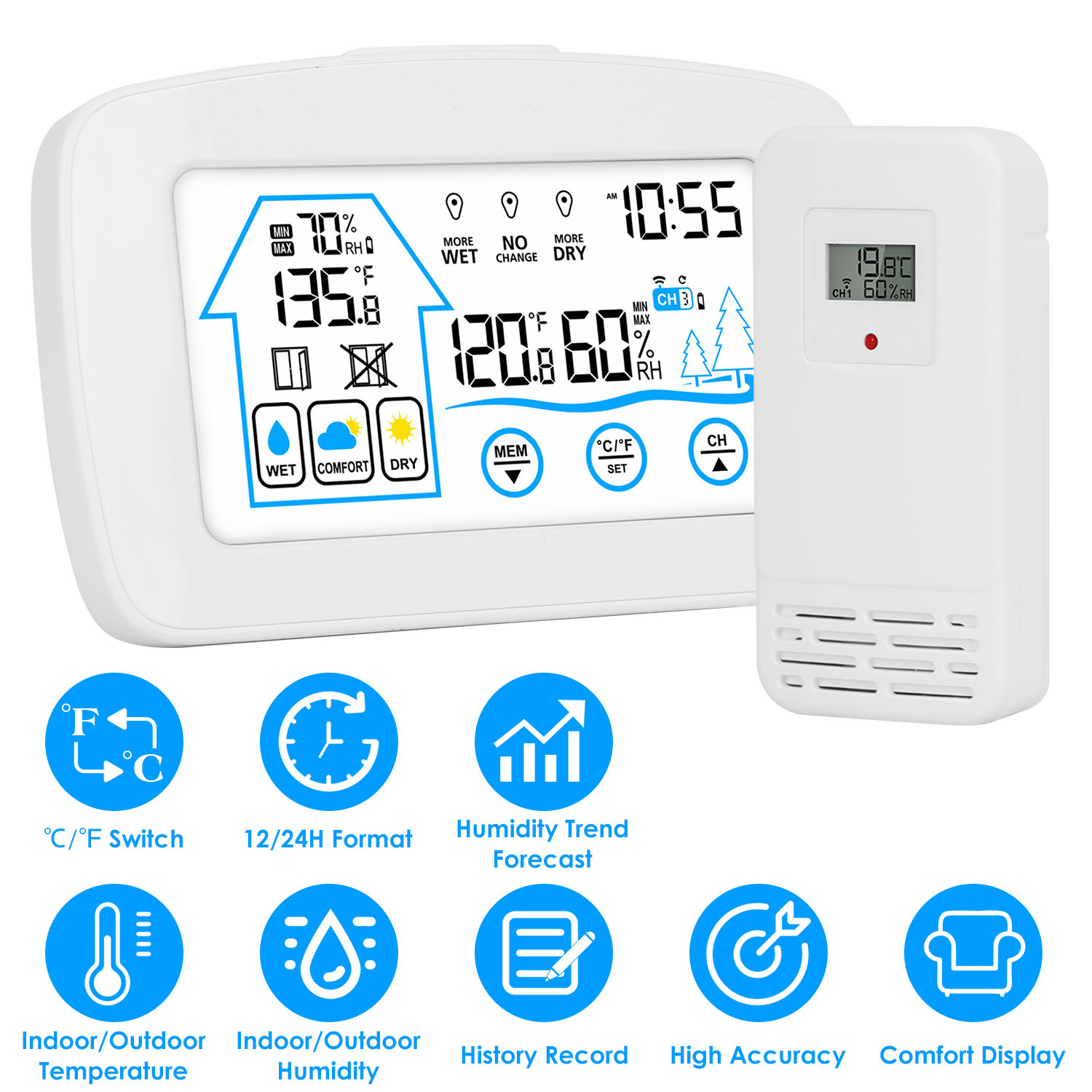 1Pc Wireless Weather Station With Clock 196FT Range Indoor Outdoor Thermometer Sensor Temperature And Humidity Monitor Forecast Battery Powered Backlight Display$39.99View on Mallflare
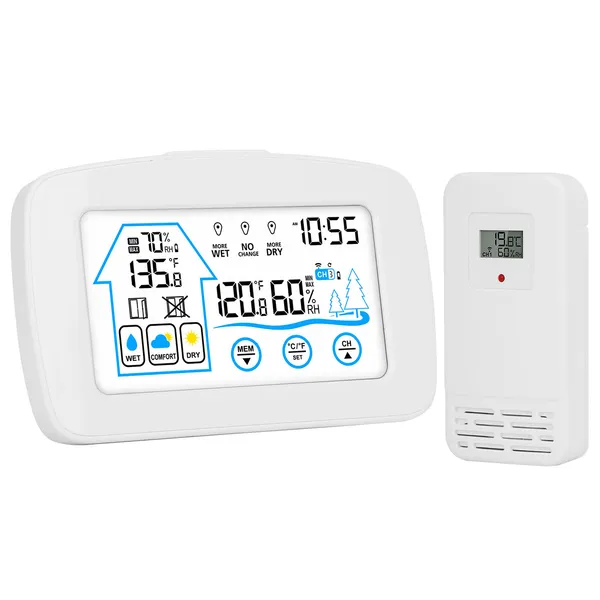 Wireless Weather Station With Clock 196FT Range Indoor Outdoor Thermometer Sensor Temperature And Humidity Monitor Forecast Battery Powered Backlight Display$43.99View on Mallflare
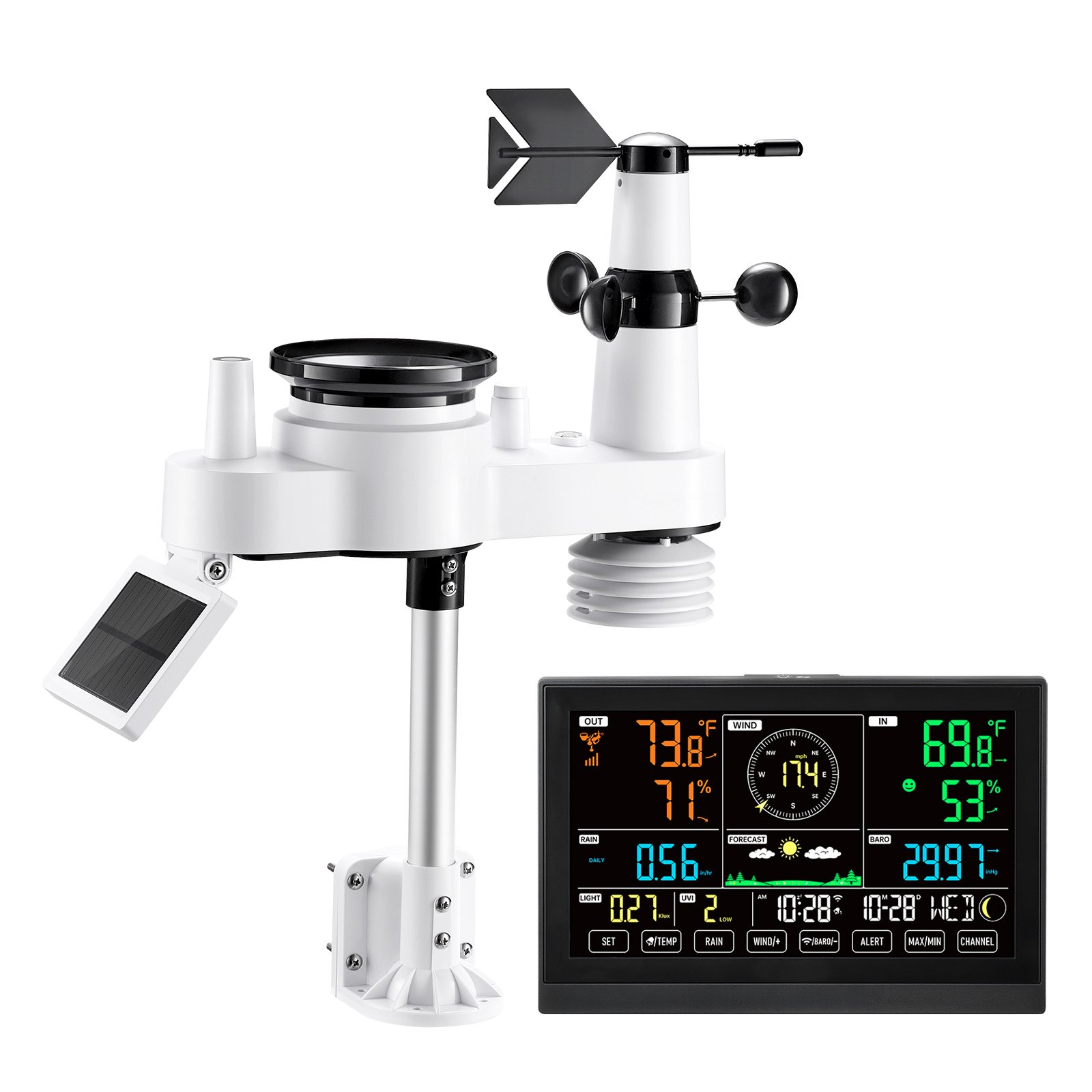 7-in-1 Wi-Fi Weather Station With APP, 7.5-Inch VA Display, Wireless Solar Powered Outdoor Sensor, Rain Gauge, Indoor For Forecast, Wind Speed, Temperature, Humidity, Rainfall$105.99View on Mallflare
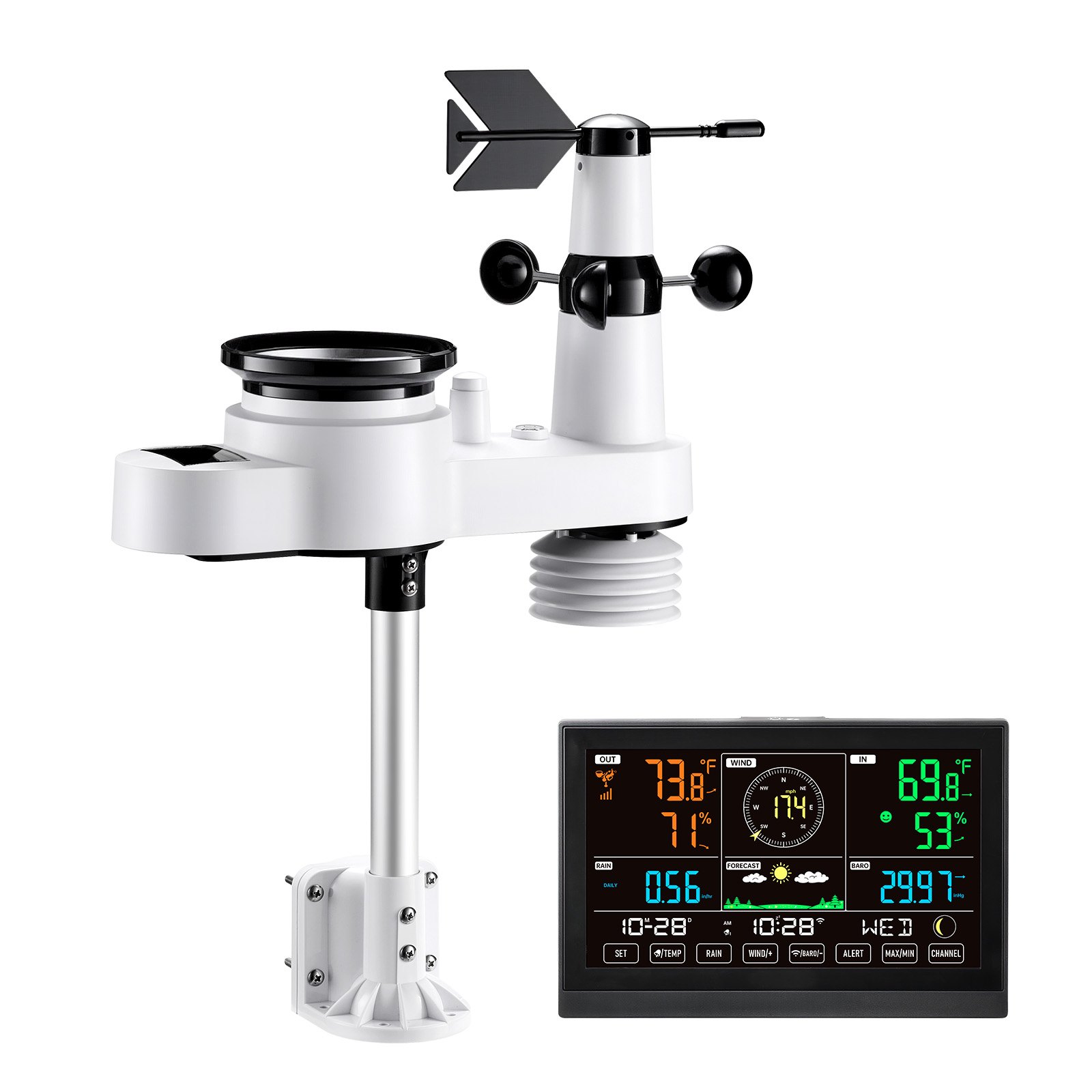 5-in-1 Wi-Fi Weather Station, 7.5-Inch VA Display, Wireless Solar Powered Outdoor Sensor, Rain Gauge, Indoor For Forecast, Wind Speed Direction, Temperature, Humidity, Rainfall$105.99View on Mallflare
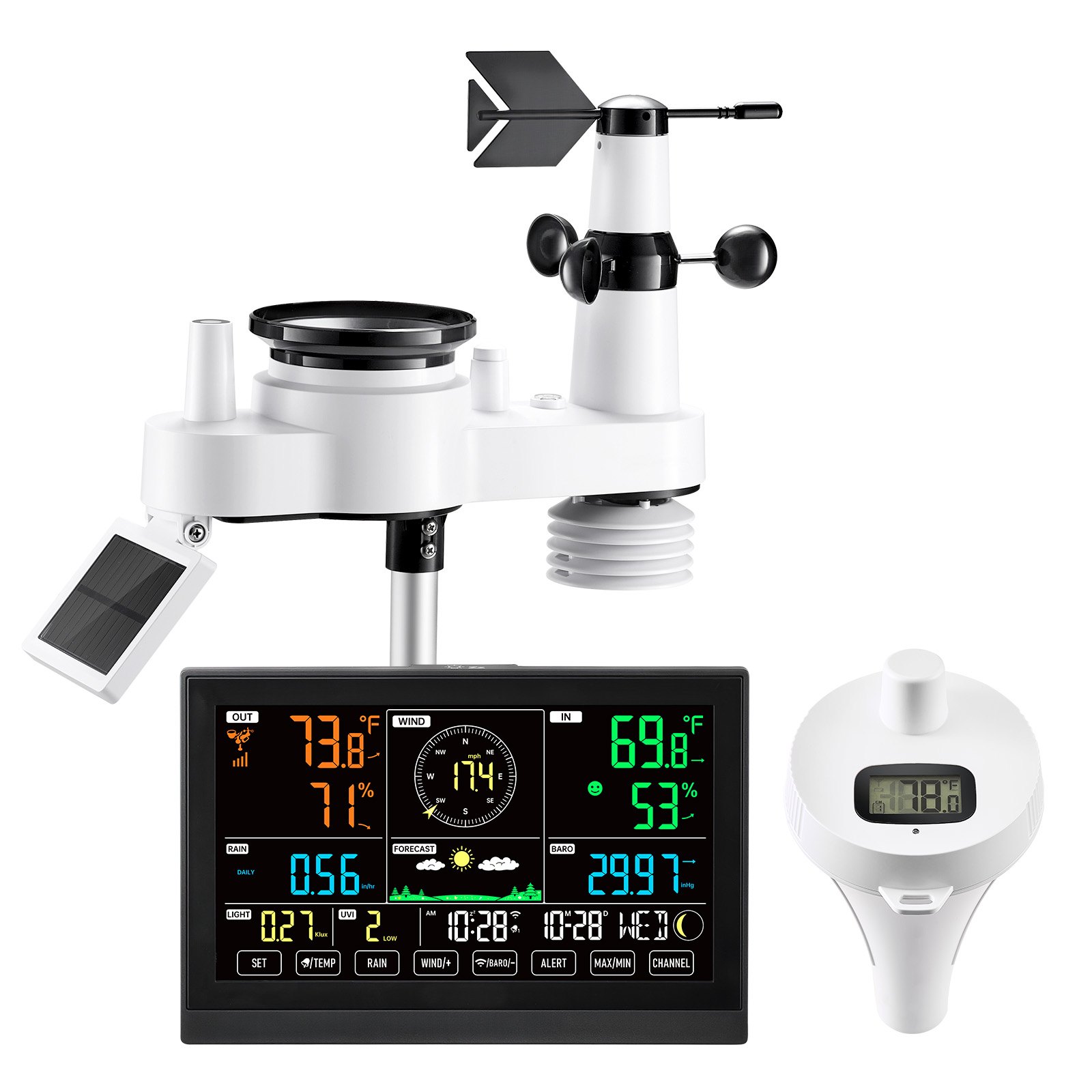 7-in-1 Wi-Fi Weather Station With APP, 7.5 In Display, Wireless Solar Powered Outdoor Sensor, Pool Thermometer, Rain Gauge, Indoor For Forecast, Wind Speed, Temperature$111.99View on Mallflare
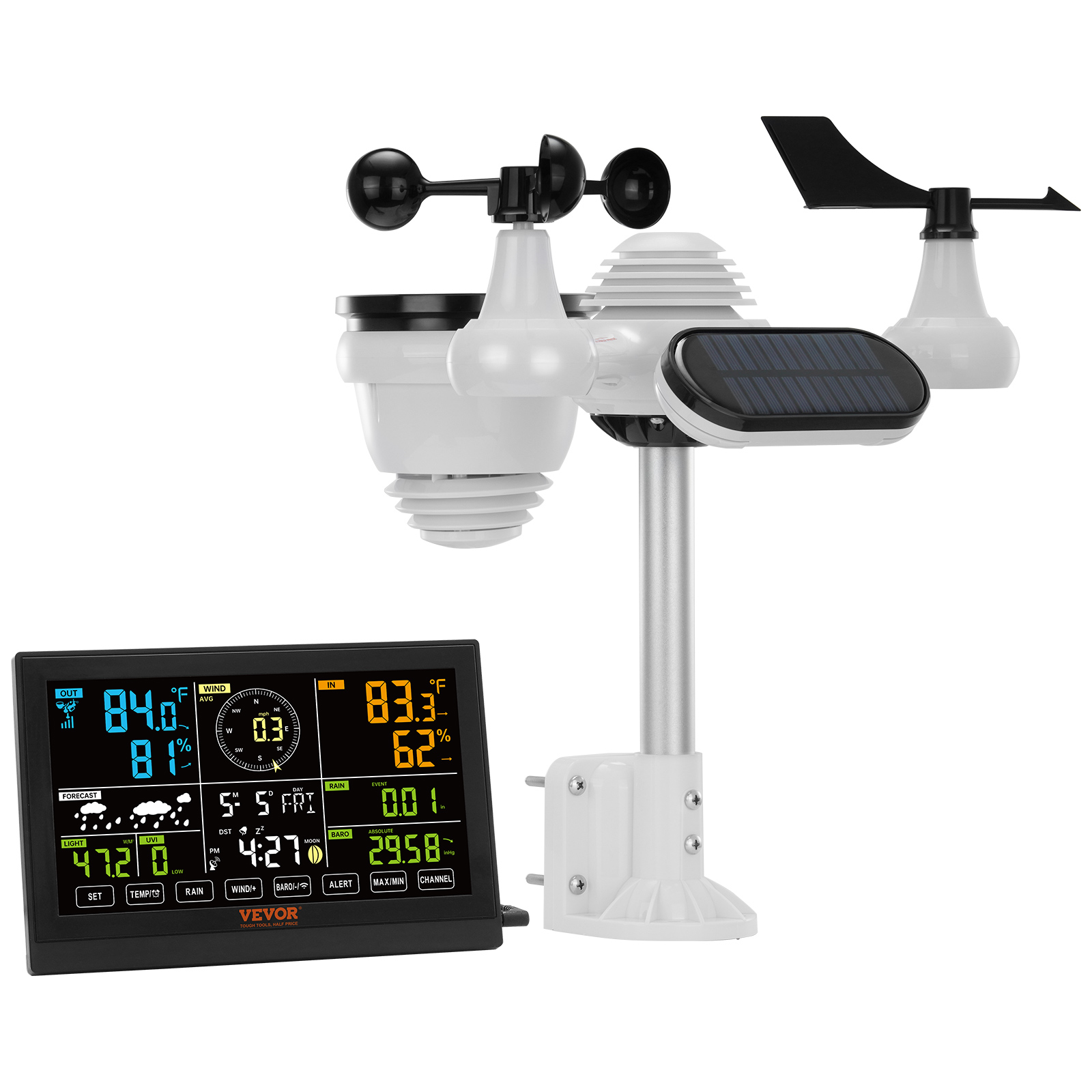 VEVOR 7-in-1 Wireless Weather Station, 7.5 In Large Color Display, Digital Home Indoor Outdoor, For Temperature Humidity Wind Speed,Direction Rain UV, With Forecast Data, Alarm, Alerts$112.99View on Mallflare
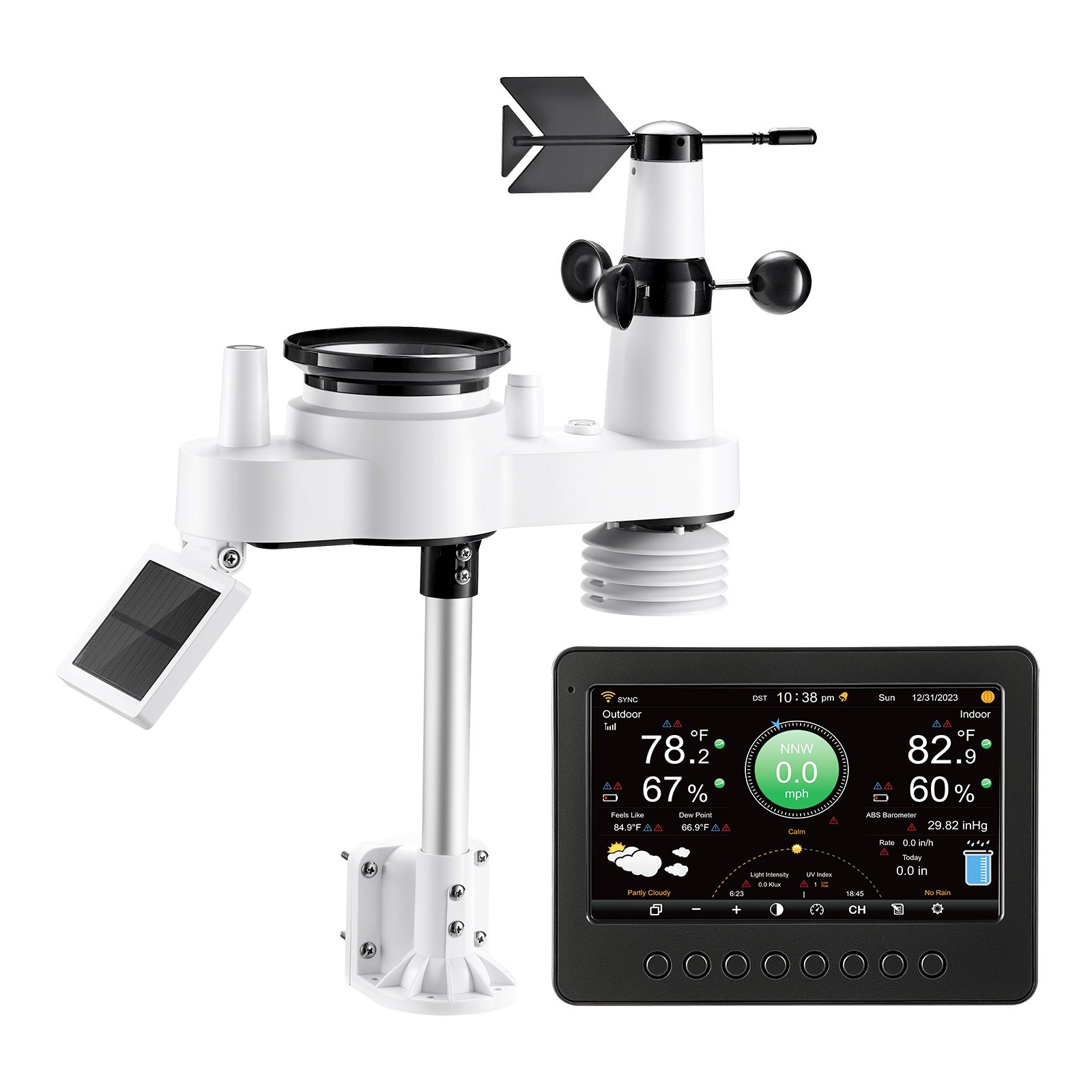 7-in-1 Wi-Fi Weather Station, 7-Inch TFT Display, Wireless Solar Powered Outdoor Sensor, Rain Gauge, Indoor For Forecast, Wind Speed Direction, Temperature, Humidity, Rainfall$146.99View on Mallflare
Highlights
- Integrated 7-in-1 sensor arrays combine wind speed, wind direction, rain, UV, temperature, and humidity in one mast-mounted unit, eliminating separate sensor pairing and sync failures.
- Radio link matters more than display size: 433 MHz or 868 MHz fixed-frequency transmission reaches 100-300 ft through walls, while 2.4 GHz Wi-Fi is for internet upload only, not sensor-to-console.
- Solar-assisted sensor arrays with a backup battery maintain wind and rain readings through winter, whereas battery-only outdoor sensors lose accuracy and drop out below freezing.
- Console class separates tiers: color TFT consoles show trends, alerts, and historical graphs; monochrome LCD consoles show current readings only and cannot log or export data.
Best use cases
- Best fit: a home gardener or hobbyist wanting wind, rain, UV, and temperature on one screen should pick a 7-in-1 solar sensor array with a color console and 200+ ft range.
- Best fit: a buyer who only needs indoor/outdoor temperature and humidity for a bedroom or greenhouse should pick a compact wireless thermometer-hygrometer kit and skip wind/rain sensors entirely.
- Wrong fit: anyone expecting phone access or long-term data logging must choose a Wi-Fi or app-connected station; a basic RF console-only kit cannot upload or store history.
- Wrong fit: exposed coastal or mountain rooftops need a mast-mounted array rated for high wind; a tabletop all-in-one unit will tip or under-read in gusts above 30 mph.
Buying tips
- Match transmission range to your install: sensor-to-console distance through two exterior walls typically cuts rated range by 50%, so choose a unit rated at least 2x your actual distance.
- For wind accuracy, mount the anemometer at 30-33 ft above ground on a rigid mast; below 10 ft, surrounding buildings and trees distort readings by 20-40%.
- Pick solar-assisted sensor arrays over pure battery units if you need continuous rain and wind data; battery-only sensors commonly drop below -4°F (-20°C).
- Choose a console with at least 7.5 in color display and history graphing if you want trend analysis; basic LCD units show only instantaneous values with no logging.
Specs
| Sensor Array | 7-in-1 integrated vs temp/humidity only |
|---|---|
| Radio Link | 433/868 MHz RF, 100-300 ft line-of-sight |
| Outdoor Power | Solar + backup battery vs battery-only |
| Console Display | Color TFT w/ history vs mono LCD |
Related searches
What to check before buying
- Measure the sensor-to-console distance and count intervening walls; confirm the rated RF range is at least double that distance for reliable 433/868 MHz reception.
- Confirm mounting: an integrated wind/rain array needs a 1-1.25 in diameter mast and clear 30 ft height; tabletop kits only suit sheltered patios.
- Check outdoor sensor power: solar panel plus backup battery is required for sub-freezing climates; battery-only units fail in winter.
- Verify console power and placement: most color consoles use AC adapter with battery backup, so confirm a nearby outlet or plan for battery-only operation.
FAQ
Data sources: eBay / Amazon listings and product attribute feeds. Updated Nov 28, 2026.
Some links on this page are affiliate links. If you buy after clicking one, we may earn a commission at no extra cost to you. This does not change which products appear here or their order. Affiliate disclosure.