
Photos from current listings. Actual item, color, and included accessories may vary.
Weather Station Home Use Buying Guide
A home weather station pairs an outdoor sensor array with an indoor display to report temperature, humidity, wind, rain, and pressure. The core trade-off is sensor completeness and wireless range versus display size and smart connectivity. Choose a 7-in-1 array with a color console for full local weather data, or a basic thermo-hygrometer for indoor/outdoor temperature only.
Median $105.99
Key takeaways
- 7-in-1 arrays measure temperature, humidity, wind speed, wind direction, rainfall, UV index, and light in one mast-mounted unit.
- Wireless range typically spans 100-300 ft (30-100 m) line-of-sight; 196 ft (60 m) is common for basic thermo-hygrometer kits.
- Outdoor sensor power comes from 2-3 AA lithium batteries or a small solar panel; solar versions avoid frequent battery swaps.
At a glance
- Category
- Environmental & Indoor Air Measurement
- Last updated
- Nov 28, 2026
Current offers
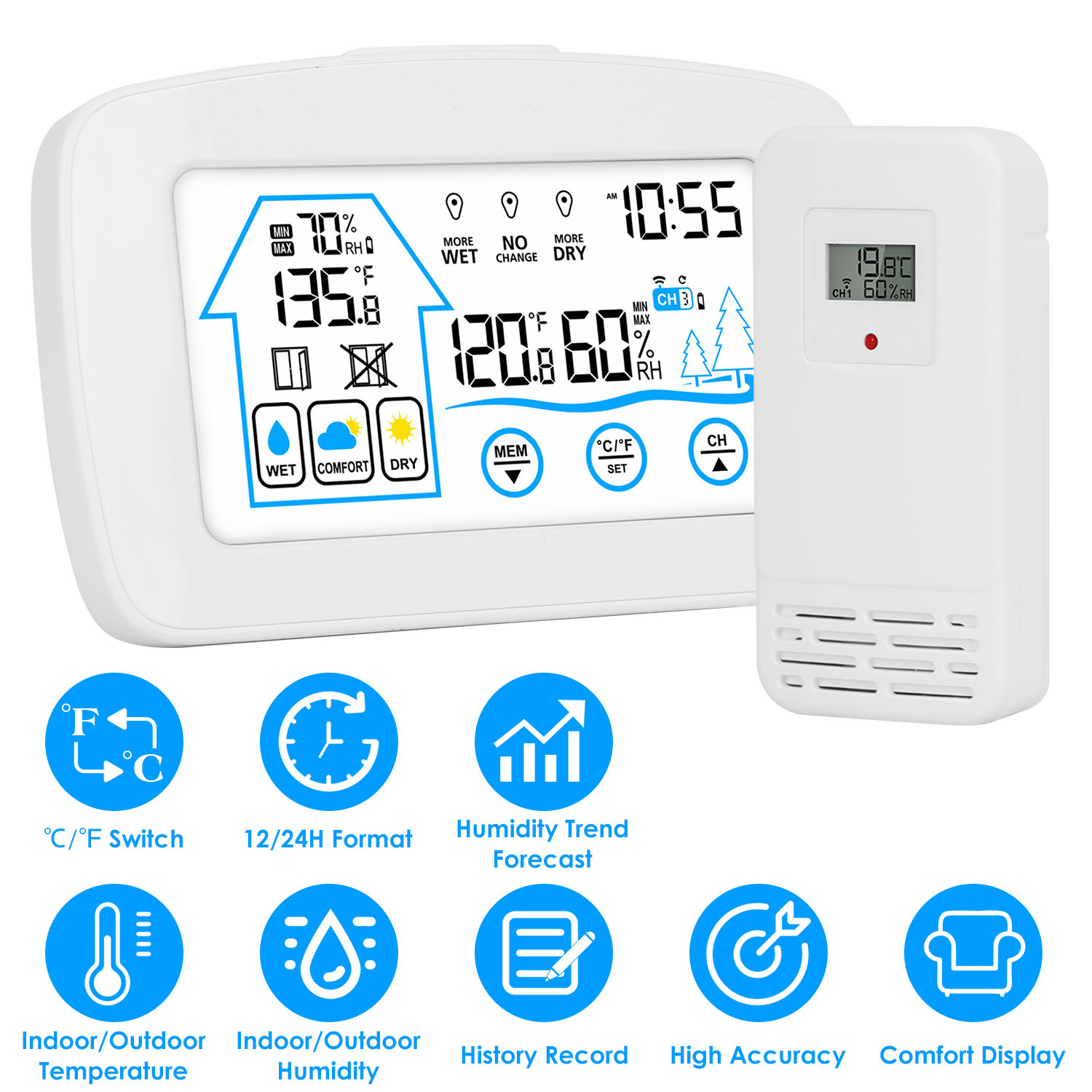 1Pc Wireless Weather Station With Clock 196FT Range Indoor Outdoor Thermometer Sensor Temperature And Humidity Monitor Forecast Battery Powered Backlight Display$39.99View on Mallflare
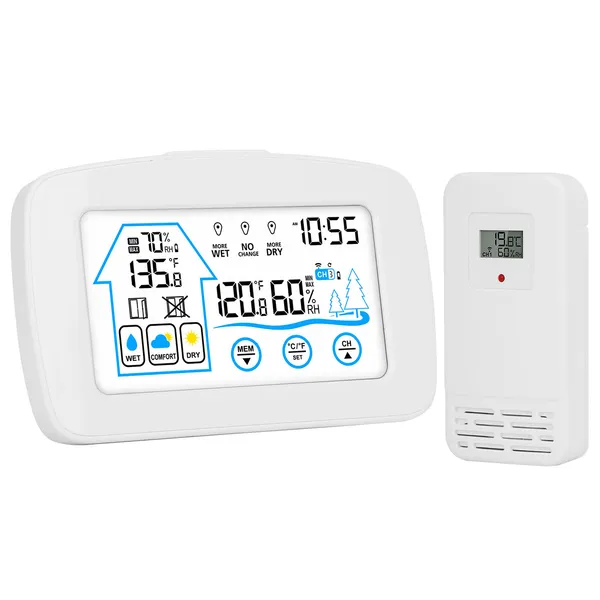 Wireless Weather Station With Clock 196FT Range Indoor Outdoor Thermometer Sensor Temperature And Humidity Monitor Forecast Battery Powered Backlight Display$43.99View on Mallflare
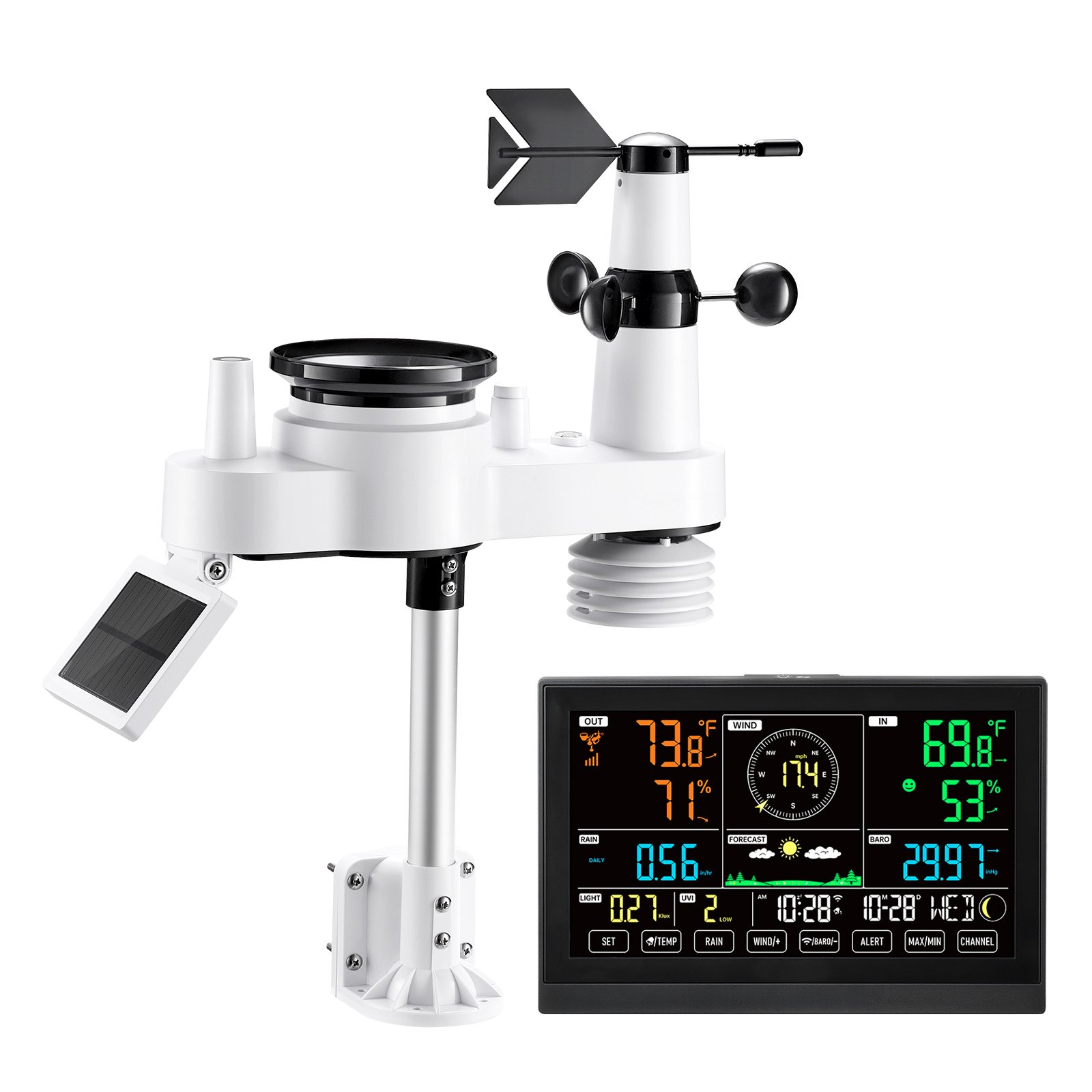 7-in-1 Wi-Fi Weather Station With APP, 7.5-Inch VA Display, Wireless Solar Powered Outdoor Sensor, Rain Gauge, Indoor For Forecast, Wind Speed, Temperature, Humidity, Rainfall$105.99View on Mallflare
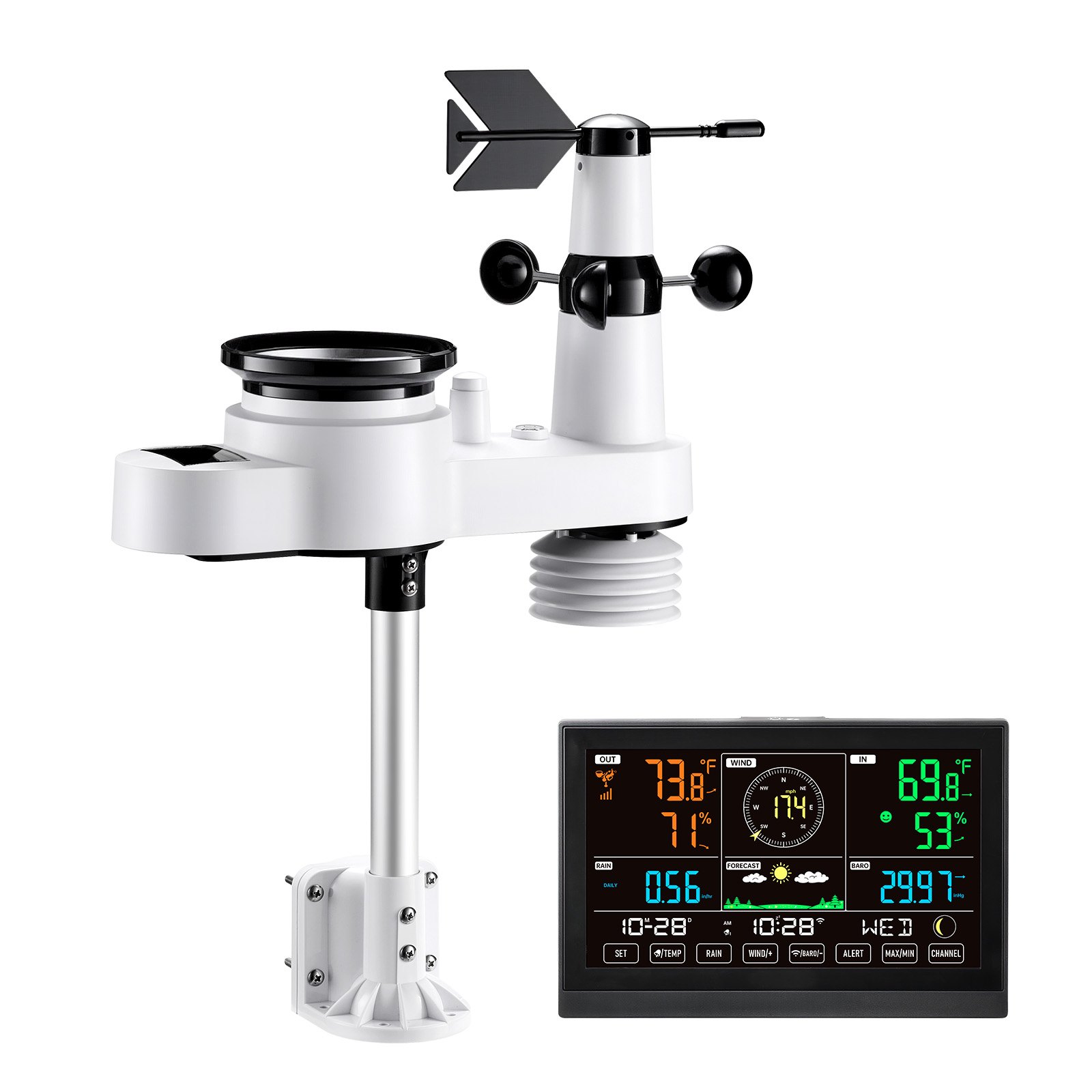 5-in-1 Wi-Fi Weather Station, 7.5-Inch VA Display, Wireless Solar Powered Outdoor Sensor, Rain Gauge, Indoor For Forecast, Wind Speed Direction, Temperature, Humidity, Rainfall$105.99View on Mallflare
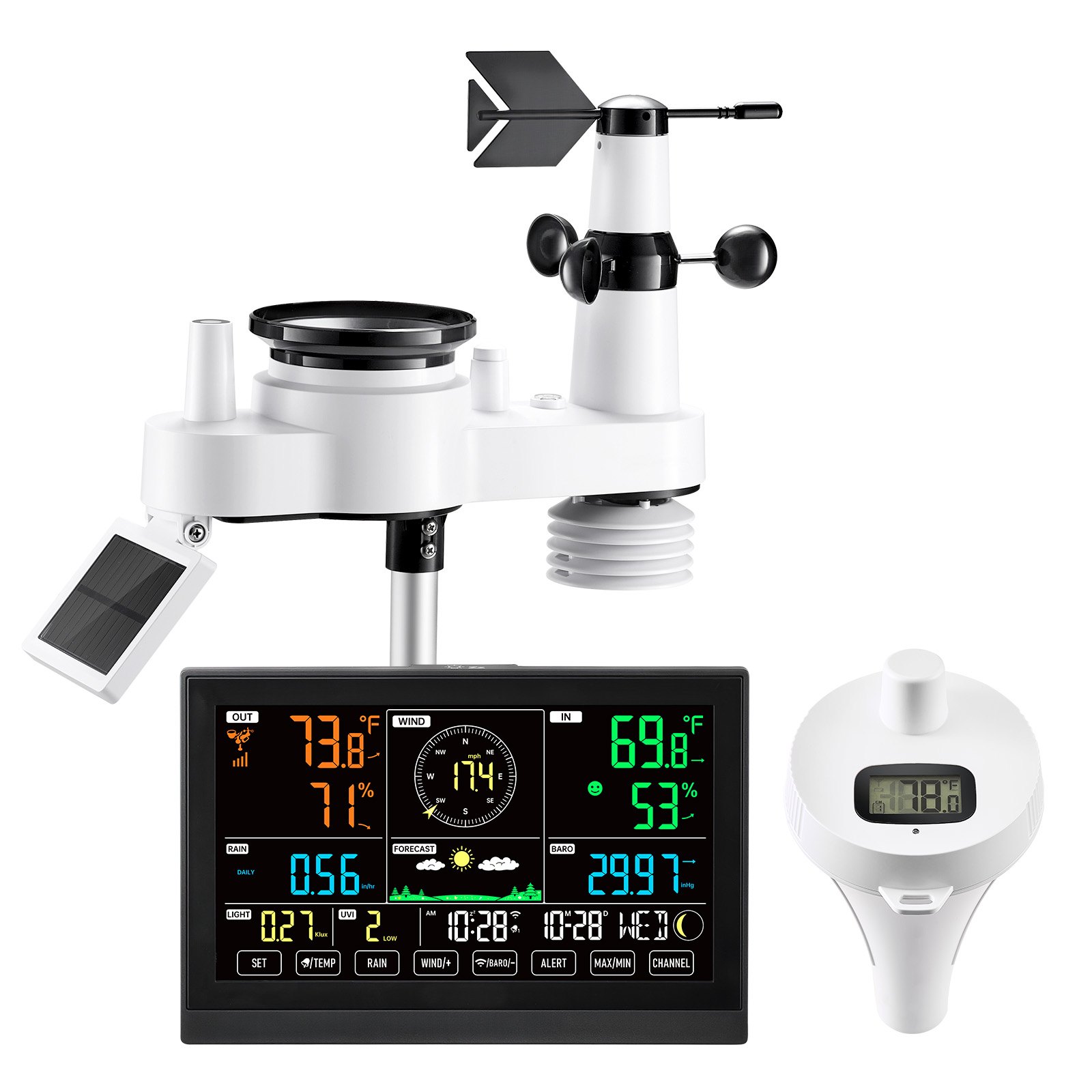 7-in-1 Wi-Fi Weather Station With APP, 7.5 In Display, Wireless Solar Powered Outdoor Sensor, Pool Thermometer, Rain Gauge, Indoor For Forecast, Wind Speed, Temperature$111.99View on Mallflare
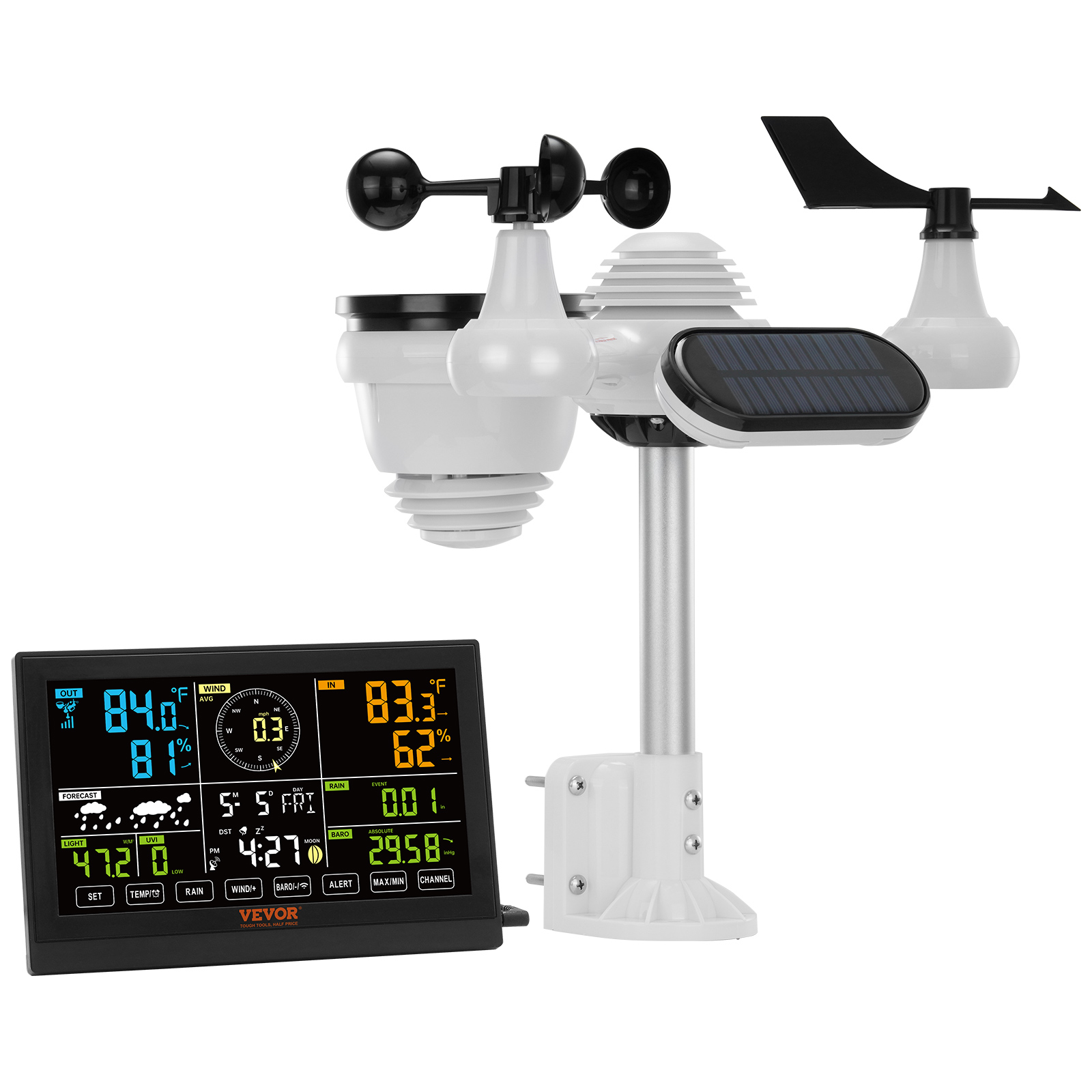 VEVOR 7-in-1 Wireless Weather Station, 7.5 In Large Color Display, Digital Home Indoor Outdoor, For Temperature Humidity Wind Speed,Direction Rain UV, With Forecast Data, Alarm, Alerts$112.99View on Mallflare
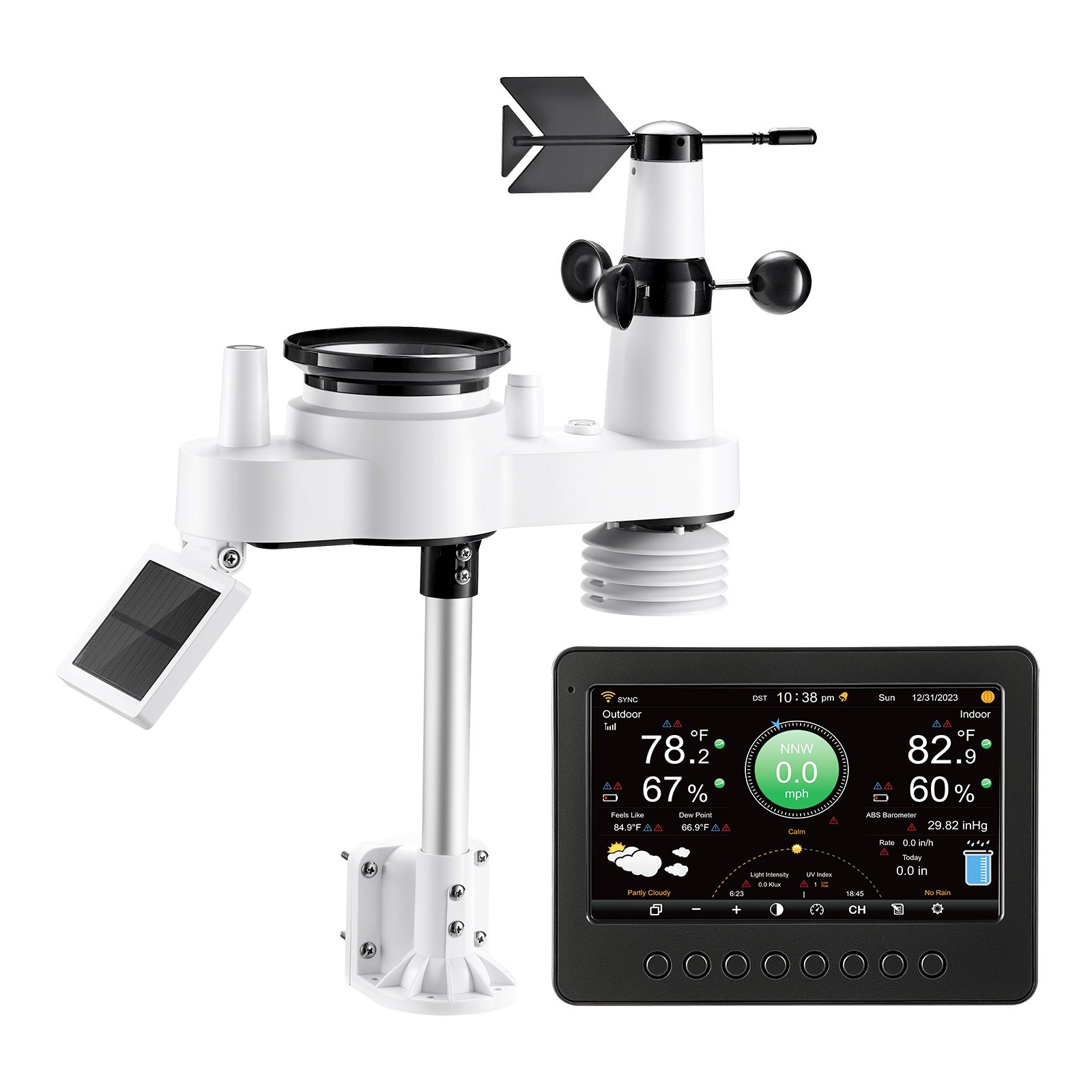 7-in-1 Wi-Fi Weather Station, 7-Inch TFT Display, Wireless Solar Powered Outdoor Sensor, Rain Gauge, Indoor For Forecast, Wind Speed Direction, Temperature, Humidity, Rainfall$146.99View on Mallflare
Highlights
- 7-in-1 arrays measure temperature, humidity, wind speed, wind direction, rainfall, UV index, and light in one mast-mounted unit.
- Wireless range typically spans 100-300 ft (30-100 m) line-of-sight; 196 ft (60 m) is common for basic thermo-hygrometer kits.
- Outdoor sensor power comes from 2-3 AA lithium batteries or a small solar panel; solar versions avoid frequent battery swaps.
- Color consoles with 7.5 in displays show full graphs and alerts; basic LCD units show only temperature/humidity and forecast icons.
Best use cases
- Best fit: a 7-in-1 color station for gardeners, farmers, or weather enthusiasts who need wind, rain, and UV data for irrigation or planting decisions.
- Best fit: a basic wireless thermo-hygrometer for apartment dwellers who only want indoor/outdoor temperature and humidity on a compact display.
- Wrong fit: a professional-grade station with metal anemometer and datalogger for casual home use—skip it unless you need research-grade accuracy and PC logging.
- Wrong fit: a single indoor air quality monitor (CO2/VOC) when you actually need outdoor weather data—these are different product categories.
Buying tips
- Match wireless range to your property: 196 ft covers most single-family homes, but 300 ft is safer for detached garages or large yards.
- Choose solar-assisted outdoor sensors if the array is exposed to direct sun; they reduce battery changes to once every 1-2 years.
- Verify the console supports the same sensor frequency (433 MHz or 868 MHz) and protocol if you plan to add extra sensors later.
- For wind accuracy, mount the anemometer at least 6-10 ft above the roofline and away from obstructions like trees or walls.
Specs
| Sensor Array | 7-in-1 vs thermo-hygrometer only |
|---|---|
| Wireless Range | 100-300 ft line-of-sight |
| Outdoor Power | AA lithium or solar-assisted |
| Display Type | Color LCD 7.5 in vs basic LCD |
Related searches
What to check before buying
- Measure the distance from your planned indoor display location to the outdoor mounting spot—stay within 80% of the rated wireless range.
- Confirm the outdoor sensor is rated for your climate: IPX4 or better for rain, and operating range down to -40°F/-40°C for cold winters.
- Check that the console can be wall-mounted or stood on a shelf, and that its power adapter (if included) matches your outlet voltage.
- Decide if you need a companion app or smart-home integration (Wi-Fi/Bluetooth); basic stations are stand-alone only.
FAQ
Data sources: eBay / Amazon listings and product attribute feeds. Updated Nov 28, 2026.
Some links on this page are affiliate links. If you buy after clicking one, we may earn a commission at no extra cost to you. This does not change which products appear here or their order. Affiliate disclosure.