
Photos from current listings. Actual item, color, and included accessories may vary.
Weather Station With Rain Gauge Buying Guide
A weather station with a rain gauge combines outdoor sensors (anemometer, wind vane, thermo-hygrometer, and a tipping-bucket or ultrasonic rain collector) with an indoor display or app to track hyperlocal conditions. The core trade-off is sensor construction and wireless protocol: cheap all-in-one units use unshielded thermistors and fragile tipping buckets that drift or jam, while modular or ultrasonic stations use shielded radiation shields and solid-state rain sensing for long-term accuracy. The decision rule is simple: buy a station with a separate radiation shield and a user-serviceable rain bucket if you need reliable rainfall totals; skip sealed all-in-one pods if you plan to rely on rain data for irrigation or records.
Median $108.99
Key takeaways
- Rain sensing splits into tipping-bucket (mechanical, 0.2–0.3 mm per tip, needs debris clearing) versus ultrasonic/haptic (no moving parts, higher cost, sensitive to vibration).
- Wireless range and protocol determine reliability: 868/915 MHz sub-GHz links reach 100–300 m through walls; 2.4 GHz Wi-Fi sensors drop out beyond 30–50 m and congested bands.
- Outdoor sensor arrays with a proper radiation shield (louvered or fan-aspirated) read 1–3 °C closer to true air temperature than unshielded all-in-one pods in direct sun.
At a glance
- Category
- Environmental & Indoor Air Measurement
- Last updated
- Nov 28, 2026
Current offers
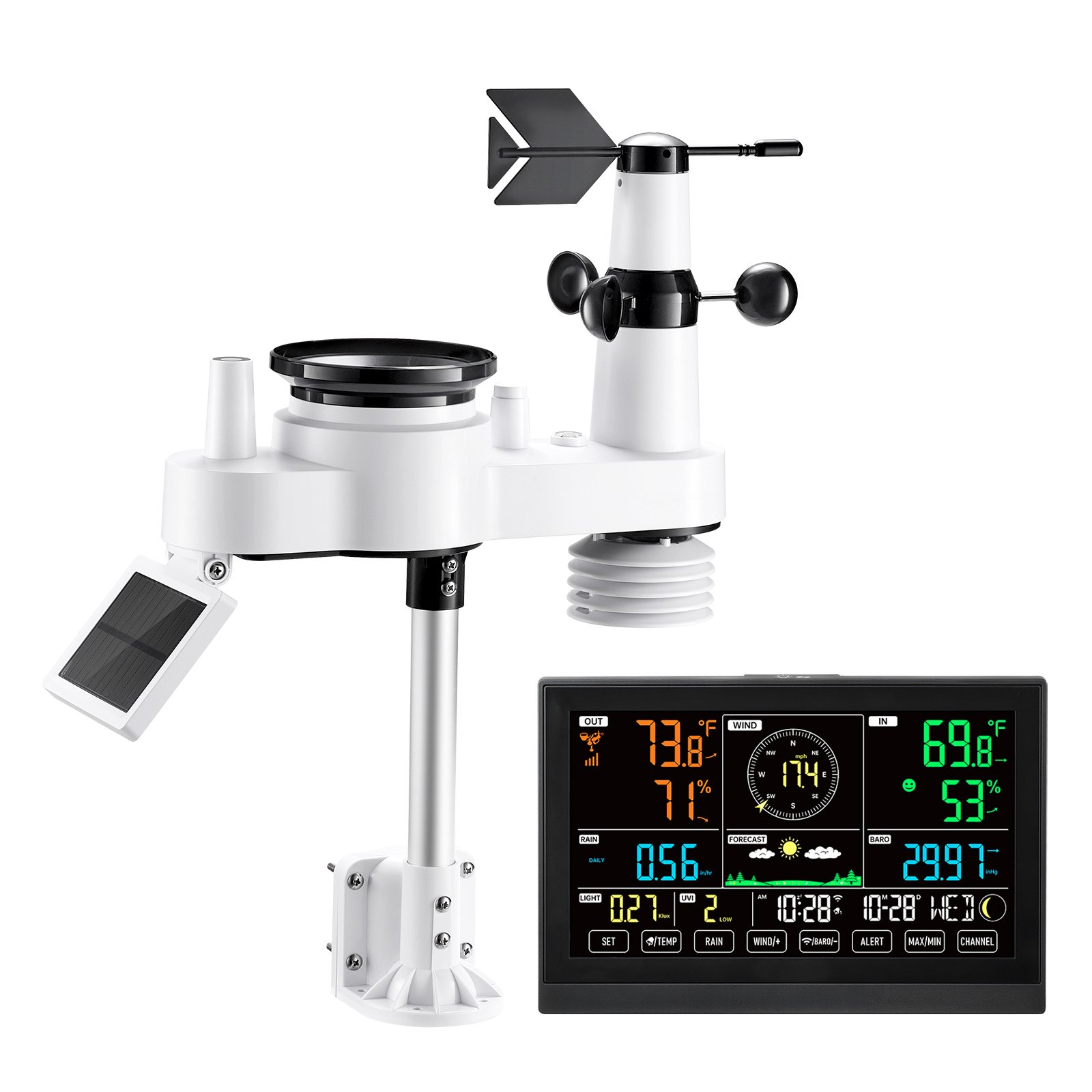 7-in-1 Wi-Fi Weather Station With APP, 7.5-Inch VA Display, Wireless Solar Powered Outdoor Sensor, Rain Gauge, Indoor For Forecast, Wind Speed, Temperature, Humidity, Rainfall$105.99View on Mallflare
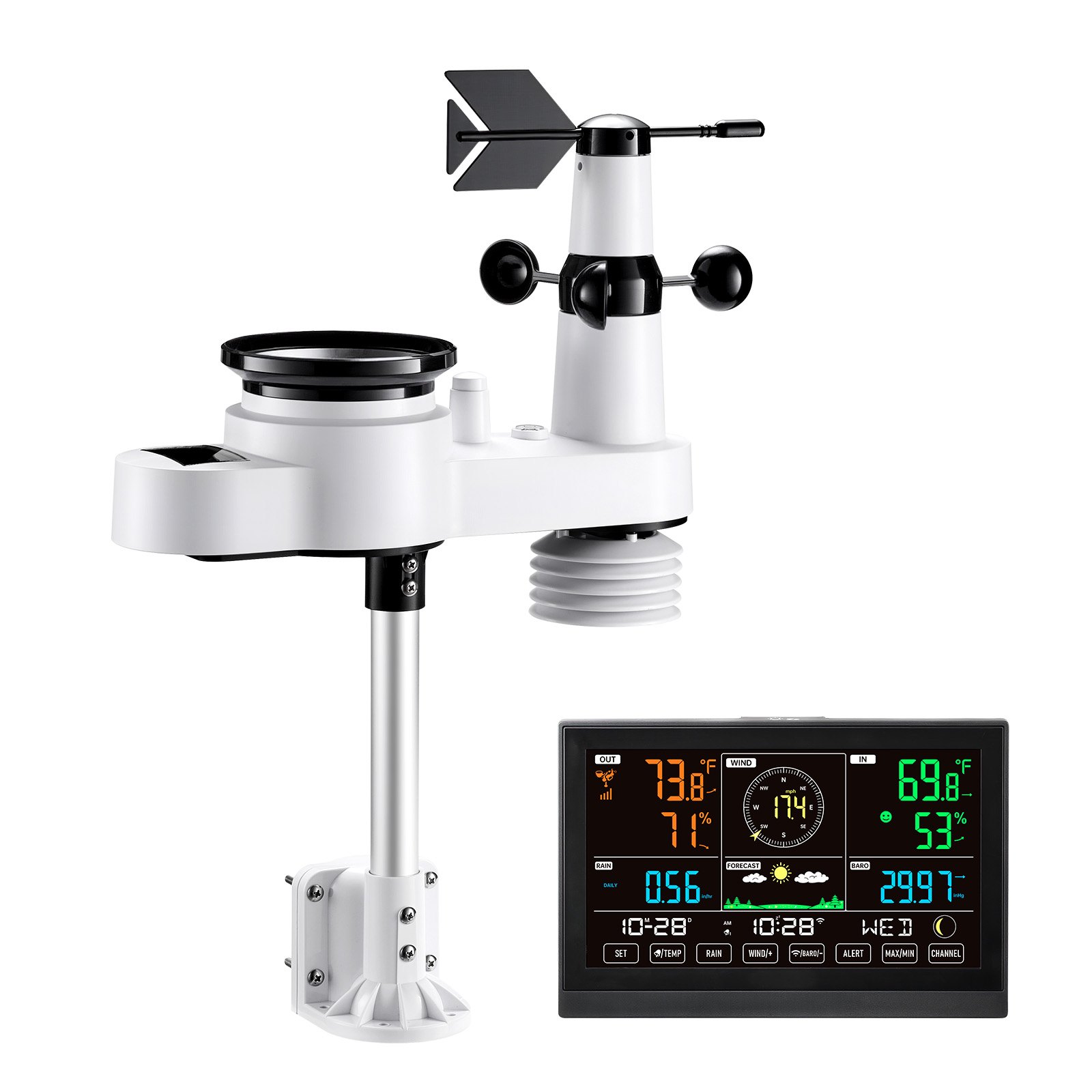 5-in-1 Wi-Fi Weather Station, 7.5-Inch VA Display, Wireless Solar Powered Outdoor Sensor, Rain Gauge, Indoor For Forecast, Wind Speed Direction, Temperature, Humidity, Rainfall$105.99View on Mallflare
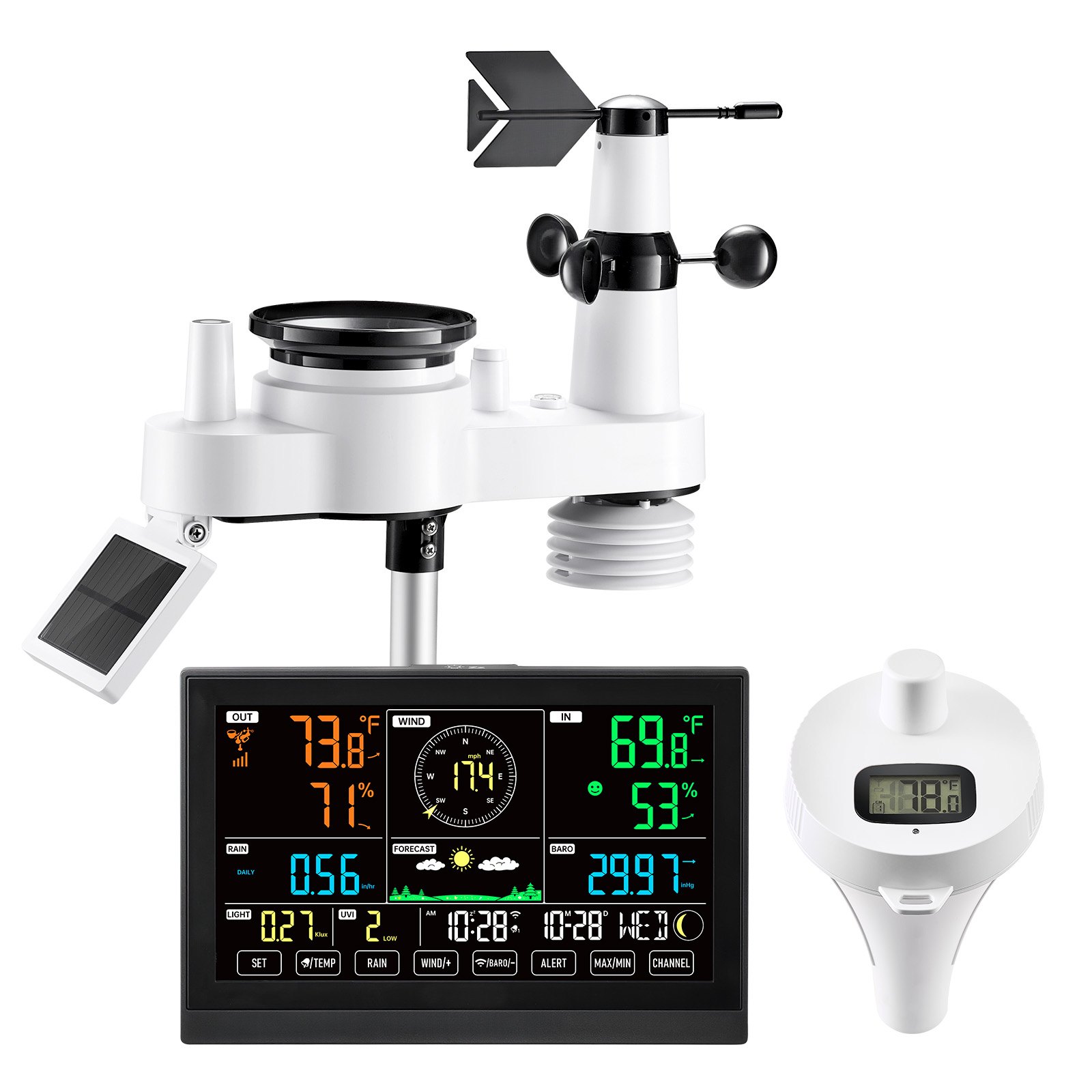 7-in-1 Wi-Fi Weather Station With APP, 7.5 In Display, Wireless Solar Powered Outdoor Sensor, Pool Thermometer, Rain Gauge, Indoor For Forecast, Wind Speed, Temperature$111.99View on Mallflare
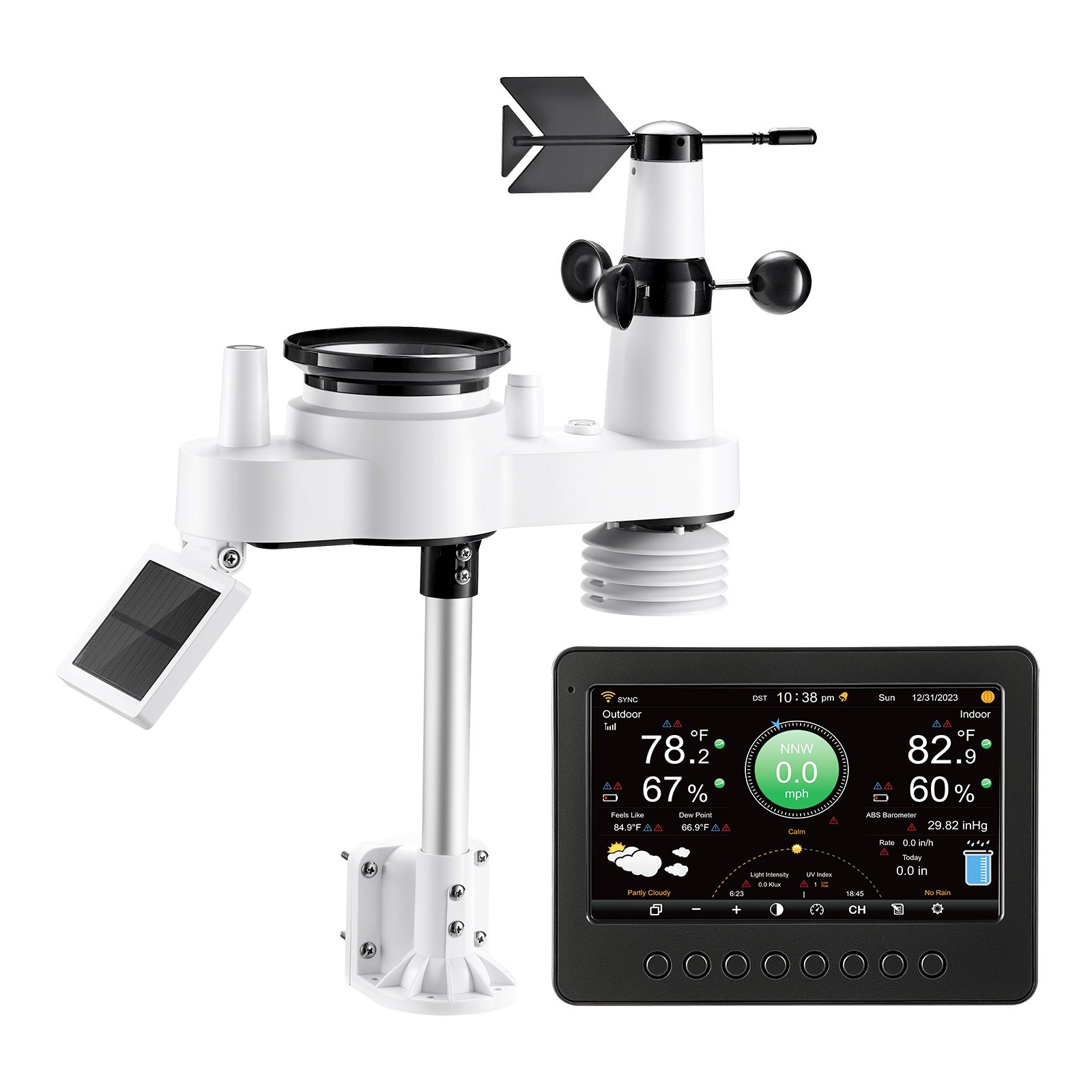 7-in-1 Wi-Fi Weather Station, 7-Inch TFT Display, Wireless Solar Powered Outdoor Sensor, Rain Gauge, Indoor For Forecast, Wind Speed Direction, Temperature, Humidity, Rainfall$146.99View on Mallflare
Highlights
- Rain sensing splits into tipping-bucket (mechanical, 0.2–0.3 mm per tip, needs debris clearing) versus ultrasonic/haptic (no moving parts, higher cost, sensitive to vibration).
- Wireless range and protocol determine reliability: 868/915 MHz sub-GHz links reach 100–300 m through walls; 2.4 GHz Wi-Fi sensors drop out beyond 30–50 m and congested bands.
- Outdoor sensor arrays with a proper radiation shield (louvered or fan-aspirated) read 1–3 °C closer to true air temperature than unshielded all-in-one pods in direct sun.
- Power architecture decides maintenance: solar-panel-plus-supercapacitor arrays run indefinitely in daylight, while AA-cell-only sensors need replacement every 12–24 months.
Best use cases
- Best fit: a gardener or smallholder who needs rainfall totals for irrigation decisions — pick a modular station with a removable tipping bucket, radiation shield, and sub-GHz link to a base display. Skip sealed Wi-Fi pods.
- Best fit: a homeowner tracking local conditions for daily planning — an all-in-one Wi-Fi station with app logging is adequate if the sensor sits within 30 m of the router and rain data is secondary. Skip it if you need research-grade rainfall.
- Best fit: a weather enthusiast or citizen-science contributor — choose a station with an API, 1-minute update interval, and separate wind/rain modules to feed networks like Weather Underground. Skip closed-appliance stations with no data export.
Buying tips
- Match rain resolution to use: 0.2 mm tipping buckets suit hobby records; 0.1 mm or weighing gauges cost more but reduce quantization error for low-rainfall climates.
- Measure your mounting run before buying: sub-GHz (868/915 MHz) stations tolerate 100–300 m line-of-sight; Wi-Fi sensors need the router within roughly 30–50 m through one or two walls.
- Insist on a separate radiation shield or fan-aspirated sensor for outdoor temperature; unshielded pods overread by several degrees in summer sun, corrupting heat-index and dew-point records.
- Confirm the rain bucket is serviceable: a removable funnel and debris screen let you clear leaves and spider webs that cause undercounting or complete blockage within a season.
Specs
| Rain Sensor Type | Tipping bucket vs ultrasonic/haptic |
|---|---|
| Wireless Protocol | Sub-GHz 868/915 MHz vs 2.4 GHz Wi-Fi |
| Outdoor Temp Shield | Louvered / fan-aspirated vs unshielded |
| Sensor Power | Solar + supercap vs AA battery-only |
Related searches
What to check before buying
- Measure the distance and wall count between your intended outdoor sensor spot and the indoor display or router; compare with the station's stated wireless range and protocol.
- Verify mounting hardware: most stations need a 25–35 mm pole or mast, and wind sensors must sit clear of rooflines and trees at roughly 10 m above ground for valid wind readings.
- Check power plan: confirm solar exposure at the sensor site for solar-assisted arrays, or budget AA lithium cells every 12–24 months for battery-only units.
- Confirm the station's data ecosystem: local display only, Wi-Fi app, or API/third-party network upload, and whether firmware and time sync are automatic.
FAQ
Data sources: eBay / Amazon listings and product attribute feeds. Updated Nov 28, 2026.
Some links on this page are affiliate links. If you buy after clicking one, we may earn a commission at no extra cost to you. This does not change which products appear here or their order. Affiliate disclosure.