
Photos from current listings. Actual item, color, and included accessories may vary.
Drywall Moisture Meter Buying Guide
A drywall moisture meter measures percent moisture content (%MC) in gypsum board, joint compound, and framing to confirm a wall is ready to seal, finish, or paint. The core trade-off is between pin-type resistive meters (direct, surface-and-depth readings but leave tiny holes) and pinless capacitive meters (non-destructive but shallow and material-calibration dependent). The decision rule: choose a meter with stated drywall/gypsum calibration, at least 0.1% resolution, and a documented accuracy tolerance; skip generic 2-pin wood meters that lack a gypsum mode or resolution below 1%.
Median $246.98 · New & pre-owned listings
Key takeaways
- Pin-type meters measure resistance between two insulated pins; depth is fixed by pin length (typically 10-20 mm), so they read the board core but leave pinholes that must be filled before painting.
- Pinless meters use a capacitive field that averages roughly the top 20-40 mm of material; they are non-destructive but readings shift with board density and require a gypsum-specific calibration curve.
- Drywall target: gypsum board is considered ready to finish at or below 0.5% MC by ASTM C1396 / C840 guidance; joint compound and framing should be below 12-15% MC depending on species and climate.
At a glance
- Category
- Industrial Gauges & Meters
- Last updated
- Nov 27, 2026
Current offers
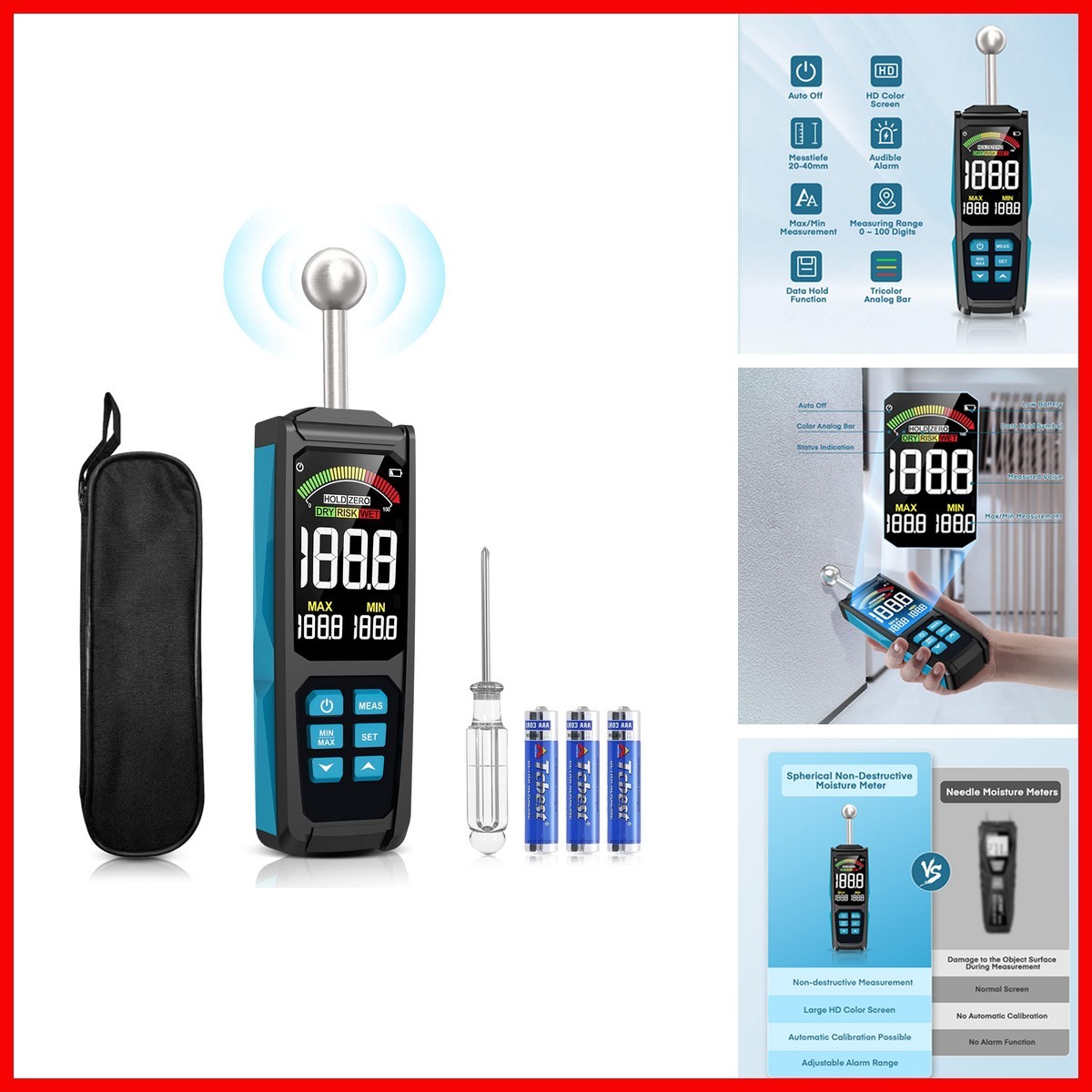 DURFICST WM710A Pinless Moisture Meter Plaster Masonry Concrete Drywall Wood$207.72New · Last checked Nov 24, 2026View on eBay
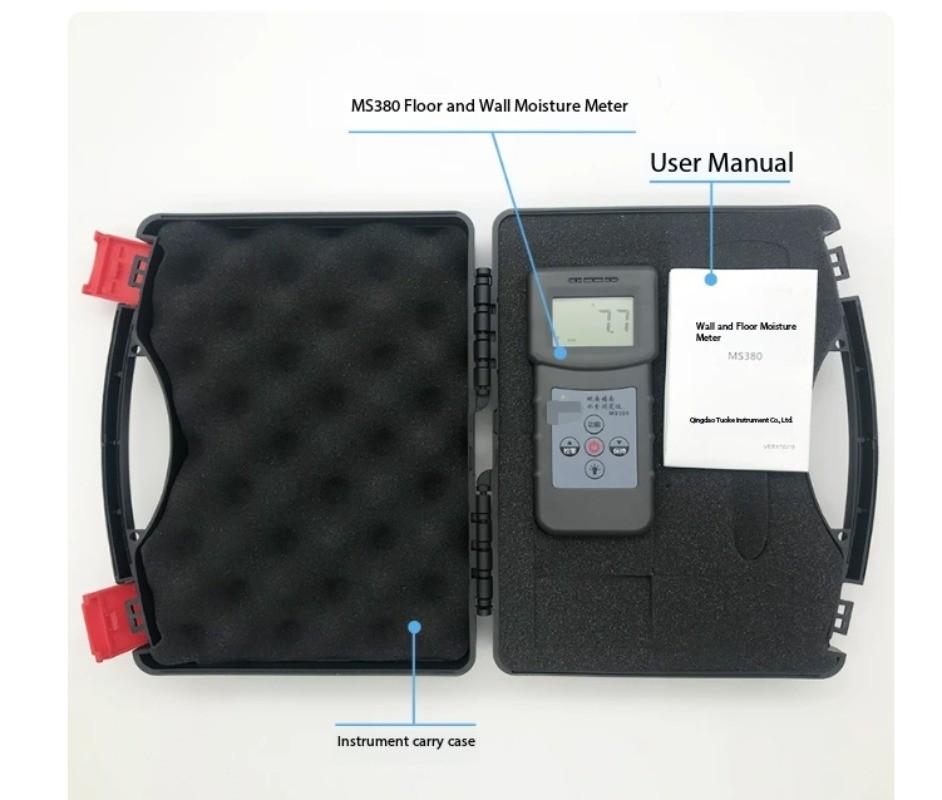 MS380 Wall and Floor Moisture Meter for Floors, Concrete, Marble, and Drywall$232.70New · Last checked Nov 24, 2026View on eBay
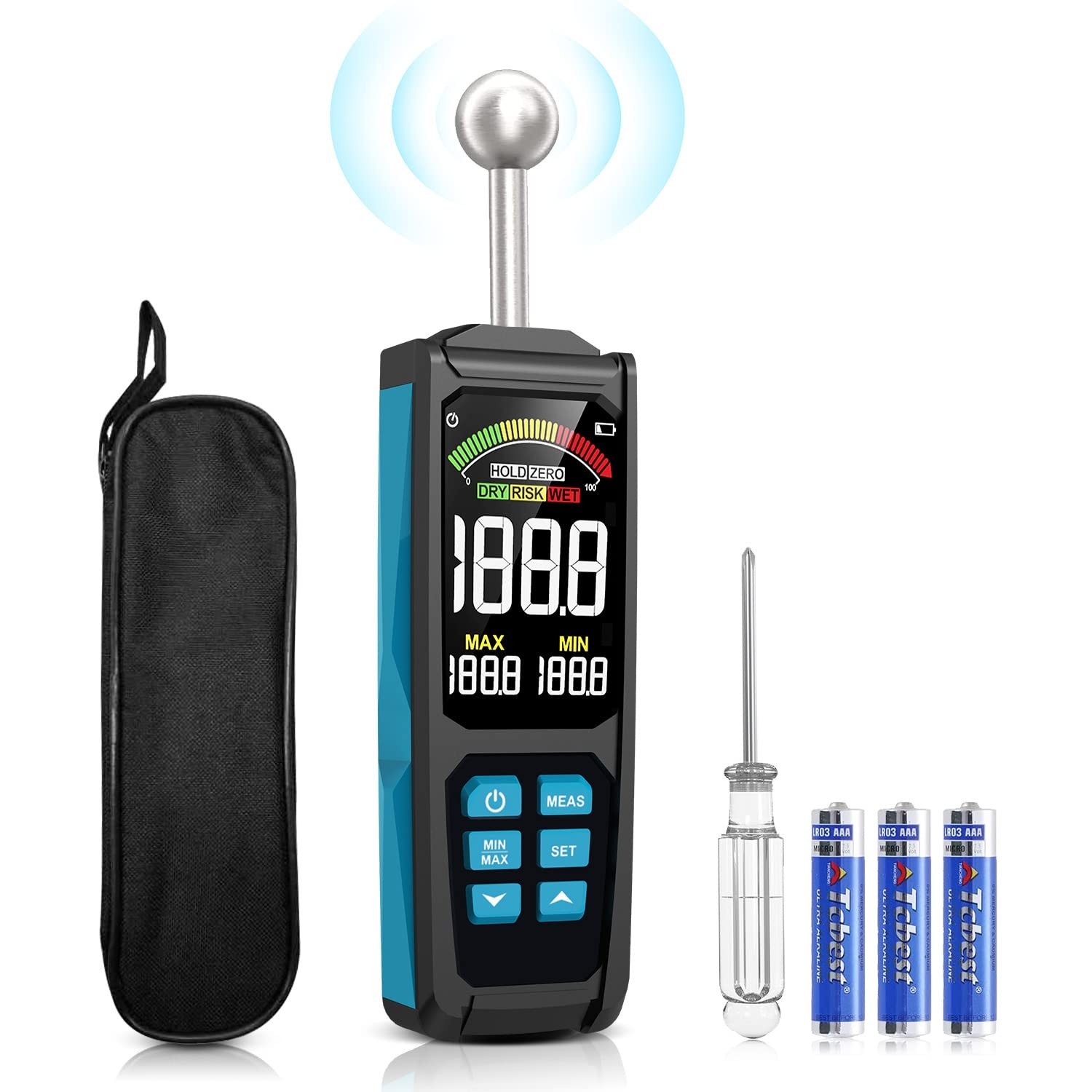 Pinless Moisture Meter Reader for Plaster Walls Masonry Concrete Drywall Wood$246.98New · Last checked Nov 24, 2026View on eBay
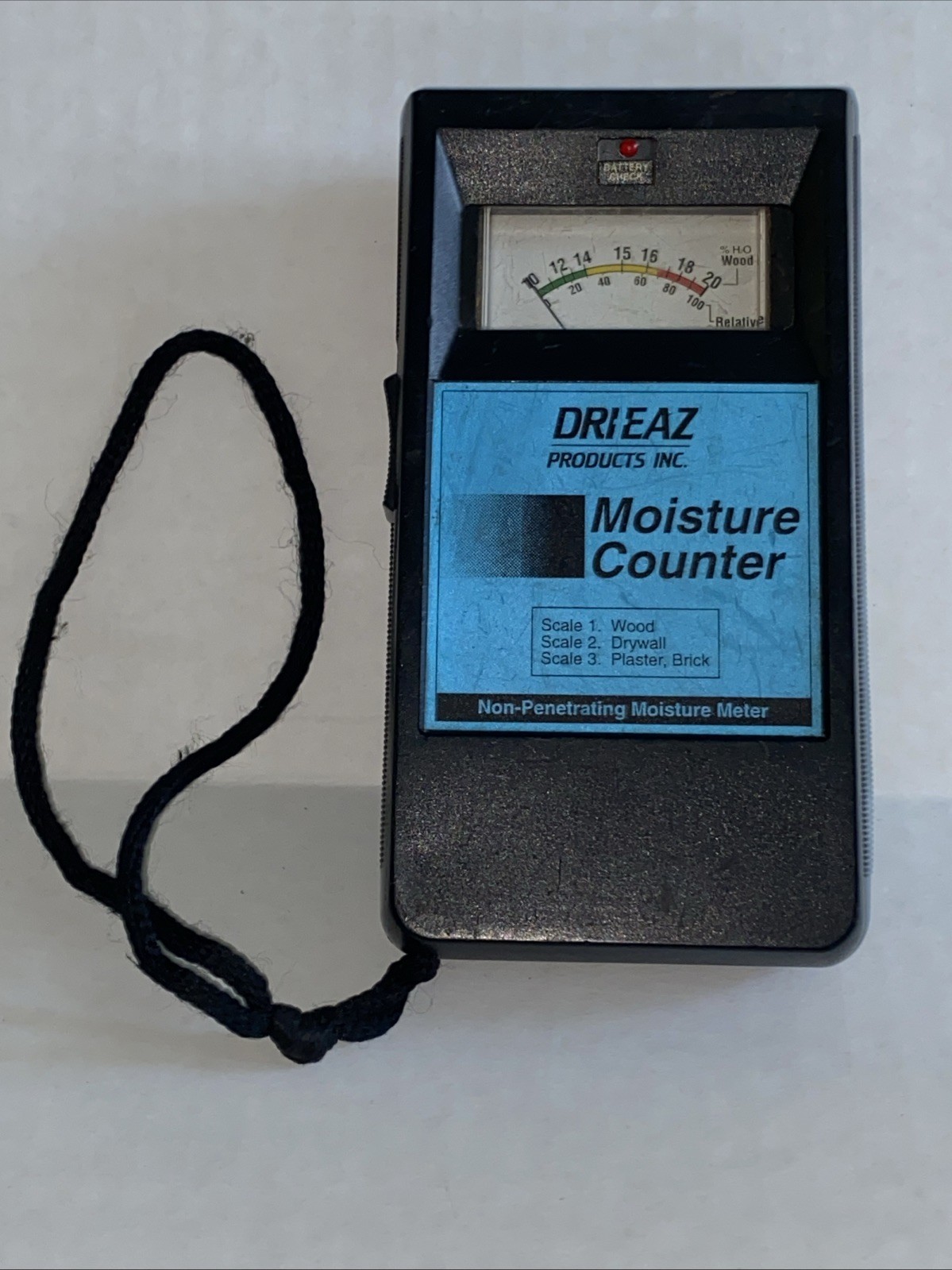 Dri-Eaz Non Destructive Moisture Meter 3 Scales Wood, Drywall, Plaster/Brick$250.00Used · Last checked Nov 24, 2026View on eBay
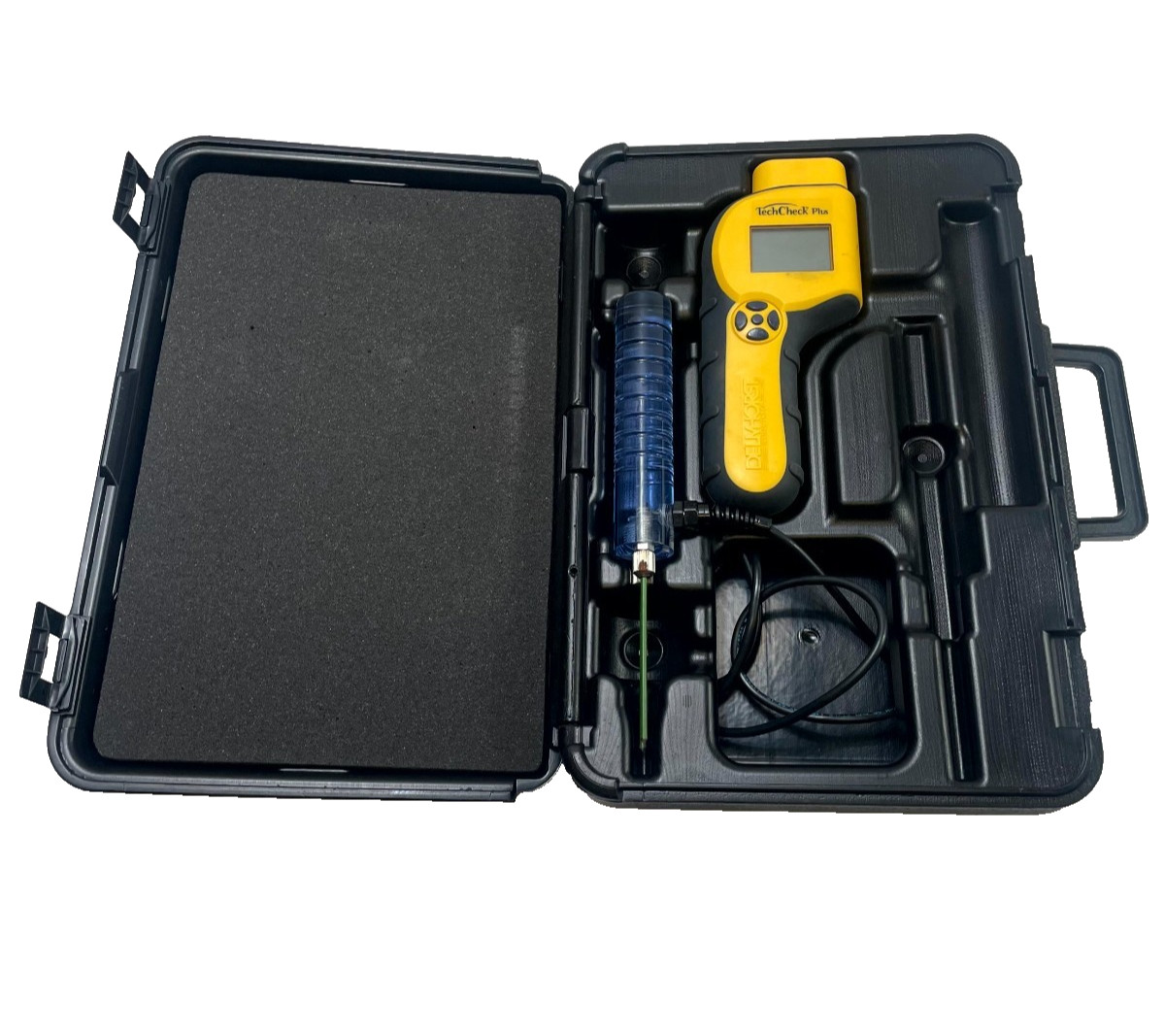 Delmhorst TechCheck Plus 2-in-1 Digital Wood Drywall Moisture Meter Scanner Kit.$674.99New · Last checked Nov 24, 2026View on eBay
Highlights
- Pin-type meters measure resistance between two insulated pins; depth is fixed by pin length (typically 10-20 mm), so they read the board core but leave pinholes that must be filled before painting.
- Pinless meters use a capacitive field that averages roughly the top 20-40 mm of material; they are non-destructive but readings shift with board density and require a gypsum-specific calibration curve.
- Drywall target: gypsum board is considered ready to finish at or below 0.5% MC by ASTM C1396 / C840 guidance; joint compound and framing should be below 12-15% MC depending on species and climate.
- Resolution and accuracy separate professional meters from toys: look for 0.1% display resolution and stated accuracy of ±0.5% MC or better; many budget units show only whole percentages with ±2-3% tolerance.
Best use cases
- Best fit: post-flood or leak-drying verification on painted walls — pick a pinless meter with gypsum calibration for fast, non-destructive grid readings across large areas; skip pin meters that would puncture finished surfaces.
- Best fit: pre-paint sign-off on new construction — pick a pin-type meter with insulated pins and 0.1% resolution to confirm board and joint compound are below 0.5% MC before primer; skip pinless-only units whose depth averaging can mask a damp core.
- Best fit: continuous monitoring during remediation — pick a meter with a hold/min-max function and external probe compatibility; skip basic single-button units that cannot log or hold a stable reading in tight corners.
- Wrong fit: reading moisture through tile, vapor barrier, or thick texture — neither pin nor pinless meters penetrate these layers reliably; use an in-situ probe or destructive test instead.
Buying tips
- Match the meter to the material: a gypsum/drywall calibration mode is mandatory; wood-only meters (species-corrected for Douglas fir, oak, etc.) will misread gypsum board by several percent MC.
- Pin length sets depth: 10 mm pins read the paper face and first millimeters; 20 mm insulated pins reach the board core. For 1/2 in (12.7 mm) and 5/8 in (15.9 mm) board, 20 mm pins are the safe choice.
- Resolution and accuracy beat feature count: insist on 0.1% display resolution and a stated accuracy of ±0.5% MC or better; a backlit display and hold function matter more than Bluetooth for drywall work.
- Power and probes: prefer standard AA/AAA cells over coin cells for field life, and confirm the meter accepts an external pin probe or hammer electrode if you need to test framing behind the board.
Specs
| Sensor Type | Pin resistive vs pinless capacitive |
|---|---|
| Drywall Resolution | 0.1% MC (pro) vs 1% MC (budget) |
| Accuracy | ±0.5% MC or better |
| Pin Depth | 10-20 mm insulated pins |
Related searches
What to check before buying
- Know your board thickness: 1/2 in (12.7 mm) and 5/8 in (15.9 mm) are standard; choose pin length and pinless depth accordingly so readings reflect the core, not just the paper.
- Confirm the meter has a dedicated gypsum/drywall calibration mode — not just a generic 'building materials' setting — and a published accuracy tolerance.
- Check the display: 0.1% resolution, backlight, and hold/min-max are the practical minimum for sign-off work in dim or tight spaces.
- Verify power and probes: standard AA/AAA batteries, and compatibility with an external probe or hammer electrode if you will test framing or subfloor.
FAQ
Data sources: eBay / Amazon listings and product attribute feeds. Updated Nov 27, 2026.
Some links on this page are affiliate links. If you buy after clicking one, we may earn a commission at no extra cost to you. This does not change which products appear here or their order. Affiliate disclosure.