
Photos from current listings. Actual item, color, and included accessories may vary.
Black Microscope Buying Guide
Black microscopes span three distinct architectures—optical compound, stereo inspection, and digital USB/standalone—where the primary trade-off is lens quality and real magnification versus convenient digital capture. Durable options use all-glass achromatic optics, metal rack-and-pinion focus, and defined numerical aperture; compromises substitute plastic lenses, empty magnification claims, and fragile stands. The decision rule: buy for the magnification and stand stability your task demands, and treat color as cosmetic—black finish changes nothing optical or mechanical.
Median $68.99
Key takeaways
- Compound microscopes use 4x/10x/40x/100x achromatic objectives with 10x or 16x eyepieces; total magnification multiplies objective by eyepiece.
- Digital and USB scopes in the 50-1600X class rely on small sensors with digital zoom; beyond roughly 200x optical detail collapses into interpolation.
- Stereo inspection scopes use paired objectives (typically 0.7x-4.5x) with long working distance of 100-165mm for soldering and repair.
At a glance
- Category
- Microscopes & Lab Imaging
- Last updated
- Nov 28, 2026
Current offers
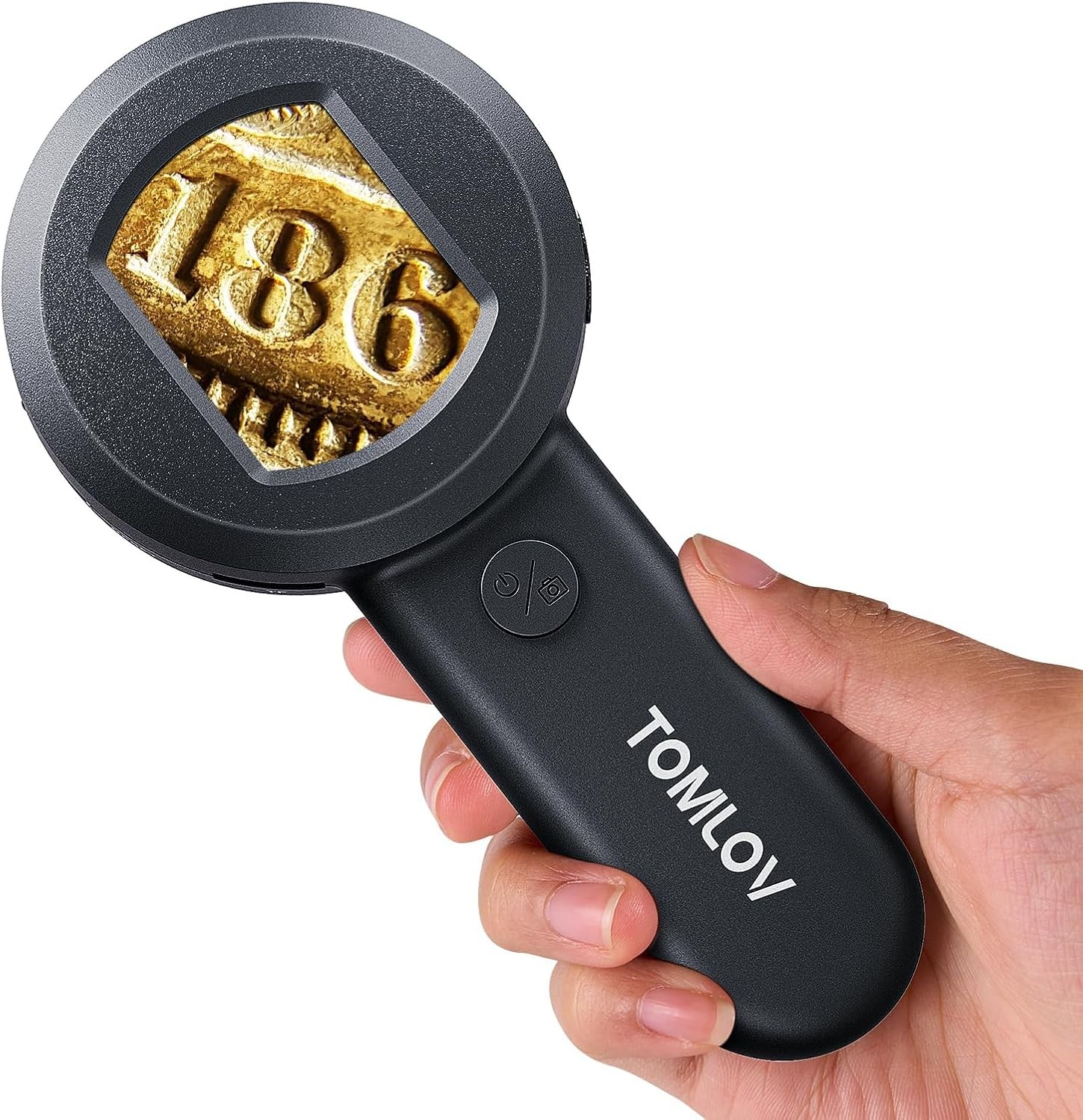 TOMLOV 100X Digital Microscope Coin Trichome Magnifier Jeweler Loupe Illuminated$23.99Last checked Nov 28, 2026View on eBay
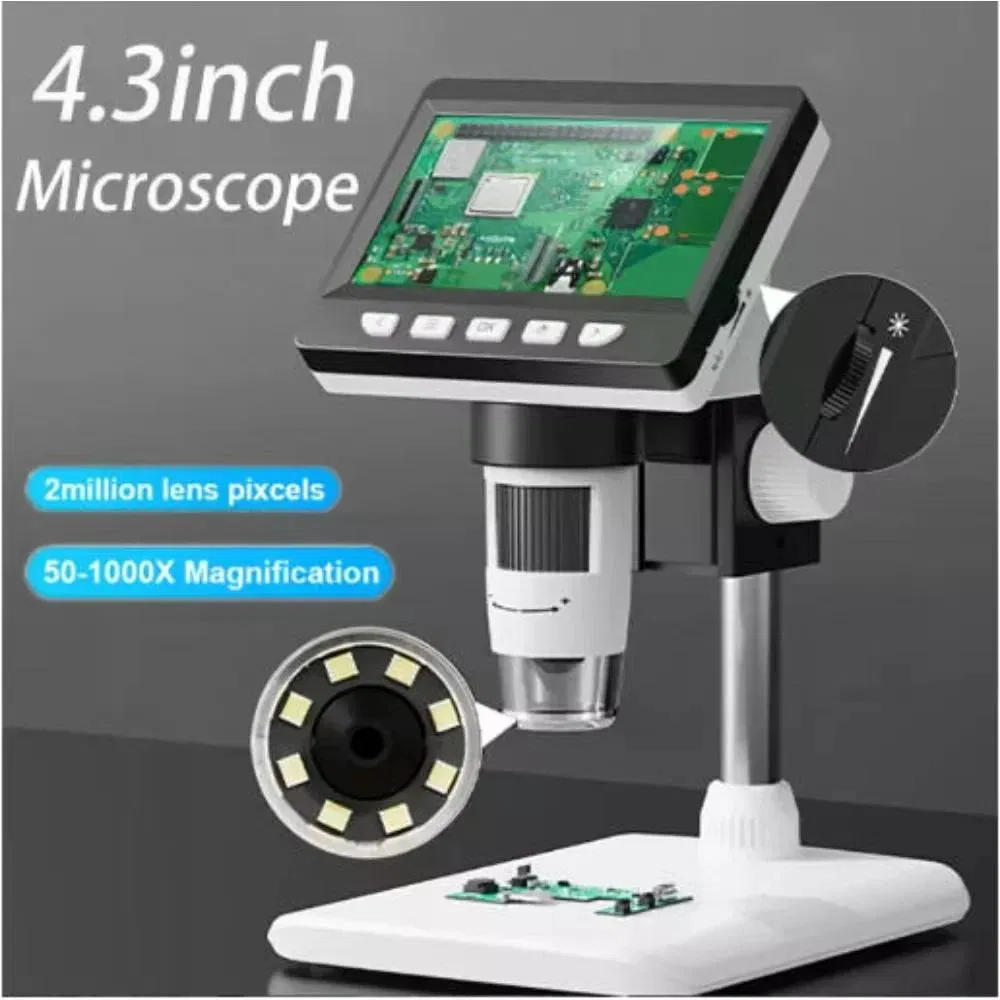 4.3 Inch HD Digital Microscope 50-1600X 8 LED Fill Light 2000mAh Battery Photo Video Manual Focus Adjustable Stand USB Connect for Electronic Repair Jewelry Industrial Teaching Household Black White$68.99View on Mallflare
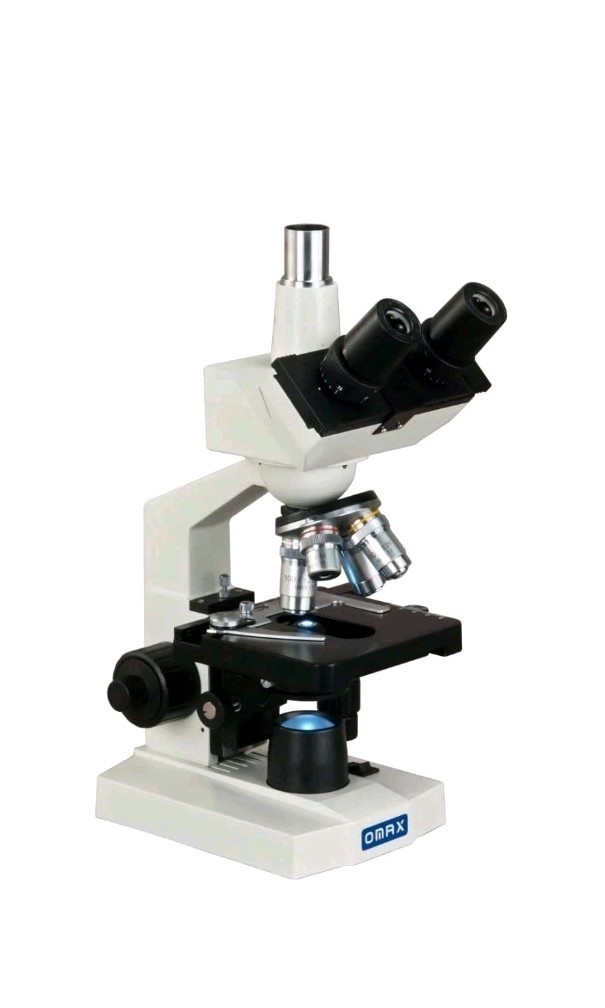 OMAX 40X-2500X LED Lab Trinocular Compound Microscope with Double Layer$159.99View on eBay
Highlights
- Compound microscopes use 4x/10x/40x/100x achromatic objectives with 10x or 16x eyepieces; total magnification multiplies objective by eyepiece.
- Digital and USB scopes in the 50-1600X class rely on small sensors with digital zoom; beyond roughly 200x optical detail collapses into interpolation.
- Stereo inspection scopes use paired objectives (typically 0.7x-4.5x) with long working distance of 100-165mm for soldering and repair.
- Metal rack-and-pinion focus and a weighted base determine stability; plastic focus gears and lightweight stands cause drift and blur at high power.
Best use cases
- Choose a compound binocular microscope for biology, histology, and education—skip digital-only models if you need true 400x-1000x optical resolution.
- Choose a stereo zoom scope for PCB rework, jewelry, and engraving—skip high-magnification compound models because working distance and depth perception matter more than raw power.
- Choose a digital USB/HD scope with adjustable stand for classroom projection, photo/video capture, and quick inspection—skip it for fine cell detail needing oil immersion.
Buying tips
- Match magnification to task: 40x-100x for coins and macro, 400x for cells, 1000x oil immersion for bacteria—avoid 1600X digital claims as optical.
- Confirm optical vs digital zoom: digital scope magnification is sensor crop; true optical detail requires glass objectives and defined numerical aperture (NA).
- For repair and inspection, require 100mm+ working distance and a heavy base; a 4.3-inch screen model with 2000mAh battery suits cordless field use.
- Compound scopes should pair 4x/10x/40x/100x objectives with 10x/16x eyepieces; 25x eyepieces add empty magnification without resolving more detail.
Specs
| Optical Type | Compound / Stereo / Digital USB |
|---|---|
| Magnification | 40x-1000x optical; digital to 1600X claim |
| Working Distance | Stereo 100-165mm; compound near-slide |
| Focus & Stand | Metal rack-and-pinion / weighted base |
Related searches
What to check before buying
- Measure bench depth and height clearance: stereo scopes need 100-165mm working distance plus eyepiece headroom under shelves.
- Check power: mains compound scopes use region-specific plugs; battery/USB digital scopes need USB-C or USB-A power and charged 2000mAh cells.
- Verify stage and slide compatibility: mechanical stage accepts 25x75mm slides; stereo stands need clearance for PCBs and tools.
- Confirm computer compatibility for USB scopes: driver-free UVC works on Windows/macOS; standalone HDMI models need an HDMI monitor.
FAQ
Data sources: eBay / Amazon listings and product attribute feeds. Updated Nov 28, 2026.
Some links on this page are affiliate links. If you buy after clicking one, we may earn a commission at no extra cost to you. This does not change which products appear here or their order. Affiliate disclosure.