
Photos from current listings. Actual item, color, and included accessories may vary.
Dark Field Microscope Buying Guide
A dark field microscope is a light microscope configured to illuminate the specimen with a hollow cone of light so that only scattered light enters the objective, producing bright objects against a black background. The primary trade-off is between a dedicated dark field condenser (or a dark field stop insert) and a standard brightfield condenser that can be adapted; pure dark field demands a condenser with an opaque central stop and a numerical aperture higher than the objective's. The decision rule: for live unstained cells, thin smears, or nanoparticles, choose a microscope with a dedicated oil-immersion dark field condenser (NA ≥1.2) and matched low-NA objectives; for occasional dark field viewing with existing brightfield gear, a drop-in dark field stop matched to the objective NA is sufficient.
Median $349.99 · New & pre-owned listings
Key takeaways
- Dark field requires a condenser central stop whose NA exceeds the objective NA; a 100x oil objective (NA 1.25) demands an oil-immersion dark field condenser with NA 1.36–1.43 for true black background.
- Dry dark field condensers (NA 0.9–1.0) work only with objectives of NA ≤0.65 (typically 4x–40x dry); using a 100x oil objective on a dry dark field condenser yields glare, not dark field.
- A simple dark field stop (opaque disc) inserted into a standard Abbe condenser gives acceptable dark field only at low power (10x–40x, NA ≤0.65) and is not equivalent to a dedicated dark field condenser.
At a glance
- Category
- Microscopes & Lab Imaging
- Last updated
- Nov 28, 2026
Current offers
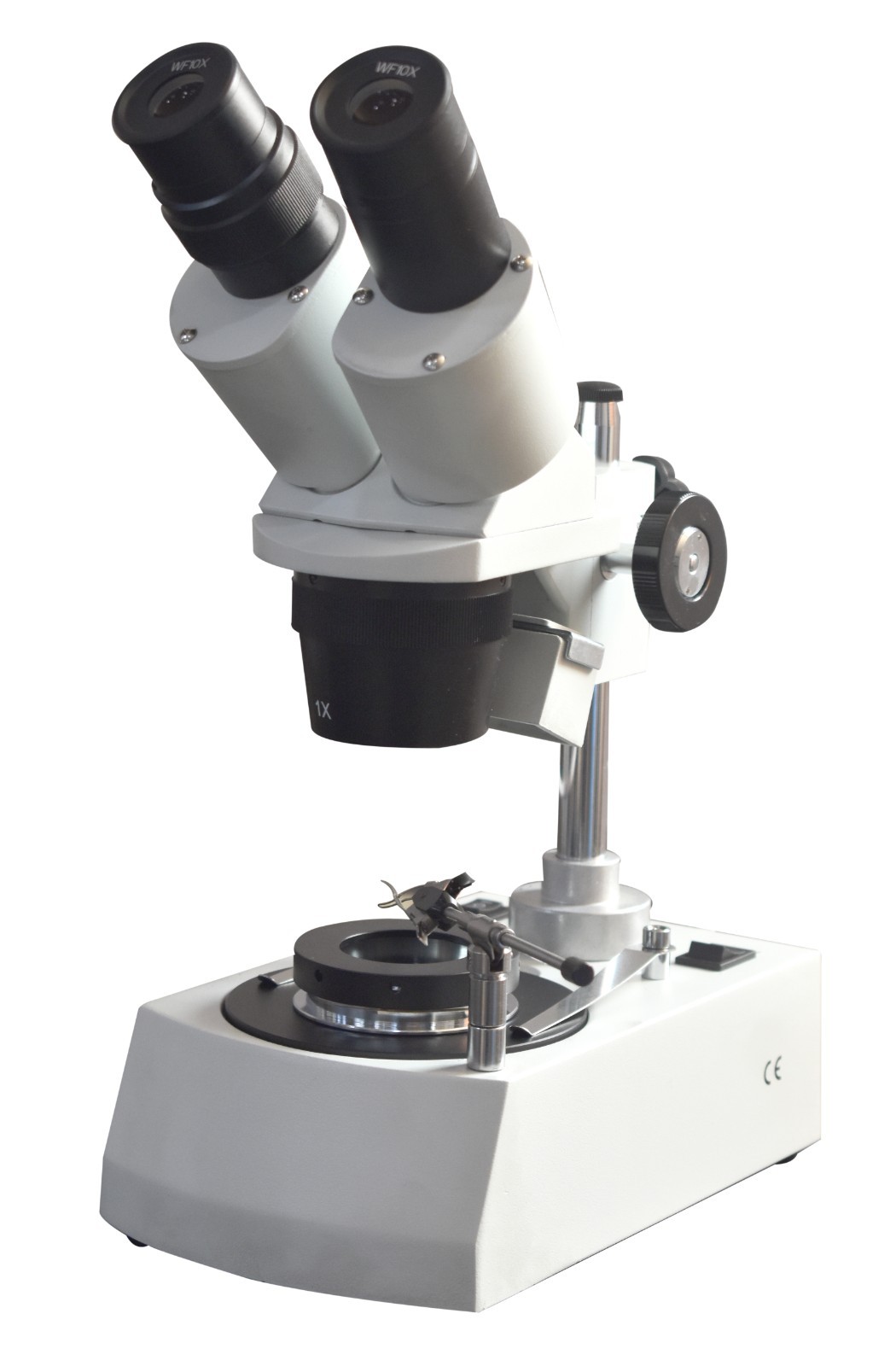 Gemology Darkfield Stereo Microscope 20x-40x With Gem Clamp$249.00New · Last checked Nov 25, 2026View on eBay
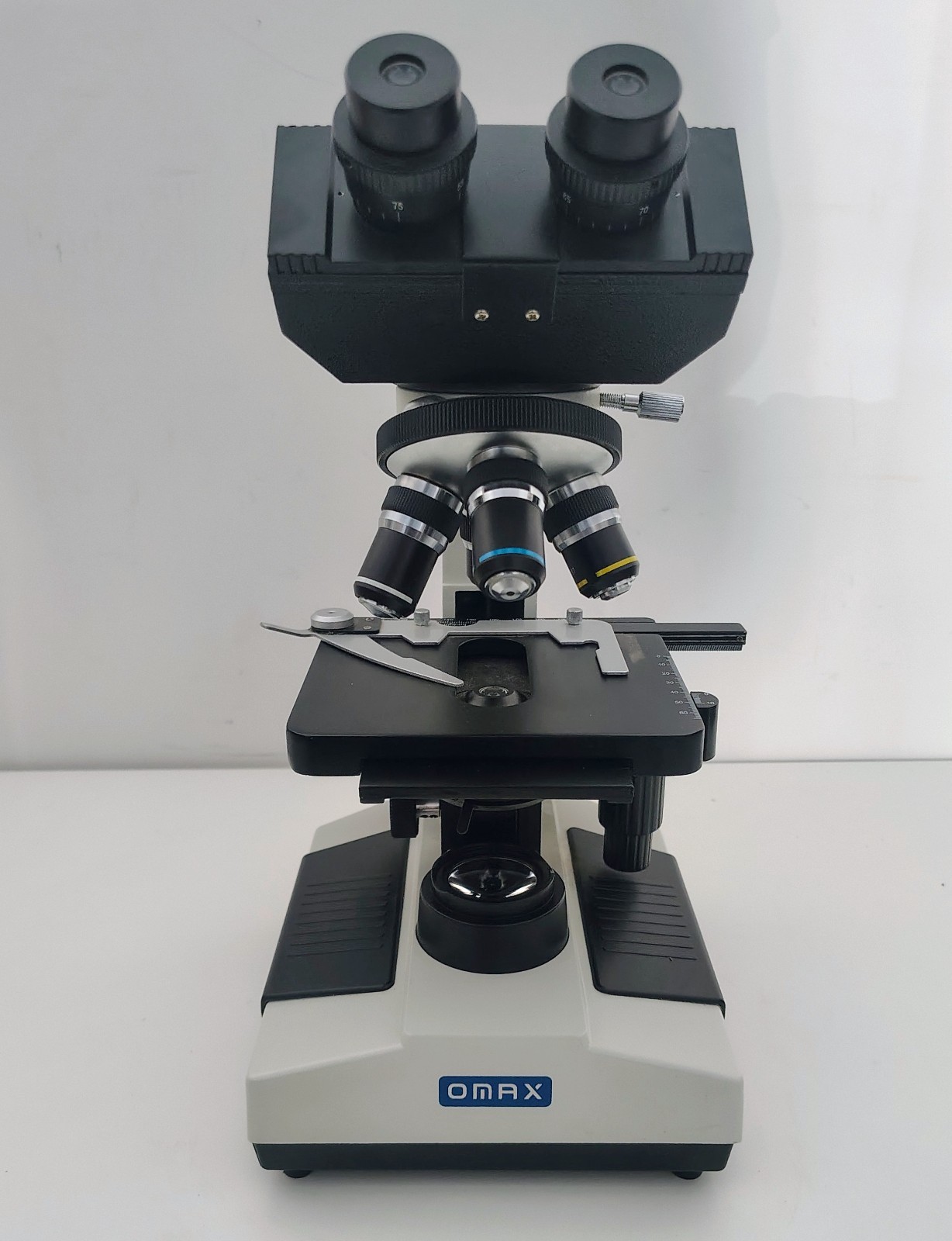 OMAX TRINOCULAR DIGITAL DARK FIELD PHASE CONTRAST COMPOUND MICROSCOPE 40X-2500X$250.00Used · Last checked Nov 25, 2026View on eBay
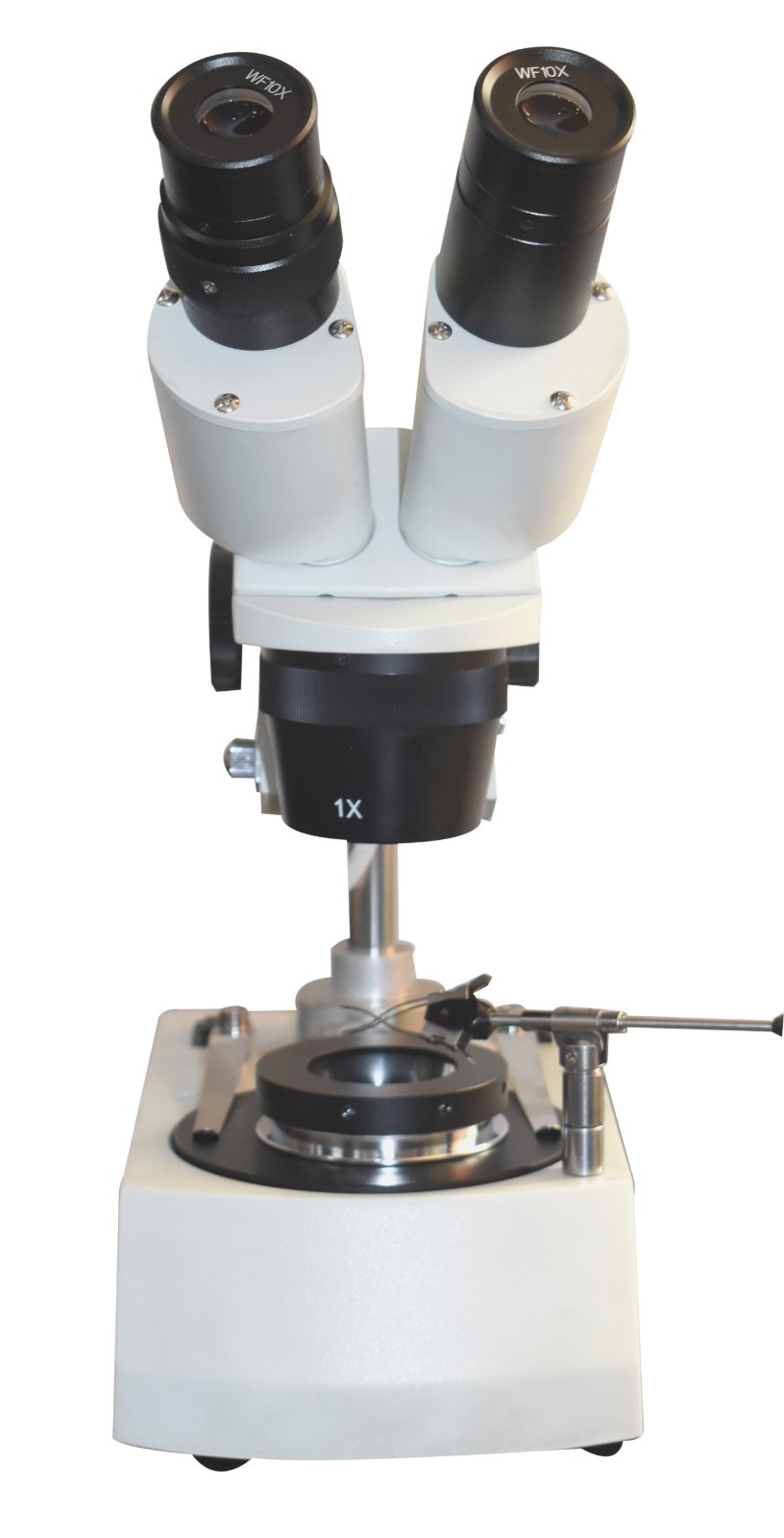 Gemology Stereo Microscope - Darkfield 20×– 40× With Stone Clamp Holder$254.34New · Last checked Nov 25, 2026View on eBay
 Gemology Stereo Microscope – Darkfield 20×–40× with Stone Holder Clamp$259.00New · Last checked Nov 25, 2026View on eBay
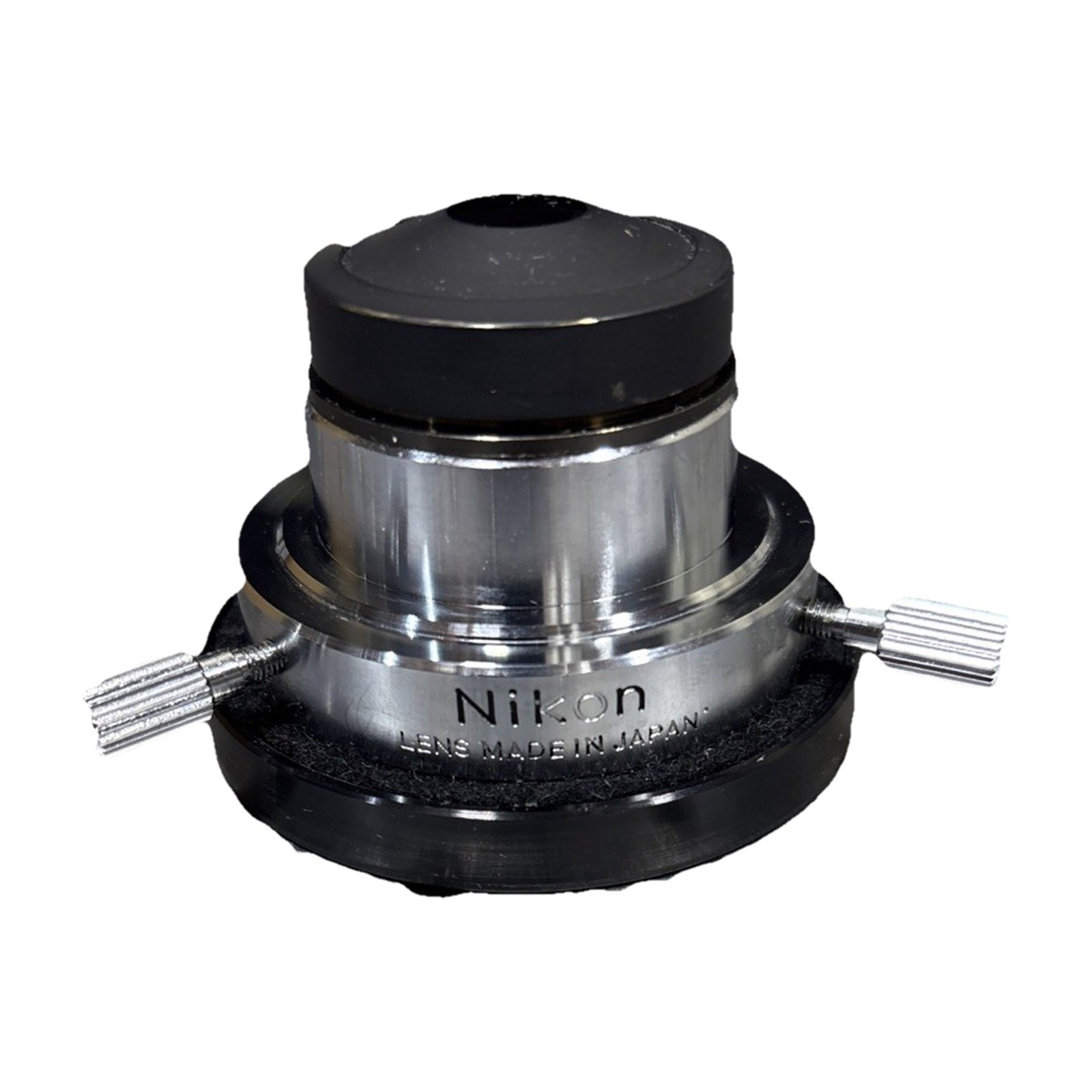 Nikon Ultra Dark Field Condenser NA 1.20-1.40 Oil Immersion Microscope Japan$349.99Used · Last checked Nov 25, 2026View on eBay
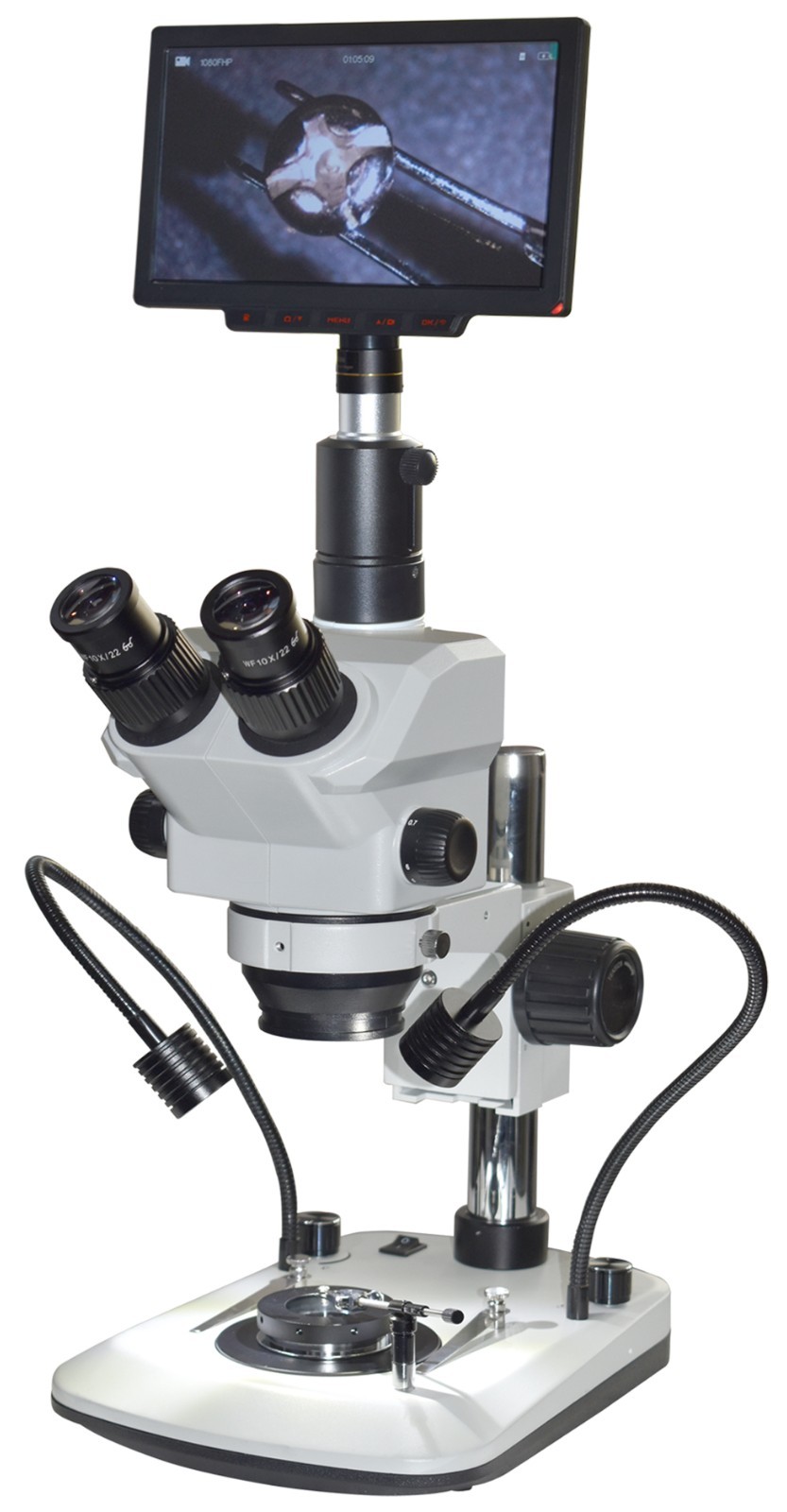 Gemology Darkfield Stereo Microscope 7–60×, 1:9 Zoom, 4K Camera /Display$799.00New · Last checked Nov 25, 2026View on eBay
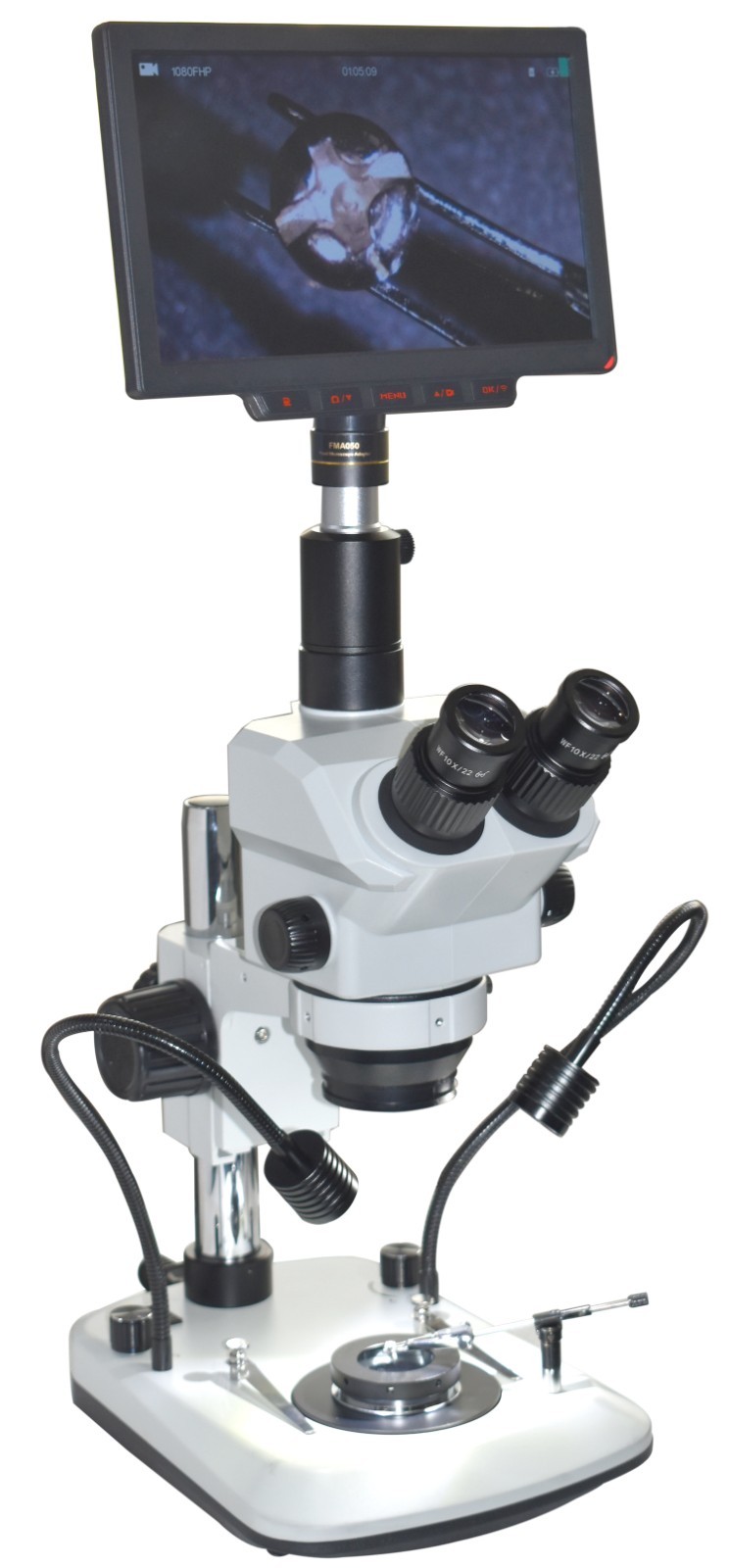 Diamond / Gem Microscope – Darkfield 1:9 Zoom, 115 mm WD, 4K Live Imaging$899.00New · Last checked Nov 25, 2026View on eBay
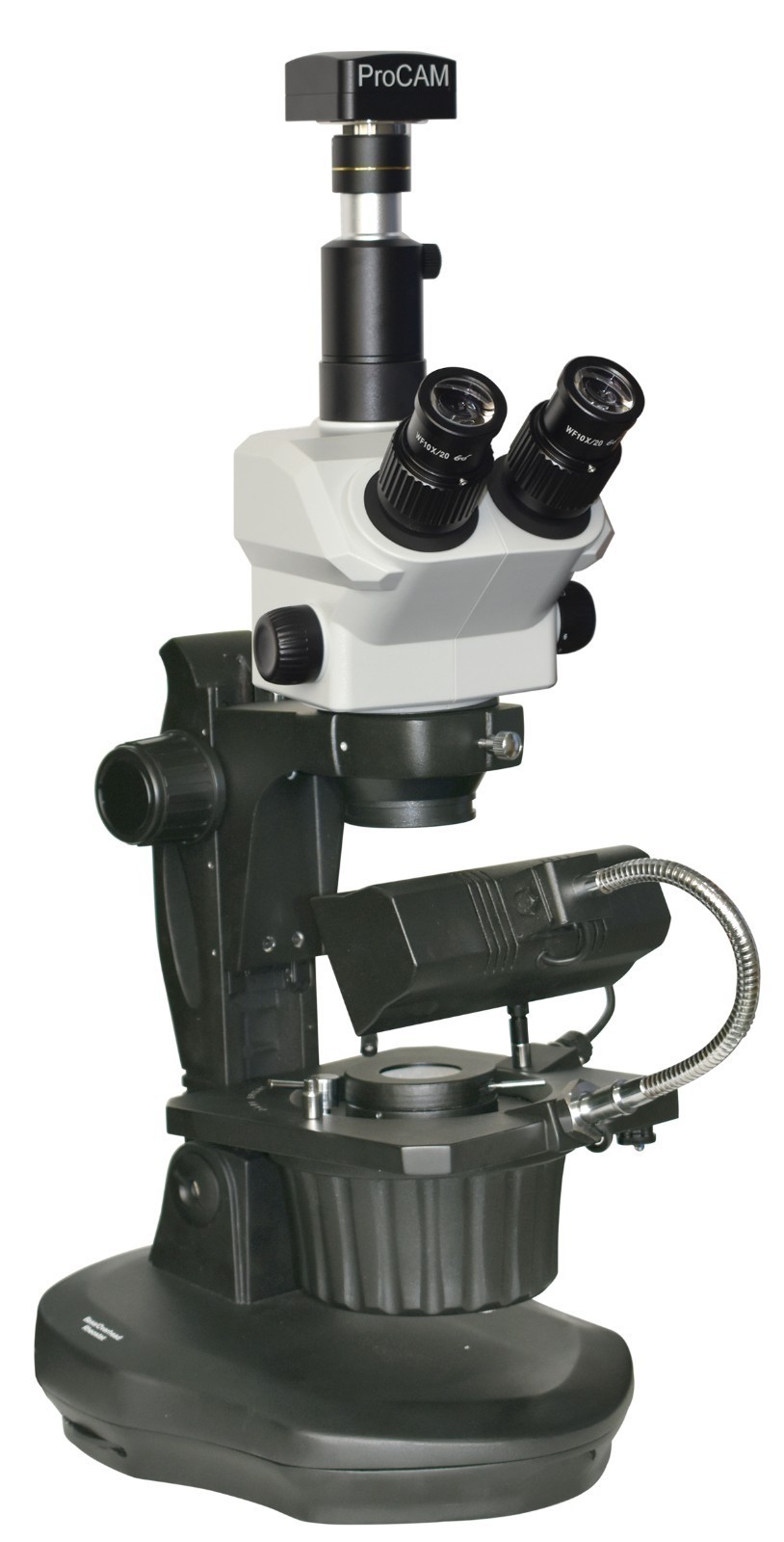 Gemology Darkfield Stereo Microscope 1:9 Zoom 7 – 60 ×,115MM WD,22MM Fov,10$1,299.00New · Last checked Nov 25, 2026View on eBay
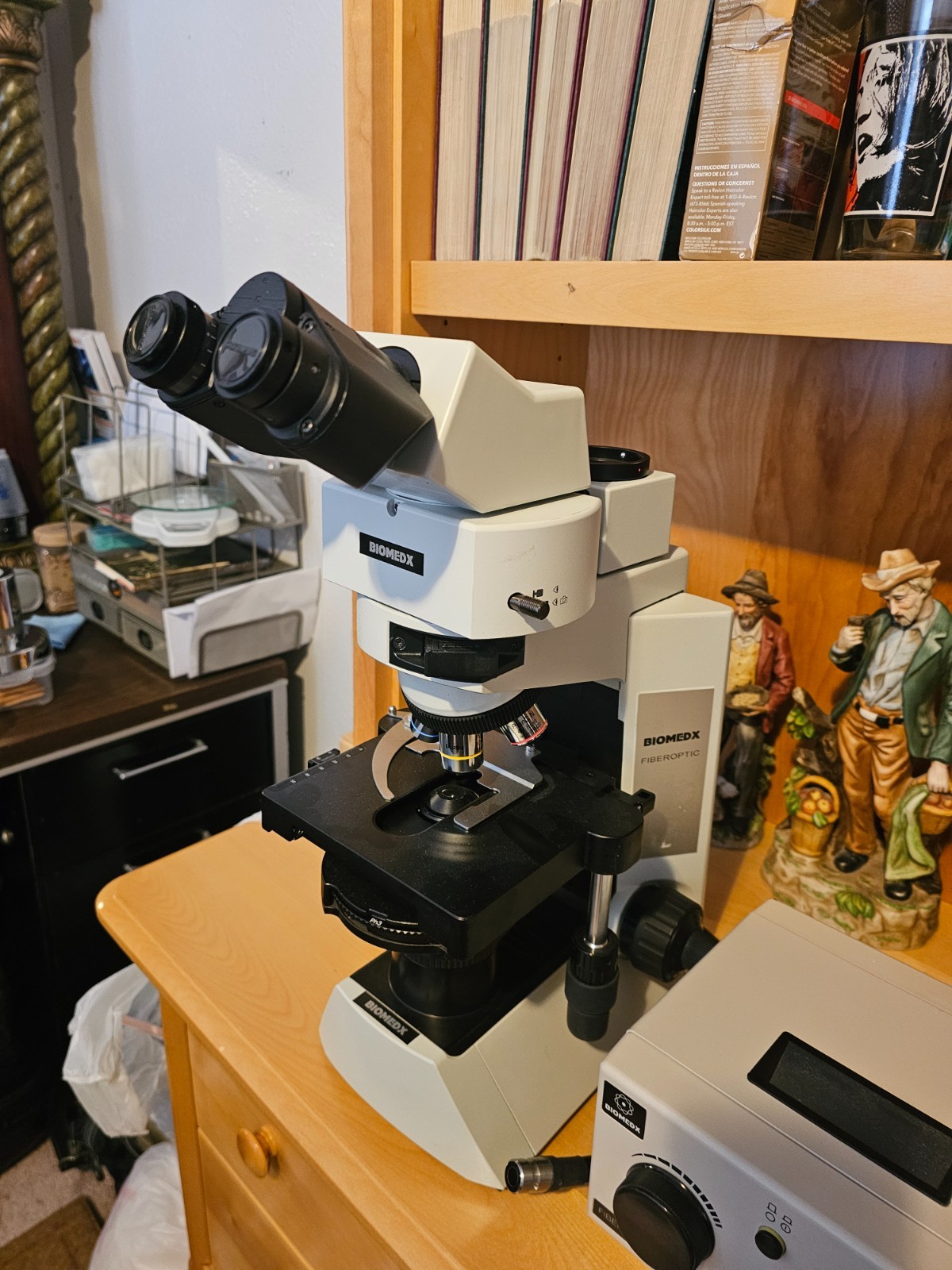 BIOMEDX DARK FIELD Microscope Fiberoptic & Fiberoptic Light Source$1,995.00Used · Last checked Nov 25, 2026View on eBay
Highlights
- Dark field requires a condenser central stop whose NA exceeds the objective NA; a 100x oil objective (NA 1.25) demands an oil-immersion dark field condenser with NA 1.36–1.43 for true black background.
- Dry dark field condensers (NA 0.9–1.0) work only with objectives of NA ≤0.65 (typically 4x–40x dry); using a 100x oil objective on a dry dark field condenser yields glare, not dark field.
- A simple dark field stop (opaque disc) inserted into a standard Abbe condenser gives acceptable dark field only at low power (10x–40x, NA ≤0.65) and is not equivalent to a dedicated dark field condenser.
- High-intensity LED or halogen illumination (≥100 W halogen equivalent) is needed because the central stop blocks most light; lower-output LEDs produce dim, low-contrast dark field images at high magnification.
Best use cases
- Best fit: viewing live, unstained microorganisms (protozoa, bacteria, spirochetes) in wet mounts — pick a microscope with a dry dark field condenser (NA 0.9) plus 10x–40x dry objectives; skip oil-immersion dark field unless you need 100x.
- Best fit: examining thin smears, blood cells, or nanoparticles at high magnification — choose an oil-immersion dark field condenser (NA ≥1.36) with matched 100x oil objective (NA 1.25) and a high-output LED or 100 W halogen source.
- Wrong fit: brightfield-only microscopes with no condenser stop or dark field accessory — a drop-in stop works only up to 40x dry; for 100x dark field you must upgrade the condenser to a dedicated dark field unit.
- Wrong fit: thick, highly scattering specimens or opaque samples — dark field fails on thick tissue sections; use phase contrast or DIC instead, and skip dark field entirely for these samples.
Buying tips
- Match condenser NA to objective NA: dark field condenser NA must be greater than objective NA; for a 100x/1.25 oil objective choose a dark field condenser with NA 1.36–1.43 (oil immersion), not a dry NA 0.9 unit.
- For dry dark field work, select a condenser with NA 0.9–1.0 and use only objectives with NA ≤0.65 (typically 4x/0.10, 10x/0.25, 40x/0.65); a 40x/0.75 objective will show glare on a dry dark field condenser.
- Check the condenser mount: most modern microscopes use a dovetail or bayonet mount; a dark field condenser must match the microscope's condenser holder diameter and height — measure the existing condenser mount before buying a separate unit.
- Illumination power matters: dark field blocks the central light path, so choose a microscope with a 3 W or higher LED or 100 W halogen equivalent; 1 W LEDs produce dim images at 40x and above.
Specs
| Condenser Type | Dry NA 0.9 / Oil NA 1.36–1.43 |
|---|---|
| Objective NA Match | Condenser NA > objective NA |
| Illumination | ≥3 W LED / 100 W halogen |
| Max Dark Field Power | 100x oil (with oil condenser) |
Related searches
What to check before buying
- Measure your microscope's condenser mount (diameter and dovetail type) — a dedicated dark field condenser must physically fit the existing condenser holder; non-matching mounts require an adapter or a different microscope.
- Confirm your objectives' NA values: list every objective's NA; dark field works only when condenser NA > objective NA, so a 40x/0.75 objective needs a condenser NA >0.75 (dry dark field NA 0.9 works, NA 0.65 does not).
- Verify illumination: ensure the light source is ≥3 W LED or 100 W halogen equivalent; dim sources yield poor dark field contrast, especially with oil-immersion condensers.
- Check power and plug standard: most laboratory microscopes ship with 100–240 V universal adapters or regional plugs; confirm the plug type matches your outlet (US Type B, EU Type C/F, UK Type G) before ordering.
FAQ
Data sources: eBay / Amazon listings and product attribute feeds. Updated Nov 28, 2026.
Some links on this page are affiliate links. If you buy after clicking one, we may earn a commission at no extra cost to you. This does not change which products appear here or their order. Affiliate disclosure.