
Photos from current listings. Actual item, color, and included accessories may vary.
Tomlov Microscope Buying Guide
Tomlov microscopes are LCD-screen digital microscopes built around a camera sensor and a built-in display, not optical eyepiece microscopes, so image quality and stand rigidity matter more than lens brand. The core trade-off is screen size and sensor resolution versus stand stability and working distance—budget 4.3-inch units flex and lack HDMI, while 7-inch and 10.1-inch models add metal stands, HDMI output, and higher magnification. Buy a 7-inch-or-larger metal-stand model with HDMI for soldering, coins, and trichome work; skip 2.4-inch handhelds unless portability is the only requirement.
Median $128.00
Key takeaways
- Screen tier drives usability: 2.4-inch handheld is pocket-portable but cramped; 4.3-inch is entry-level; 7-inch is the practical minimum for soldering and coin inspection; 10.1-inch HDMI models are the workstation tier.
- Sensor resolution separates detail tiers: 12MP and 20MP sensors resolve fine PCB traces and coin relief, while older low-MP units blur at maximum digital zoom.
- Magnification is digital beyond the optical base—1200X, 1500X, and 2500X figures are interpolated, so real resolving power comes from sensor MP and lens/lighting, not the printed zoom number.
At a glance
- Category
- Microscopes & Lab Imaging
- Last updated
- Nov 28, 2026
Current offers
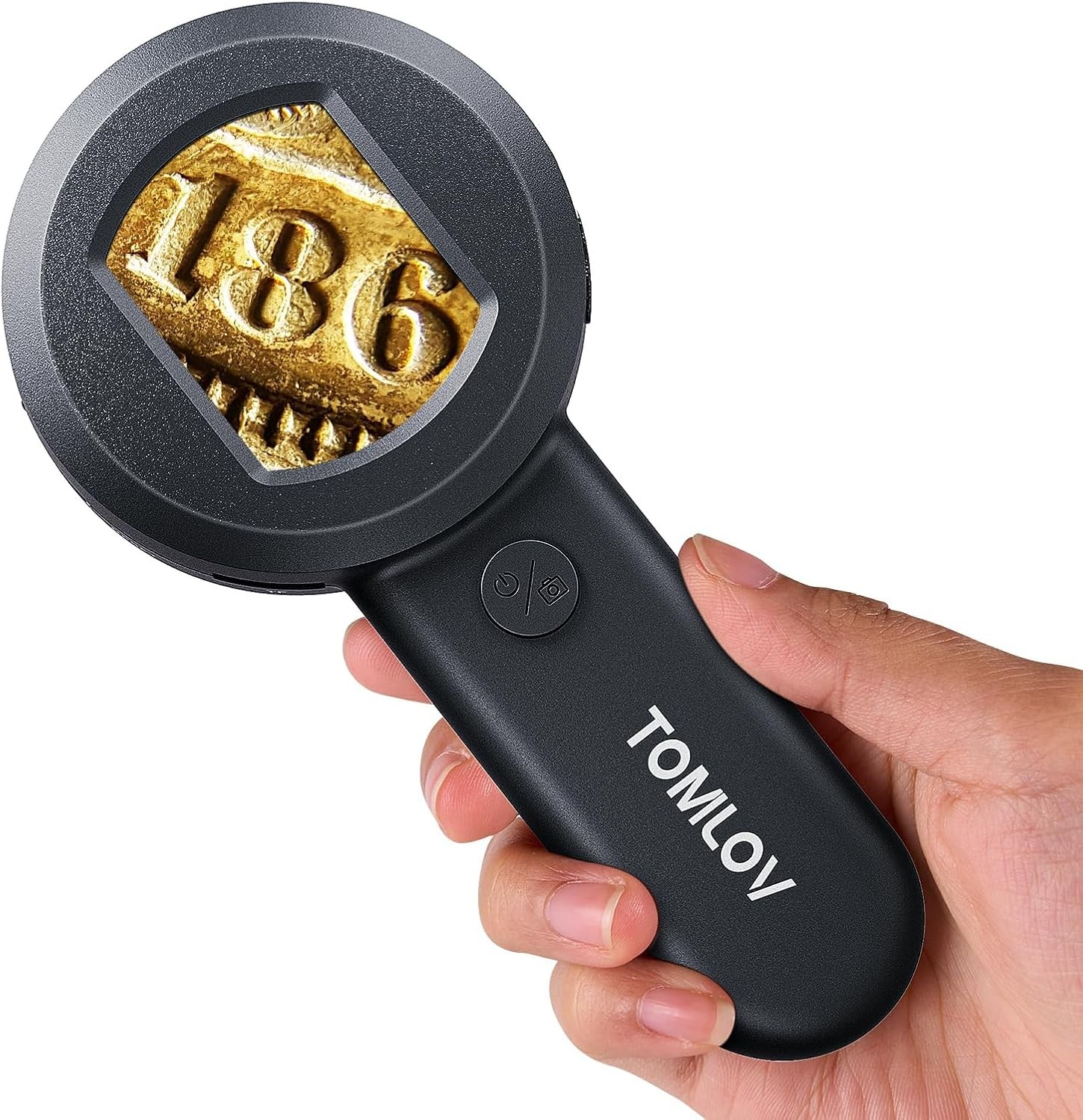 TOMLOV 100X Digital Microscope Coin Trichome Magnifier Jeweler Loupe Illuminated$23.99Last checked Nov 28, 2026View on eBay
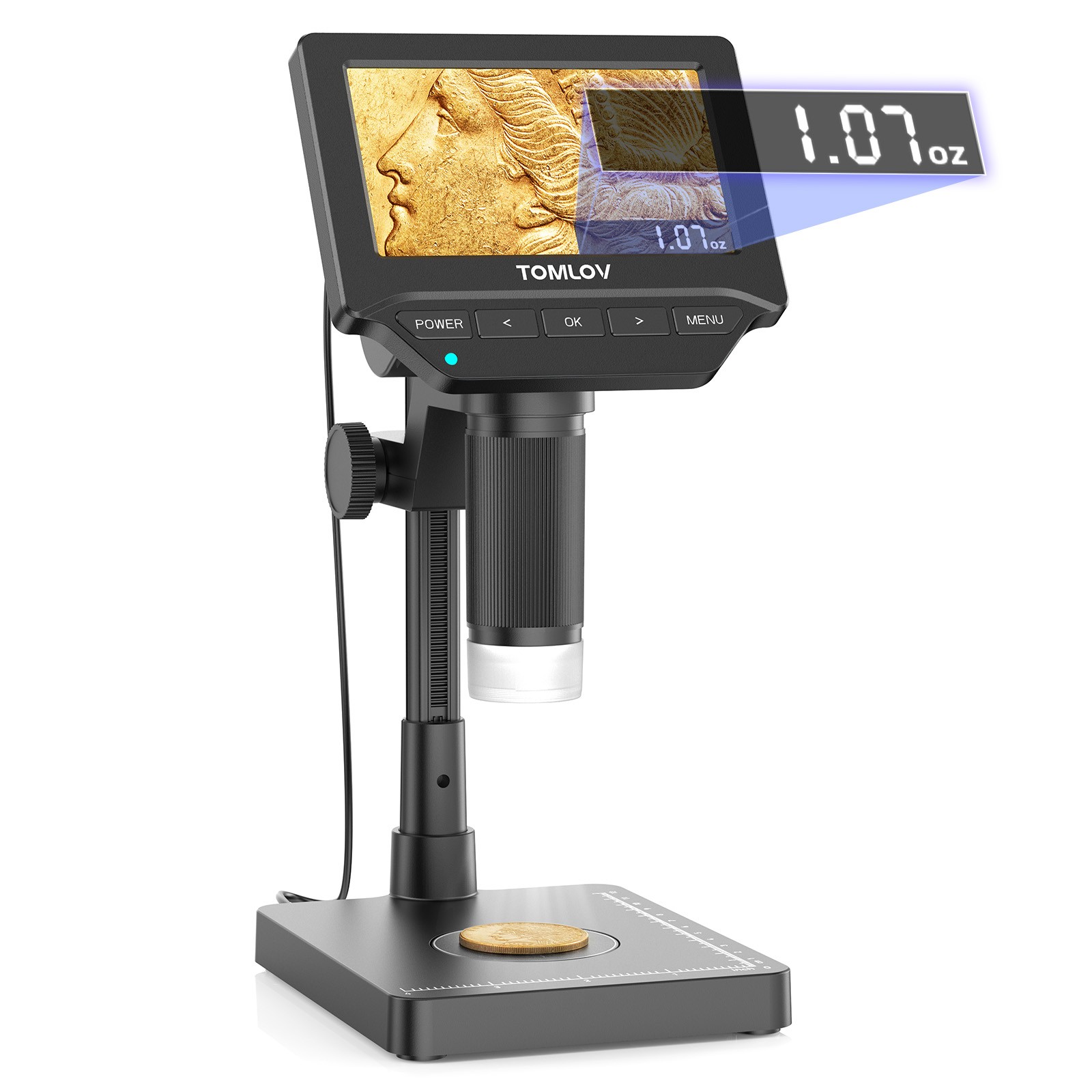 TOMLOV 4.3" Digital Microscope 200X Coin Microscope Weight Scale for Collectors$52.26Last checked Nov 28, 2026View on eBay
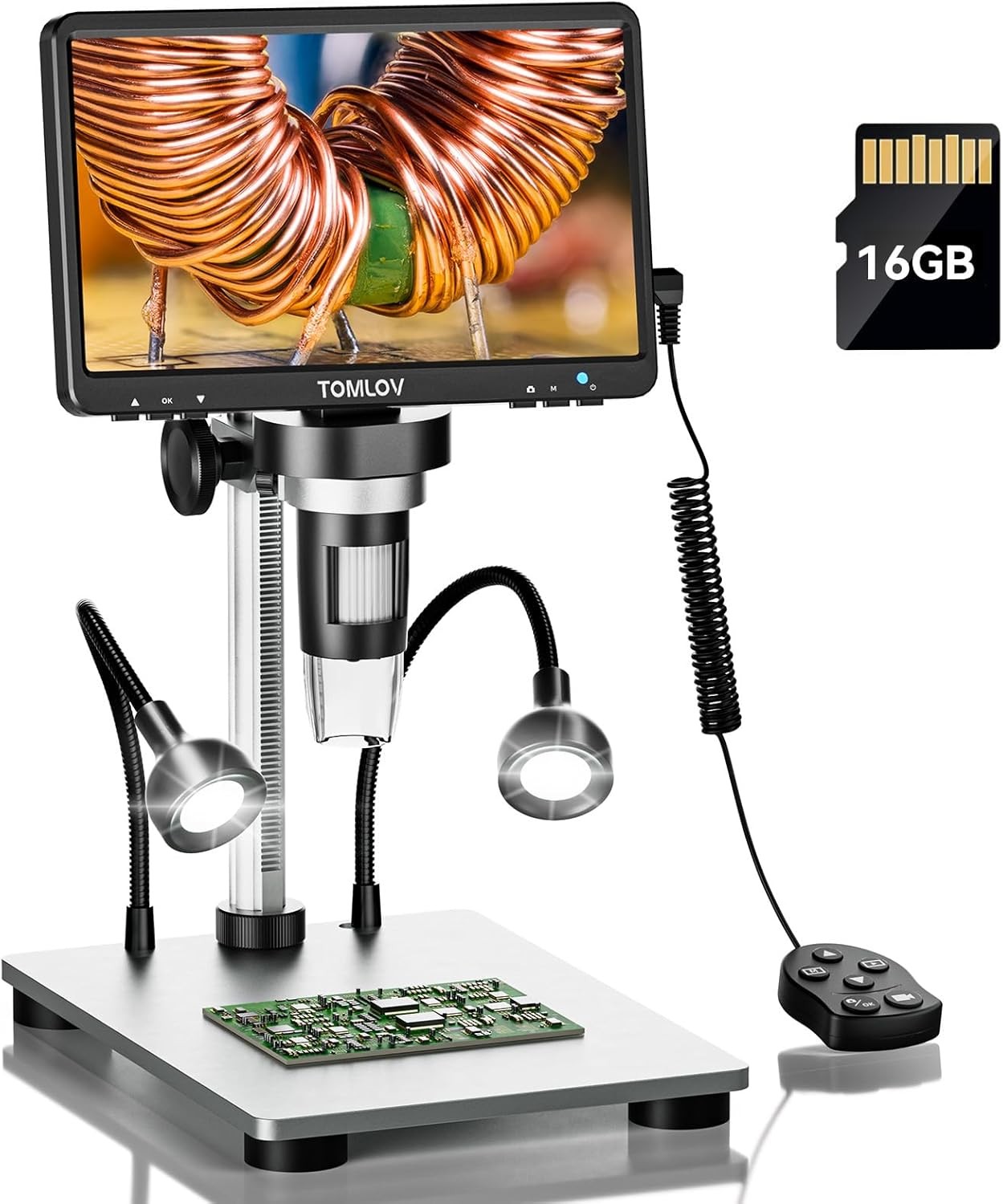 TOMLOV Microscope 7in LCD Digital Coin Microscope 1200x 12MP Soldering Magnifier$69.00Last checked Nov 27, 2026View on eBay
- TOMLOV 7" Digital Microscope 1200X Coin Microscope Soldering Camera Video Record$69.99View on eBay
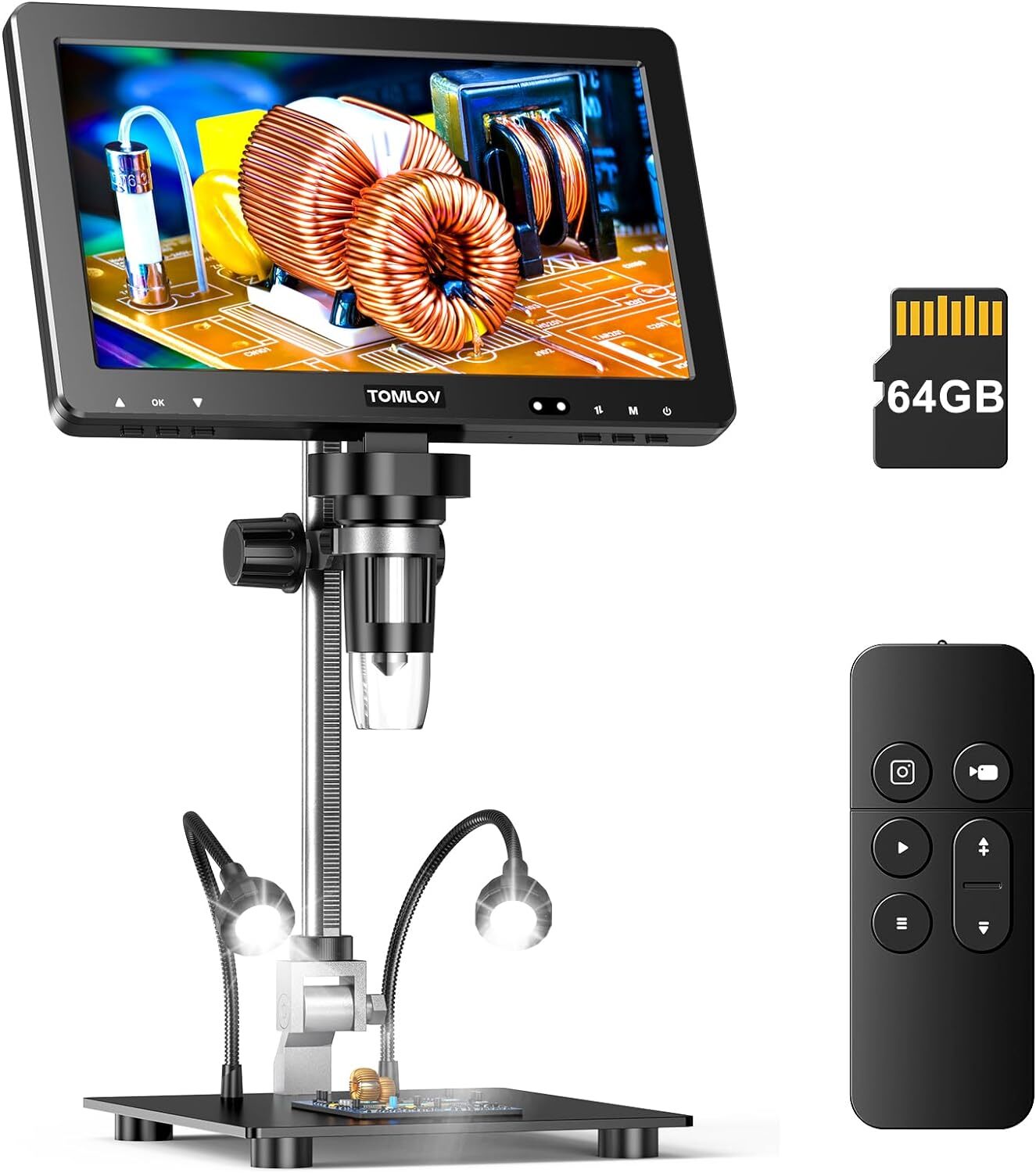 TOMLOV Digital Microscope 1500X 20MP 10.1" Coin Microscope PCB Magnifier HDMI$119.00Last checked Nov 27, 2026View on eBay
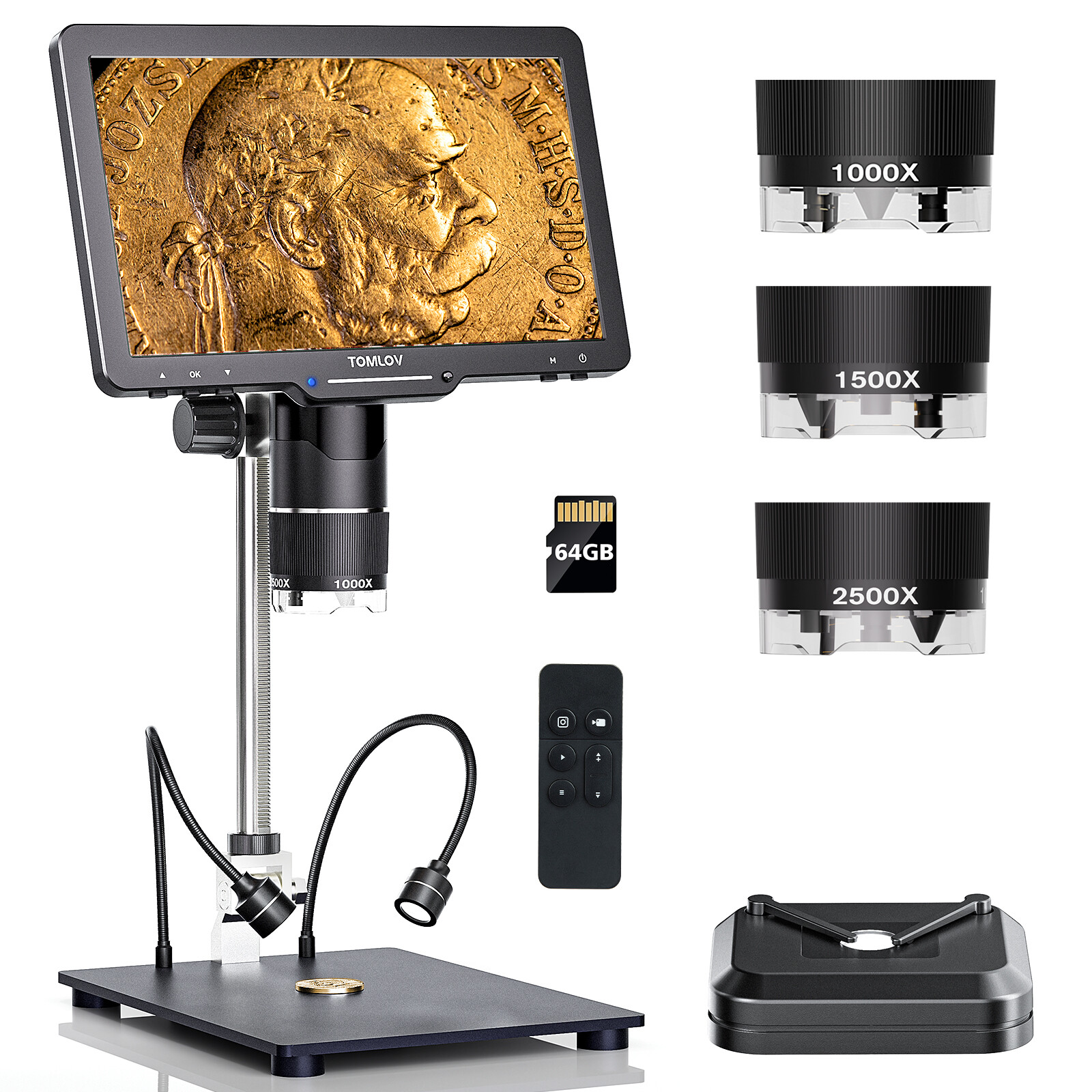 TOMLOV TriL110 10" Digital Microscope 2500X Soldering Microscope 3 Lens 2K HDMI$136.99View on eBay
- TOMLOV TriL110 Digital Microscope 2500X Coin Microscope Entire Coins Magnifier$149.00View on eBay
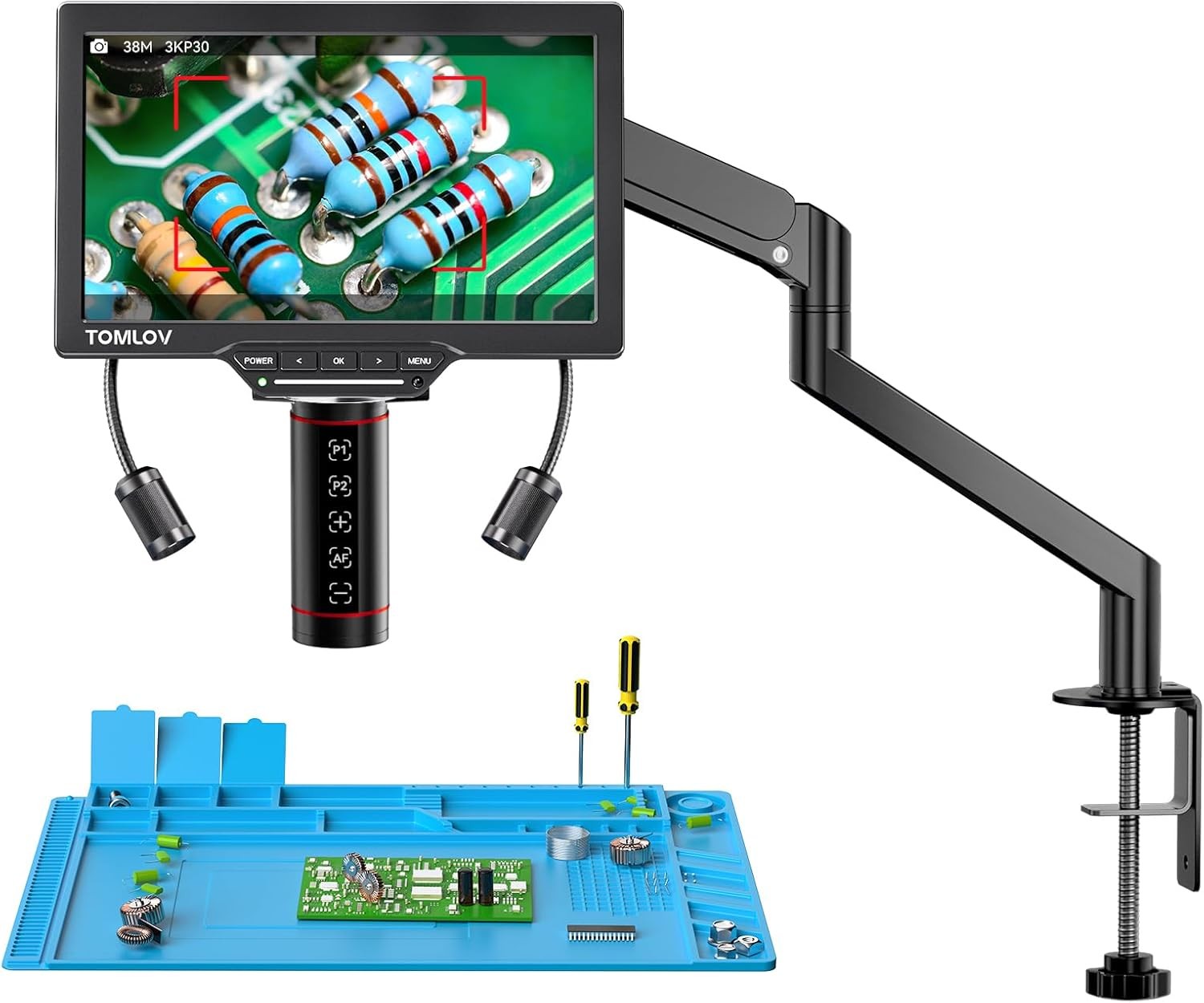 TOMLOV 10" Autofocus Digital Microscope 2000X 3K 38MP Coin Microscope Hands-free$199.00View on eBay
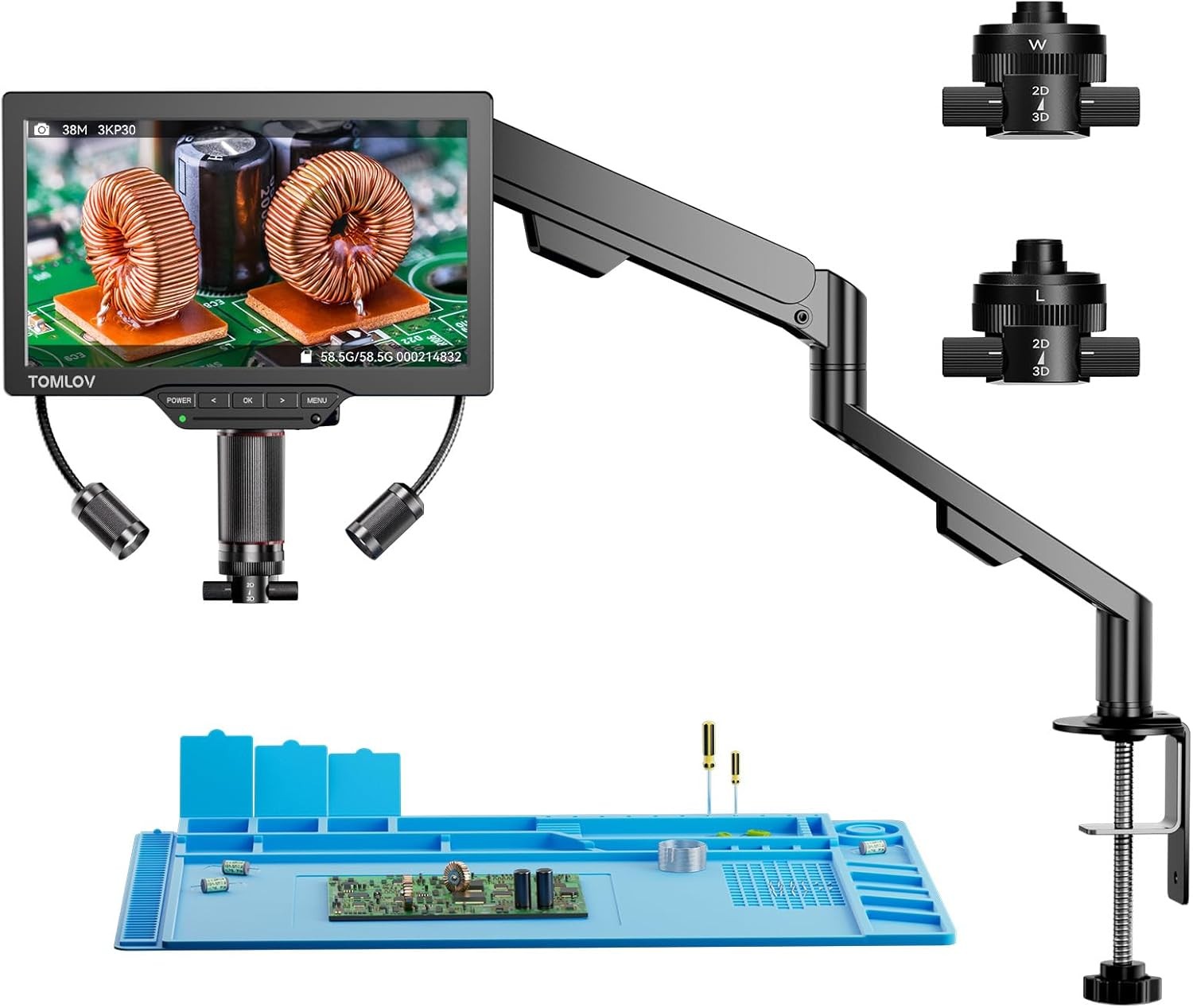 TOMLOV 10" 2000X Digital Microscope Flex Arm Soldering Microscope Camera HDMI$229.00Last checked Nov 18, 2026View on eBay
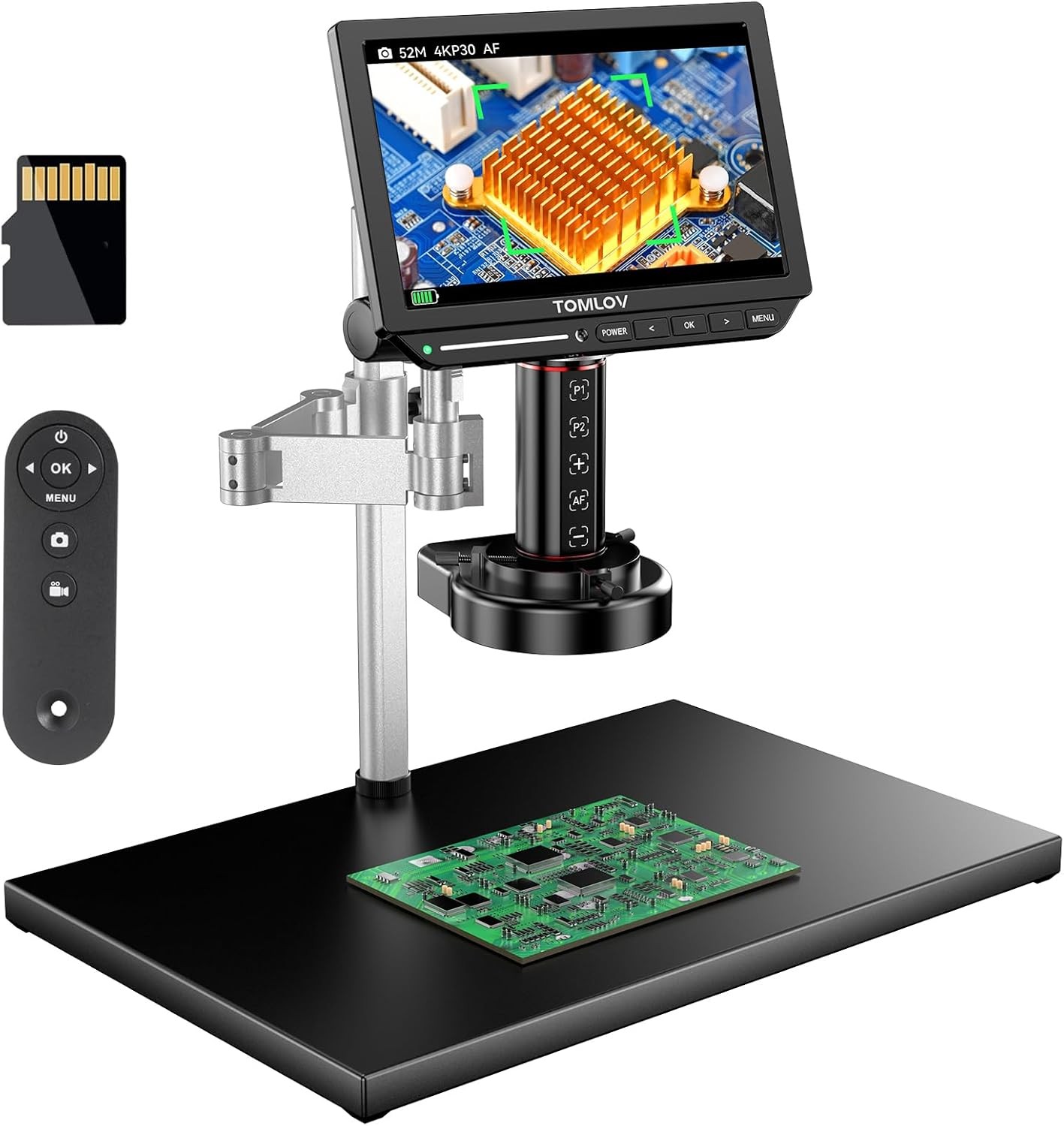 TOMLOV 4K Autofocus Digital Microscope 10.1" Spin Flex Arm Soldering Microscope$256.00Last checked Nov 17, 2026View on eBay
Highlights
- Screen tier drives usability: 2.4-inch handheld is pocket-portable but cramped; 4.3-inch is entry-level; 7-inch is the practical minimum for soldering and coin inspection; 10.1-inch HDMI models are the workstation tier.
- Sensor resolution separates detail tiers: 12MP and 20MP sensors resolve fine PCB traces and coin relief, while older low-MP units blur at maximum digital zoom.
- Magnification is digital beyond the optical base—1200X, 1500X, and 2500X figures are interpolated, so real resolving power comes from sensor MP and lens/lighting, not the printed zoom number.
- Stand construction determines stability: aluminum-alloy and metal column stands hold focus at high magnification, while plastic flex stands drift and blur during soldering or measurement.
Best use cases
- PCB soldering and rework: pick a 7-inch or 10.1-inch model with HDMI output and a rigid metal stand; skip 2.4-inch handhelds, which cannot hold focus at working distance.
- Coin and collectible grading: choose a 7-inch 1200X unit or the 10.1-inch DM9 Max for full-coin framing; skip 200X weight-scale bundles unless you specifically need the integrated scale.
- Trichome and jeweler inspection: a 100X–200X illuminated loupe-style unit suffices; skip 2500X TriL110 models, whose interpolated zoom adds no real detail at this scale.
- Classroom or shared bench: the 10.1-inch HDMI tier supports an external monitor for group viewing; skip 4.3-inch units, whose small screen limits multiple viewers.
Buying tips
- Match screen size to task: 4.3-inch for quick loupe checks, 7-inch for sustained soldering, 10.1-inch for coin framing and monitor output.
- Prefer 12MP or 20MP sensors over low-MP units; interpolated 1500X–2500X claims do not compensate for a weak sensor.
- Choose aluminum-alloy or metal column stands over plastic; rigidity holds focus at high magnification and long working distance.
- Buy HDMI-equipped models (DM9 Max, TriL110) if you want external-monitor viewing; 4.3-inch and 2.4-inch tiers are screen-only.
Specs
| Display Size | 2.4" / 4.3" / 7" / 10.1" |
|---|---|
| Sensor Resolution | 12MP vs 20MP |
| Magnification | 100X-2500X digital |
| Stand Material | Aluminum alloy vs plastic |
Related searches
What to check before buying
- Measure bench depth and overhead clearance: 10.1-inch models need a stable desk footprint and headroom for the tall column.
- Confirm working distance for soldering: iron and hot-air tools need clearance between lens and board, which short handheld units cannot provide.
- Check output ports: HDMI requires a monitor and cable; USB-only units tether to a PC and lack standalone display.
- Verify lighting: LED ring count (10 LED on DM9 Max) and dimming control matter for reflective coins and shiny solder joints.
FAQ
Data sources: eBay / Amazon listings and product attribute feeds. Updated Nov 28, 2026.
Some links on this page are affiliate links. If you buy after clicking one, we may earn a commission at no extra cost to you. This does not change which products appear here or their order. Affiliate disclosure.