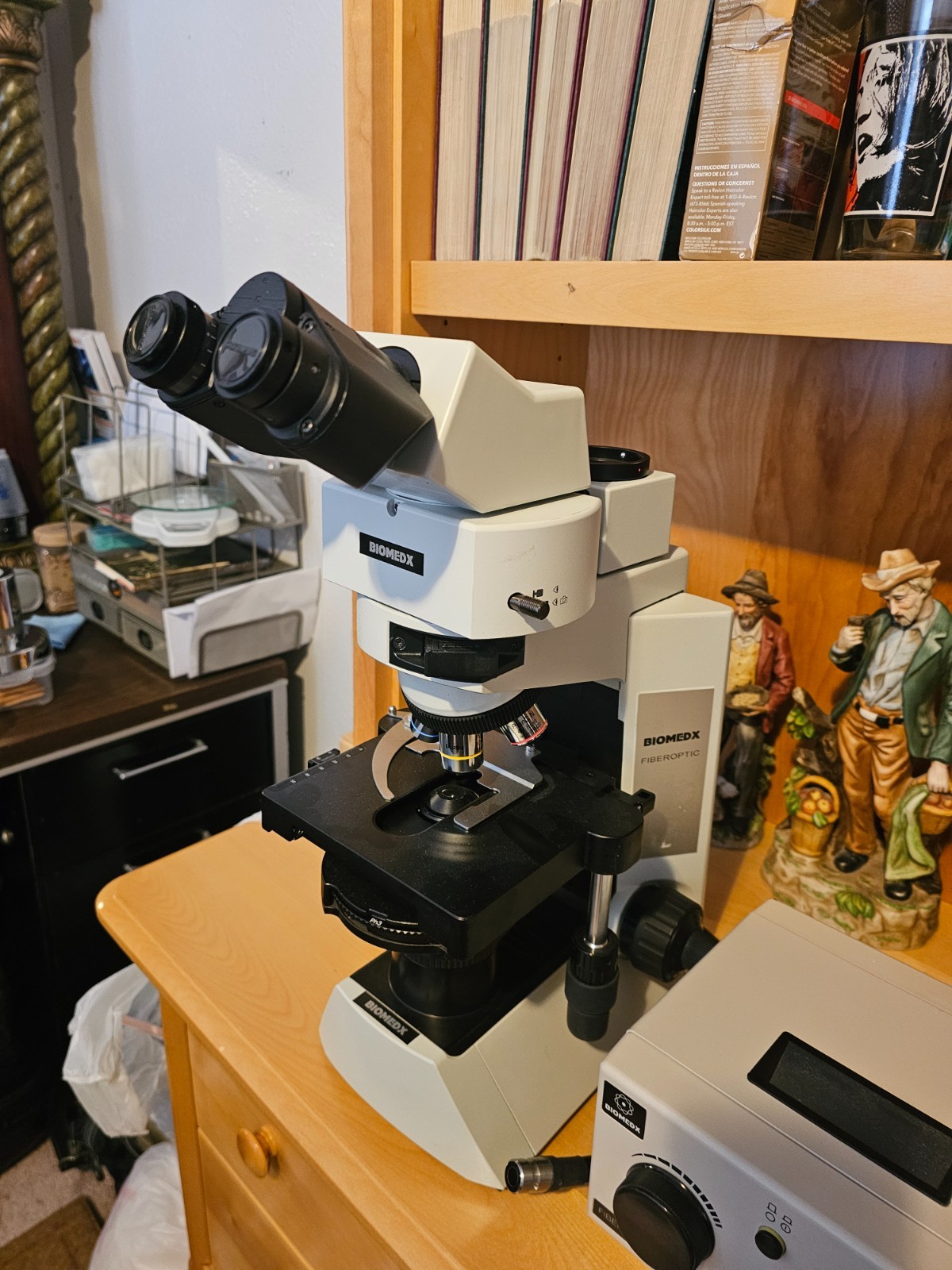

Photos from current listings. Actual item, color, and included accessories may vary.
Microscope Light Buying Guide
A microscope light is the illumination module or built-in LED array that determines image brightness, color accuracy, and contrast for any stereo, compound, or digital microscope. The core trade-off is between simple fixed-brightness LED rings and dimmable, color-corrected, or transmitted-light systems that match the specimen and camera sensor. Buy a dimmable, high-CRI LED module with the correct mount for your microscope type; skip fixed-brightness plastic rings or mirror-only illuminators for serious imaging.
Key takeaways
- LED ring lights dominate digital and stereo microscopes; compound scopes use built-in transmitted illuminators or external gooseneck sources.
- Dimmable 8-LED arrays with 6500K color temperature are standard on 4.3-inch LCD digital microscopes for coin and error-coin inspection.
- High-CRI (90+) LEDs preserve specimen color accuracy; low-CRI budget arrays shift colors and hurt photo/video documentation.
At a glance
- Category
- Microscopes & Lab Imaging
- Last updated
- Nov 28, 2026
Current offers
Highlights
- LED ring lights dominate digital and stereo microscopes; compound scopes use built-in transmitted illuminators or external gooseneck sources.
- Dimmable 8-LED arrays with 6500K color temperature are standard on 4.3-inch LCD digital microscopes for coin and error-coin inspection.
- High-CRI (90+) LEDs preserve specimen color accuracy; low-CRI budget arrays shift colors and hurt photo/video documentation.
- Zeiss and other compound microscopes use dedicated illuminators or mirrors; LED retrofits must match the condenser and field diaphragm.
Best use cases
- Coin, error-coin, and PCB inspection: pick a 4.3-inch LCD digital microscope with dimmable 8-LED ring and 1080p capture; skip mirror-only compound scopes.
- Stereo dissection and repair: choose a dimmable LED ring with 6500K output and a 55-65mm mount; skip fixed-brightness plastic rings.
- Compound biology and slides: use the built-in transmitted LED illuminator or a compatible external source; skip ring lights that only light opaque surfaces.
Buying tips
- Match the light mount to your microscope: 55-65mm ring diameter fits most stereo scopes; digital LCD scopes use integrated 8-LED arrays.
- Choose dimmable 6500K LEDs with CRI 90+ for color-accurate photos; fixed-brightness arrays wash out shiny specimens.
- For compound scopes, confirm the illuminator voltage and plug standard matches your region and the condenser accepts LED retrofit.
- Digital microscope lights are integrated; verify the LCD model supports external PC view and 32GB card capture if you need documentation.
Specs
| Light Type | LED ring / transmitted / gooseneck |
|---|---|
| Color Temp | 6500K neutral white |
| Dimmable | Yes (8-step or continuous) |
| Mount Diameter | 55-65mm ring / integrated |
Related searches
What to check before buying
- Measure your microscope head or ring adapter diameter (55-65mm common) before ordering a ring light.
- Confirm specimen type: opaque coins/PCBs need ring or gooseneck light; slides need transmitted illumination.
- Check LED color temperature (6500K neutral) and CRI (90+) against your camera or phone sensor.
- Verify voltage and plug standard (USB or 100-240V adapter) for your region and outlet.
FAQ
Data sources: eBay / Amazon listings and product attribute feeds. Updated Nov 28, 2026.
Some links on this page are affiliate links. If you buy after clicking one, we may earn a commission at no extra cost to you. This does not change which products appear here or their order. Affiliate disclosure.