
Photos from current listings. Actual item, color, and included accessories may vary.
Compound Trinocular Microscope Buying Guide
A compound trinocular microscope uses a dual-ocular viewing head plus a dedicated vertical photo port, letting you observe and capture simultaneously. The core trade-off is optical quality and mechanical rigidity versus ballooned magnification claims: true performance comes from plan achromatic objectives, a sturdy metal stage, and a stable trinocular head, not from digital-zoom multipliers. Buy for real optical limits (typically 40X–1000X with 4×/10×/40×/100× objectives) and skip any listing that markets 2500X–5000X as native optical magnification.
Median $231.45 · Pre-owned listings
Key takeaways
- Native optical magnification is objective power × eyepiece power (e.g., 100× objective × 10× eyepiece = 1000X); anything beyond 1000X–1600X is empty digital/eyepiece enlargement with no added resolution.
- Trinocular heads split light 70/30 or 80/20 to the photo port; the port diameter (typically 23.2mm or 30mm) dictates which C-mount adapters and camera sensors fit.
- A two-layer mechanical stage with coaxial X-Y knobs and a graduated scale enables repeatable scanning at 400X–1000X, where hand-positioned slides are unusable.
At a glance
- Category
- Microscopes & Lab Imaging
- Last updated
- Nov 28, 2026
Current offers
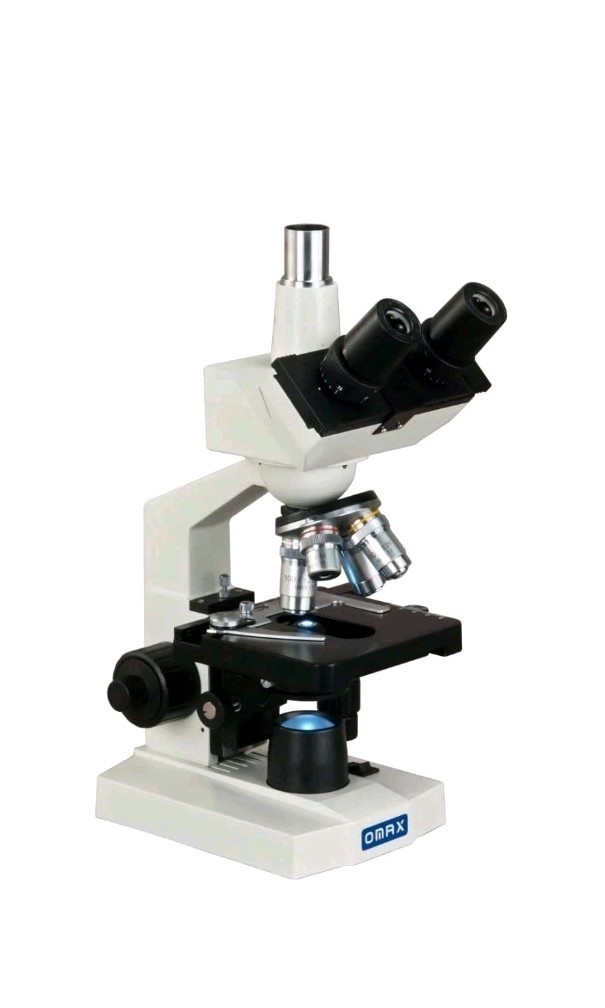 OMAX 40X-2500X LED Lab Trinocular Compound Microscope with Double Layer$159.99View on eBay
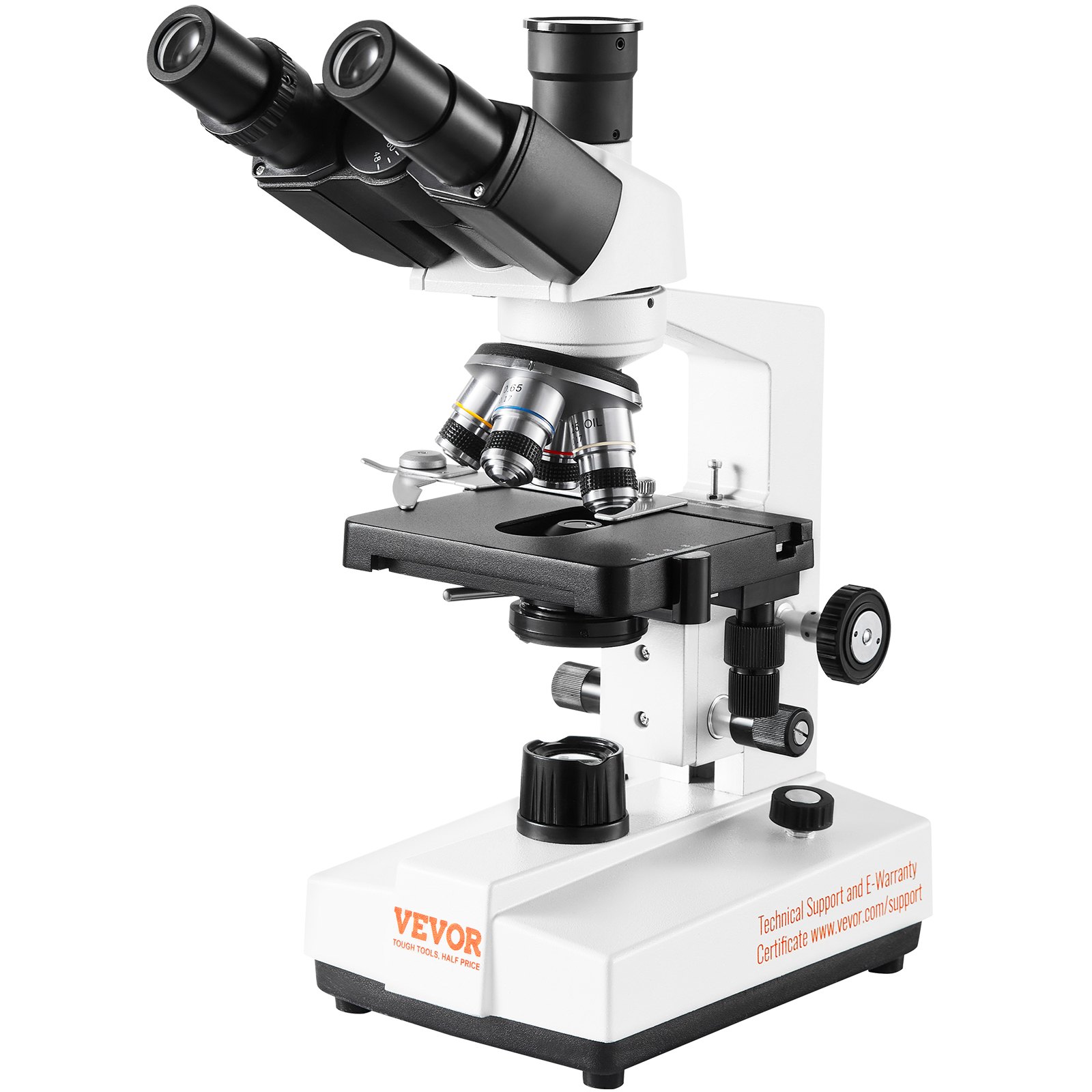 Compound Trinocular Microscope, 40X-5000X Magnification Lab With Two-Layer Mechanical Stage, External Interface, LED Illumination And Slides Included$283.99View on Mallflare
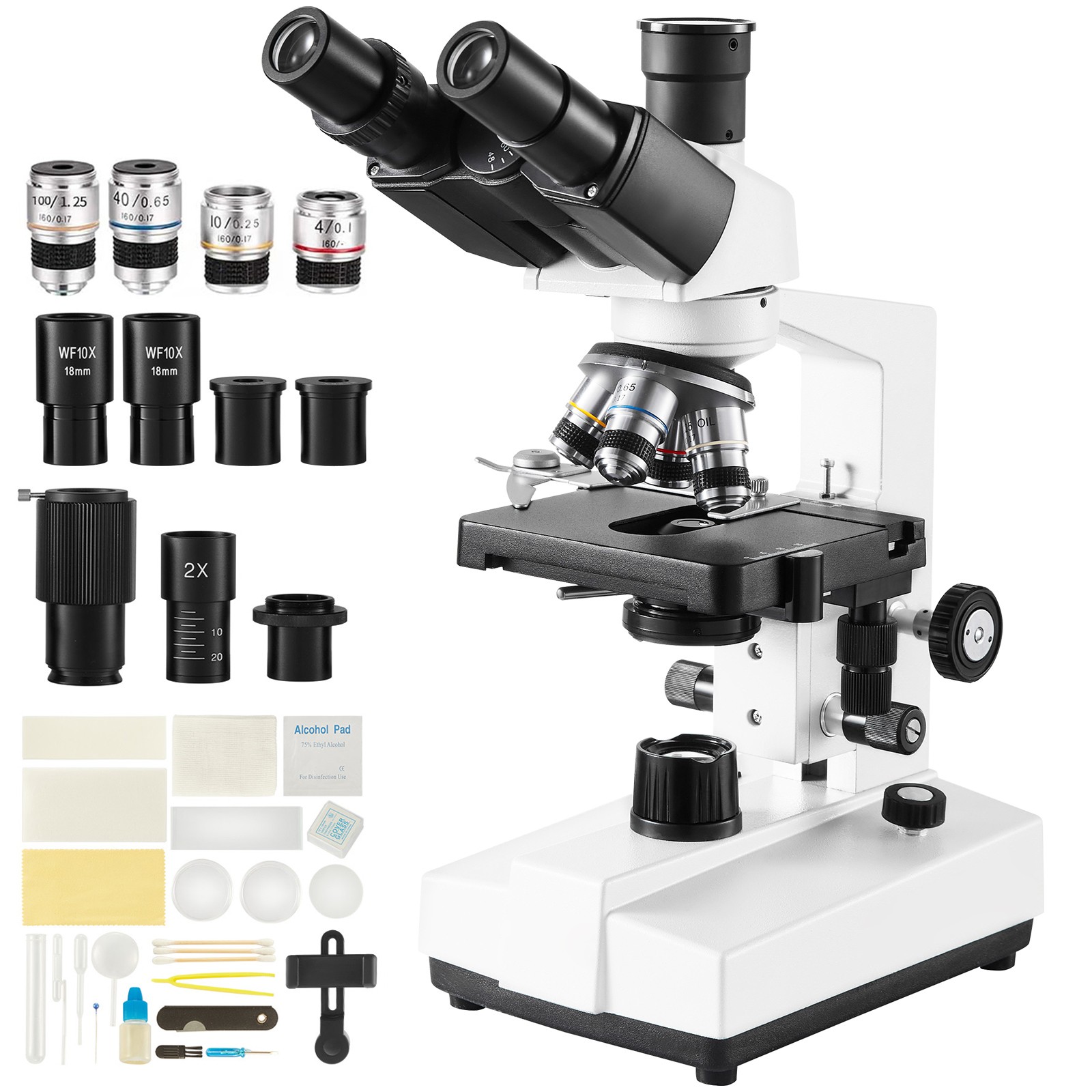 Lab Compound Trinocular Microscope 40X-5000X Two-Layer 3D Mechanical Stage LED$212.89Last checked Nov 27, 2026View on eBay
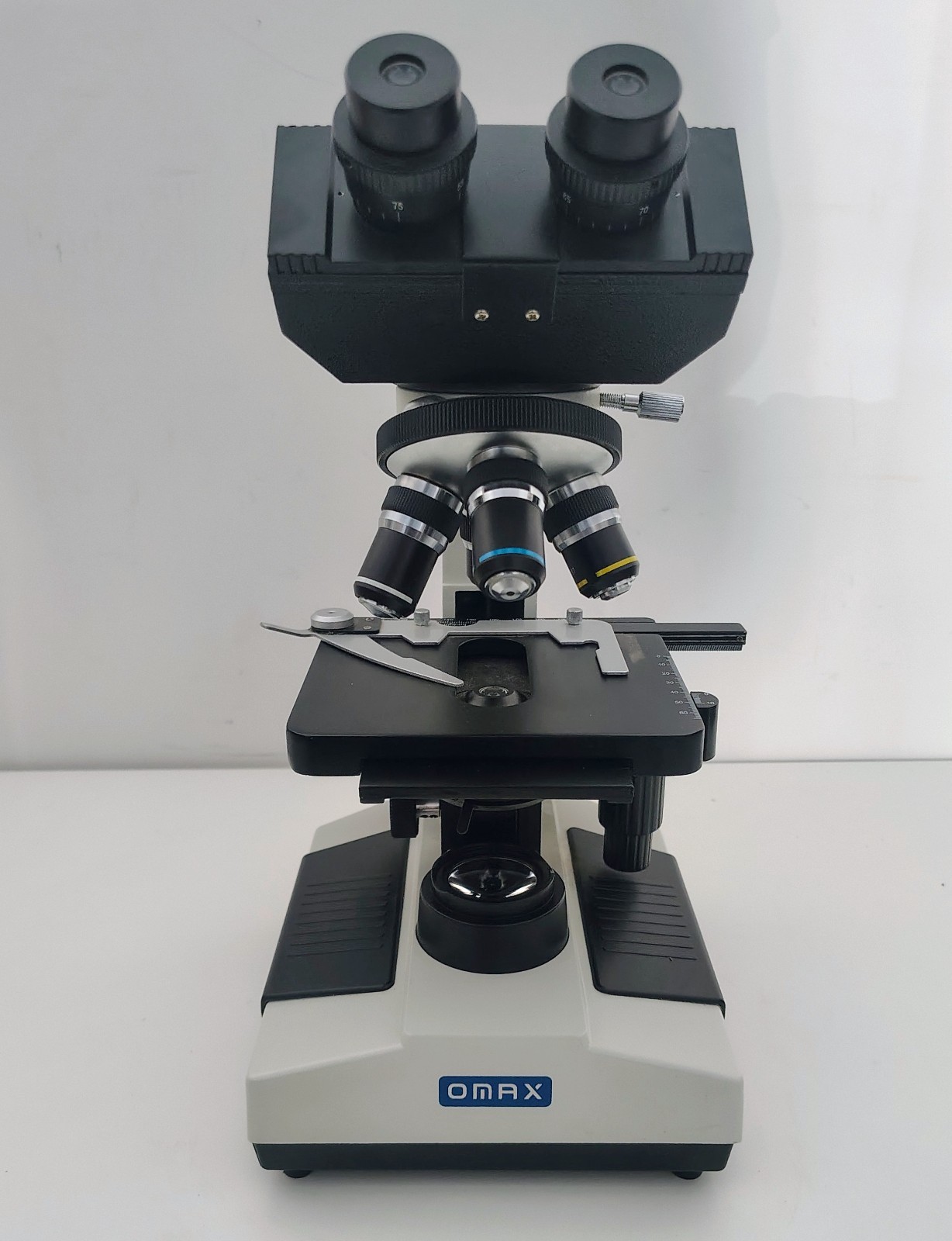 OMAX TRINOCULAR DIGITAL DARK FIELD PHASE CONTRAST COMPOUND MICROSCOPE 40X-2500X$250.00Used · Last checked Nov 25, 2026View on eBay
Highlights
- Native optical magnification is objective power × eyepiece power (e.g., 100× objective × 10× eyepiece = 1000X); anything beyond 1000X–1600X is empty digital/eyepiece enlargement with no added resolution.
- Trinocular heads split light 70/30 or 80/20 to the photo port; the port diameter (typically 23.2mm or 30mm) dictates which C-mount adapters and camera sensors fit.
- A two-layer mechanical stage with coaxial X-Y knobs and a graduated scale enables repeatable scanning at 400X–1000X, where hand-positioned slides are unusable.
- Abrécht condenser (N.A. 1.25) with iris diaphragm and Köhler-capable field diaphragm is the dividing line between research-grade contrast and entry-level washed-out images.
Best use cases
- Best fit: classroom or vet/clinical wet-mount work at 40X–1000X — pick a trinocular with 4×/10×/40×/100× plan objectives and a 23.2mm photo port for phone or C-mount camera.
- Best fit: documented specimen archiving — choose a model with a 30mm photo port and C-mount adapter so a dedicated USB camera can record without an eyepiece.
- Wrong fit: metallurgical or opaque-sample inspection — skip biological compound trinoculars (brightfield transmitted light only) and choose an upright metallurgical scope with reflected illumination.
- Wrong fit: stereo/dissection work — a compound trinocular's high magnification and short working distance make it useless for PCB repair or insect dissection; pick a stereo zoom trinocular instead.
Buying tips
- Cap expectations at 1000X–1600X native: 100× oil-immersion objective plus 10×–16× eyepieces is the practical ceiling; 2500X and 5000X labels are digital-zoom marketing.
- Demand plan achromatic (not just achromatic) objectives if you'll photograph; plan objectives flatten field curvature so edges stay sharp in the camera port.
- Match the trinocular port to your camera: 23.2mm accepts 0.5× C-mount adapters for 1/2"–2/3" sensors; 30mm takes 1× adapters for larger sensors.
- Prioritize a metal rack-and-pinion stage with coaxial controls and a 1.25 N.A. Abrécht condenser over LED brightness specs; illumination is cheap to upgrade, mechanics and optics are not.
Specs
| Head Type | Trinocular (dual ocular + photo port) |
|---|---|
| Magnification Range | 40X–1000X native optical |
| Objective Type | Plan achromatic, 4×/10×/40×/100× |
| Stage Type | Two-layer mechanical, coaxial X-Y |
Related searches
What to check before buying
- Measure bench depth and height clearance: compound trinoculars typically need ~40×30cm footprint and ~40–45cm vertical clearance for the eyepiece tubes and photo port.
- Confirm your camera's sensor size and mount before buying: C-mount cameras need a 0.5× or 1× adapter matched to the port diameter (23.2mm vs 30mm).
- Check power: most LED compound scopes ship with 100–240V external adapters; confirm plug type for your region and that the LED is dimmable.
- Budget for consumables: slides, coverslips, immersion oil (for 100×), lens paper, and a dust cover are required companion items not always included.
FAQ
Data sources: eBay / Amazon listings and product attribute feeds. Updated Nov 28, 2026.
Some links on this page are affiliate links. If you buy after clicking one, we may earn a commission at no extra cost to you. This does not change which products appear here or their order. Affiliate disclosure.