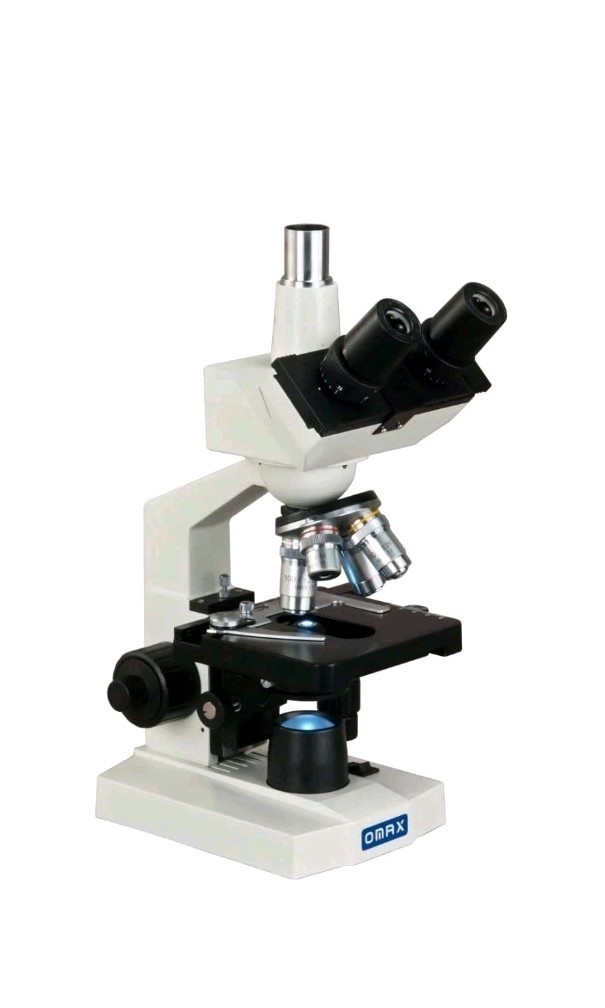

Photos from current listings. Actual item, color, and included accessories may vary.
Omax Microscope Buying Guide
OMAX microscopes are affordable compound and stereo microscopes built around achromatic optics and LED illumination, primarily serving students, hobbyists, and small clinics. The core trade-off is optical glass quality and mechanical stage rigidity versus price: entry tiers use plastic gears and single-layer stages, while lab tiers add all-metal racks, double-layer mechanical stages, and trinocular ports. The decision rule: buy the highest mechanical-stage and optics tier you can justify, and skip models with plastic focus gears or fixed single-layer stages if you need repeatable measurements.
Median $205.00 · Pre-owned listings
Key takeaways
- OMAX compound models commonly span 40X–2500X using 4X/10X/40X/100X objectives plus 10X and 25X eyepieces; the 100X oil objective is required for true 2500X.
- Trinocular heads add a camera port splitting light ~70/30 to eyepieces/camera, enabling documentation without swapping eyepieces.
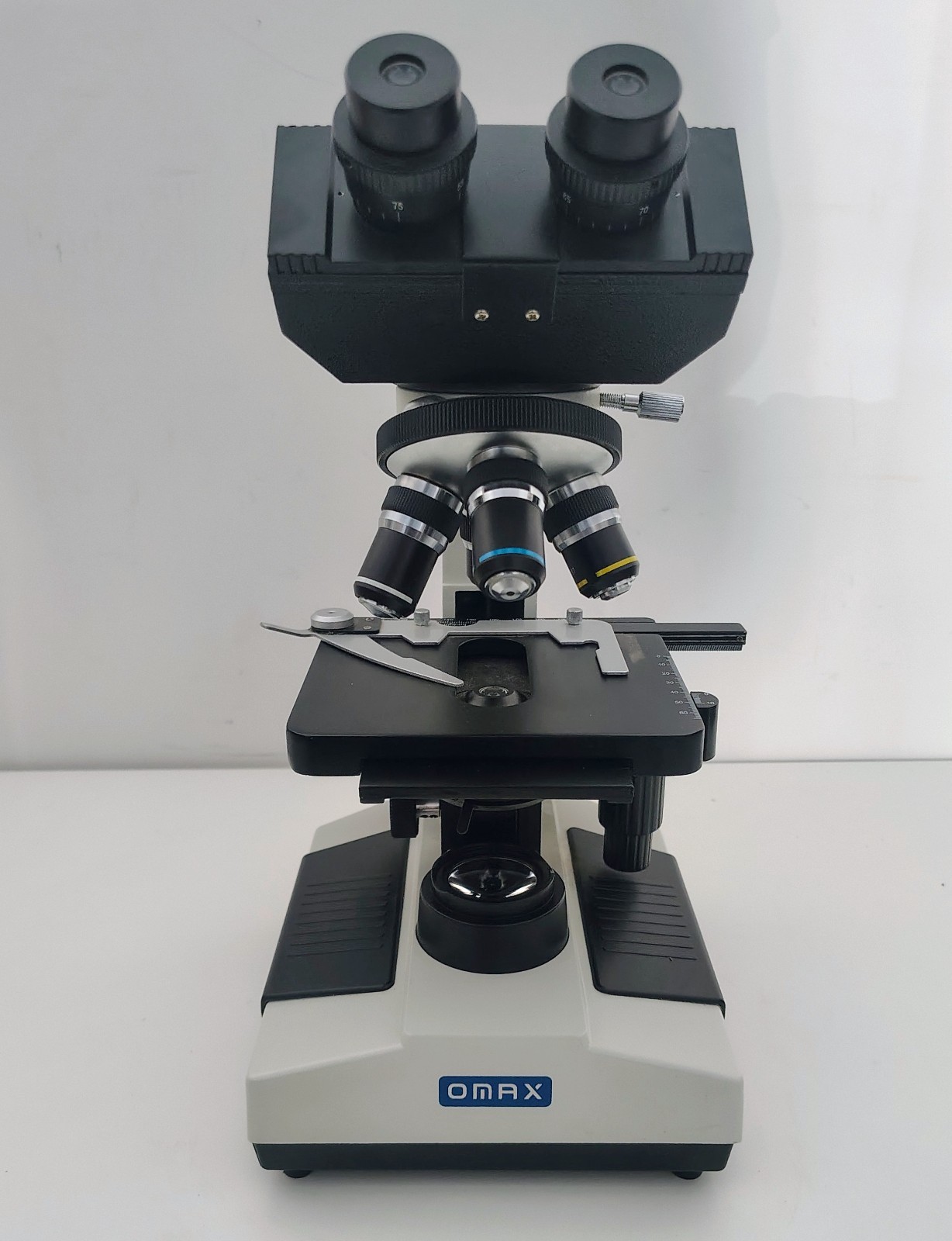
- Double-layer mechanical stages use coaxial X-Y knobs with 1mm/0.1mm graduations; single-layer stages rely on slide clips and hand positioning, limiting repeatability.
At a glance
- Category
- Microscopes & Lab Imaging
- Last updated
- Nov 28, 2026
Current offers
Highlights
- OMAX compound models commonly span 40X–2500X using 4X/10X/40X/100X objectives plus 10X and 25X eyepieces; the 100X oil objective is required for true 2500X.
- Trinocular heads add a camera port splitting light ~70/30 to eyepieces/camera, enabling documentation without swapping eyepieces.
- Double-layer mechanical stages use coaxial X-Y knobs with 1mm/0.1mm graduations; single-layer stages rely on slide clips and hand positioning, limiting repeatability.
- Illumination is typically 1W LED with adjustable brightness and Abbe condenser NA 1.25; LED runs cool and lasts far longer than halogen.
Best use cases
- Best fit: high school or college student needing 40X–1000X brightfield viewing — pick a monocular or binocular 40X–1000X model with LED and mechanical stage; skip trinocular if no camera is planned.
- Best fit: clinic or lab documenting slides — choose a trinocular 40X–2500X with double-layer stage and 100X oil objective; skip monocular heads, which force eyepiece camera swaps.
- Wrong fit: inspecting opaque 3D objects (coins, insects, PCBs) — compound microscopes require transmitted light through thin slides; choose a stereo zoom microscope instead.
- Wrong fit: field or classroom use without stable power — these are AC-powered benchtop units; skip if you need battery or portable operation.
Buying tips
- Match magnification to purpose: 40X–400X covers most student work; add 100X oil only if you need cellular detail and will use immersion oil properly.
- Insist on a double-layer mechanical stage with coaxial knobs for any measurement or scanning work; single-layer stages make systematic slide traversal impractical.
- Prefer achromatic objectives (DIN standard 160mm tube length or infinity-corrected) and glass optics; plastic lenses and plastic focus racks degrade image and longevity.
- For photomicrography, pick trinocular with a standard C-mount or 23mm camera adapter; confirm the port accepts your camera sensor format before buying.
Specs
| Head Type | Monocular / Binocular / Trinocular |
|---|---|
| Magnification Range | 40X–1000X / 40X–2500X (oil) |
| Stage Type | Single-layer / Double-layer mechanical |
| Illumination | LED 1W, Abbe condenser NA 1.25 |
Related searches
What to check before buying
- Measure your bench: compound microscopes need roughly 20x30 cm footprint plus clearance for the head and eyepieces; trinocular heads add height for camera.
- Confirm power: OMAX units are typically 100–240V AC with US-style plugs; verify the plug type and voltage for your region before ordering.
- Check camera compatibility: trinocular ports usually need a C-mount adapter or 23mm reducing adapter; confirm your camera's mount and sensor size.
- Plan for consumables: 100X oil objectives require immersion oil, lens paper, and slides/coverslips; budget these companion parts.
FAQ
Data sources: eBay / Amazon listings and product attribute feeds. Updated Nov 28, 2026.
Some links on this page are affiliate links. If you buy after clicking one, we may earn a commission at no extra cost to you. This does not change which products appear here or their order. Affiliate disclosure.