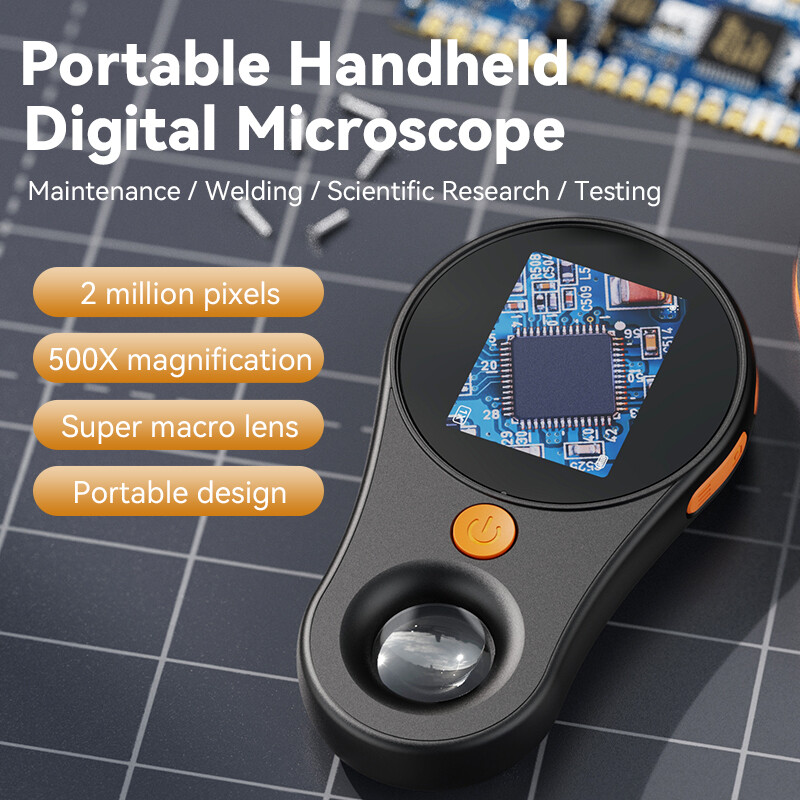

Photos from current listings. Actual item, color, and included accessories may vary.
Portable Microscope Buying Guide
A portable microscope is a compact optical or digital imaging tool built for field use, classroom demos, or bench-side inspection where a full-size lab scope is impractical. The core trade-off is between optical clarity (glass lenses, mechanical stage) and digital convenience (USB/Wi-Fi sensor, screen, capture). Choose optical for fine detail and true color; choose digital for shared viewing, recording, and coin/PCB inspection—skip hybrids that promise both without a quality lens or sensor.
Key takeaways
- Optical portable scopes use achromatic glass lenses with 10x-40x magnification; digital models rely on CMOS sensors (2MP-8MP) and fixed-focus lenses, so resolution is capped by pixel density, not eyepiece quality.
- Digital handheld scopes with 500x-1000x claims often use digital zoom, which degrades image quality; true optical zoom stays sharp, so look for optical magnification rating first.
- Build quality hinges on the stand: metal bases with rack-and-pinion focus are stable for coins/PCBs; plastic friction stands drift and blur at high magnification.
At a glance
- Category
- Microscopes & Lab Imaging
- Last updated
- Nov 28, 2026
Current offers
Highlights
- Optical portable scopes use achromatic glass lenses with 10x-40x magnification; digital models rely on CMOS sensors (2MP-8MP) and fixed-focus lenses, so resolution is capped by pixel density, not eyepiece quality.
- Digital handheld scopes with 500x-1000x claims often use digital zoom, which degrades image quality; true optical zoom stays sharp, so look for optical magnification rating first.
- Build quality hinges on the stand: metal bases with rack-and-pinion focus are stable for coins/PCBs; plastic friction stands drift and blur at high magnification.
- Battery-powered LED illumination (coin cell or rechargeable) is standard; corded USB models avoid battery drain but tether you to a laptop, so match power source to field vs bench use.
Best use cases
- Field biology and geology: pick a pocket optical scope (20x-40x, glass lens, LED) for true color and no power dependency; skip USB digital models that need a laptop.
- Coin, stamp, and PCB inspection: choose a digital scope with 2MP+ sensor, metal stand, and 1080p capture for shared images; skip low-res 0.3MP toys that blur fine print.
- Classroom and kids: a 100x-400x monocular optical scope with mechanical stage teaches real focusing; skip app-only digital scopes that hide optics behind software.
- Professional lab backup: a USB digital scope with 5MP sensor and adjustable stand works for documentation; skip fixed-focus pens that cannot hold working distance.
Buying tips
- Match magnification to task: 20x-40x for coins/insects, 100x-400x for cells/slides, 500x+ only with a stable metal stand and good lighting.
- Prioritize glass optics over digital zoom: a 40x achromatic lens outperforms a 500x digital zoom for clarity and color accuracy.
- Check sensor and output: 2MP minimum for 1080p; USB-C or Wi-Fi for capture; avoid scopes that only stream to a proprietary app with no file export.
- Verify stand compatibility: metal base with standard 1/4-20 thread or clamp fits most stands; plastic clips limit working distance and stability.
Specs
| Optical Magnification | 20x-40x (field) / 100x-400x (lab) |
|---|---|
| Sensor Resolution | 2MP-8MP CMOS (1080p capture) |
| Illumination | LED ring/gooseneck, battery or USB |
| Stand Type | Metal base / plastic clip / tripod |
Related searches
What to check before buying
- Measure working distance: ensure the scope's focal range clears your subject (coins need 1-2 cm; PCBs need 5-10 cm) and fits your bench height.
- Confirm power: field use needs AA/AAA or rechargeable battery; bench use can accept USB bus power, but check cable length reaches your port.
- Check illumination: LED ring or gooseneck must be adjustable and bright enough for 400x; fixed tiny LEDs wash out at high magnification.
- Verify mounting: tripod thread (1/4-20) or C-mount adapter for camera; plastic clips may not fit your stand or phone.
FAQ
Data sources: eBay / Amazon listings and product attribute feeds. Updated Nov 28, 2026.
Some links on this page are affiliate links. If you buy after clicking one, we may earn a commission at no extra cost to you. This does not change which products appear here or their order. Affiliate disclosure.