
Photos from current listings. Actual item, color, and included accessories may vary.
Trinocular Compound Microscope Buying Guide
A trinocular compound microscope adds a dedicated camera port to the standard binocular eyepiece pair, enabling simultaneous viewing and imaging—critical for documentation, teaching, and lab workflows. The primary trade-off is between entry-level achromatic optics with basic LED illumination and plan-achromatic infinity-corrected systems with Köhler illumination, which determines image flatness, color fidelity, and long-term durability. The clear decision rule: choose infinity-corrected optics and a mechanical stage for repeatable imaging work; accept finite-conjugate achromats only for casual visual observation where camera output is secondary.
Median $231.45 · Pre-owned listings
Key takeaways
- Trinocular head splits light 80/20 or 70/30 to the camera port; a 100% switch lever is required for low-light camera exposures.
- Infinity-corrected plan-achromatic objectives (marked ∞/0.17) deliver flat fields and accept standard RMS threads; finite 160mm achromats are cheaper but show edge curvature.
- Köhler illumination with field diaphragm and centering telescope is the standard for even, glare-free imaging; simple LED with diffuser is acceptable only for brightfield visual use.
At a glance
- Category
- Microscopes & Lab Imaging
- Last updated
- Nov 28, 2026
Current offers
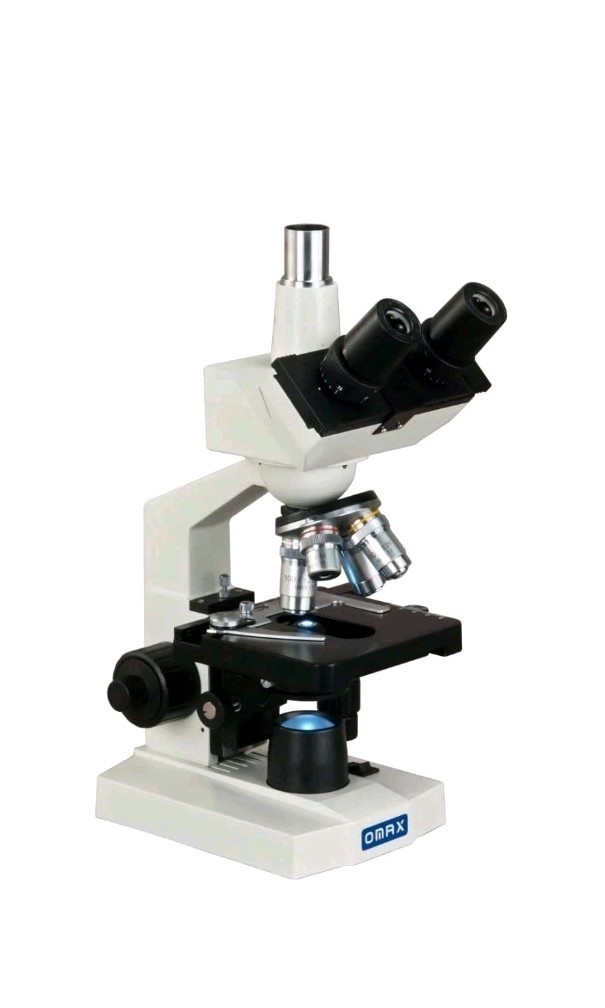 OMAX 40X-2500X LED Lab Trinocular Compound Microscope with Double Layer$159.99View on eBay
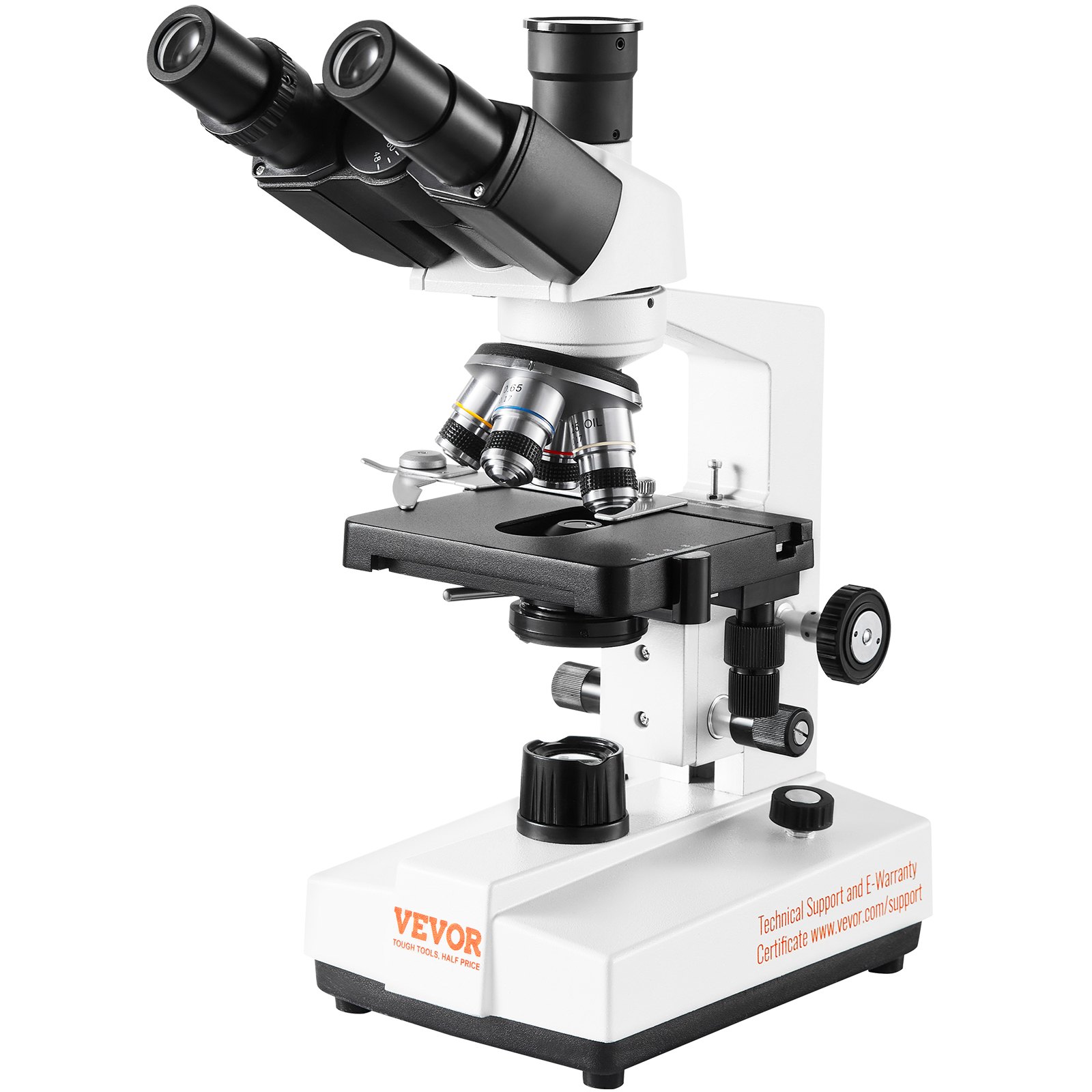 Compound Trinocular Microscope, 40X-5000X Magnification Lab With Two-Layer Mechanical Stage, External Interface, LED Illumination And Slides Included$283.99View on Mallflare
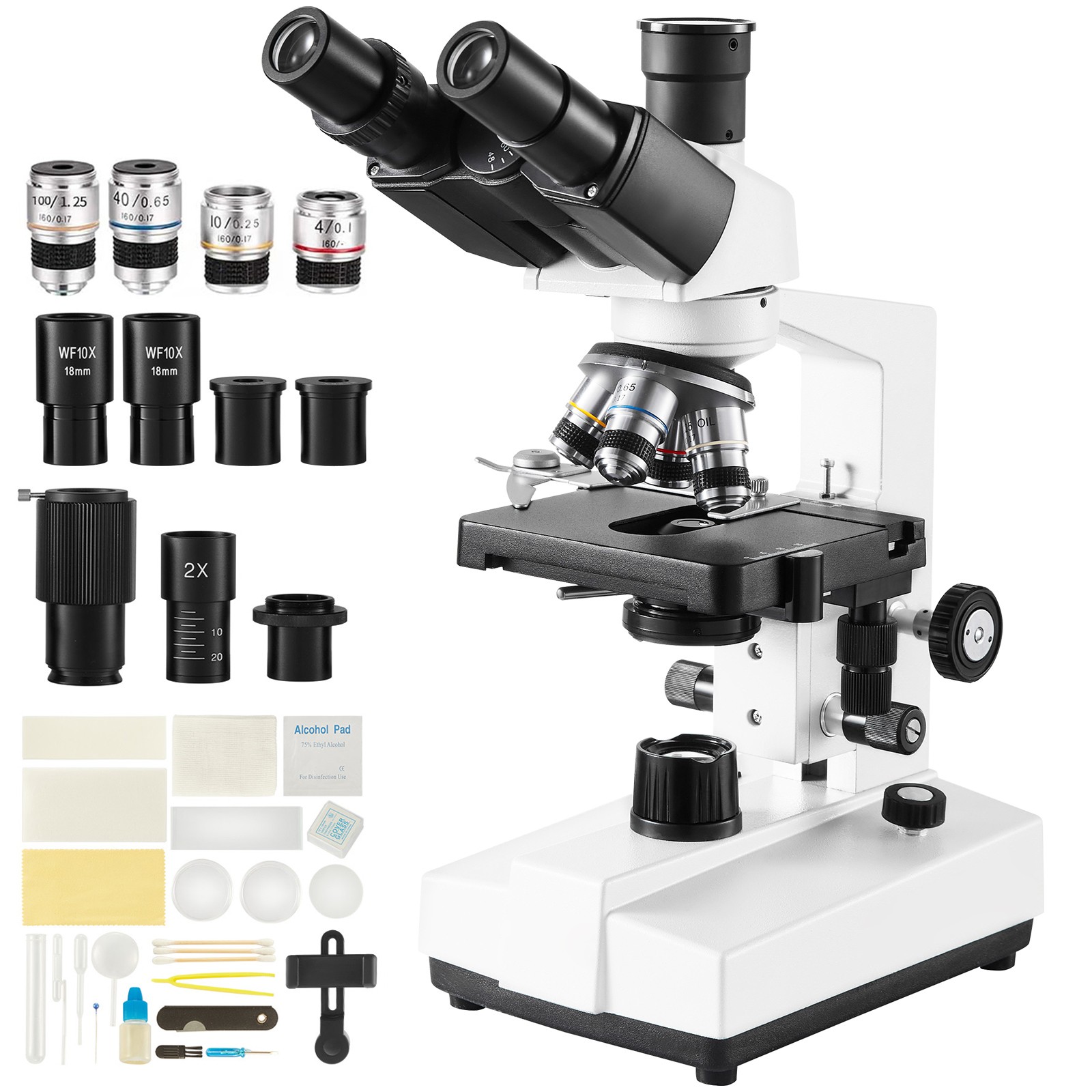 Lab Compound Trinocular Microscope 40X-5000X Two-Layer 3D Mechanical Stage LED$212.89Last checked Nov 27, 2026View on eBay
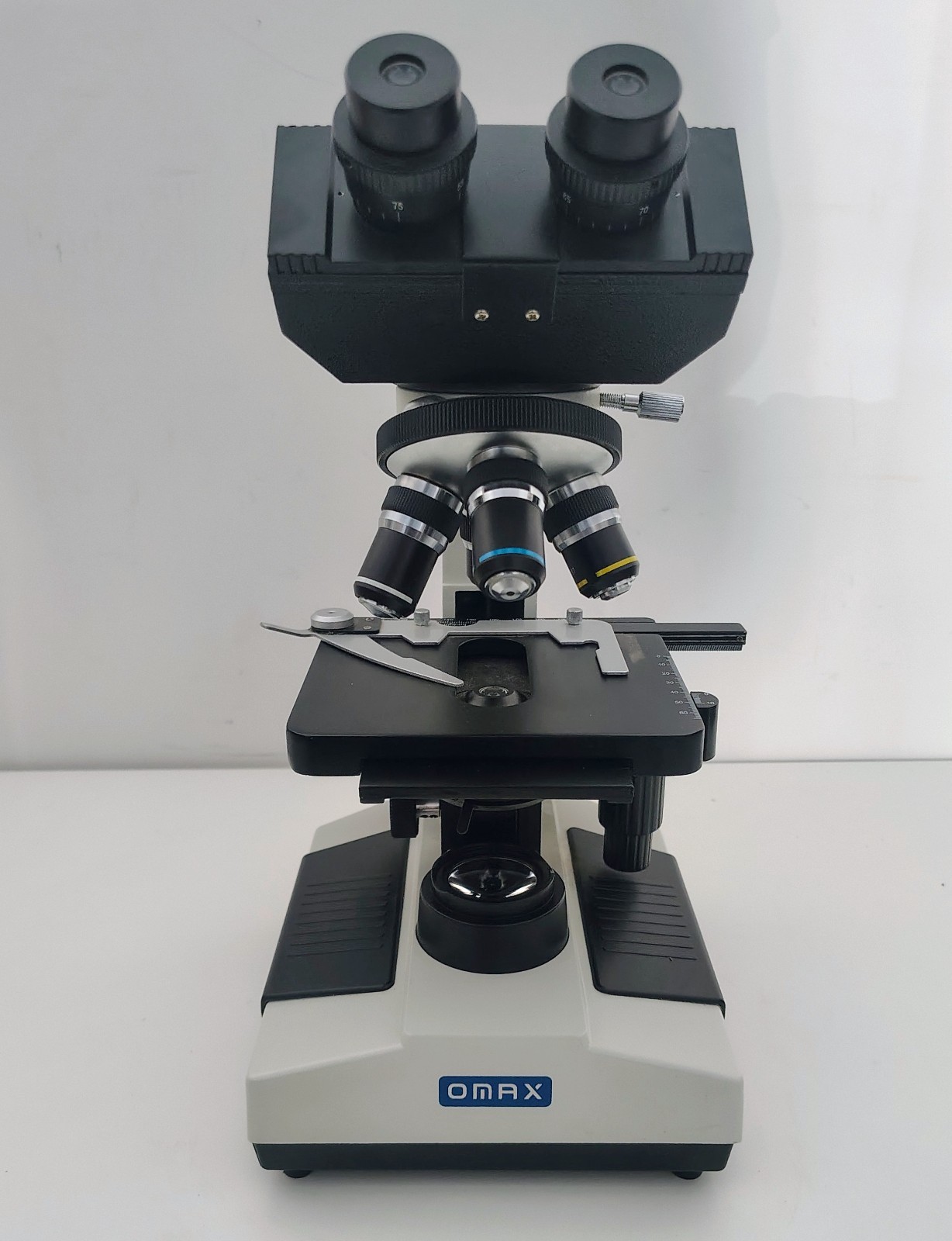 OMAX TRINOCULAR DIGITAL DARK FIELD PHASE CONTRAST COMPOUND MICROSCOPE 40X-2500X$250.00Used · Last checked Nov 25, 2026View on eBay
Highlights
- Trinocular head splits light 80/20 or 70/30 to the camera port; a 100% switch lever is required for low-light camera exposures.
- Infinity-corrected plan-achromatic objectives (marked ∞/0.17) deliver flat fields and accept standard RMS threads; finite 160mm achromats are cheaper but show edge curvature.
- Köhler illumination with field diaphragm and centering telescope is the standard for even, glare-free imaging; simple LED with diffuser is acceptable only for brightfield visual use.
- Mechanical stages with coaxial X-Y controls and 0.1mm graduations enable precise scanning; plain stage clips are inadequate for oil-immersion or tiled imaging.
Best use cases
- Best fit: lab documentation and teaching—pick an infinity-corrected trinocular with 4x/10x/40x/100x oil plan objectives, Köhler LED, and a 23mm camera adapter mount.
- Wrong fit: clinical pathology requiring fluorescence or phase contrast—skip standard brightfield trinoculars; you need a modular infinity system with epi-fluorescence ports.
- Best fit: field or classroom visual use with occasional photos—a finite-conjugate 40x-1000x trinocular with 20W LED and simple stage is sufficient and more portable.
- Wrong fit: high-resolution publication imaging—avoid 40x-2500x kits that rely on empty magnification (25x eyepieces); prioritize 100x oil plan optics and a 5MP+ camera over eyepiece-based zoom.
Buying tips
- Verify infinity correction: objectives must be marked ∞/-/0.17; finite 160mm systems cannot be upgraded with infinity objectives and limit future module additions.
- Match camera port thread: standard is 23mm (C-mount adapter required for most cameras); confirm the trinocular head includes a 30° or 45° viewing angle and a light-split lever.
- Stage travel matters: choose a mechanical stage with at least 75mm x 50mm travel and 0.1mm graduations for scanning slides; two-layer stages allow coarse and fine positioning.
- Illumination power: 1W LED is adequate for brightfield; 3W or higher with adjustable intensity is needed for darkfield or high-mag oil imaging; confirm 100-240V universal input.
Specs
| Optical System | Infinity-corrected vs finite 160mm |
|---|---|
| Magnification Range | 40x-1000x standard; 2500x empty |
| Stage Type | Mechanical X-Y vs plain clips |
| Camera Port | 23mm phototube / C-mount ready |
Related searches
What to check before buying
- Measure bench depth: trinocular heads add 50-100mm height; ensure at least 400mm vertical clearance and a stable, vibration-free surface.
- Confirm camera compatibility: check whether the port accepts C-mount (1-inch sensor) or requires a 0.5x reduction lens for 2/3-inch sensors.
- Verify power: match plug type (US/EU/UK) and voltage; lab-grade units should accept 100-240V 50/60Hz for global use.
- Account for accessories: plan for immersion oil (if 100x oil objective included), lens paper, and a dust cover; some kits omit these.
FAQ
Data sources: eBay / Amazon listings and product attribute feeds. Updated Nov 28, 2026.
Some links on this page are affiliate links. If you buy after clicking one, we may earn a commission at no extra cost to you. This does not change which products appear here or their order. Affiliate disclosure.