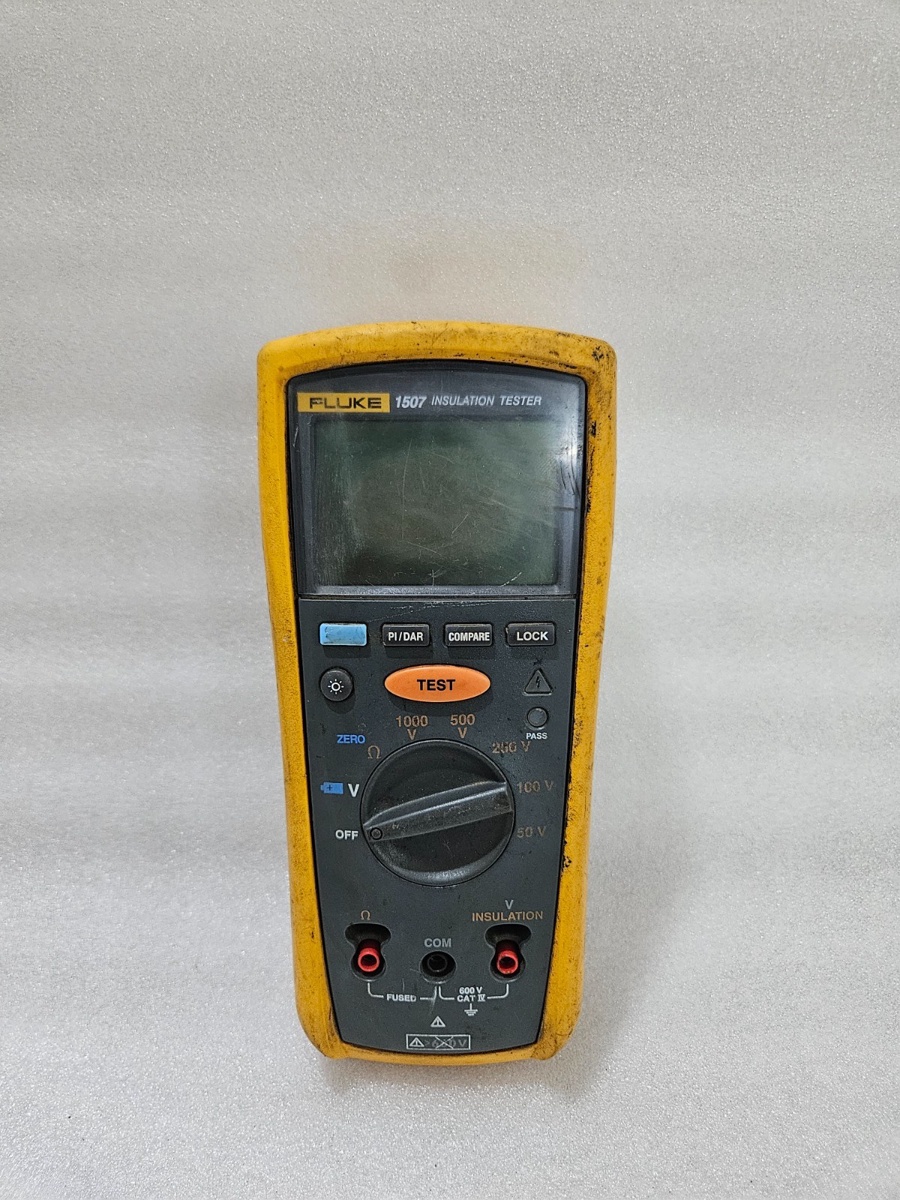

Photos from current listings. Actual item, color, and included accessories may vary.
Fluke 1507 Buying Guide
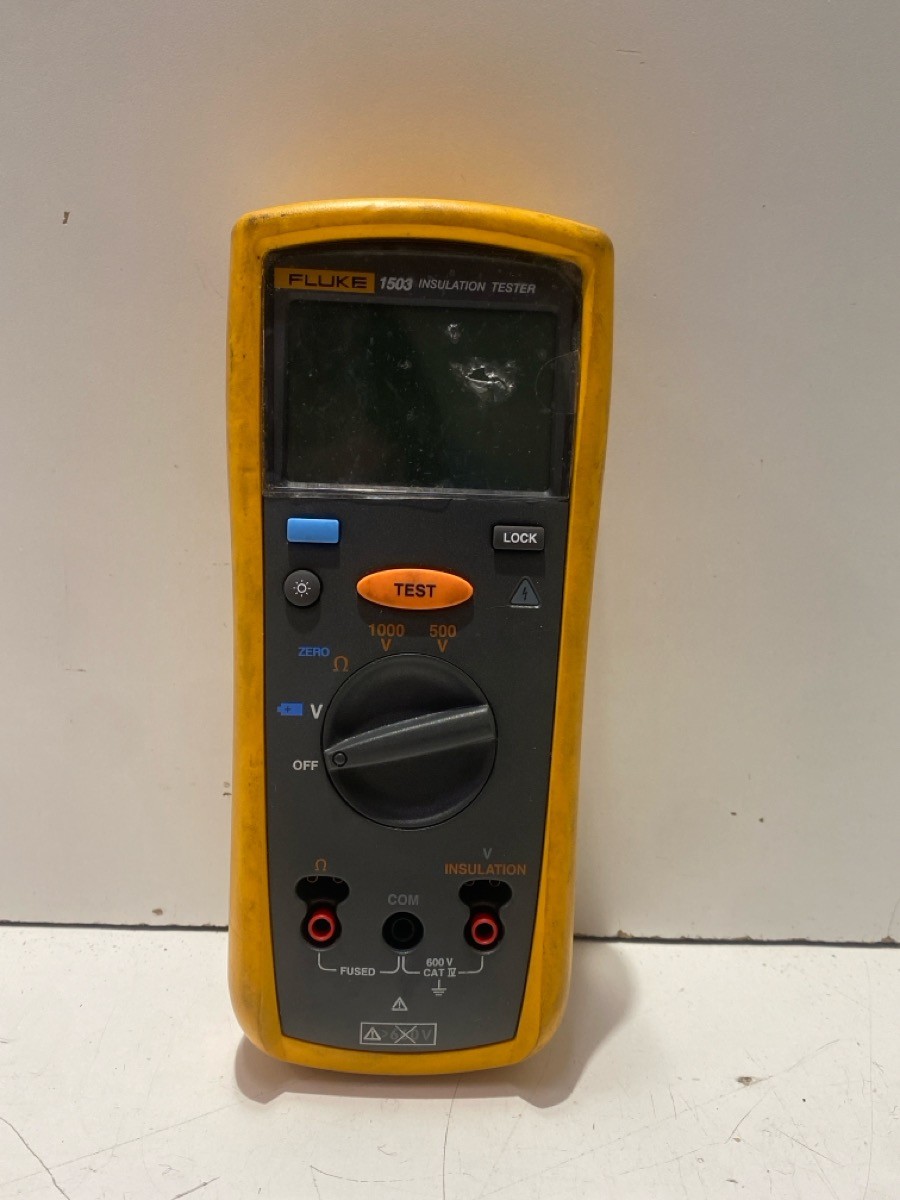
The Fluke 1507 is a battery-powered insulation resistance tester combining 50V–1000V insulation testing with True RMS AC/DC voltage, resistance, and continuity in one handheld unit. The key trade-off is application range versus simplicity: the 1507 covers 50V, 100V, 250V, 500V, and 1000V test voltages with 0.01 MΩ to 10 GΩ resistance range and a 200 mA continuity test, while the lower-tier 1503 stops at 500V and lacks the 1000V range. Choose the 1507 when your work touches 480V–1000V motors, cables, or switchgear; skip it only if your testing never exceeds 500V, where the 1503 saves cost and size.
Key takeaways
- Five selectable insulation test voltages: 50V, 100V, 250V, 500V, and 1000V — the 1000V setting is the decisive advantage over the Fluke 1503 (500V max).
- Insulation resistance range 0.01 MΩ to 10 GΩ with 200 mA continuity test, covering motor windings, cable insulation, and switchgear leakage checks.
- True RMS AC/DC voltage (0.1V–600V) and resistance measurement make it a functional multimeter for verification before insulation testing.
At a glance
- Category
- Multimeters & Electrical Testers
- Status
- Listings available
- Last updated
- Nov 28, 2026
Current offers
Highlights
- Five selectable insulation test voltages: 50V, 100V, 250V, 500V, and 1000V — the 1000V setting is the decisive advantage over the Fluke 1503 (500V max).
- Insulation resistance range 0.01 MΩ to 10 GΩ with 200 mA continuity test, covering motor windings, cable insulation, and switchgear leakage checks.
- True RMS AC/DC voltage (0.1V–600V) and resistance measurement make it a functional multimeter for verification before insulation testing.
- CAT IV 600V safety rating with live-circuit detection and automatic discharge, plus a 1-year calibration cycle and Fluke-pattern test leads.
Best use cases
- Best fit: industrial electricians testing 480V motors, feeders, and MCC buckets — the 1000V range and 10 GΩ ceiling handle medium-voltage insulation checks the 1503 cannot.
- Best fit: HVAC and facility maintenance teams diagnosing compressor windings and motor insulation — test voltage selection at 250V/500V/1000V matches motor nameplate requirements.
- Wrong fit: residential-only electricians working 120V/240V circuits — a 500V-max tester (Fluke 1503 or 1587 FC) covers every residential insulation test and costs less.
- Wrong fit: buyers wanting a primary DMM — the 1507 is an insulation tester first; for general electronics work a Fluke 117 or 87V is the correct tool.
Buying tips
- Match test voltage to equipment: 250V for low-voltage control wiring, 500V for 240V–480V motors, 1000V for 600V-class and medium-voltage cables — if you never exceed 500V, buy the 1503.
- Insulation resistance range matters: 10 GΩ ceiling on the 1507 supports trend logging on clean, dry insulation; units topping out at 2 GΩ saturate on healthy 1000V cables.
- Choose a model with True RMS voltage and 200 mA continuity — the 1507's 200 mA test is needed to reliably check ground-bond continuity on industrial frames.
- Open-box and new-in-box Fluke 1507 listings typically include Fluke-branded silicone test leads and a soft case; confirm the leads are genuine Fluke (TL75 or TL71 pattern) because third-party leads undercut CAT IV safety ratings.
Specs
| Insulation Test Voltage | 50V / 100V / 250V / 500V / 1000V |
|---|---|
| Insulation Resistance | 0.01 MΩ to 10 GΩ |
| Voltage / Continuity | True RMS 0.1–600V AC/DC; 200 mA |
| Safety Category | CAT IV 600V / CAT III 1000V |
Alternatives to compare
Related searches
What to check before buying
- Voltage class of the equipment you service: if any target exceeds 500V, the 1507 is required; 120V–480V work is fully covered by the 1503.
- Test-lead compatibility: the 1507 uses standard 4 mm shrouded banana jacks — confirm your existing probes and clips fit before relying on included leads.
- Environment and safety category: verify your work area requires CAT IV 600V (service entrance) versus CAT III 1000V; the 1507 is rated CAT IV 600V / CAT III 1000V.
- Battery and calibration logistics: the unit runs on AA batteries and needs periodic calibration — factor in a calibration interval and a spare battery set for field work.
FAQ
Data sources: eBay / Amazon listings and product attribute feeds. Updated Nov 28, 2026.
Some links on this page are affiliate links. If you buy after clicking one, we may earn a commission at no extra cost to you. This does not change which products appear here or their order. Affiliate disclosure.