
Photos from current listings. Actual item, color, and included accessories may vary.
Handheld Oscilloscope Buying Guide
A handheld oscilloscope packs a battery-powered ADC, display, and input front end into a pocket format for field, automotive, and classroom probing where a bench scope can't go. The core trade-off is sample rate and bandwidth versus channel count and build isolation—budget mini DSOs often sacrifice real-time sampling and true RMS accuracy. Buy a unit with at least 2x the bandwidth you need in real-time sampling, proper CAT-rated probes, and a clearly specified input impedance; skip generic '3-in-1' meters that hide their ADC rate.
Median $47.54
Key takeaways
- Real-time sample rate must be 2.5x–5x the rated analog bandwidth; a 10 MHz scope at 48 MS/s is legitimate, a 50 MHz label on a 48 MS/s ADC is marketing fiction.
- Single-channel mini DSOs (often 2.4–3.5 inch screens) suit audio and low-speed logic; dual-channel units are mandatory for phase, timing, and serial bus work.
- Input impedance should be 1 MΩ ±2% with 10x/100x switchable probes; 10:1 probes with compensation trimmers are required to avoid loading CMOS and sensor nodes.
At a glance
- Category
- Oscilloscopes, Signal & Spectrum Analyzers
- Last updated
- Nov 28, 2026
Current offers
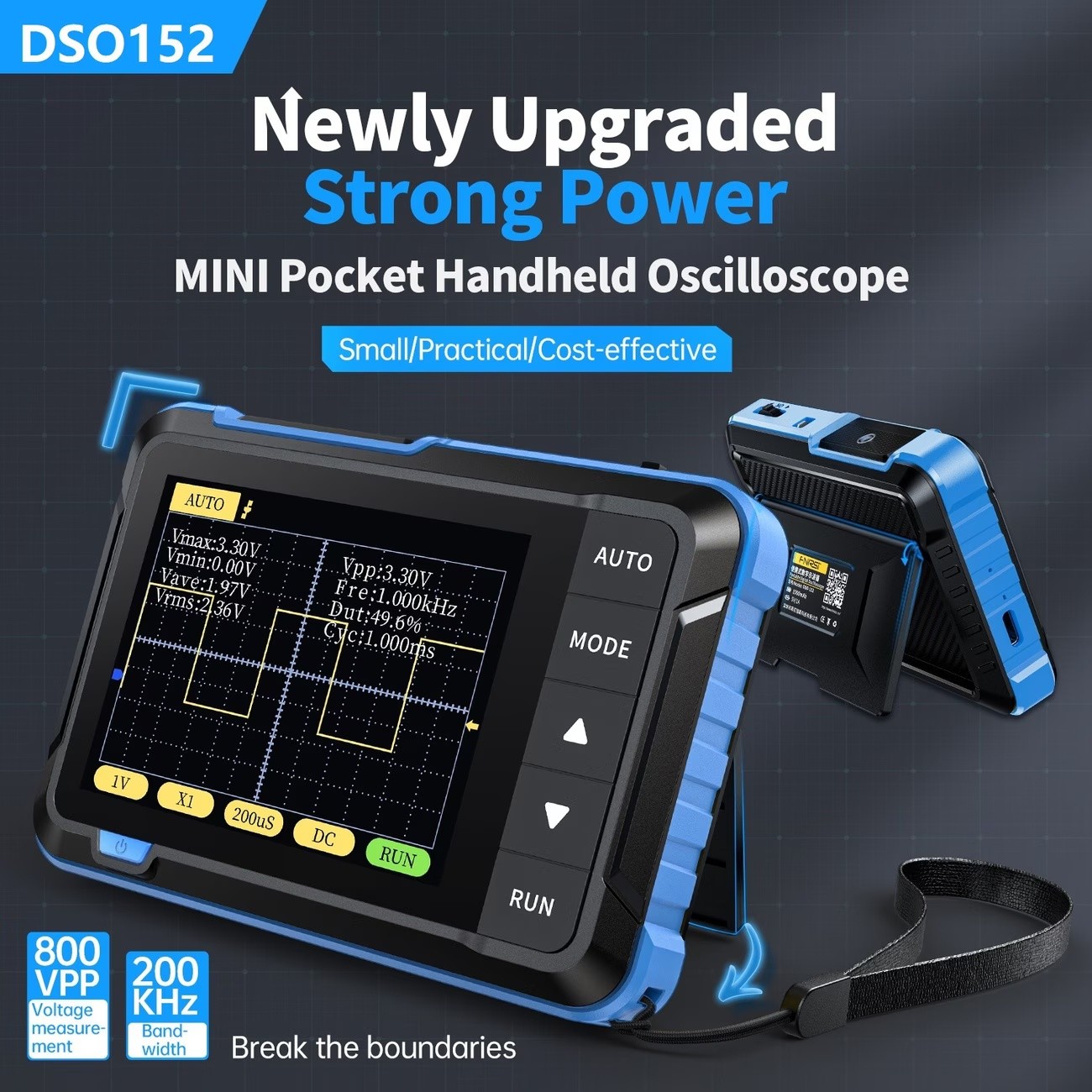 Handheld Digital Oscilloscope Portable Mini DSO for Beginner Repair Teaching$26.99Last checked Nov 27, 2026View on eBay
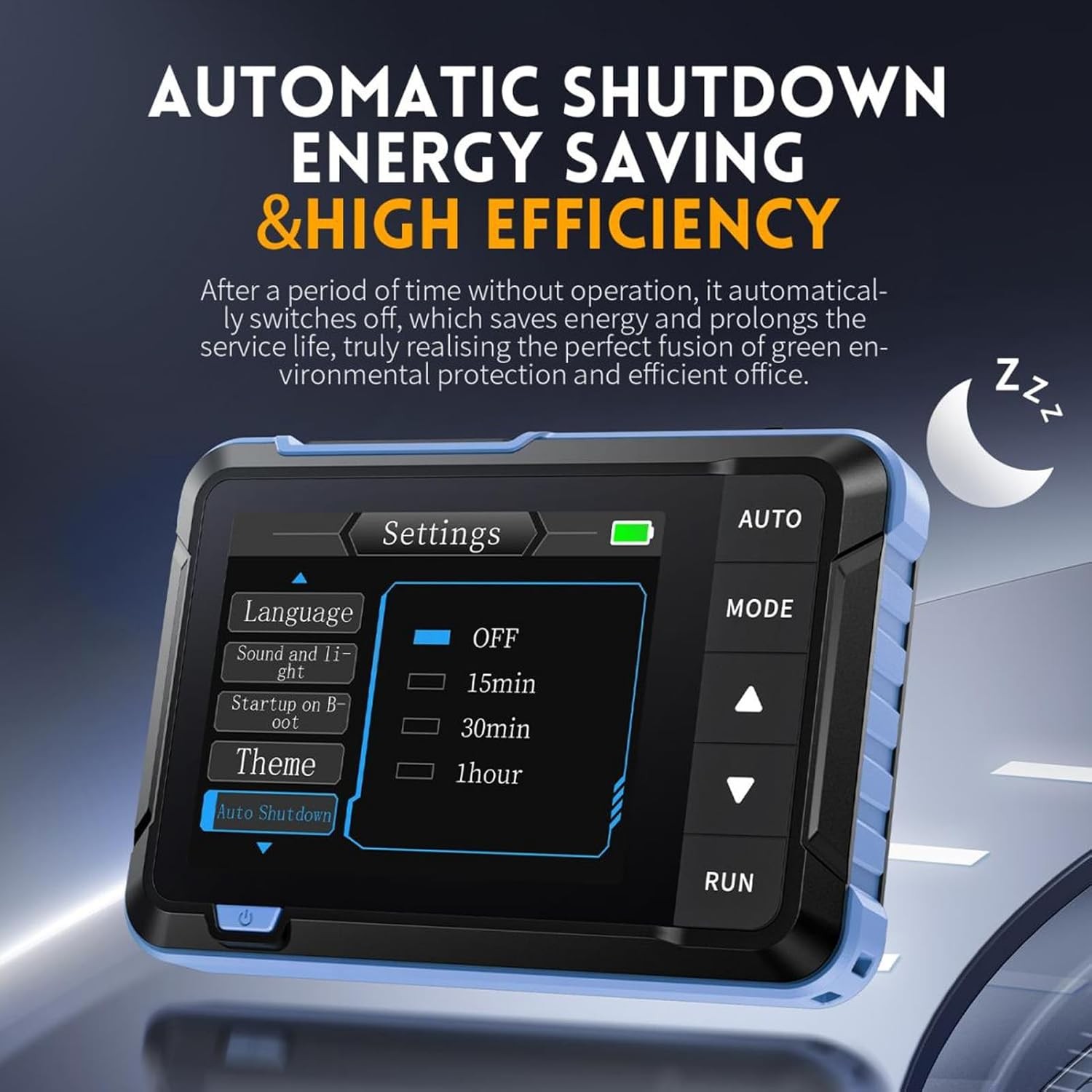 Handheld Oscilloscope Portable Digital DSO for Teaching Repair Electronics$39.57View on eBay
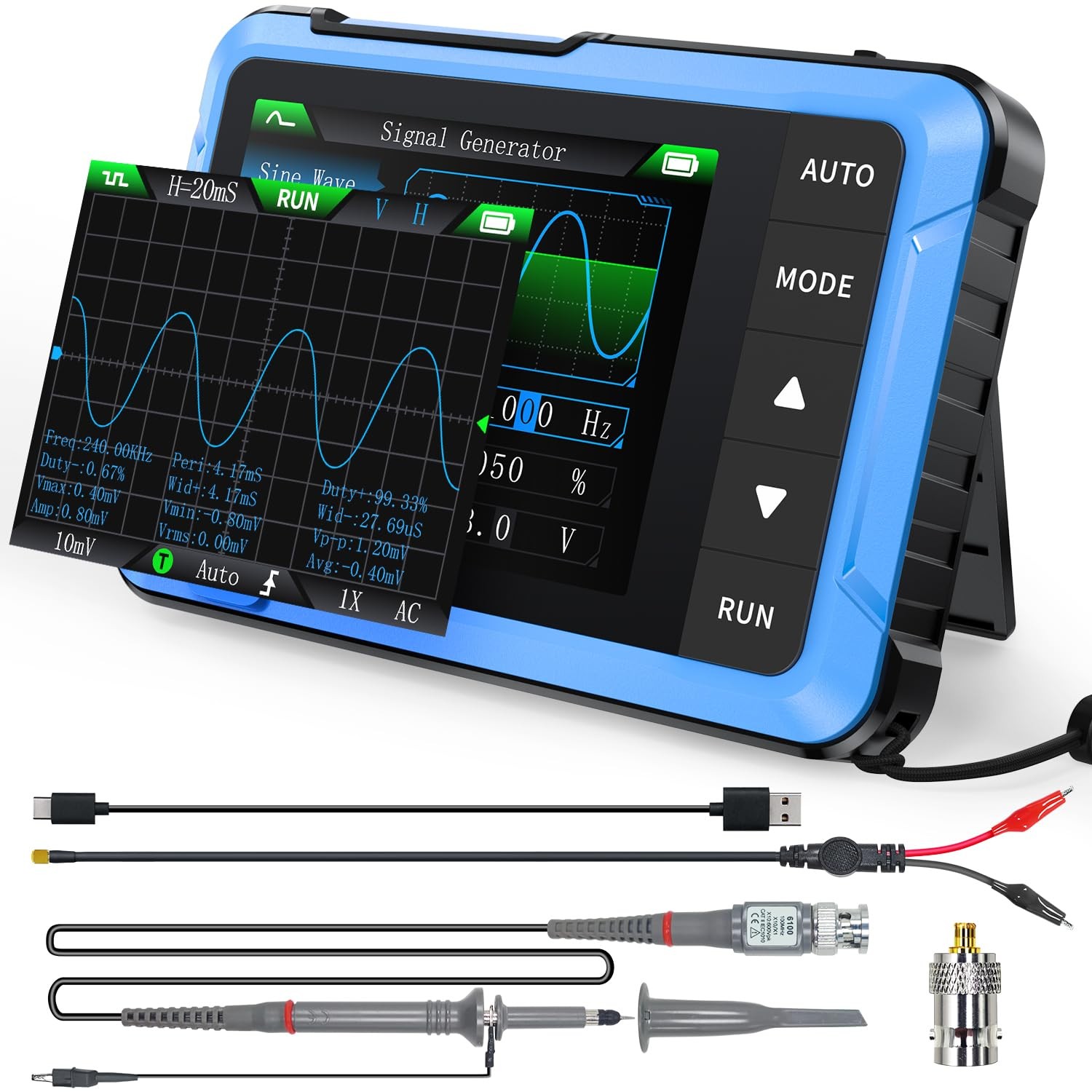 FNIRSI DSO510 2 IN 1 Handheld Digital Oscilloscope Signal Generator 48MS/s 10MHz$55.50Last checked Nov 27, 2026View on eBay
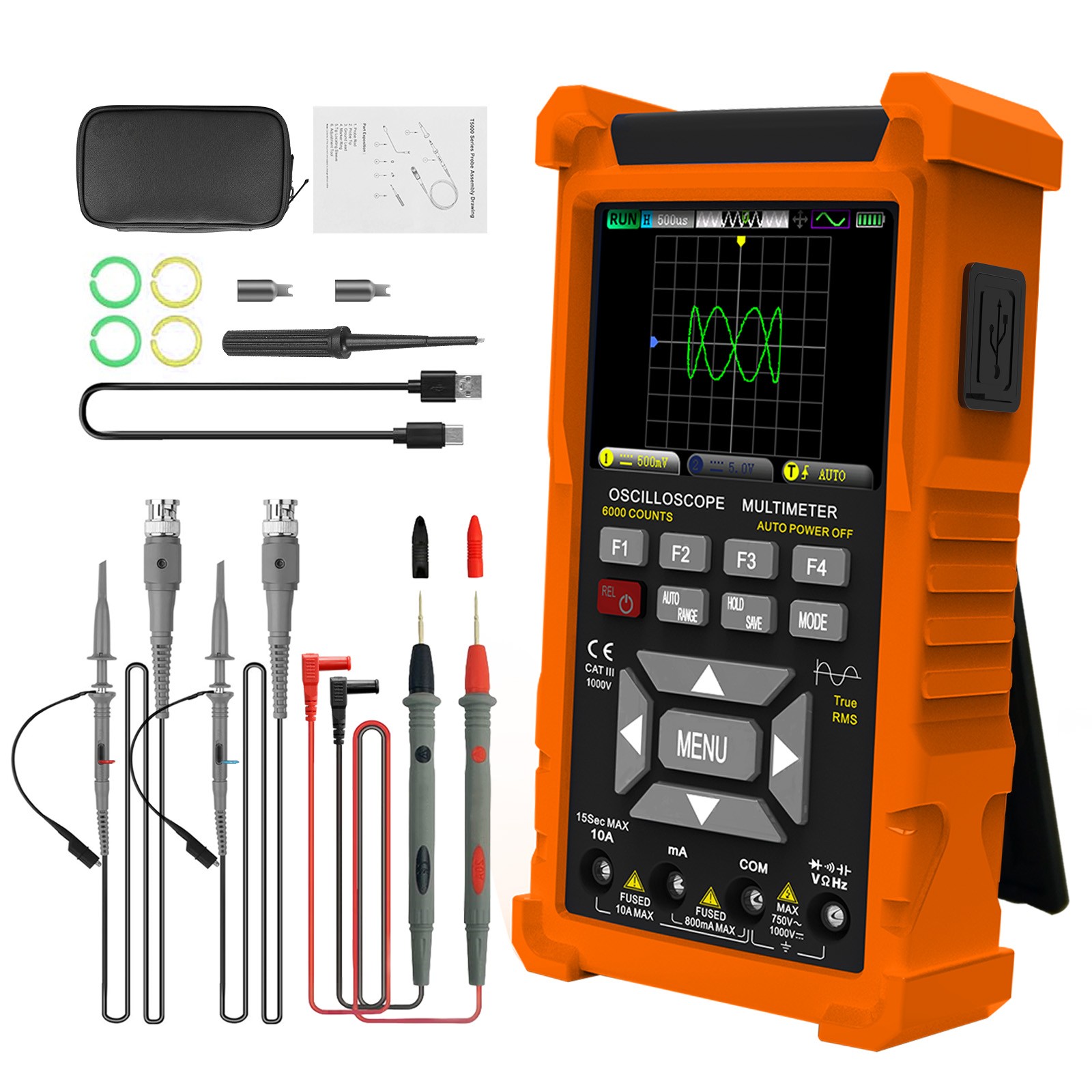 Digital 3in1 Oscilloscope Multimeter AUTO Signal Generator 1000V 50MHz Handheld$79.99View on eBay
Highlights
- Real-time sample rate must be 2.5x–5x the rated analog bandwidth; a 10 MHz scope at 48 MS/s is legitimate, a 50 MHz label on a 48 MS/s ADC is marketing fiction.
- Single-channel mini DSOs (often 2.4–3.5 inch screens) suit audio and low-speed logic; dual-channel units are mandatory for phase, timing, and serial bus work.
- Input impedance should be 1 MΩ ±2% with 10x/100x switchable probes; 10:1 probes with compensation trimmers are required to avoid loading CMOS and sensor nodes.
- Battery runtime and isolation matter in the field: Li-ion packs rated 4–8 hours with USB-C charging beat AAA-powered units that sag under backlight load.
Best use cases
- Automotive and field service: pick a dual-channel, CAT II/III-rated handheld with 100x probes and 5+ hour battery—skip unrated mini DSOs that cannot survive 12V load-dump spikes.
- Classroom and hobby repair: a single-channel 10 MHz mini DSO with built-in signal generator is sufficient for audio, PWM, and Arduino logic; do not pay for 50 MHz when sampling stays at 48 MS/s.
- Bench supplement: choose a handheld with USB stream-to-PC and 1 MΩ input to mirror a bench scope on isolated or high-voltage nodes; skip units lacking probe compensation or external trigger.
Buying tips
- Match bandwidth to signal: 10 MHz covers audio and Arduino; 50–100 MHz needed for SMPS ripple and fast digital edges. Confirm the ADC sample rate is at least 2.5x that number.
- Count channels before screen size: dual-channel is non-negotiable for comparing clock vs data or in/out phase; single-channel units are blind to timing relationships.
- Check probe compatibility: standard BNC with 10:1 switchable probes beats proprietary connectors; ensure the scope supplies probe compensation output and accepts 100x for mains-adjacent work.
- Treat '3-in-1' claims as additive only: a DMM plus signal generator is useful, but the oscilloscope's ADC bandwidth, input impedance, and CAT rating define safety and accuracy.
Specs
| Bandwidth vs Sample Rate | 10–100 MHz analog; ADC ≥2.5x bandwidth |
|---|---|
| Channel Count | 1-ch mini DSO vs 2-ch dual-channel |
| Input Impedance | 1 MΩ ±2%, BNC with 10:1 probes |
| Safety Rating | CAT II 300V min for mains; CAT III panels |
Related searches
What to check before buying
- Verify input voltage and CAT rating against your probing environment: CAT II 300V minimum for household mains, CAT III for distribution panels; unrated mini DSOs are logic-level only.
- Measure your workspace: handheld screens run 2.4–3.5 inches; confirm the unit fits a bench bag and that the battery is user-replaceable or USB-C rechargeable for field days.
- Confirm probe and accessory standard: BNC input, 10:1 switchable probes, and a compensation trimmer; add a 100x probe if you'll touch switch-mode supplies or ignition circuits.
- Check PC connectivity and firmware: USB or Wi-Fi streaming, file export (CSV/PNG), and a documented firmware update path separate usable instruments from disposable toys.
FAQ
Data sources: eBay / Amazon listings and product attribute feeds. Updated Nov 28, 2026.
Some links on this page are affiliate links. If you buy after clicking one, we may earn a commission at no extra cost to you. This does not change which products appear here or their order. Affiliate disclosure.