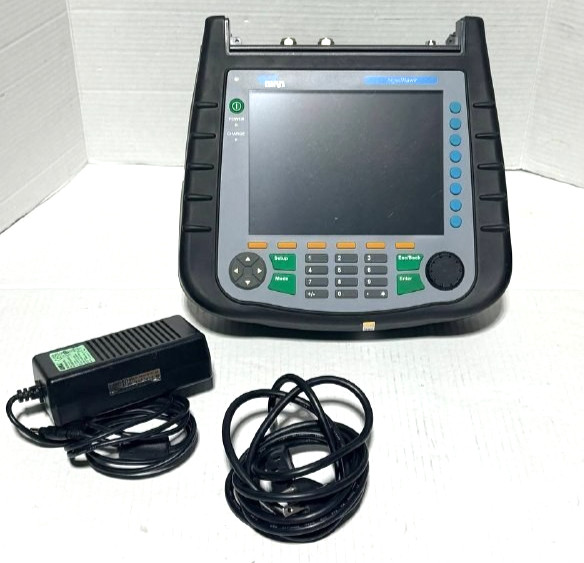

Photos from current listings. Actual item, color, and included accessories may vary.
Portable Network Analyzer Buying Guide
A portable network analyzer is a handheld or battery-capable instrument for measuring RF reflection (VSWR/return loss) and transmission (S21) from roughly 1 MHz to 6 GHz, used to verify antennas, feedlines, filters, and cable plants in the field. The core trade-off is built-in source detector quality and calibration accuracy versus screen size, battery life, and price tier. Choose a true two-port VNA architecture with factory SOLT calibration for any work where phase or impedance matters; a scalar return-loss bridge is only acceptable for go/no-go antenna sweeps.
Median $1,471.98 · New & pre-owned listings
Key takeaways
- Two-port VNA architectures (e.g., NanoVNA, SAA-2N, LiteVNA) measure full complex S11/S21, while single-port antenna analyzers like the RigExpert or MFJ series measure reflection only and cannot characterize filters or amplifiers.
- Frequency coverage tiers matter: 3 GHz covers Wi-Fi 2.4/5 GHz and most ham bands; 6 GHz is needed for Wi-Fi 6E/7 and many modern antenna designs; sub-1 GHz models are limited to HF/VHF/UHF land mobile work.
- Dynamic range and directivity determine measurement confidence: compact VNAs typically deliver 60-80 dB dynamic range and 30-40 dB directivity, versus 90+ dB on benchtop instruments, so deep stopband rejection measurements need averaging or a better analyzer.
At a glance
- Category
- Oscilloscopes, Signal & Spectrum Analyzers
- Last updated
- Nov 28, 2026
Current offers
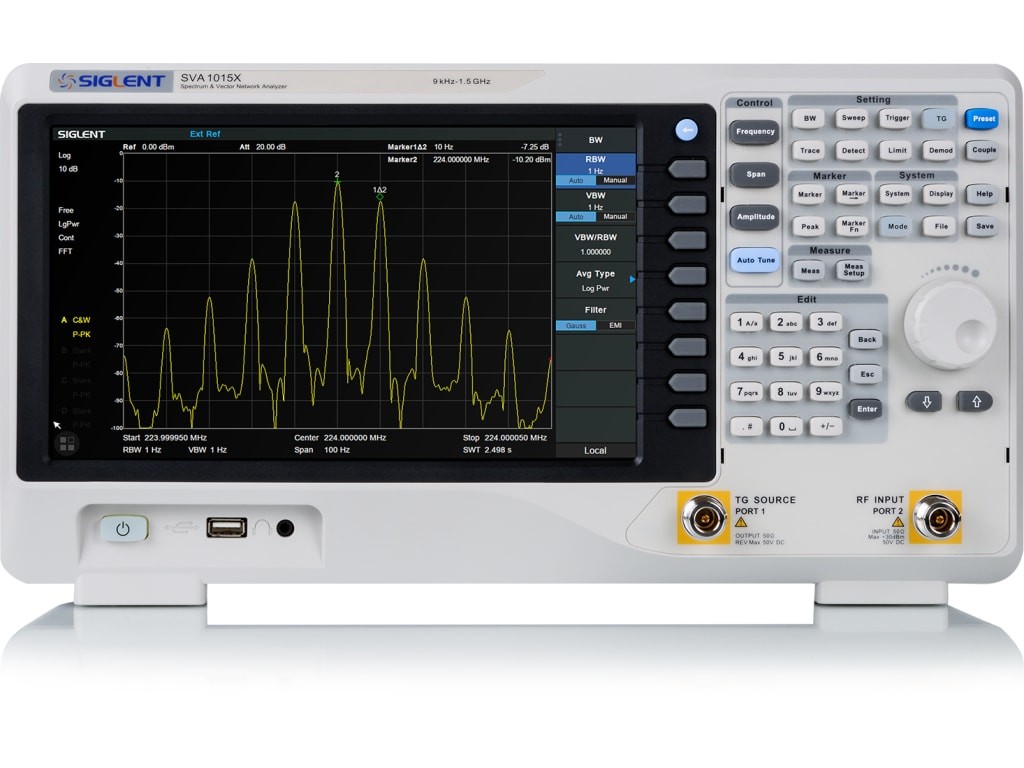
Highlights
- Two-port VNA architectures (e.g., NanoVNA, SAA-2N, LiteVNA) measure full complex S11/S21, while single-port antenna analyzers like the RigExpert or MFJ series measure reflection only and cannot characterize filters or amplifiers.
- Frequency coverage tiers matter: 3 GHz covers Wi-Fi 2.4/5 GHz and most ham bands; 6 GHz is needed for Wi-Fi 6E/7 and many modern antenna designs; sub-1 GHz models are limited to HF/VHF/UHF land mobile work.
- Dynamic range and directivity determine measurement confidence: compact VNAs typically deliver 60-80 dB dynamic range and 30-40 dB directivity, versus 90+ dB on benchtop instruments, so deep stopband rejection measurements need averaging or a better analyzer.
- Calibration standards and method (SOLT with open/short/load/thru, or eCal modules) set absolute accuracy; uncalibrated handheld readings can be off by several dB, which matters for return-loss pass/fail limits below 20 dB.
Best use cases
- Best fit: field antenna and feedline troubleshooting on towers or rooftops — pick a battery-powered analyzer with a sunlight-readable display and one-port S11 sweep plus distance-to-fault (DTF) if cable runs exceed 30 m.
- Best fit: lab and bench RF filter/amplifier characterization up to 6 GHz — pick a two-port VNA with SOLT kit and PC software for Touchstone (.s2p) export, not an antenna-only analyzer.
- Wrong fit: precision production test or metrology — handheld analyzers lack the directivity and stability of benchtop VNAs (Keysight ENA, R&S ZNL) and should be skipped for acceptance testing tighter than ±0.5 dB.
- Wrong fit: live spectrum monitoring or interference hunting — a network analyzer with a tracking generator is not a spectrum analyzer; select a separate spectrum analyzer or a combo instrument with real RBW and preamp specs.
Buying tips
- Match maximum frequency to the highest band you actually test: 3 GHz covers Wi-Fi 5 and most amateur antennas, but Wi-Fi 6E/7 (6 GHz) and 5G sub-6 require a 6 GHz-capable analyzer.
- Check connector type and impedance: most compact VNAs use 50 Ω SMA or N-type; 75 Ω CATV work requires a 75 Ω bridge or balun, and SMA-to-N adapters add loss and wear that must be calibrated out.
- Prioritize models with a supplied or purchasable SOLT calibration kit matched to the connector — a 6 GHz VNA without proper standards is less accurate than a 3 GHz unit with a fresh calibration.
- For battery-powered field units, verify runtime and charging standard: USB-C PD and 8+ hours typical runtime suit full-day site work; proprietary chargers and 3-4 hour runtimes force mid-day downtime.
Specs
| Architecture | 2-port VNA vs 1-port return loss |
|---|---|
| Frequency Range | 1 MHz-3 GHz / 1 MHz-6 GHz |
| Dynamic Range | 60-80 dB compact / 90+ dB benchtop |
| Connector / Impedance | SMA or N-type, 50 Ω |
Related searches
What to check before buying
- Confirm the maximum test frequency exceeds your highest device band by at least 10% so the sweep includes the band edge without roll-off error.
- Measure your cable/antenna connector interface (SMA, N, BNC, UHF) and budget for adapters and a calibration kit in the same connector family.
- Check display readability and size: 2.8-4 inch screens are common on pocket VNAs; for outdoor use confirm high-brightness or transflective display and a sunshade.
- Verify PC connectivity (USB or microSD) and software support for Touchstone export if you need to archive sweeps or share results with design tools.
FAQ
Data sources: eBay / Amazon listings and product attribute feeds. Updated Nov 28, 2026.
Some links on this page are affiliate links. If you buy after clicking one, we may earn a commission at no extra cost to you. This does not change which products appear here or their order. Affiliate disclosure.