
Photos from current listings. Actual item, color, and included accessories may vary.
Portable Spectrum Analyzer Buying Guide
A portable spectrum analyzer is a handheld RF instrument that visualizes signal amplitude across frequency, from entry-level 100 kHz–960 MHz USB-powered units to professional 100 kHz–3 GHz calibrated analyzers. The core trade-off is frequency coverage and amplitude accuracy versus size and cost: wideband professional receivers deliver trusted dBm readings and tracking generators, while budget SDR-style analyzers trade absolute accuracy for affordability and compactness. The decision rule: buy a calibrated, spec-backed analyzer for compliance or interference work, and a budget analyzer only for relative signal hunting and educational use.
Median $244.43 · New & pre-owned listings
Key takeaways
- Entry-tier analyzers typically span 100 kHz–960 MHz with a 2.8-inch display, SMA input, and USB-C power — enough for FM, ISM, and sub-GHz LoRa/z-wave band checks.
- Professional handhelds like the Anritsu MS2711D cover 100 kHz–3 GHz with a color display, internal battery, and calibrated amplitude accuracy for cellular, Wi-Fi, and public-safety bands.
- Frequency range, resolution bandwidth (RBW), and displayed average noise level (DANL) are the three specs that determine whether weak or closely spaced signals are visible.
At a glance
- Category
- Oscilloscopes, Signal & Spectrum Analyzers
- Last updated
- Nov 28, 2026
Current offers
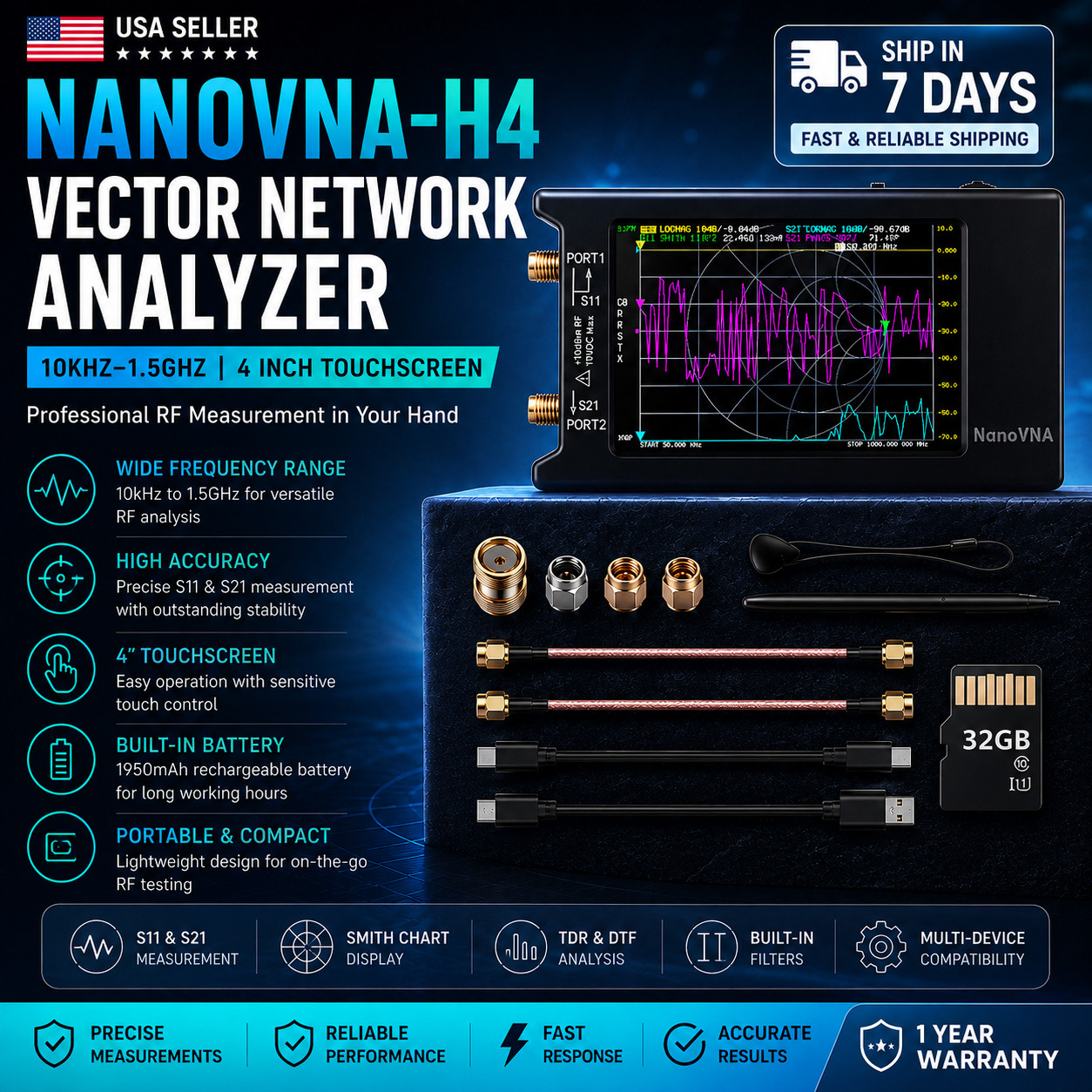 Spectrum Analyzer 4" TinySA Ultra+ ZS407 10kHz-1.5GHz RF Signal Generator 32GB!!$199.00View on eBay
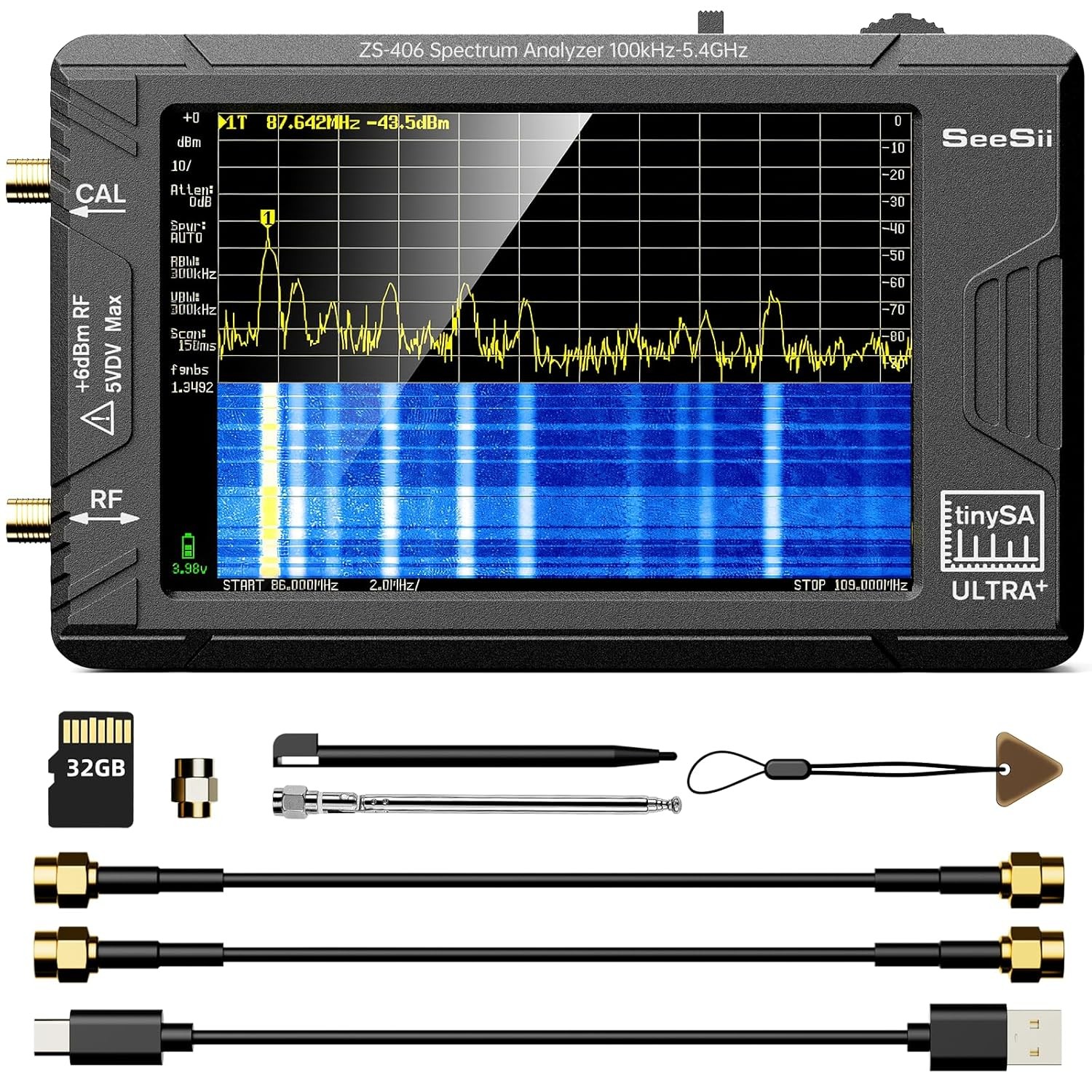 TinySA Ultra+ ZS406 Spectrum Analyzer 100kHz-5.4GHz 4" ,2 in 1 Signal Generator$203.41Last checked Nov 28, 2026View on eBay
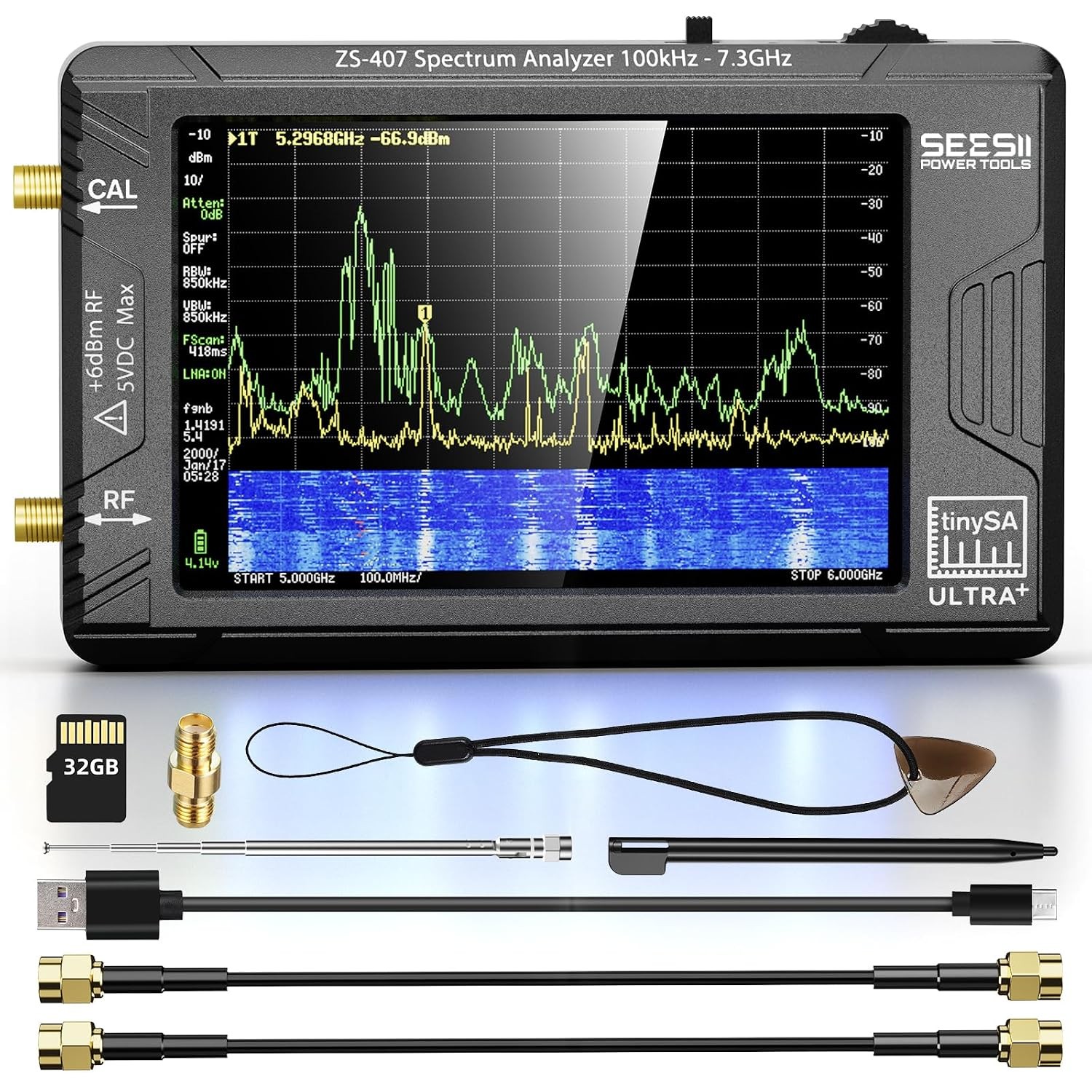 TinySA Ultra+ ZS407 Spectrum Analyzer Signal Generator 4" 100kHz-7.3GHz +32GB$239.00Last checked Nov 16, 2026View on eBay
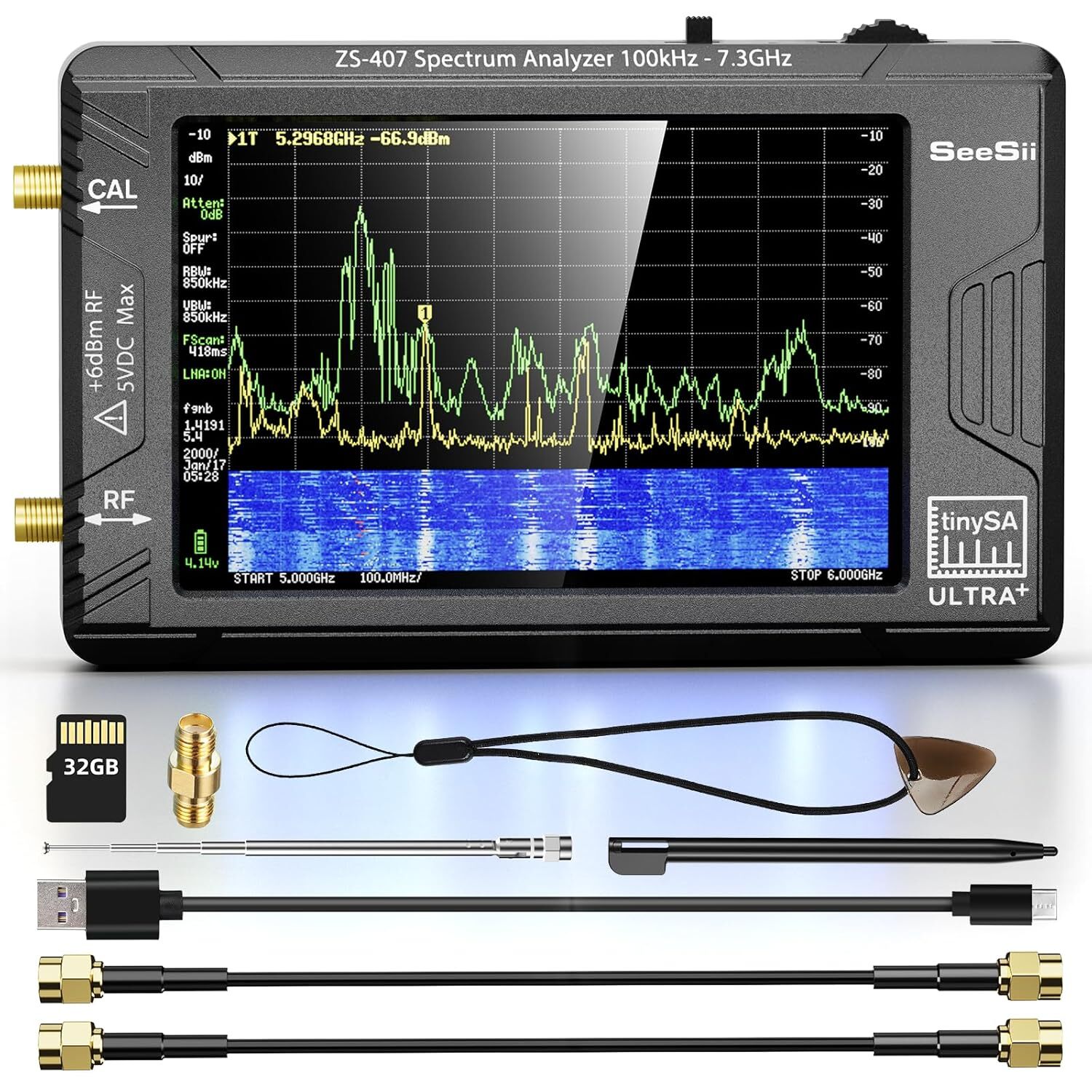 Tinysa Ultra+ ZS407 7.3GHz Spectrum Analyzer 100kHz-7.3GHz 4" Frequency Analyze$249.86Last checked Nov 27, 2026View on eBay
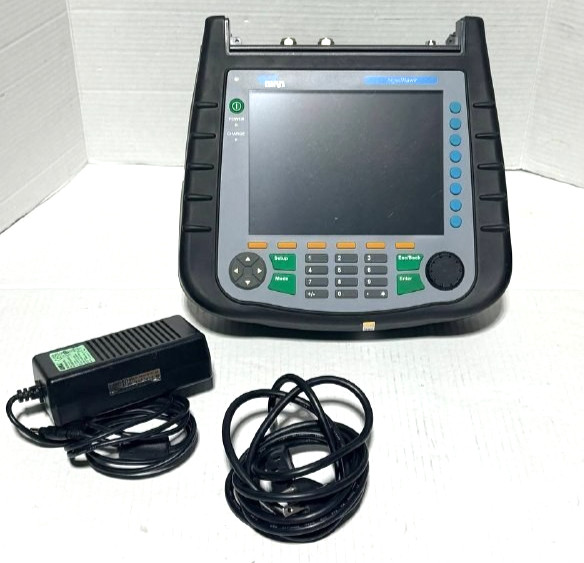 Bird SignalHawk SH-361S Signal Spectrum Analyzer &Vector Network Analyzer$999.95Used · Last checked Nov 21, 2026View on eBay
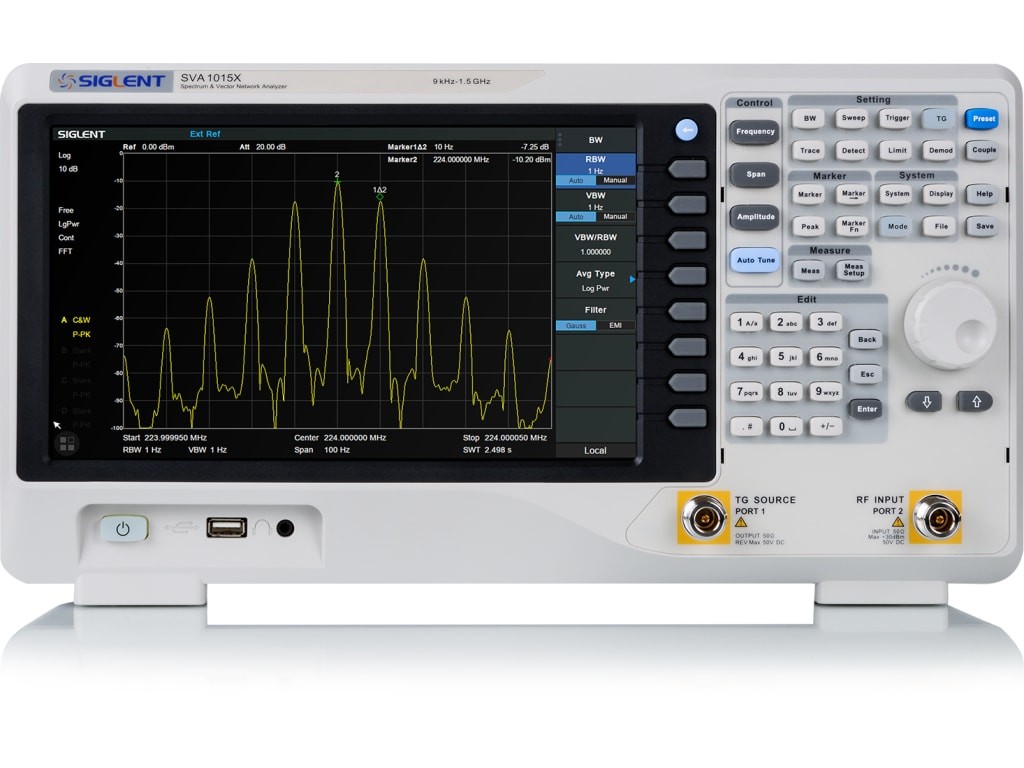 Siglent SVA1015X - 1.5 GHz Spectrum Analyzer with Vector Network Analysis$1,944.00New · Last checked Nov 21, 2026View on eBay
Highlights
- Entry-tier analyzers typically span 100 kHz–960 MHz with a 2.8-inch display, SMA input, and USB-C power — enough for FM, ISM, and sub-GHz LoRa/z-wave band checks.
- Professional handhelds like the Anritsu MS2711D cover 100 kHz–3 GHz with a color display, internal battery, and calibrated amplitude accuracy for cellular, Wi-Fi, and public-safety bands.
- Frequency range, resolution bandwidth (RBW), and displayed average noise level (DANL) are the three specs that determine whether weak or closely spaced signals are visible.
- A tracking generator turns a spectrum analyzer into a scalar network analyzer for filter, cable, and antenna return-loss sweeps — a feature absent from most budget analyzers.
Best use cases
- Best fit: sub-GHz IoT and ISM band troubleshooting (433/868/915 MHz) — pick a 100 kHz–960 MHz analyzer with SMA input and decent RBW; skip 3 GHz models if you never work above 1 GHz.
- Best fit: Wi-Fi, cellular, and public-safety interference hunting up to 2.4/5.8 GHz — choose a calibrated 3 GHz handheld with battery power and dBm accuracy; skip budget 960 MHz units that cannot see 2.4 GHz.
- Best fit: filter and antenna tuning — pick a model with a tracking generator and return-loss bridge; skip analyzers without a TG, since they cannot sweep S21/S11.
- Wrong fit: lab-grade phase-noise or EMC pre-compliance measurement — handheld portables lack the DANL and shielding of benchtop analyzers; use a benchtop unit instead.
Buying tips
- Match frequency range to your highest signal of interest: 960 MHz covers sub-GHz ISM/LoRa; 3 GHz covers Wi-Fi 2.4 GHz, cellular, and GPS; 6 GHz+ is needed for Wi-Fi 6E/7.
- Check RBW and DANL: narrower RBW (e.g., 10 kHz vs 100 kHz) resolves closely spaced signals; lower DANL (e.g., −120 dBm) reveals weaker signals above the noise floor.
- Prefer analyzers with an SMA or N-type input and specified maximum input power (e.g., +20 dBm) — direct antenna connection without a DC block or attenuator can destroy the front end.
- For antenna/filter work, confirm a tracking generator and return-loss bridge are built in or supported; without them the analyzer cannot measure S11/S21.
Specs
| Frequency Range | 100 kHz–960 MHz / 100 kHz–3 GHz |
|---|---|
| Amplitude Accuracy | Calibrated ±1.5 dB vs uncalibrated relative |
| Tracking Generator | Built-in TG vs none |
| Display & Power | 2.8" USB-C vs 3"+ color battery |
Related searches
What to check before buying
- Confirm your antenna/connector standard: most portables use SMA female; have SMA-to-N or SMA-to-BNC adapters for lab antennas and cables.
- Verify power: internal rechargeable battery for field use vs USB-C bus power for bench/desk use; check charger voltage and plug standard for your region.
- Check display size and brightness for outdoor use: 2.8-inch screens are pocketable but hard to read in sunlight; color 3-inch+ screens suit field work.
- Confirm firmware/PC software support and calibration: professional units ship with calibration certificates and PC control; budget units may lack both.
FAQ
Data sources: eBay / Amazon listings and product attribute feeds. Updated Nov 28, 2026.
Some links on this page are affiliate links. If you buy after clicking one, we may earn a commission at no extra cost to you. This does not change which products appear here or their order. Affiliate disclosure.