
Photos from current listings. Actual item, color, and included accessories may vary.
R S Spectrum Analyzer Buying Guide
A spectrum analyzer visualizes signal amplitude across frequency, and the R&S (Rohde & Schwarz) line spans handheld field units, benchtop lab instruments, and USB-powered modules. The core trade-off is frequency range and phase-noise performance versus portability and cost, with architecture (swept-tuned vs FFT vs real-time) determining what signals you can actually capture. The decision rule: buy a real-time or FFT analyzer for intermittent or wideband signals, a swept analyzer only for steady narrowband work, and never accept a handheld with less than 10 Hz RBW if you need close-in measurements.
Median $244.43 · New & pre-owned listings
Key takeaways
- R&S FPC and FPH handhelds cover 5 kHz to 3/4 GHz with 10 Hz to 3 MHz RBW; FPH adds tracking generator and 20 MHz demod bandwidth for field interference hunting.
- R&S FSW/FPS benchtop analyzers deliver phase noise below -130 dBc/Hz at 10 kHz offset and analysis bandwidth to 2 GHz, which separates lab-grade EVM testing from field surveys.
- Real-time analyzers like the R&S FSVR capture 40 MHz instantaneous bandwidth with 100% probability of intercept for transient or frequency-hopping signals; swept analyzers miss short bursts.
At a glance
- Category
- Oscilloscopes, Signal & Spectrum Analyzers
- Last updated
- Nov 28, 2026
Current offers
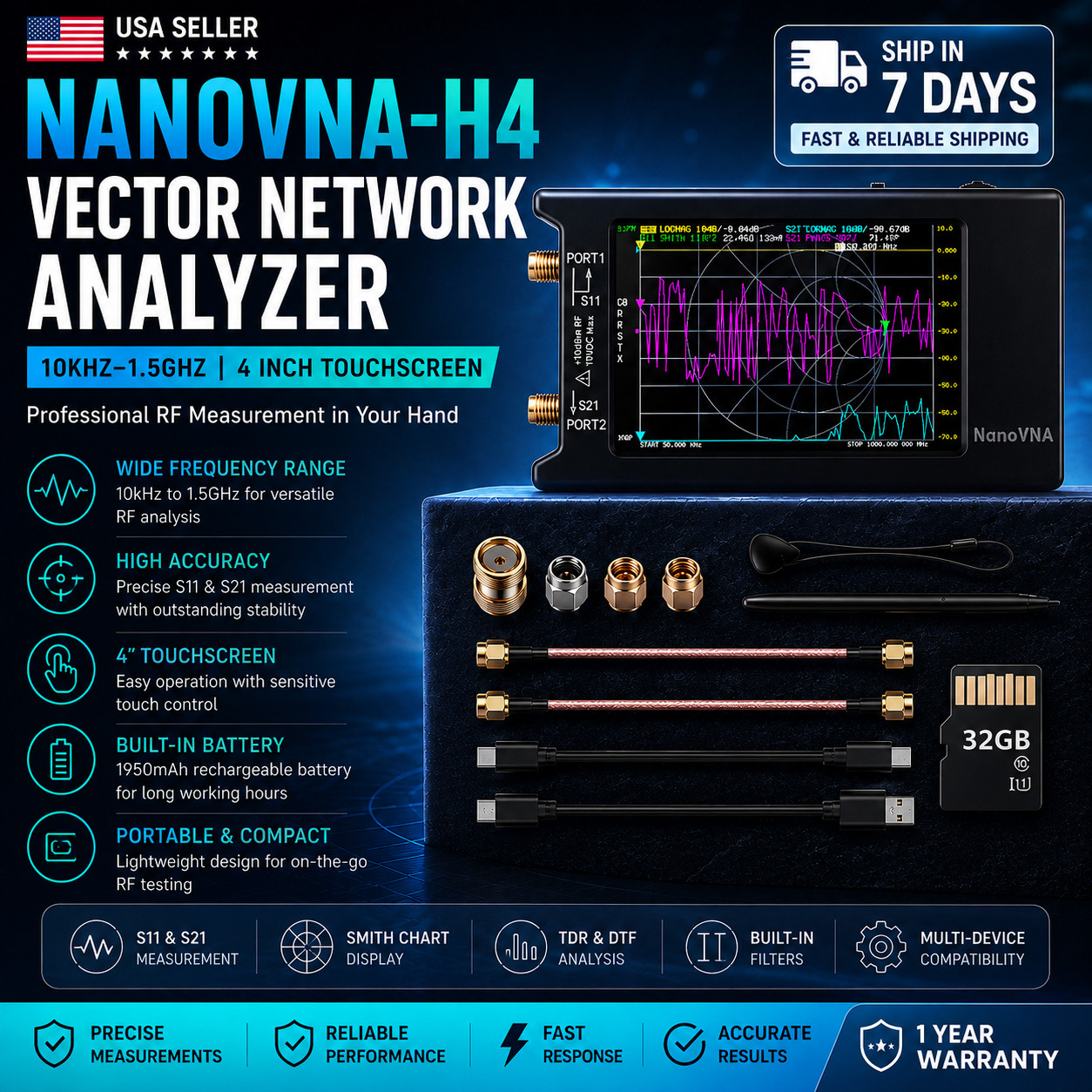 Spectrum Analyzer 4" TinySA Ultra+ ZS407 10kHz-1.5GHz RF Signal Generator 32GB!!$199.00View on eBay
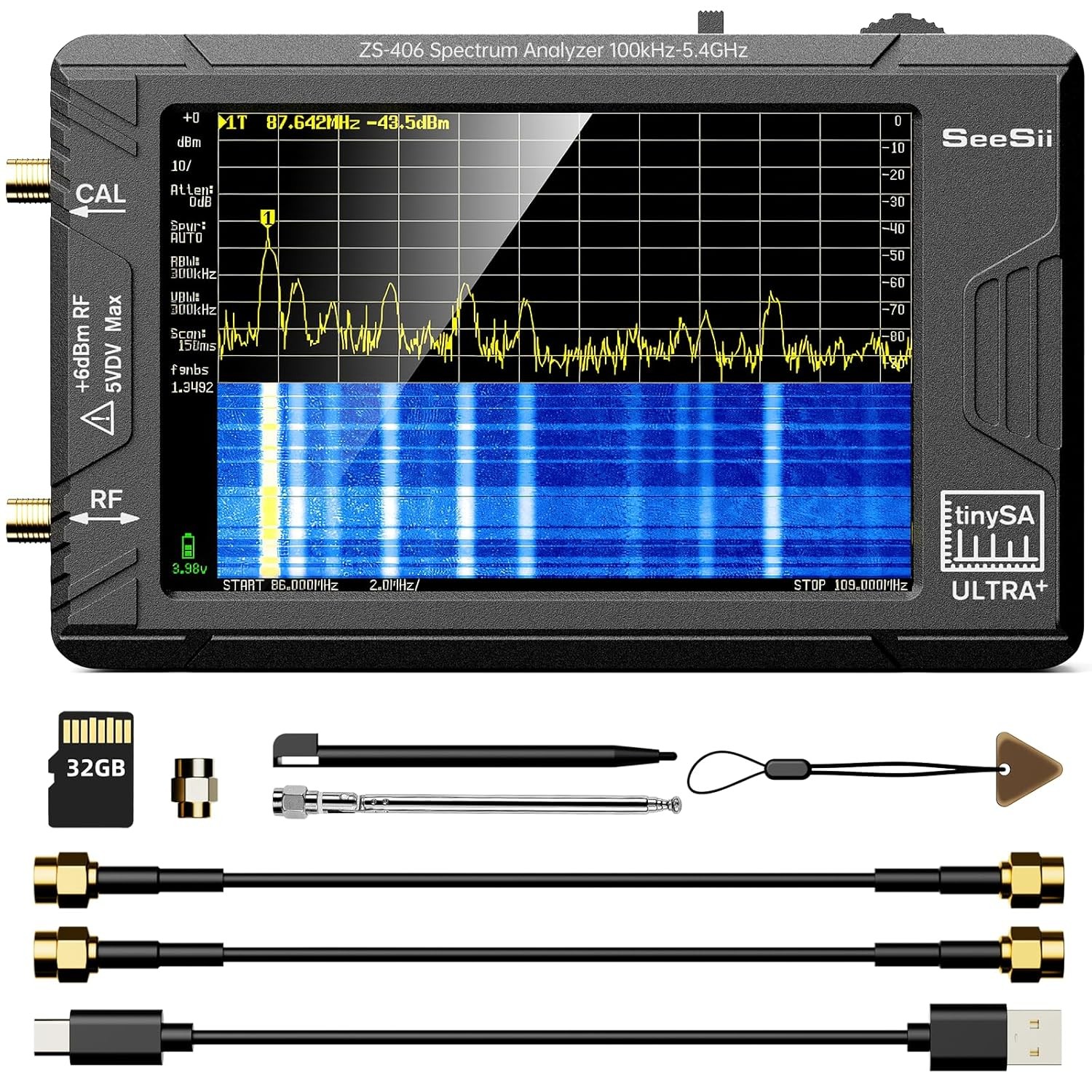 TinySA Ultra+ ZS406 Spectrum Analyzer 100kHz-5.4GHz 4" ,2 in 1 Signal Generator$203.41Last checked Nov 28, 2026View on eBay
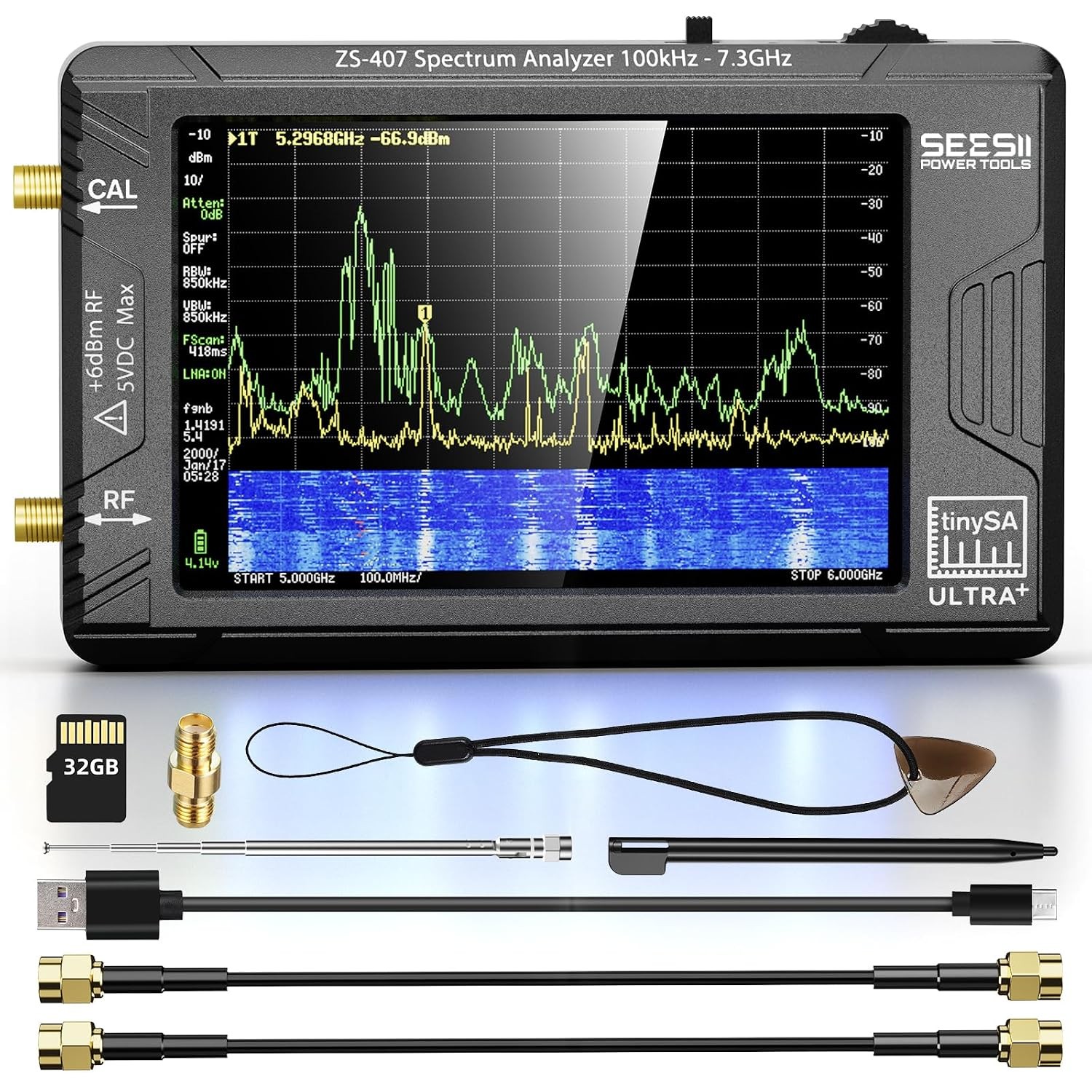 TinySA Ultra+ ZS407 Spectrum Analyzer Signal Generator 4" 100kHz-7.3GHz +32GB$239.00Last checked Nov 16, 2026View on eBay
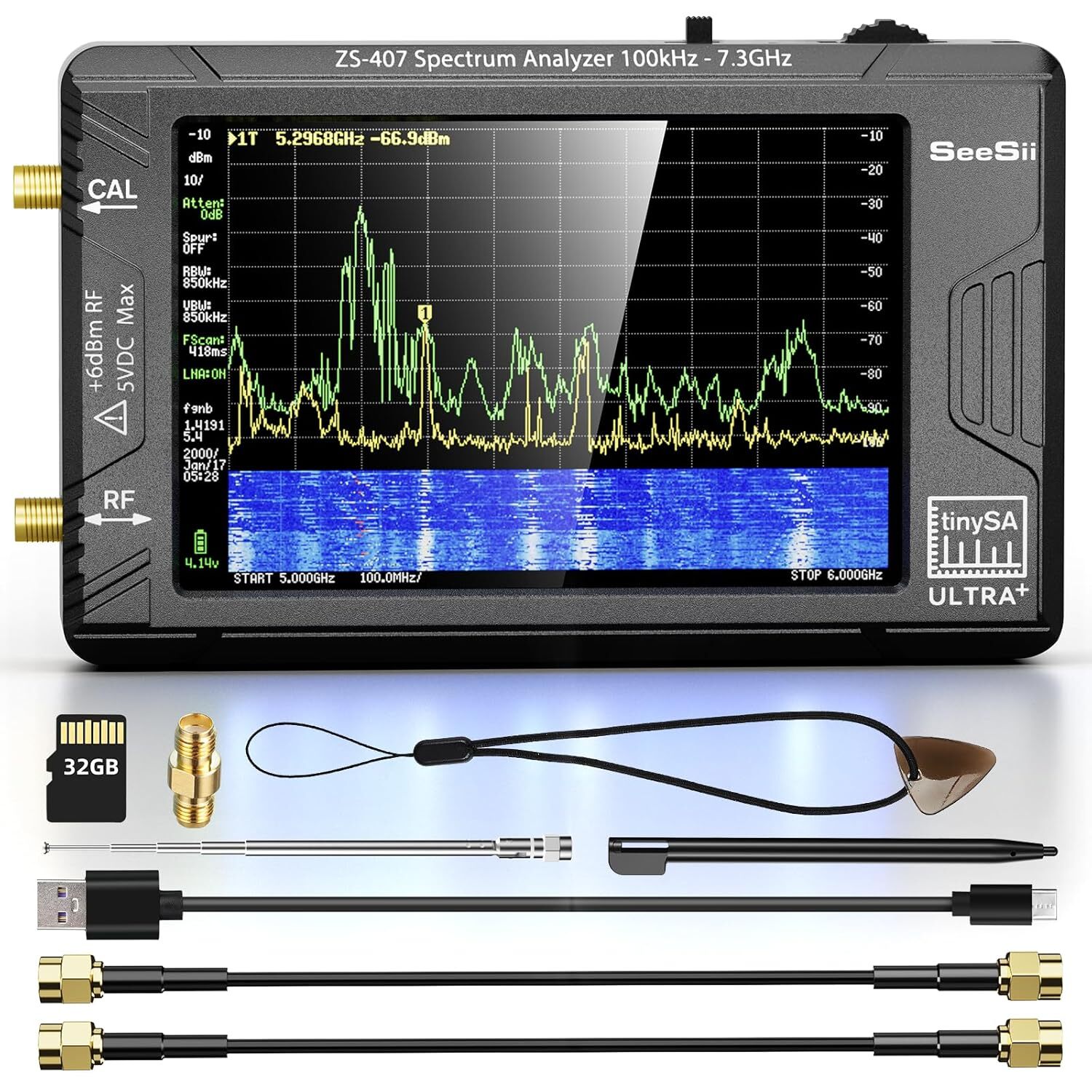 Tinysa Ultra+ ZS407 7.3GHz Spectrum Analyzer 100kHz-7.3GHz 4" Frequency Analyze$249.86Last checked Nov 27, 2026View on eBay
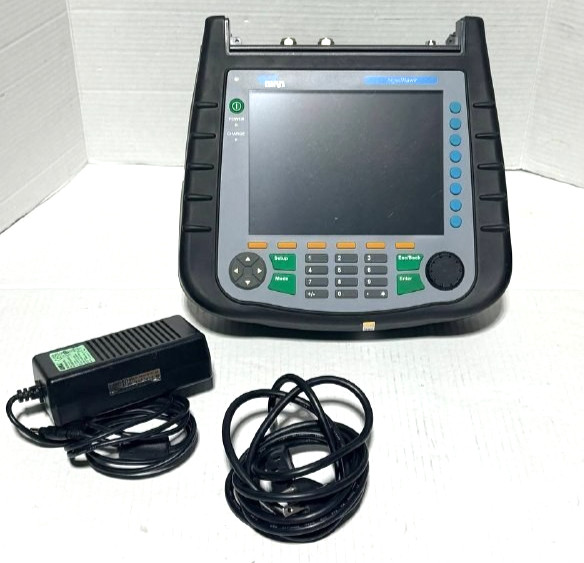 Bird SignalHawk SH-361S Signal Spectrum Analyzer &Vector Network Analyzer$999.95Used · Last checked Nov 21, 2026View on eBay
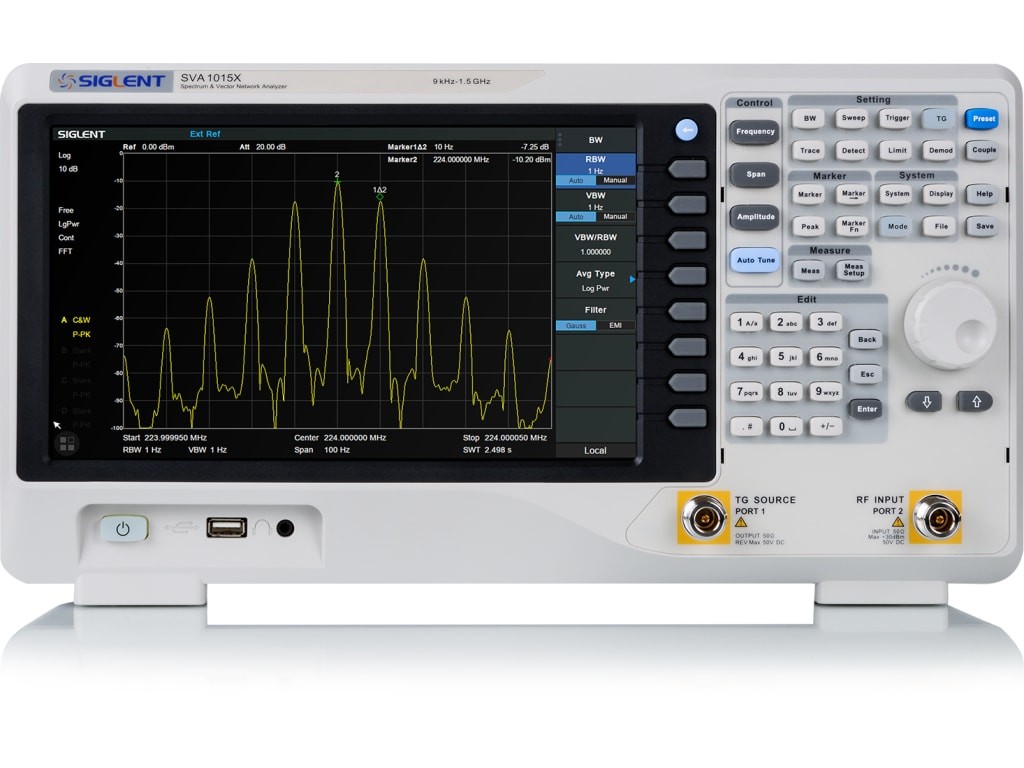 Siglent SVA1015X - 1.5 GHz Spectrum Analyzer with Vector Network Analysis$1,944.00New · Last checked Nov 21, 2026View on eBay
Highlights
- R&S FPC and FPH handhelds cover 5 kHz to 3/4 GHz with 10 Hz to 3 MHz RBW; FPH adds tracking generator and 20 MHz demod bandwidth for field interference hunting.
- R&S FSW/FPS benchtop analyzers deliver phase noise below -130 dBc/Hz at 10 kHz offset and analysis bandwidth to 2 GHz, which separates lab-grade EVM testing from field surveys.
- Real-time analyzers like the R&S FSVR capture 40 MHz instantaneous bandwidth with 100% probability of intercept for transient or frequency-hopping signals; swept analyzers miss short bursts.
- USB spectrum analyzers (R&S FPC1500 series or third-party) trade front-panel controls and battery for PC-tethered operation; confirm the host software supports your OS and the module supplies its own preamp.
Best use cases
- Best fit: field interference hunting and site surveys — pick an R&S FPH or FPC handheld with tracking generator, battery power, and 10 Hz RBW; skip benchtop units that require AC power and lack IP rating.
- Best fit: lab R&D on wideband or hopping signals — choose a real-time benchtop with 40 MHz+ analysis bandwidth and phase noise under -120 dBc/Hz; skip handhelds whose 10 MHz demod bandwidth can't capture your modulation.
- Best fit: education and basic tone/power measurement — a 1-3 GHz swept or FFT benchtop with 100 Hz RBW and USB/LAN control is enough; skip real-time and 2 GHz bandwidth tiers that add cost without benefit.
- Wrong fit: production ATE racks — R&S benchtop analyzers are SCPI-programmable but heavy; for multi-channel automated lines consider modular PXI analyzers instead of standalone boxed units.
Buying tips
- Match frequency range to your highest harmonic: for 2.4 GHz Wi-Fi/BLE testing you need at least 6 GHz to see the third harmonic; a 3 GHz analyzer will alias or miss it.
- Resolution bandwidth (RBW) sets minimum signal separation: 10 Hz RBW resolves close-in spurs, while 1 MHz RBW speeds sweep but merges adjacent tones — check the minimum RBW spec, not the maximum span.
- Verify input power handling: most R&S analyzers tolerate +20 to +30 dBm max input; above that you need an external 20-30 dB attenuator or a DC block to avoid front-end damage.
- For handhelds, confirm battery runtime (typically 3-4 hours) and whether the tracking generator, preamp, and GPS are built-in or optional license upgrades — license-locked features change the real capability tier.
Specs
| Architecture | Swept / FFT / Real-time |
|---|---|
| Frequency Range | 5 kHz to 3 / 6 / 44 GHz |
| Min RBW | 10 Hz to 1 MHz |
| Form Factor | Benchtop / Handheld / USB |
Related searches
What to check before buying
- Measure your bench or rack depth: benchtop R&S units run roughly 400-500 mm deep and weigh 8-15 kg, so confirm shelf load and rear clearance for RF connectors.
- Confirm your mains voltage and plug standard (100-240 V AC, 50/60 Hz typical) and whether the unit ships with the regional power cord or needs a separate IEC cable.
- Check connector types and impedance: R&S analyzers use 50-ohm N-type or SMA inputs; have the matching cables, adapters, and a calibrated torque wrench for SMA before first use.
- For handheld field work, verify IP rating and operating temperature range (often 0-50 °C) plus whether a soft case, strap, and spare battery are included or sold separately.
FAQ
Data sources: eBay / Amazon listings and product attribute feeds. Updated Nov 28, 2026.
Some links on this page are affiliate links. If you buy after clicking one, we may earn a commission at no extra cost to you. This does not change which products appear here or their order. Affiliate disclosure.