When you need to confirm that a wire is dead before you touch it, you can grab either a simple test pen or a multifunction positioning tester. These two electrical testers sit roughly $10.38 apart in price, and that gap buys genuinely different capabilities. The challenge is matching the tool to the work you actually do most often.
Quick Verdict
For quick checks on standard wall outlets, switches, and extension cords, the Electricity Test Pen Digital 90-1000V AC Voltage Detectors Non-Contact Tester Pe covers the job with a straightforward glow-and-beep response. If you trace wires, inspect breakers, or work around lower-voltage circuits, the 12V-1000V Positioning Voltage Tester Electric Wire Detector Test Pen Tool Kit gives you a wider detection range and more feedback.
Comparison at a Glance
| Product | Listed Price | Detection Range | Notable Extras |
|---|---|---|---|
| Electricity Test Pen Digital 90-1000V AC Voltage Detectors Non-Contact Tester Pe | USD 3.20 | 90-1000V AC | Tip glows red and beeps; CAT II 1000V rating; 50-500 Hz |
| 12V-1000V Positioning Voltage Tester Electric Wire Detector Test Pen Tool Kit | USD 13.58 | 12-1000V AC | Wire positioning; live/neutral indication; flashlight; adjustable sensitivity; auto shut-off; audible/visual/voice alarm |
Where Each Detector Wins
The Electricity Test Pen wins when your priority is a simple answer. Touch the tip to a terminal strip, socket, or supply cord and it indicates voltage with light and sound. It is enough for most everyday energized-circuit checks.
The Positioning Voltage Tester wins when you need more information from the same tool. Its 12V lower threshold lets it reach low-voltage wiring, and the positioning feature helps you tell live from neutral. The flashlight is handy in dark panels, and adjustable sensitivity plus multiple alarm modes add flexibility.
Both are non-contact voltage testers, so they share the same basic approach and neither requires direct contact with bare conductors.
Product Notes
Electricity Test Pen Digital 90-1000V AC Voltage Detectors Non-Contact Tester Pe
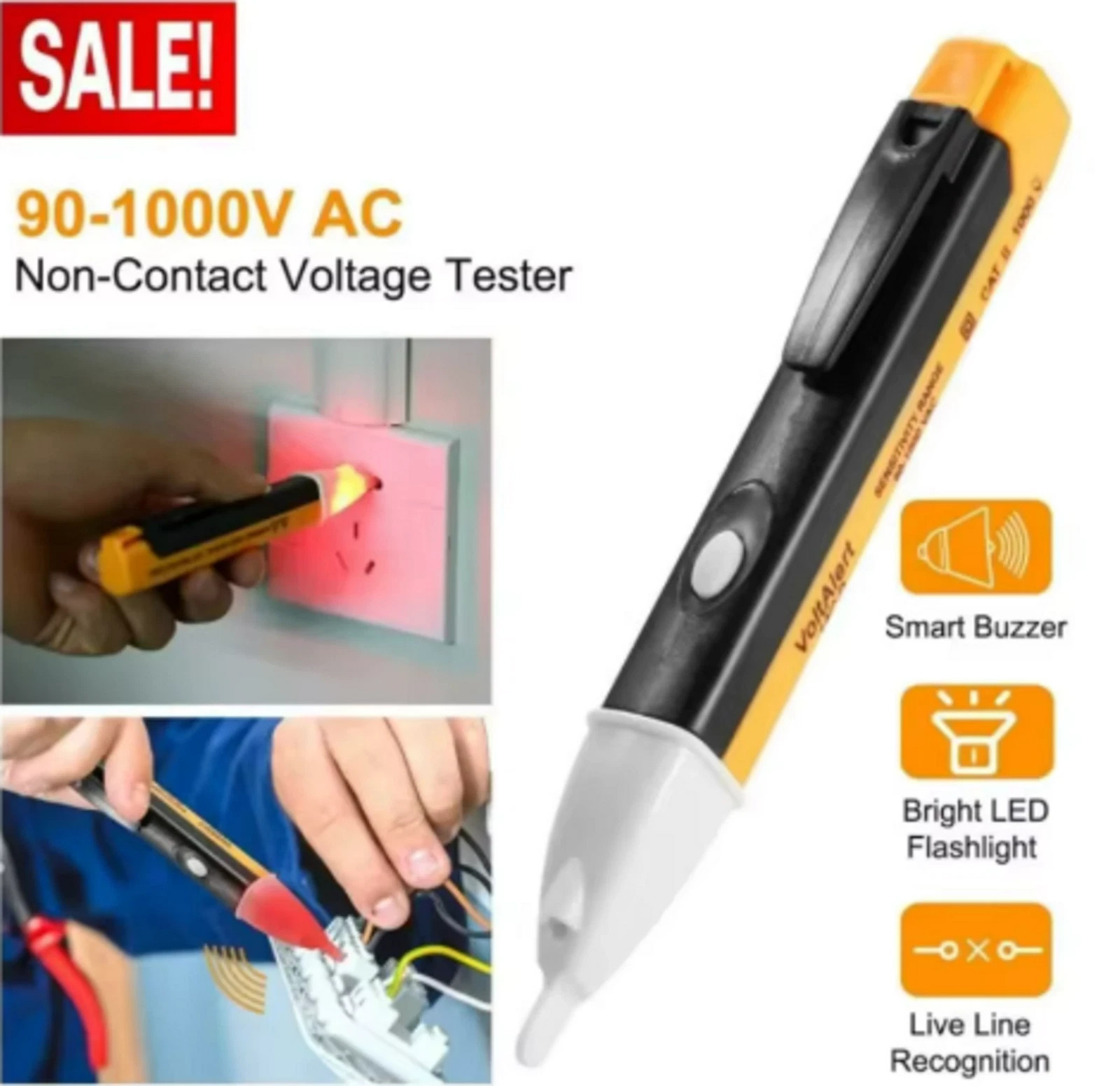
If your jobs are mostly outlets, receptacles, and supply cords, this pen keeps the process simple. It detects AC voltage from 90V to 1000V and signals a live circuit by glowing red and beeping, and the CAT II 1000V safety rating is reassuring for standard residential work. It is easy to slip into a pocket and use one-handed. The limitation is its higher starting voltage: below 90V you will not get a signal. It also lacks the positioning, flashlight, and voice alerts of the more advanced tester, so it is less useful for tracing wires or working in dark equipment spaces.
12V-1000V Positioning Voltage Tester Electric Wire Detector Test Pen Tool Kit
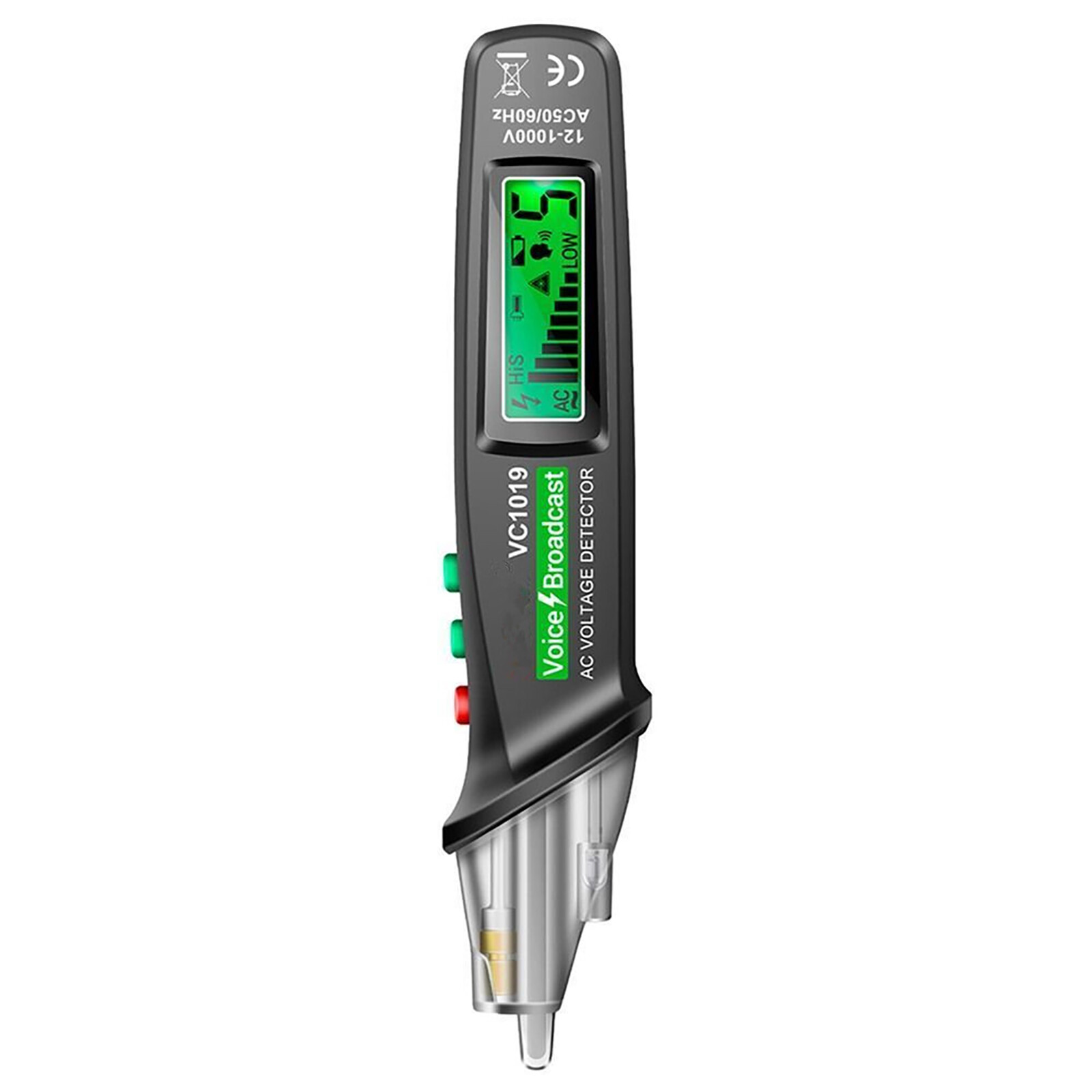
This is the more capable pick when you work beyond simple live checks. It covers roughly 12V to 1000V AC, so it can touch low-voltage control wiring that the 90V-start pen cannot. The positioning function distinguishes live and neutral lines, and the built-in flashlight helps in dim breaker panels and junction boxes. Adjustable sensitivity and automatic shutdown after about five minutes of inactivity are useful refinements. On the downside, the extra functions add a little complexity, and you have to supply two AAA batteries before the first use.
Final Choice by Use Case
Choose the Electricity Test Pen Digital 90-1000V AC Voltage Detectors Non-Contact Tester Pe for fast live-wire checks on standard household voltage. Choose the 12V-1000V Positioning Voltage Tester Electric Wire Detector Test Pen Tool Kit when your work involves tracing wires, testing breakers and junction boxes, or reaching circuits below 90V with the help of a flashlight and clear alarms.