When you're shopping for multimeters electrical testers and need to confirm a wire is live, the first decision is how much detection range you actually need. One tester handles both low-voltage controls and standard AC lines, while another covers the basics at a much more accessible price. Here's how to choose.
Quick verdict
If you regularly test low-voltage circuits and want visual feedback beyond a simple glow, the dual-range AC voltage tester is the pick. If your only job is checking outlets, switches, and power cords, the electricity test pen's straightforward signal and lower price make it the easy choice.
At a glance
| Feature | AC Voltage Tester (Dual Range) | Electricity Test Pen |
|---|---|---|
| Price | USD 12.99 | USD 3.20 |
| Price bar | ||
| AC voltage detection | 12-1000V low mode, 48-1000V high mode | 90-1000V |
| Signal feedback | Red/green screen plus beeping | Red tip glow plus beeping |
| Notable extras | Digital display, built-in flashlight | CAT II 1000V safety rating |
| Country of origin | China | United States |
Both tools are non-contact testers, so you hold the tip near an outlet, wire, or terminal to sense voltage without touching live parts. That makes them a safe first check before you go any deeper into a circuit.
Where each product wins
Where the dual-range tester wins: The big advantage is the low end. In its low sensitivity mode it can detect voltage in low-voltage wiring that many standard pens will miss.
Where the test pen wins: For a routine live-wire check at an outlet or cord, this pen covers household AC in one mode, and its compact design slips easily into a pocket.
Product notes
AC Voltage Tester/Non-Contact Voltage Tester with Dual Range AC 12V-1000V
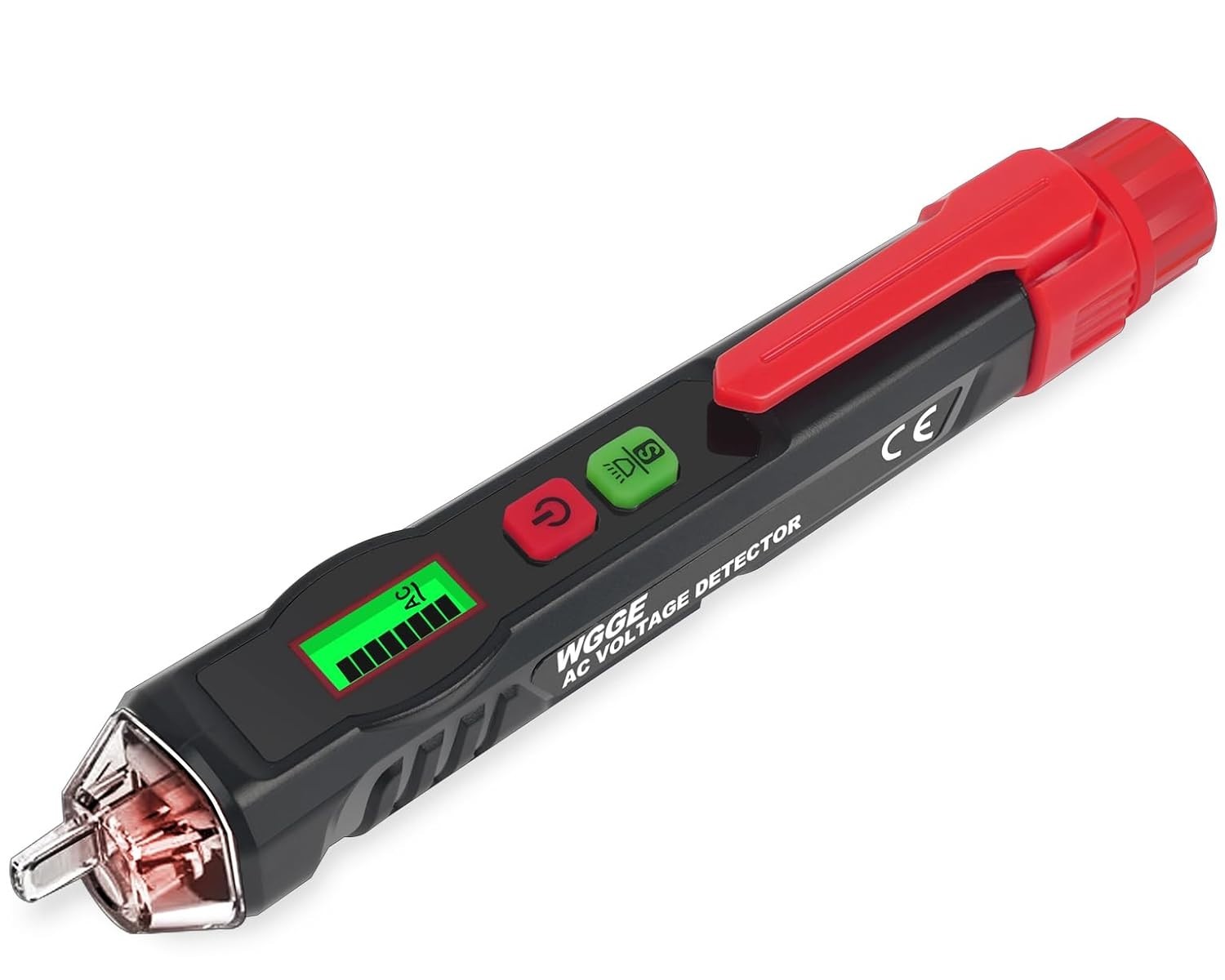
The dual-range tester earns its place when low-voltage circuits are part of the job. Flip it to the low sensitivity mode and it detects AC from a very low starting point; switch to the high mode and it covers a broader 48-1000V band. That flexibility makes it a fit for thermostats, doorbells, and control wiring as well as standard outlets. The red/green screen gives a quick visual answer, and the beeping speeds up as you approach a live source, which helps you pinpoint where voltage is present. A built-in LED flashlight is welcome inside dark breaker boxes, and the aluminum/plastic housing is ready for toolbox duty. Automatic shut-off helps preserve battery life. The limitation is the extra cost you pay for that versatility, plus the need to select the right range mode before each test.
Electricity Test Pen Digital 90-1000V AC Voltage Detectors Non-Contact Tester Pe
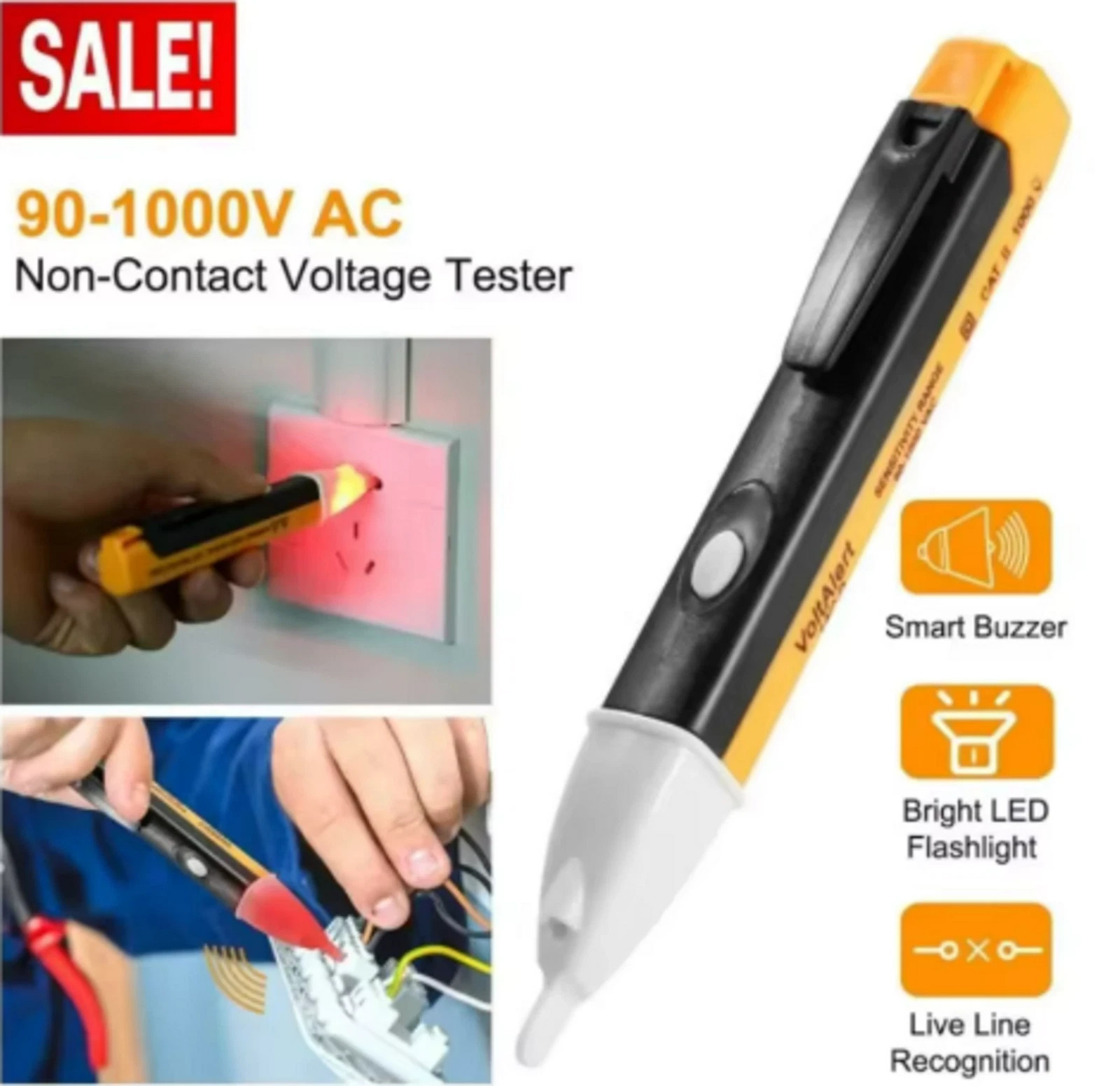
The electricity test pen is about as simple as non-contact testing gets. Touch the tip to an outlet, terminal strip, or supply cord; if it glows red and beeps, voltage is present. With a 90-1000V operating range and 50-500Hz frequency coverage, it handles common household and light commercial circuits without any range switching. The CAT II 1000V safety rating gives you a clear spec for basic electrical work, and the tool runs on two AAA batteries (not included). The limitation is the 90V floor: it can't detect lower-voltage systems, so you'll need another tool if you work on doorbells or controls. It's also battery-dependent, so keeping a spare set around is a good idea. For straightforward live-wire checks, this pen is a practical companion.
Final choice by use case
If your checklist includes low-voltage thermostat wiring, doorbell transformers, or control circuits, the AC Voltage Tester with Dual Range is the tool that gets the job done. If your work stays at standard outlet and line voltage, the Electricity Test Pen covers that territory with less cost and less complexity.